
The best engineering building sets turn abstract STEM concepts into hands-on projects involving motion, structures, hydraulics, gears, and problem-solving. The options in this roundup range from guided science activities to detailed vehicle builds.
Use the comparison and buying advice below to match each set with the builder’s age, interests, patience, and preferred level of engineering challenge.
Best 10 Engineering Building Sets Picks for 2026
Hands-On Physics Pick
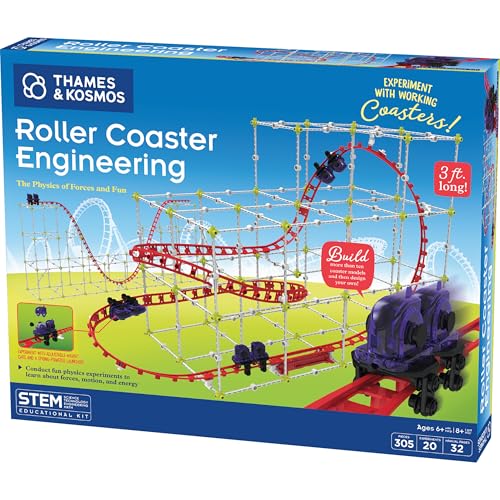
- Build working roller coaster models
- Explore force, motion, and energy
- Includes reusable pieces and a 32-page manual
Best For: Kids ages 6+ who enjoy physics and coaster-building challenges
Advanced Robotics Project

- Build a working water-powered robotic arm
- Includes six axes and a controllable gripper
- Designed as a multiple-hour STEM project
Best For: Builders ages 12+ exploring hydraulics and mechanics
Structural Design Explorer

- Build 20 bridge and skyscraper models
- Explore load, compression, and tension
- Includes 285+ pieces and a 36-page manual
Best For: Intermediate builders ages 8–14 learning structural physics
Vehicle Mechanics Choice

- Build a 452-piece race car model
- Includes pull-back action and steering
- LEGO Builder app supports guided assembly
Best For: Kids ages 9+ who enjoy race cars and moving mechanisms
Hands-On Starter
10-in-1 STEM Engineering Vehicle Kit

- Builds 10 vehicle and machine models
- Includes 112 pieces and assembly instructions
- Designed for hands-on STEM play ages 4–8
Best For: Young beginners who enjoy construction vehicles
Performance Build
LEGO Technic Lamborghini Huracán Tecnica

- 806-piece Lamborghini model for ages 9+
- Features a moving V10 engine and steering
- Includes app-based 3D building guidance
Best For: Older builders and Lamborghini enthusiasts
Kinetic Learning Pick
LEGO Gear Bots STEM Activity Kit

- Builds eight physics-driven kinetic creatures
- Includes 62 LEGO elements and papercraft
- Explains axles, cams, cranks, and engineering
Best For: Ages 8–12 learning through guided STEM projects
Magnetic Maze Engineering
National Geographic Marble Run

- 75-piece magnetic marble maze set
- Builds on vertical magnetic surfaces
- Includes physics and engineering guide
Best For: Creative STEM experimentation and maze redesign
Motorsport Mechanics

- 905-piece race car construction set
- Working W16 engine and steering
- Functional scissor doors and display styling
Best For: Young vehicle fans interested in mechanical model building
Hypercar Engineering

- 801-piece hypercar model kit
- Builds V8, differential, and steering mechanisms
- Features realistic rotating dihedral doors
Best For: Older vehicle fans exploring automotive engineering
Hands-On Physics Pick – Roller Coaster Engineering
For younger builders seeking engineering building sets, the Thames & Kosmos Roller Coaster Engineering kit combines model construction with practical physics exploration. Kids can build working coaster models while investigating force, motion, and energy through guided challenges.
Best For: Kids ages 6 and up who enjoy physics experiments, reusable building projects, and roller coaster designs.
Pros:
- Builds working roller coaster models.
- Introduces force, motion, and energy through hands-on experiments.
- Durable, reusable plastic pieces and a 32-page illustrated manual support repeat building.
Cons:
- The set focuses specifically on roller coaster designs rather than a broad range of engineering subjects.
- Assembly and experimentation may require adult guidance for younger children.
This is a strong choice when you want an accessible introduction to engineering and physics with an entertaining finished model and structured challenges.
Advanced Robotics Project – Hydrobot Hydraulic Arm
Among engineering building sets for older kids, the TEACH TECH Hydrobot stands out as a substantial mechanical project. Builders assemble a working hydraulic arm powered by water, then use its controls to rotate the arm and operate its gripper without batteries.
Best For: Builders ages 12 and up who want an extended introduction to hydraulics, mechanics, robotics, and problem solving.
Pros:
- Builds a working hydraulic robotic arm from individual parts.
- Offers six axes of movement, up to 270-degree rotation, and a controllable gripper.
- Battery-free water-powered operation encourages exploration of fluid power.
- Detailed instructions provide a multiple-hour hands-on building experience.
Cons:
- The in-depth assembly requires patience and careful attention to the instructions.
- Its 12+ recommendation makes it less suitable for younger builders.
This kit is best viewed as a focused engineering project rather than a quick-play toy, making it appealing for older children ready to spend time assembling and testing a functional mechanism.
Structural Design Explorer – Bridges & Skyscrapers
The Thames & Kosmos Structural Engineering set is one of the more concept-focused engineering building sets, using bridges and skyscrapers to demonstrate how structures handle forces. Its interchangeable pieces support 20 models covering load, compression, tension, and related mechanical concepts.
Best For: Intermediate builders ages 8 to 14 who want to compare structural models and learn foundational building physics.
Pros:
- Supports 20 different structural models.
- Includes more than 285 interchangeable plastic building pieces.
- Covers load, compression, tension, and building materials.
- The 36-page illustrated manual combines assembly guidance with experiments.
Cons:
- Its intermediate skill level may be challenging for beginners.
- The learning focus is primarily structural engineering rather than general construction.
Choose this set for a systematic introduction to structural design: it offers more model variety than a single-build kit while keeping the educational focus on how forces affect buildings and bridges.
Vehicle Mechanics Choice – NEOM McLaren Formula E
For kids drawn to vehicles, the LEGO Technic NEOM McLaren Formula E set offers an engaging route into engineering building sets. The 452-piece model includes pull-back action and steering, giving builders a working race car mechanism to explore after assembly.
Best For: Kids ages 9 and up who enjoy race cars, mechanical functions, and guided LEGO Technic building.
Pros:
- Builds a detailed NEOM McLaren Formula E race car model.
- Features double pull-back action and functional steering.
- LEGO Builder app provides 3D viewing, progress tracking, and saved-set tools.
- The 452-piece build introduces realistic movement and mechanisms.
Cons:
- The engineering learning is centered on a race car rather than broad physics experiments.
- It is a single vehicle model, so it offers less structural model variety than multi-model kits.
This is a practical pick for vehicle-focused builders who are more motivated by race-car play than formal experiments. Its moving features help connect the build with basic mechanical ideas.
Hands-On Starter – 10-in-1 STEM Engineering Vehicle Kit
For younger builders exploring engineering building sets, this 112-piece STEM kit offers 10 vehicle and machine designs, including a bulldozer, crane, forklift, and windmill. Its manual builds and moving finished projects make it a practical introduction to construction and problem-solving for children ages 4 to 8.
Best For: Young beginners who enjoy building vehicles and want multiple projects in one set.
Pros:
- Builds 10 different engineering-themed models.
- Includes detailed assembly instructions.
- Comes with a storage box for cleanup.
- Offers hands-on STEM practice through play.
Cons:
- Plastic construction rather than metal.
- Manual operation does not include powered motion.
- Some builds may be better suited to younger or assisted builders.
This is a versatile entry-level choice for families seeking reusable engineering building sets, especially when variety, storage, and accessible projects matter more than advanced mechanics.
Performance Build – LEGO Technic Lamborghini Huracán Tecnica
For older children ready for a more detailed challenge, this LEGO Technic set combines an 806-piece Lamborghini model with functional features. Builders can assemble and explore the moving V10 engine, steering, and opening doors, making it one of the more advanced engineering building sets in this roundup.
Best For: Lamborghini fans and builders ages 9 and up who want a detailed display model with mechanical features.
Pros:
- Includes a moving V10 engine and working steering.
- Opening doors add interactive detail.
- 806 pieces provide a substantial building challenge.
- LEGO Builder app offers 3D guidance and progress tracking.
Cons:
- Recommended for ages 9 and up, so it is not ideal for younger beginners.
- Focused on one Lamborghini model rather than multiple builds.
- The completed car is primarily a display and manual-play model.
This set is a strong fit when the goal is a polished, recognizable vehicle with genuine mechanical elements. Its larger piece count makes it better for patient builders than quick, simple projects.
Kinetic Learning Pick – LEGO Gear Bots STEM Activity Kit
This Klutz LEGO Gear Bots kit takes a science-focused approach to engineering building sets. Children ages 8 to 12 use LEGO Technic elements and papercraft to create eight physics-driven kinetic creatures while learning how axles, cams, and cranks work in everyday machines.
Best For: Curious learners ages 8 to 12 who prefer guided STEM activities with science explanations.
Pros:
- Builds eight kinetic creature projects.
- Includes a 64-page instructional and educational book.
- Teaches axles, cams, cranks, and basic engineering concepts.
- Contains the LEGO elements and papercraft sheets needed for the projects.
Cons:
- Uses papercraft components alongside the LEGO elements.
- Recommended age range begins at 8 years.
- Offers manual, single-player building rather than powered construction.
Choose this kit when learning the principles behind movement is more important than building a traditional vehicle. The guided book and repeatable creature projects give it a clear educational focus.
Magnetic Maze Engineering – National Geographic Marble Run
For hands-on engineering building sets that emphasize experimentation, the National Geographic Magnetic Marble Run offers a flexible way to design, test, and revise pathways. Its magnetic pieces can attach to vertical metal surfaces, while the snap-fit connectors and included guide make construction approachable for builders ages 10 and up.
Best For: Creative STEM play, physics exploration, and builders who enjoy repeatedly redesigning marble mazes.
Pros:
- Includes 42 tracks and connectors, 17 trick pieces, and 15 marbles for varied layouts.
- Magnetic construction works on refrigerators, lockers, whiteboards, and other vertical magnetic surfaces.
- Learning Guide introduces physics and engineering concepts alongside the building activity.
- Snap-fit connectors are designed to reduce frustration during assembly.
Cons:
- Recommended for ages 10 and up, so it may not suit younger builders.
- The design is focused on marble mazes rather than conventional block construction.
This is a strong choice when the goal is open-ended testing rather than building one fixed model. Its 75-piece magnetic format supports repeated experimentation and creative problem-solving.
Motorsport Mechanics – LEGO Technic Bugatti Bolide
Among engineering building sets for vehicle fans, the LEGO Technic Bugatti Bolide combines a substantial 905-piece construction project with working automotive features. Builders ages 9 and up can assemble a display-ready race car while exploring steering, engine movement, and functional doors.
Best For: Young motorsport enthusiasts who want a detailed vehicle model with interactive mechanical features.
Pros:
- 905 pieces provide a substantial building experience.
- Features a working W16 engine, steering, and scissor doors.
- Yellow-and-black styling and sticker details make the finished model suitable for display.
- Introduces engineering and construction concepts through a recognizable race car.
Cons:
- The model is recommended for ages 9 and up and may be demanding for younger children.
- Its focus on reproducing one race car offers less open-ended construction than a general-purpose set.
The Bugatti Bolide is a practical pick for builders who value both the assembly process and a polished final model. Its moving mechanisms add meaningful play value after construction is complete.
Hypercar Engineering – LEGO Technic Koenigsegg Jesko
This LEGO Technic Koenigsegg Jesko Absolut is one of the more mechanism-focused engineering building sets for ages 10 and up. The 801-piece kit lets builders assemble an articulated V8 engine, differential, steering, and an unusual door system, with 3D instructions available through the LEGO Builder app.
Best For: Vehicle enthusiasts who want to learn about automotive mechanisms while building a detailed hypercar model.
Pros:
- Includes an articulated V8 engine, differential, and functional steering.
- Dihedral synchro-helix doors rotate outward and upward like the real car’s design.
- LEGO Builder app provides 3D model views, progress tracking, and saved sets.
- The completed model measures over 11 inches long and 5 inches wide.
Cons:
- Recommended for ages 10 and up, with a mechanism-focused build that may require patience.
- The 801-piece kit is centered on one sports-car model rather than freeform building.
Choose this set when realistic automotive functions matter as much as the finished appearance. The engine, differential, steering, and distinctive doors give the build a clear engineering purpose beyond decoration.
How We Picked These Engineering Building Sets
We selected sets that offer more than simple assembly. Each product was considered for the engineering ideas it introduces, the quality of its hands-on activity, age suitability, replay value, and how clearly it connects building with real-world design principles. The list includes structural, mechanical, hydraulic, magnetic, gear-based, and automotive projects so families can choose a format that fits the builder.
We also favored kits with a defined learning path, useful components, and enough creative flexibility to encourage experimentation. Because difficulty varies considerably, adult assistance may be helpful for younger builders or for projects involving small parts, precise alignment, or complex instructions.
Quick Comparison
| Best For | Recommended Options | What They Explore |
|---|---|---|
| Structures and forces | Bridges & Skyscrapers | Load-bearing design, stability, and construction |
| Motion and systems | Roller Coaster, Gear Bots | Gears, movement, energy transfer, and mechanisms |
| Hydraulics and robotics | TEACH TECH Hydrobot Arm | Fluid pressure, control, and articulated motion |
| Marble-run experimentation | National Geographic Magnetic Marble Run | Gravity, speed, pathways, and trial-and-error design |
| Vehicle engineering | LEGO Technic car sets | Steering, drivetrains, engines, aerodynamics, and model construction |
| Broad STEM activities | choopheme 10-in-1 kit | Multiple guided builds and creative projects |
Key Buying Factors for Engineering Building Sets
Age, Complexity, and Supervision
Check the recommended age, but also consider the child’s reading ability, fine-motor skills, and experience with multi-step builds. A younger beginner may learn more from a simpler kit than from a technically impressive set that requires frequent adult intervention.
Learning Focus
Choose a kit based on the concepts the builder enjoys. Structural sets suit children interested in buildings and bridges, while hydraulic or gear-based models are better for robotics and mechanical motion. Vehicle sets often provide the strongest appeal for automotive enthusiasts, though they may emphasize detailed construction more than open-ended experimentation.
Reusability and Creative Freedom
Look for sets that support multiple models, adjustable designs, repeatable experiments, or independent modifications. Guided activities provide a clear starting point, while modular components offer more room for invention after the instructions are complete.
Parts, Storage, and Build Time
Small components can be easy to lose, so organized storage matters. Also consider whether the recipient prefers a short project or a detailed build spread across several sessions. Review any requirements for batteries, water, tools, or additional household materials before buying.
Who Should Buy Which Engineering Building Sets?
Choose Bridges & Skyscrapers for a builder fascinated by architecture, forces, and stability. The Roller Coaster set is a strong fit for experimenting with motion and track layouts. For an aspiring roboticist, the Hydrobot Arm offers a distinctive introduction to hydraulics and controlled movement.
Gear Bots suits children who enjoy moving mechanisms and guided science activities, while the Magnetic Marble Run encourages rapid redesign and visual cause-and-effect learning. The multi-project choopheme kit is useful when variety is more important than one deep build.
Finally, choose a LEGO Technic vehicle set for builders who value detailed models, recognizable performance cars, and patient construction. Match the specific car to the child’s interests, available build time, and comfort with a more intricate instruction sequence.