
When the power goes out, a dependable radio can do more than play weather updates—it can help keep your phone alive, too. The best emergency radios with phone charger combine alert access, backup lighting, and multiple charging options in one compact tool.
Below, we break down what matters most so you can choose a model that fits your emergency kit, travel bag, or home preparedness plan.
Best 10 Emergency Radios with Phone Charger Picks for 2026
Editor’s Pick
Raynic 5000mAh Solar Hand Crank Weather Radio

- Automatic NOAA alert scanning
- 6-way charging with USB phone charging
- Flashlight, reading lamp, and SOS siren
Best For: All-around emergency preparedness with weather alerts
Compact Backup
7400mWh Radio with Built-In Charging Cables
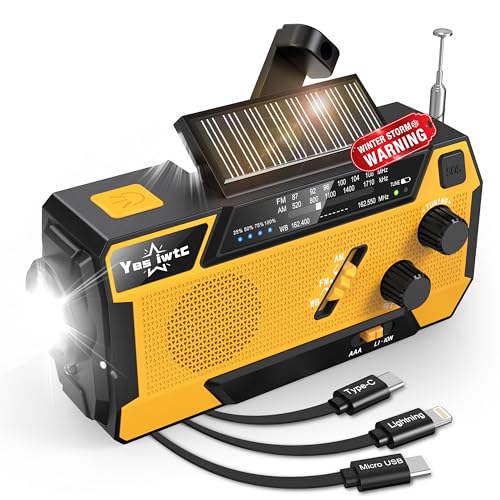
- Built-in Lightning, USB-C, and Micro USB cables
- USB-C, solar, hand crank, and AAA power options
- NOAA radio with flashlight, reading lights, and SOS
Best For: Quick charging access with built-in cables
High-Capacity Pick
14800mWh Emergency Radio With Phone Charger

- Large 14800mWh battery can charge more than one smartphone
- Four charging modes including solar and hand crank
- 3-mode flashlight plus motion-sensor reading lamp
Best For: Longer runtime and stronger battery backup
Budget Power Bank
FosPower 7400mWh NOAA Emergency Radio

- 7400mWh power bank for phone or small tablet
- Solar, hand crank, USB, and battery backup
- 4-LED reading light and 1W flashlight
Best For: Compact backup power and NOAA alerts
Premium Powerhouse
Emergency Weather Radio with 12000mAh Battery

- Real 12000mAh battery for backup power
- Large solar panel plus hand crank charging
- 5W flashlight, reading lamp, NOAA alerts
Best For: Long outages, storm prep, and users who want maximum backup power
Budget Utility Pick
NITIGO 4000mAh NOAA Weather Radio

- 4000mAh battery with USB, solar, and hand crank charging
- NOAA alerts with AM/FM radio support
- LED flashlight, reading lamp, SOS alarm
Best For: Budget-minded buyers who want core emergency features and occasional phone charging
Field-Ready Midrange
Leaton 10000mAh Emergency Radio

- 10000mAh battery with USB-C charging input
- IPX6 waterproof body for stormy conditions
- 48-LED lamp, flashlight, SOS alarm, compass
Best For: Rugged preparedness with strong battery life and slow emergency phone charging
Power-Heavy Backup
10000mAh Solar Hand Crank Weather Radio

- 10000mAh battery supports longer runtime and device charging.
- Four power options include USB-C, hand crank, solar, and AAA.
- Adds flashlight, reading lamp, SOS alarm, and AM/FM/WB reception.
Best For: Buyers who want a higher-capacity emergency radio with multiple backup charging methods.
Compact Carry
2000mAh Solar Hand Crank Radio
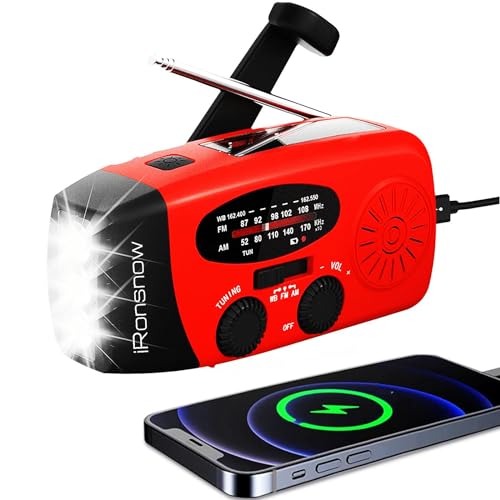
- 2000mAh battery includes USB-C phone charging support.
- Uses solar, hand crank, and USB-C power options.
- Compact design with flashlight and SOS alarm.
Best For: Travelers and preparedness buyers who want a lightweight backup radio.
All-Rounder Alert Kit

- 10000mAh/37000mWh battery charges phones, tablets, and USB devices.
- USB, solar, and hand-crank charging add backup flexibility.
- Includes NOAA alerts, flashlight, reading lamp, and SOS alarm.
Best For: Shoppers who want a versatile emergency radio for alerts and device charging.
Editor’s Pick – Raynic 5000mAh Solar Hand Crank Weather Radio
If you want emergency radios with phone charger support that also work as a full-featured weather alert tool, the Raynic is built for all-around preparedness. It adds automatic NOAA alert scanning, multiple charging options, and enough lighting features to stay useful when the power goes out.
Best For: Buyers who want a well-rounded emergency radio with automatic weather alerts and multiple backup power options.
Pros:
- Automatic NOAA weather alert scanning in standby or active mode.
- 6-way charging setup includes solar, hand crank, AC, USB, AAA batteries, and built-in rechargeable backup.
- Includes USB phone charging, flashlight, reading lamp, and SOS siren.
- Large HD LCD display shows battery level and tuning frequency.
Cons:
- AAA batteries are not included.
- It is compact and portable, but still larger than a basic pocket radio.
This model stands out if you value alert automation and versatility over a bare-bones backup radio. It covers the core emergency needs without feeling stripped down.
Compact Backup – 7400mWh Radio with Built-In Charging Cables
This emergency radios with phone charger option is especially practical if you want cables ready to go in the same unit. The built-in Lightning, USB-C, and Micro USB cords make it easier to charge devices during an outage without hunting for extras.
Best For: Users who want an emergency radio with built-in phone charging cables for quick grab-and-go use.
Pros:
- Built-in Lightning, USB-C, and Micro USB charging cables.
- Four charging methods include USB-C, hand crank, solar, and AAA batteries.
- Includes NOAA weather broadcasts plus AM/FM reception.
- Offers 3 flashlight modes, 6 LED reading lights, and an SOS alarm.
Cons:
- AAA batteries are required for backup use and are not part of the power cell.
- The product notes emphasize utility over display features.
For emergencies, convenience matters, and the built-in cable setup is the big advantage here. It is a smart pick for households that want a simple radio-power bank combo with fewer loose accessories.
High-Capacity Pick – 14800mWh Emergency Radio With Phone Charger
If you need emergency radios with phone charger capability and extra battery capacity, this model is designed to cover more of the basics in one unit. It combines a larger rechargeable battery with multiple charging methods, NOAA weather access, and stronger lighting features for outages or storm prep.
Best For: Shoppers who want a higher-capacity emergency radio that can charge a smartphone and run longer between charges.
Pros:
- Large 14800mWh rechargeable battery can charge more than one smartphone.
- Four charging modes: micro USB, solar, hand crank, and rechargeable battery use.
- Receives NOAA weather broadcasts from 7 stations with AM/FM support.
- Includes a 3-mode flashlight and motion-sensor reading lamp.
Cons:
- The notes focus on core emergency functions rather than extra accessories.
- Phone charging is supported, but the listing does not highlight built-in cables.
This is a strong option when battery size and long emergency runtime matter most. It offers a useful balance of lighting, weather alerts, and phone backup power.
Budget Power Bank – FosPower 7400mWh NOAA Emergency Radio
For buyers comparing emergency radios with phone charger support, the FosPower keeps the formula straightforward: weather radio, small-device charging, and backup lighting in a compact body. It is built around a 7400mWh power bank, so it can help keep a phone or small tablet powered when the grid is down.
Best For: Anyone who wants a compact emergency radio with power bank features and simple backup lighting.
Pros:
- 7400mWh power bank can provide emergency power to a small tablet or phone.
- Uses solar, hand crank, battery backup, and USB charging support.
- Includes a 4-LED reading light and 1W flashlight.
- Receives NOAA and AM/FM broadcasts for emergency updates.
Cons:
- Requires 4 AAA batteries for battery-powered backup use.
- The battery bank is sized for small devices, not larger electronics.
This is a practical, no-frills emergency radio for basic communication and light. It makes sense if you want a dependable backup unit with a documented power bank and simple controls.
Premium Powerhouse – Emergency Weather Radio with 12000mAh Battery
If you want emergency radios with phone charger support that prioritize capacity and charging flexibility, this Roxicosly model is built for serious backup use. Its real 12000mAh battery, large solar panel, hand crank, and USB-C options make it a strong fit for blackouts, storm prep, and camping when you need both alerts and power.
Best For: Households that want a high-capacity emergency radio for longer outages and dependable phone charging.
Pros:
- Real 12000mAh battery offers dependable backup power for lights and phone charging.
- Large 8500mm² monocrystalline solar panel is designed to capture sunlight efficiently.
- Hand crank is engineered for faster output, with 1 minute of cranking helping power calls, lighting, or news updates.
- Includes dual lighting with a 5W flashlight and 12-LED reading lamp, plus NOAA alerts and SOS alarm.
Cons:
- Bulkier than smaller emergency radios due to the larger battery and lighting setup.
- Phone charging is emergency-focused backup power, not a replacement for a dedicated power bank.
Overall, this is one of the more capable all-in-one picks if battery size and charging options matter most. It stands out for real capacity, strong solar input, and useful emergency lighting.
Budget Utility Pick – NITIGO 4000mAh NOAA Weather Radio
This NITIGO model is a practical choice if you want emergency radios with phone charger capability in a compact, multi-use package. Its 4000mAh battery, solar and hand-crank backup charging, and USB support cover the basics for weather alerts, light, and emergency communication without adding unnecessary complexity.
Best For: Everyday preparedness shoppers who want a straightforward emergency radio for alerts, lighting, and occasional phone charging.
Pros:
- 4000mAh rechargeable battery can be powered by USB, solar, or hand crank.
- NOAA weather alerts help deliver real-time updates for storms and severe weather.
- Includes an LED flashlight, retractable 180-degree reading lamp, SOS alarm, and flashing light.
- 3.5mm headphone jack adds a handy listening option for quieter use.
Cons:
- Smaller battery capacity than higher-end emergency radios with phone charger features.
- Charging output is intended for emergency use rather than fast device charging.
For the money, this is a well-rounded emergency radio that covers the essentials cleanly. It is especially appealing if you want alert reception, basic lighting, and backup power in one portable unit.
Field-Ready Midrange – Leaton 10000mAh Emergency Radio
If you’re comparing emergency radios with phone charger support and want a balanced mix of capacity, durability, and useful controls, the Leaton stands out. It offers a real 10000mAh battery, USB-C charging, solar and hand-crank backup power, and rugged waterproofing for storms, travel, and outdoor use.
Best For: Buyers who want a rugged emergency radio with strong battery life and reliable backup charging for phone emergencies.
Pros:
- Real 10000mAh battery provides long runtime, with USB-C input for faster recharging.
- IPX6 waterproof build and textured grip make it suited to stormy or rough conditions.
- Includes a 48-LED reading lamp, 20-LED flashlight, SOS alarm, and built-in compass.
- Manual NOAA/AM/FM tuning gives direct control over reception and alerts.
Cons:
- USB-C output is limited to 5V/1A, so phone charging is slow emergency backup.
- NOAA alerts require manual tuning rather than automated SAME support.
As a midrange option, this Leaton model emphasizes real-world utility over flashy extras. It is a strong fit if you want a dependable emergency radio that can keep you informed, lit, and minimally charged during outages.
Power-Heavy Backup – 10000mAh Solar Hand Crank Weather Radio
If you want emergency radios with phone charger support that can keep both broadcasts and devices powered longer, this model leans into capacity. Its 10000mAh battery, USB-C charging, hand crank, solar panel, and AAA backup give you multiple ways to stay ready during outages, travel, or severe weather.
Best For: Users who want a higher-capacity emergency radio with multiple charging options and long runtime.
Pros:
- 10000mAh battery is built for longer use and phone charging support.
- Four charging methods: USB-C, hand crank, solar, and AAA batteries.
- Includes flashlight, reading lamp, and SOS alarm for emergency use.
- Extended 7-section antenna and AM/FM/WB tuning support clearer reception.
Cons:
- AAA batteries are not included.
- Bulkier than smaller compact emergency radios.
Overall, this is a practical pick if battery life and backup flexibility matter more than ultra-compact size. It covers the core emergency-radio needs well and adds enough power reserve to serve as a more dependable grab-and-go option.
Compact Carry – 2000mAh Solar Hand Crank Radio
For shoppers comparing emergency radios with phone charger features in a smaller package, this iRonsnow model keeps things simple and portable. It offers USB-C phone charging, solar and hand-crank power, plus NOAA AM/FM weather coverage for basic emergency readiness.
Best For: People who want a lightweight, compact emergency radio for day-to-day preparedness and travel.
Pros:
- 2000mAh battery with USB-C phone charging support.
- Three recharge methods: USB-C, hand crank, and solar.
- Built-in flashlight with SOS alarm mode for emergencies.
- Compact size makes it easy to pack in a bag or car kit.
Cons:
- Smaller battery than larger-capacity emergency radios.
- Details note that shipped versions may vary in flashlight layout.
This is a sensible choice if portability is the priority and you mainly need a dependable backup radio with charging support. It won’t match bigger models for runtime, but it keeps the essentials in a compact footprint.
All-Rounder Alert Kit – 10000mAh NOAA Weather Radio
If you’re shopping emergency radios with phone charger capability for home or outdoor use, this NITIGO model covers a lot of ground. It combines a 10000mAh rechargeable battery, USB/solar/hand-crank charging, NOAA weather alerts, and extra lighting tools in one portable emergency package.
Best For: Buyers who want a versatile emergency radio for alerts, lighting, and device charging.
Pros:
- 10000mAh/37000mWh battery supports emergency phone, tablet, and USB device charging.
- Three charging methods: USB, solar, and hand crank.
- Includes LED flashlight, reading lamp, SOS alarm, and flashing light.
- NOAA weather alerts, AM/FM/WB reception, and 7 preset NOAA channels.
Cons:
- NOAA alerts require the radio to be on with the WB band selected.
- More feature-rich, which may be more than some users need.
As a do-it-all option, this model makes sense if you want one radio to cover alerts, charging, and visibility. It is especially practical for emergency kits, travel, and outdoor preparedness where versatility matters.
How We Picked the Best Emergency Radios with Phone Charger
We focused on models that balance weather-alert reliability, practical charging output, and everyday usability. The strongest picks offer NOAA band support, a usable hand crank or solar backup, and enough battery capacity to top off a phone in a real emergency—not just on paper. We also favored radios with clear controls, strong flashlight features, and more than one way to recharge.
Quick Comparison: What Matters Most
In this category, bigger battery numbers can help, but they are not the whole story. A 10,000mAh radio may be more useful than a higher-capacity unit if it charges efficiently, has stable reception, and is easy to operate under stress. Look at power sources, antenna quality, and whether the radio includes USB-C or built-in charging cables for convenience.
Key Buying Factors for Emergency Radios with Phone Charger
Charging Methods
Choose a unit with at least two backup charging paths, such as solar and hand crank, plus USB input for pre-charging. More charging options generally mean better odds of keeping the radio and phone usable during extended outages.
Battery Capacity and Phone Output
Larger batteries can provide more phone reserve, but actual performance depends on conversion efficiency. For Emergency Radios with Phone Charger features, look for a battery size that matches your needs, along with a clear description of output ports or included cables.
Alert and Broadcast Coverage
NOAA weather band support is the core feature for storm readiness. AM/FM is useful for local news and broader updates, while some models add shortwave for extra listening flexibility.
Light, Alarm, and Build Quality
An LED flashlight and reading lamp can make a radio much more practical in a blackout. An SOS alarm may also be helpful for signaling. Rugged housing and intuitive controls matter because emergency gear should work quickly, even in poor conditions.
Who Should Buy Which Emergency Radios with Phone Charger?
Buy a higher-capacity model if you want the best chance of charging a smartphone more than once or supporting longer outages. Pick a mid-capacity, multi-charge radio if you want a balanced all-around emergency kit item. Choose a compact, lower-capacity option if portability is your top priority and you mainly want alerts, light, and a small phone boost.
If you are building a family storm kit, a model with multiple charging methods and built-in cables can be especially convenient. If you want simple preparedness for travel or a vehicle, a lighter radio with NOAA alerts and a dependable crank is often enough.