
When the power goes out, a good emergency radio with flashlight keeps you informed, visible, and better prepared. It can deliver NOAA weather alerts, broadcast updates, and a dependable light source in one compact device.
Below, we’ve narrowed the field to options that balance power, charging methods, battery capacity, and practical survival features so you can choose with confidence.
Best 10 Emergency Radios with Flashlight Picks for 2026
Compact Backup Power
FosPower NOAA Emergency Weather Radio A1

- 7400mWh power bank for small devices
- Solar, hand crank, and AAA power options
- 4-LED reading light plus 1W flashlight
Best For: portable storm-prep with phone charging
Feature-Rich Field Radio
Midland ER310 Emergency Crank Radio

- Solar, hand crank, and rechargeable battery power
- 130-lumen SOS flashlight beacon
- NOAA Weather Scan + Alert and USB charging
Best For: serious emergency preparedness and signaling
Waterproof Everyday Rescue Radio
Bluetooth Emergency Radio with Flashlight
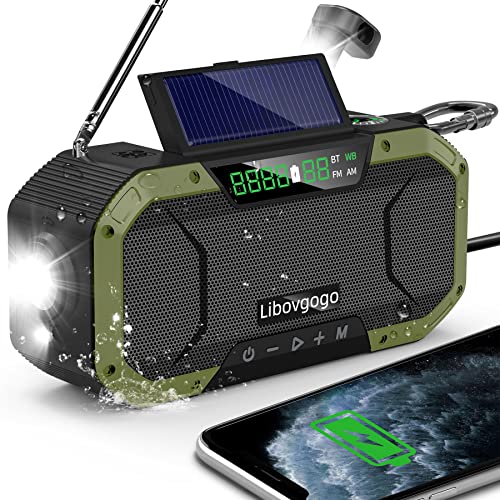
- Waterproof body with NOAA weather radio
- Bluetooth speaker for daily and outdoor use
- 5000mAh battery with flashlight and reading lamp
Best For: outdoor users who want speaker and emergency features
Pocket Emergency Pick
Emgykit Hand Crank Radio with 3 LED Flashlight

- Compact 0.51 lb emergency radio
- 3W 3-LED flashlight with 140 lumens
- Hand crank, solar, and Type-C charging
Best For: grab-and-go kits and lightweight backup use
Ultimate Power Pick
QAUYYW 74000mWh Emergency Radio

- 74,000mWh battery for extended emergency use
- USB-C, hand crank, and solar charging
- 3W flashlight plus 3.5W reading lamp
Best For: People who want maximum backup power and lighting
Alert-Focused Choice
Raynic Emergency Radio with Flashlight

- Automatic NOAA alerts in standby mode
- 3W flashlight, reading lamp, and SOS siren
- Six charging options including solar and hand crank
Best For: Shoppers who want automatic alerts and flexible backup power
Compact Budget Backup
Esky Hand Crank Emergency Radio

- Pocket-sized and easy to carry
- USB, solar, and hand-crank charging
- 140-lumen 3-LED flashlight with SOS alarm
Best For: Campers and go-bag users who want a small emergency radio
Powerful All-Weather Backup
Emergency Crank Weather Radio, 14800mWh Solar Hand Crank Portable AM/FM/NOAA Weather Radio

- 14800mWh battery charges more than one smartphone
- 3-mode flashlight and motion-sensor reading lamp
- Solar, hand crank, and micro USB charging
Best For: Homes and emergency kits that need high-capacity backup power and strong lighting
Compact Everyday Carry
iRonsnow Solar Emergency Hand Crank Weather Radio, 2000mAh NOAA AM/FM
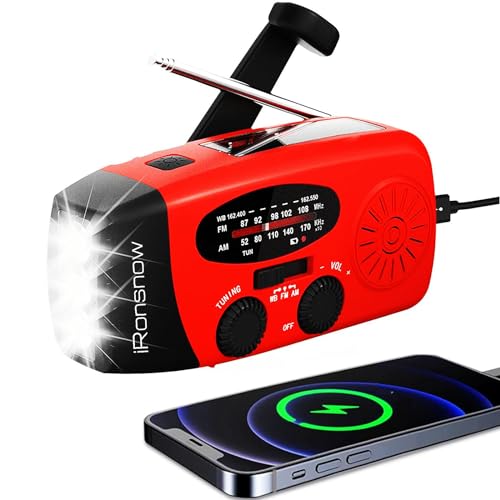
- Compact size for easy storage and travel
- 1W LED flashlight with SOS flashing mode
- USB-C, solar, and hand-crank charging
Best For: Campers and lightweight emergency kits
Feature-Rich Survival Pick
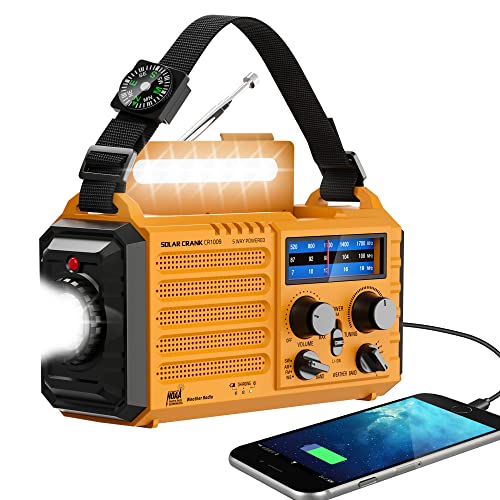
- 5000mAh battery with solar, crank, USB, and AAA backup
- 3W flashlight reaches up to 80 meters
- AM/FM/shortwave plus NOAA weather alerts
Best For: Outdoor users who want versatile radio reception and stronger lighting
Compact Backup Power – FosPower NOAA Emergency Weather Radio A1
For emergency radios with flashlight use, the FosPower NOAA Emergency Weather Radio A1 is a practical pick if you want a compact unit that can handle storms, outages, and basic device charging. It combines AM/FM/NOAA reception with a hand crank, solar panel, and AAA battery backup, plus a built-in flashlight and reading light for nighttime use.
Best For: Users who want a small emergency radio with flashlight, weather alerts, and a built-in power bank for phones or tablets.
Pros:
- 7400mWh (2000mAh) power bank can provide emergency power to small devices
- Three charging options: solar, hand crank, and AAA batteries
- Includes both a 4-LED reading light and 1W flashlight
- Receives NOAA emergency weather broadcasts plus AM/FM stations
Cons:
- Power bank capacity is suited to small phones and tablets, not larger devices
- No water-resistance rating beyond water-resistant
- Requires 4 AAA batteries for backup use
This is a straightforward all-in-one emergency radio with flashlight for basic preparedness. It stands out most for its combination of multiple charging methods, weather alerts, and dual light sources in a portable form.
Feature-Rich Field Radio – Midland ER310 Emergency Crank Radio
The Midland ER310 is a strong option if you’re comparing emergency radios with flashlight features and want more than the basics. It offers solar, hand crank, and rechargeable battery power, along with NOAA weather scanning, a bright SOS flashlight beacon, USB charging for devices, and an ultrasonic dog whistle for emergency signaling.
Best For: Buyers who want a more fully featured emergency radio for weather alerts, signaling, and backup charging.
Pros:
- Three recharge methods: solar panel, hand crank, and rechargeable 2600mAh battery
- Flashlight includes an SOS beacon and 130-lumen bright CREE LED
- NOAA Weather Scan + Alert automatically locks onto the strongest channel
- USB output lets you charge phones and tablets
Cons:
- Water resistance is not listed
- 6 AA batteries are optional backup power, but not included
- Bulkier than pocket-sized emergency radios
The ER310 is built for preparedness with several useful extras, especially for severe-weather situations. If you want a flashlight-equipped radio with broader emergency functions, this one is easy to justify.
Waterproof Everyday Rescue Radio – Bluetooth Emergency Radio with Flashlight
This emergency radio with flashlight leans into versatility, combining NOAA weather coverage with Bluetooth speaker functionality for daily use and outdoor trips. It also adds a waterproof build, solar and hand-crank charging, a 5000mAh rechargeable battery, and both a 3W flashlight and foldable reading lamp.
Best For: Campers, boaters, and anyone who wants a waterproof emergency radio that can also work as a Bluetooth speaker.
Pros:
- Waterproof design for outdoor and emergency use
- Bluetooth speaker function adds everyday utility
- 5000mAh battery can charge phones and other devices
- Includes a 3W flashlight, reading light, and SOS alert
Cons:
- Brand is less established than some mainstream emergency radio makers
- More feature-heavy than a simple backup radio, which may be unnecessary for some buyers
- Only one battery is included, so long-term backup plans still matter
If you want an emergency radio with flashlight that pulls double duty as a portable speaker, this model offers a lot. Its waterproof build and larger battery make it especially appealing for outdoor preparedness.
Pocket Emergency Pick – Emgykit Hand Crank Radio with 3 LED Flashlight
If you want a smaller emergency radio with flashlight, the Emgykit model focuses on portability without dropping the essentials. It includes AM/FM/NOAA reception, three power options, a built-in 2000mAh battery, a brighter 3-LED flashlight, and an SOS siren for urgent situations.
Best For: People who want a lightweight, pocket-sized emergency radio for outages, travel, or grab-and-go kits.
Pros:
- Very compact and lightweight at just 0.51 lb
- 3W, 3-LED flashlight delivers 140 lumens of emergency lighting
- SOS siren sounds louder than 80 decibels
- Three charging options: hand crank, solar panel, and Type-C charging
Cons:
- Built-in battery capacity is smaller than some larger emergency radios
- Speaker output is modest at 1 watt
- Designed more for portability than extended run time
This model makes sense if your priority is a lightweight emergency radio with flashlight that is easy to carry. It covers the core preparedness basics well and keeps the form factor simple.
Ultimate Power Pick – QAUYYW 74000mWh Emergency Radio
If you want emergency radios with flashlight features for longer outages, this QAUYYW model leans heavily into battery life and backup charging. It combines NOAA weather alerts, AM/FM/SW tuning, a built-in flashlight, and a reading lamp in a compact unit that is meant to stay useful when power is out.
Best For: Users who want a high-capacity emergency radio with multiple light sources and several charging options.
Pros:
- Large 74,000mWh battery is designed for extended use and can also charge USB devices briefly.
- Offers USB-C, hand crank, and solar charging for flexible backup power.
- Includes a 3W flashlight, 3.5W reading lamp, and SOS alarm for emergency use.
- IPX6 waterproof design and extended antenna add practical outdoor readiness.
Cons:
- NOAA alerts require the radio to be powered on and manually tuned to a local station.
- Feature set is broad, so setup may take a little more attention than simpler radios.
Overall, this is a strong choice if your priority is endurance and all-in-one emergency coverage. It stands out most for its large battery, lighting tools, and multiple power methods rather than for simplicity.
Alert-Focused Choice – Raynic Emergency Radio with Flashlight
This Raynic option is a practical pick for emergency radios with flashlight support when weather alerts matter most. It adds automatic NOAA alert scanning, a flashlight, a reading lamp, and several charging methods, so it is built to stay ready day or night.
Best For: People who want automatic weather alerts plus a compact emergency radio with multiple backup charging options.
Pros:
- Automatic NOAA alert mode can warn you even while the radio is in standby.
- Includes a 3W flashlight, 2.5W reading lamp, and SOS siren with flashing red light.
- Six charging options add flexibility, including hand crank, solar, USB, AC, rechargeable battery, and AAA batteries.
- Small, light, and IPX3 water-resistant for portable use.
Cons:
- AAA batteries are not included.
- Water resistance is limited to IPX3, so it is not the most rugged option here.
For buyers who value alert automation and versatility, this is the most convenience-focused radio in the group. It balances emergency lighting, device charging, and reception features in a compact body.
Compact Budget Backup – Esky Hand Crank Emergency Radio
The Esky is a straightforward emergency radio with flashlight functionality for buyers who want a compact survival tool without a lot of extra bulk. It combines AM/FM/NOAA reception, solar and hand-crank charging, a built-in 3-LED flashlight, and SOS support in a small, lightweight package.
Best For: Campers and emergency-kit buyers who want a small, easy-to-carry radio with basic backup lighting.
Pros:
- Lightweight and pocket-sized for easy transport in a bag, trunk, or suitcase.
- Three charging methods: USB, solar panel, and hand crank.
- Built-in 3-LED flashlight is rated at 140 lumens for emergency visibility.
- Battery can provide about 20 hours of flashlight use when fully charged.
Cons:
- Battery capacity is smaller than some larger emergency radios in this roundup.
- Fewer extra features than the more advanced options, so it is more basic overall.
This model makes sense if portability matters more than feature depth. It covers the essentials well and is easy to keep on hand for camping, travel, or a go-bag.
Powerful All-Weather Backup – Emergency Crank Weather Radio, 14800mWh Solar Hand Crank Portable AM/FM/NOAA Weather Radio
If you want emergency radios with flashlight features that feel ready for serious outages, this MD-090P model is built around backup power, NOAA alerts, and strong lighting. It combines a large rechargeable battery with solar, hand-crank, and USB charging so you can keep the radio and flashlight working through extended emergencies.
Best For: Homes and emergency kits that need a high-capacity weather radio with strong light and phone-charging backup.
Pros:
- 14800mWh rechargeable battery can charge more than one smartphone.
- 3-mode flashlight plus motion-sensor reading lamp adds useful lighting options.
- Receives 7 NOAA weather stations for severe-weather updates.
- Supports micro USB, solar, and hand-crank charging.
Cons:
- Bulky features may be more than you need for a minimalist kit.
- Designed as an emergency tool first, not a travel-friendly compact radio.
This is a strong all-around pick if you want a feature-rich emergency radio with flashlight capability and long-lasting backup power. The built-in phone charging and multiple charging methods make it especially practical when outages last for days.
Compact Everyday Carry – iRonsnow Solar Emergency Hand Crank Weather Radio, 2000mAh NOAA AM/FM
For shoppers comparing emergency radios with flashlight features, this iRonsnow model focuses on portability and straightforward survival basics. It adds NOAA reception, a rechargeable battery, and three charging methods in a small body that is easy to pack for camping, car kits, or storm prep.
Best For: Campers and anyone wanting a lightweight emergency radio with simple charging and a built-in flashlight.
Pros:
- Compact size makes it easy to store or carry.
- 1W LED flashlight includes a long-press SOS flashing mode.
- USB-C, hand crank, and solar charging options.
- Battery level indicator helps you monitor remaining power.
Cons:
- 2000mAh battery is smaller than larger-capacity emergency radios.
- Flashlight options are more basic than multi-mode models.
This is a practical pick if you value convenience over maximum runtime. It covers the essentials well: weather alerts, emergency lighting, and multiple ways to recharge when power is unavailable.
Feature-Rich Survival Pick – Eoxsmile Emergency Radio with NOAA Weather Alert, 5000mAh Solar Hand Crank Portable AM/FM Shortwave Radio
If you want emergency radios with flashlight support plus broader listening options, this Eoxsmile model stands out with NOAA alerts, AM/FM/shortwave bands, and multiple charging methods. It is built for storm prep and outdoor use, giving you both warning coverage and practical lighting in one portable unit.
Best For: Outdoor users and households that want a versatile radio with weather alerts, shortwave reception, and a bright flashlight.
Pros:
- 5000mAh rechargeable battery offers solid runtime.
- 3W LED flashlight reaches up to 80 meters.
- Reading lamp adds a second light source for campsites or rooms.
- Includes NOAA alerts, USB charging, hand crank, solar, and AAA backup support.
Cons:
- More features can mean a less streamlined setup than simpler radios.
- Relies on a range of power options, including separate AAA batteries as backup.
This model is a good fit if you want more than basic storm coverage. The combination of shortwave radio, stronger flashlight output, and multiple power sources makes it a flexible survival tool for home and outdoor preparedness.
How We Picked the Best Emergency Radios with Flashlight
We focused on Emergency Radios with Flashlight features that matter in real outages: NOAA weather alert support, multiple charging methods, usable light output, battery capacity, and portability. We also prioritized models with backup options such as solar, hand crank, USB charging, and power bank functionality.
Quick Comparison
The best choice depends on how you plan to use it. Some buyers want a compact radio for a go-bag or car kit, while others need a higher-capacity unit for longer blackouts or frequent severe-weather alerts. Radios with larger batteries usually offer longer runtime, but smaller models can be easier to carry and quicker to recharge.
Key Buying Factors for Emergency Radios with Flashlight
Power Sources
Look for more than one charging option. Solar and hand crank backup are useful when outlets are unavailable, while USB charging is best for everyday convenience. A built-in rechargeable battery with decent capacity is especially helpful for extended outages.
Alert Coverage
NOAA weather band support is essential if you want storm warnings and local emergency updates. AM/FM is useful for general broadcasts, and shortwave can add flexibility depending on where you live or travel.
Flashlight Quality
Not all lights are equally useful. Some units offer a simple torch for walking around at night, while others add reading lamps or multiple brightness modes. If you expect to use the radio during prolonged outages, a brighter and more adjustable light is a real advantage.
Portability and Durability
For home backup, size may matter less than battery life and ease of use. For camping, commuting, or bug-out bags, weight, grip, and water resistance become more important. A radio that feels sturdy and is easy to operate in the dark is worth prioritizing.
Who Should Buy Which Emergency Radios with Flashlight?
If you want a simple household backup, choose a mid-size model with NOAA alerts, USB charging, and a reliable flashlight. If you’re building a go-bag or car emergency kit, a compact hand-crank unit with solar backup is usually the smartest pick. If you want longer runtime or the ability to charge a phone, look for higher-capacity Emergency Radios with Flashlight features and a built-in power bank.
For frequent storm regions, the best overall option is typically one with strong alert reception, multiple charging methods, and enough battery reserve to stay useful for several days. Match the radio to your outage length, mobility needs, and how often you’ll rely on the light as much as the broadcast.