
When severe weather cuts power or cell service becomes unreliable, an emergency radio with a hand crank can provide vital alerts, lighting, and backup charging in one compact device.
We compared 10 emergency radios with crank across power options, NOAA coverage, battery capacity, charging features, and portability to help you choose the right model for home, travel, or an emergency kit.
Best 10 Emergency Radios with Crank Picks for 2026
Best Overall
Midland ER310 Emergency Crank Weather Radio

- NOAA weather scan and alerts
- Solar power plus six included AA batteries
- SOS flashlight and ultrasonic dog whistle
Best For: Home emergency kits and outdoor preparedness
Best High-Capacity Pick

- 12000mAh lithium battery
- Large solar panel and efficient hand crank
- Flashlight, reading lamp, and SOS alarm
Best For: Extended outages and off-grid emergency kits
Best Compact Rechargeable Option
Alertsync 2000mAh Emergency Radio
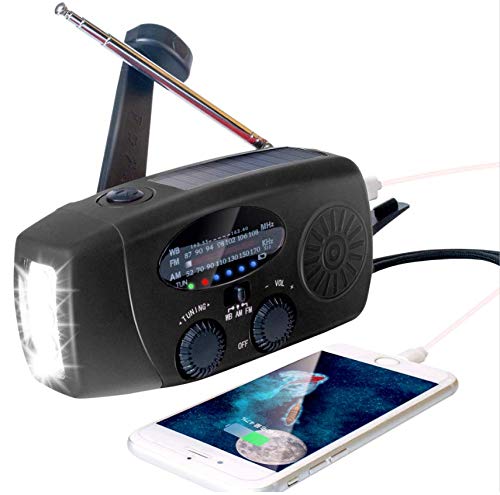
- Solar, hand-crank, and Micro USB charging
- AM/FM/NOAA reception
- 1W LED flashlight and phone charging
Best For: Compact home, car, and outdoor emergency kits
Compact Kit Essential
Portable Solar Hand Crank Radio
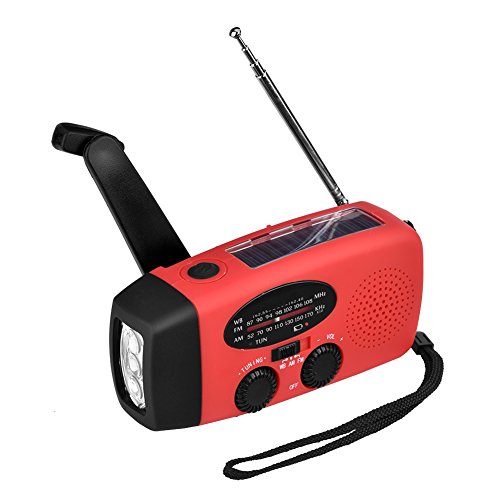
- AM/FM and NOAA weather reception
- Solar, crank, and USB charging
- 3-LED flashlight with phone charging
Best For: Compact emergency kits and short-term power outages
Indicator-Friendly Outdoor Pick

- Three charging methods and 2,000mAh battery
- AM/FM/WB reception with adjustable antenna
- Battery indicator, LED light, and SOS alarm
Best For: Outdoor trips and emergency kits needing power monitoring
Power-Heavy Choice
UMUTOO 5000mAh Emergency Radio

- 5000mAh power bank with three charging methods
- AM/FM and seven NOAA weather stations
- Multiple lights, SOS alarm, speakers, and headphone jack
Best For: Family emergency kits and extended power outages
Best Overall – Midland ER310 Emergency Crank Weather Radio
The Midland ER310 is a practical choice among emergency radios with crank, combining multiple power sources with AM/FM tuning, NOAA weather scan and alerts, and built-in emergency lighting. Its compact 16-ounce design also adds an SOS flashlight and ultrasonic dog whistle for preparedness kits and outdoor use.
Best For: Households and outdoor users who want a recognized-brand emergency radio with weather alerts and multiple backup features.
Pros:
- Supports multiple power sources, including solar power and six included AA batteries.
- Includes NOAA weather scan and alert functionality.
- Built-in flashlight, SOS signaling, and ultrasonic dog whistle add emergency utility.
Cons:
- Not water resistant.
- Its feature set does not specify a built-in rechargeable battery.
The ER310 is a well-rounded preparedness radio with useful alert and signaling features. Choose it when dependable basic weather information and brand familiarity matter more than water resistance or a large internal battery.
Best High-Capacity Pick – 12000mAh NOAA Weather Radio
This high-capacity model stands out among emergency radios with crank for its stated 12000mAh lithium battery, large solar panel, and hand-crank charging system. It also covers AM, FM, and NOAA bands while providing a flashlight, reading lamp, SOS alarm, and USB charging support.
Best For: Extended outages, bug-out bags, and off-grid use where battery capacity and multiple charging options are priorities.
Pros:
- Large 12000mAh lithium battery is designed for extended runtime.
- Uses solar, hand crank, USB-C input, and three included AAA batteries.
- Includes a focused flashlight, reading lamp, SOS alarm, and AM/FM/NOAA reception.
Cons:
- Larger power system may be more than needed for a basic emergency kit.
- The notes identify an analog tuner rather than digital tuning.
With its unusually large battery and expanded lighting, this radio is aimed at users who want more than short-term news reception. Fully charge it before first use, as recommended in the supplied instructions.
Best Compact Rechargeable Option – Alertsync 2000mAh Emergency Radio
The Alertsync 2000mAh model is a compact option among emergency radios with crank, offering rechargeable power through hand cranking, solar charging, or a Micro USB cable. It receives AM, FM, and NOAA broadcasts and includes a 1W LED flashlight plus phone-charging capability for basic emergency support.
Best For: Small home kits, car emergency bags, and users who want a lightweight radio with straightforward rechargeable options.
Pros:
- Offers solar, hand-crank, and Micro USB charging.
- Receives AM, FM, and NOAA weather broadcasts.
- Compact design includes a 2000mAh rechargeable battery and LED flashlight.
Cons:
- Its 2000mAh battery is smaller than the high-capacity alternatives.
- Charging input is Micro USB rather than USB-C.
This model keeps the core emergency functions simple and portable. It makes sense for users who want weather reception, light, and backup charging without choosing a larger radio with a higher-capacity battery.
Best Simple Budget-Style Pick – Green Hand Crank Emergency Radio
This green hand-crank radio provides the essential features expected from emergency radios with crank: AM/FM/NOAA reception, a 2000mAh rechargeable battery, solar and USB-C charging, and an LED flashlight. Its straightforward knobs and compact body make it easy to keep in a home kit, car, or backpack.
Best For: Adults seeking an uncomplicated emergency radio for outages, camping, travel, or vehicle preparedness.
Pros:
- Rechargeable battery can be replenished by hand crank, solar panel, or USB-C.
- AM, FM, and NOAA weather reception supports storm updates.
- Includes a three-LED flashlight and USB phone-charging output.
Cons:
- The supplied notes do not specify battery runtime or charging speed.
- Its approximately 5.16-inch body offers a smaller battery than high-capacity models.
This is a sensible everyday preparedness choice when ease of operation is more important than advanced features. The dedicated tuning and volume knobs, telescopic antenna, and compact format keep it practical for basic emergency and outdoor use.
Compact Kit Essential – Portable Solar Hand Crank Radio
For shoppers comparing emergency radios with crank, this ASHATA model combines AM/FM and NOAA weather reception with solar and USB charging. Its compact design, flashlight, and phone-charging capability make it a practical addition to a small emergency kit.
Best For: Compact emergency kits, camping, and power-outage preparedness.
Pros:
- Supports hand-crank, solar, and USB charging.
- Receives AM/FM and NOAA weather broadcasts.
- Includes a 3-LED flashlight and emergency USB phone charging.
- Compact and lightweight at about 265 g.
Cons:
- The built-in battery is 300mAh, smaller than the batteries in the other listed models.
- The supplied notes do not specify water resistance.
This is a straightforward, portable choice when you want core broadcast and lighting functions without a bulky design. Its smaller battery is best suited to short-term backup use rather than extended power needs.
High-Capacity Alert Pick – Wind-Up NOAA Radio with SOS Alarm
This Ywalxskk model is one of the more feature-rich emergency radios with crank, pairing a 2,000mAh battery with hand-crank, solar, and Type-C charging. NOAA reception, a torch, and an SOS alarm add useful functions for car kits, camping bags, and power cuts.
Best For: Buyers who want a larger battery, Type-C input, and an audible SOS feature.
Pros:
- Offers hand-crank, solar, and Type-C charging.
- Built-in 2,000mAh battery provides more capacity than the first listed model.
- Receives AM, FM, and NOAA weather broadcasts.
- Includes a 3-LED torch and SOS alarm.
Cons:
- IPX3 protection covers light spray and splashes, not submersion.
- Solar charging is slow and depends on sunlight.
- Reception depends on location, according to the supplied notes.
The combination of a high-capacity battery and SOS alarm makes this a versatile emergency-kit option. Its splash resistance is useful for light outdoor exposure, but it should not be treated as waterproof.
Indicator-Friendly Outdoor Pick – 2000mAh Type-C Weather Radio
For those comparing emergency radios with crank for outdoor use, the Yoidesu model provides three charging options, a 2,000mAh battery, AM/FM/WB reception, and a carrying strap. Its battery indicator and charging-status light make it easier to monitor remaining power during an outage or trip.
Best For: Hiking, camping, field exploration, and users who want visible battery-status information.
Pros:
- Supports solar, hand-crank, and Type-C charging.
- Uses a 2,000mAh battery for backup power.
- Receives AM, FM, and weather-band broadcasts.
- Includes LED lighting, an SOS alarm, and a battery indicator.
Cons:
- The supplied notes do not specify water resistance.
- They list the tuner type as AM despite describing AM/FM/WB reception, so buyers should verify the exact radio specifications.
- The stated manufacturer warranty is 90 days.
This model stands out for its clear power-status feedback and carrying strap, both useful away from an outlet. Verify the listed reception details before purchase if FM or weather-band access is essential to your emergency plan.
Compact Backup – Portable Hand Crank Weather Radio
For shoppers comparing emergency radios with crank, this compact model covers the basics: AM/FM/SW reception, hand-crank, solar, and USB charging, plus an LED flashlight and SOS alarm. Its straightforward controls make it easy to keep in a home emergency kit, car, or camping gear.
Best For: Simple outage preparedness, camping, hiking, and roadside emergencies.
Pros:
- Supports hand-crank, solar, and USB charging.
- Combines AM/FM/SW radio reception with an LED flashlight and SOS alarm.
- Compact hard-plastic casing measures about 6.3 by 1.97 by 3.15 inches.
- Includes USB phone charging for basic backup power.
Cons:
- The notes do not specify a battery capacity.
- It has a basic plastic construction rather than a more specialized rugged design.
- The listed radio bands do not include NOAA weather-band reception.
This is a practical, uncomplicated choice when you want several charging options and essential light and radio functions without a large form factor. Consider another model if NOAA alerts or a high-capacity power bank is a priority.
Alert-Ready Pick – LiebeWH NOAA Hand Crank Radio
Among emergency radios with crank, the LiebeWH stands out for adding NOAA weather alerts to its AM/FM broadcasts. It also offers hand-crank, solar, USB-C charging, a 2000mAh battery, phone charging, and a splash-resistant enclosure for storm preparation and outdoor use.
Best For: Weather-aware emergency kits, storm preparation, camping, and hiking.
Pros:
- Provides access to NOAA alerts alongside AM/FM broadcasts.
- Offers hand-crank, solar, and USB-C charging options.
- Includes a 2000mAh battery, LED light, SOS beacon, and loud alarm.
- Splash-resistant enclosure supports use around rainy campsites or storm conditions.
Cons:
- The listed battery capacity is smaller than the 5000mAh capacity of the UMUTOO model.
- The supplied specifications do not clearly list standard AM/FM/NOAA tuner details.
- The warranty description is limited to 90 days.
Choose this model if receiving NOAA alerts is central to your preparedness plan and you want multiple ways to replenish its battery. Its 2000mAh capacity is better suited to basic phone backup than extensive device charging.
Power-Heavy Choice – UMUTOO 5000mAh Emergency Radio
If you want emergency radios with crank that can do more than broadcast updates, the UMUTOO adds a 5000mAh power bank, NOAA weather reception, multiple lights, and double speakers. Type-C, hand-crank, and solar charging give it flexibility during outages, while the headphone jack supports more private listening.
Best For: Families wanting a higher-capacity emergency power bank, weather radio, and lighting in one device.
Pros:
- 5000mAh rechargeable battery can charge more than two phones according to the supplied notes.
- Receives AM/FM and seven NOAA weather stations.
- Offers Type-C, hand-crank, and solar charging.
- Includes three light modes, a reading lamp, SOS alarm, double speakers, and a headphone jack.
Cons:
- At 1.16 pounds, it is heavier than a minimal emergency radio.
- The larger battery and speaker setup may be more than needed for basic preparedness.
- The supplied notes do not specify a solar charging rate or runtime.
This is the most feature-rich option of the three for users who value phone charging and lighting alongside weather information. Its larger battery and additional hardware make it a better fit for a family kit or extended outage than ultralight carry.
How We Picked the Best Emergency Radios with Crank
We focused on the features that matter when normal power and communication options are unavailable. Each pick was evaluated for weather-alert access, AM/FM reception, charging flexibility, built-in lighting, battery capacity, portability, and emergency signaling. We also considered whether a radio supports multiple power sources, such as hand cranking, solar charging, USB or USB-C input, and replaceable or rechargeable batteries.
Because product specifications can vary by seller and model revision, verify the current listing for battery capacity, included cables, radio-band coverage, and charging limitations before buying.
Quick Comparison
| Feature | What to Look For | Why It Matters |
|---|---|---|
| Alert coverage | NOAA weather band and alert function | Provides access to weather warnings and forecasts |
| Power options | Crank, solar, USB, and battery backup | Improves reliability during extended outages |
| Battery capacity | About 2,000mAh or more | Supports longer use and emergency phone charging |
| Lighting | Flashlight, reading lamp, or both | Helps with navigation and overnight tasks |
| Emergency functions | SOS alarm or signal light | Can assist with attracting attention |
Key Buying Factors for Emergency Radios with Crank
NOAA Alerts and Reception
Choose a model with NOAA weather-band support if storm warnings are a priority. An alert mode is more useful than manually scanning because it can notify you when severe weather information is broadcast. AM/FM reception is also valuable for local news and general updates.
Power and Charging
A hand crank is a backup power source, not usually a replacement for a full battery charge. Solar charging can help during prolonged outages but is weather- and sunlight-dependent. USB or USB-C charging is convenient before an emergency, while battery backup provides more predictable runtime. Phone charging is best treated as an emergency boost rather than a dependable full recharge.
Lighting, Durability, and Size
Look for a bright flashlight and, if needed, a reading lamp for hands-free indoor use. A compact, water-resistant design is easier to keep in a go-bag, vehicle, or shelter. Check the crank handle, controls, and port covers for sturdiness, especially if the radio will be used outdoors.
Who Should Buy Which Emergency Radios with Crank?
For a home emergency kit: Choose a model with NOAA alerts, a larger rechargeable battery, multiple charging methods, and both a flashlight and reading lamp.
For hiking, camping, or travel: Prioritize a lightweight radio with a durable body, simple controls, solar and crank charging, and a bright flashlight.
For storm-prone areas: Select reliable NOAA alert functionality, clear reception, an SOS alarm, and enough battery capacity to remain useful during a multi-day outage.
For occasional backup use: A compact, affordable model with AM/FM/NOAA reception, a crank, solar charging, and basic lighting may provide the best balance without unnecessary extras.
Whichever model you choose, test it periodically, keep it charged, store it where everyone can find it, and confirm that the weather band receives local broadcasts.