
When severe weather or a power outage disrupts normal communication, a dependable emergency radio can provide critical alerts, news, lighting, and backup charging in one compact device. The best models balance reliable reception with practical backup power, so you can keep monitoring conditions even when outlets and cell service are unavailable.
We’ve gathered 10 emergency radios under $300, ranging from straightforward battery-powered weather radios to feature-rich crank, solar, Bluetooth, and power-bank models. Use the guide below to compare the features that matter most for your home emergency kit, vehicle, campsite, or go-bag.
Best 10 Emergency Radios Under 300 Picks for 2026
Best All-Around Pick

- AM/FM and NOAA weather scan with alerts
- Solar power plus six included AA batteries
- Flashlight, SOS signal, and dog whistle
Best For: General emergency kits and outdoor preparedness
Best for Long-Range Listening
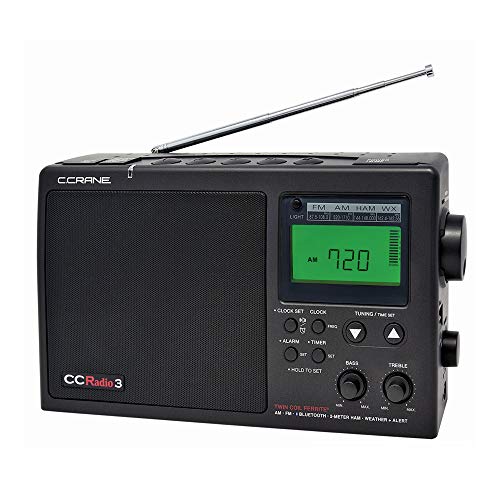
- Designed for strong AM/FM reception
- Adds NOAA alerts and 2-Meter ham band
- Bluetooth and approximately 250-hour battery life
Best For: Home use and reception-focused emergency listening
Best High-Capacity Option

- 12,000mAh lithium battery for extended backup power
- Solar, hand-crank, USB-C, and battery options
- Flashlight, reading lamp, and SOS alarm included
Best For: Extended outages and off-grid preparedness
Best Simple Home Radio
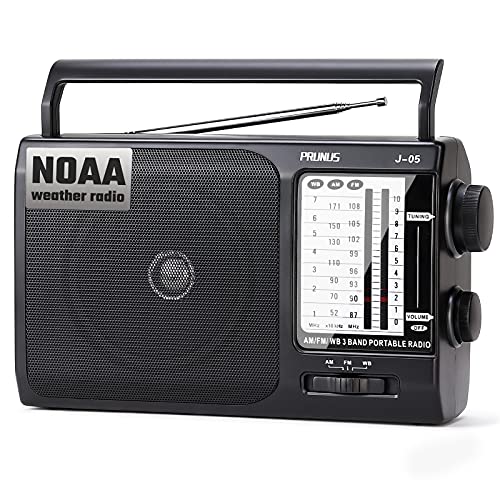
- AM/FM and seven NOAA weather channels
- AC adapter plus three replaceable D batteries
- Large controls and clear 3W speaker
Best For: Simple home use during outages and severe weather
Best for Easy Setup
12000mAh Solar Emergency Radio

- Real 12000mAh battery for phone charging and lighting
- Large solar panel plus efficient hand crank
- NOAA alerts, dual lights, and IPX6 waterproofing
Best For: Blackout preparedness and extended outdoor use
Best Everyday Audio Pick
Bluetooth NOAA Radio with Color Display

- Up to 18 hours from the 3000mAh rechargeable battery
- Bluetooth 5.0, 8W speaker, and 40 FM presets
- NOAA band, SOS siren, color display, and alarms
Best For: Daily listening, bedside use, and travel
Best Balanced Brand Pick
Philips Multi-Powered Emergency Radio

- Four charging options and a 5200mAh battery
- Up to 60 hours of radio playtime plus phone charging
- AM/FM, SOS alert, lights, and IP55 water resistance
Best For: General household preparedness and outages
Best All-Around Crank Radio

- Hand-crank, solar, and USB-C charging
- AM/FM radio with clear stereo audio
- Lights, SOS alarm, and 2,000 mAh power bank
Best For: Camping, outages, and portable emergency kits
Best for Localized Alerts

- S.A.M.E. county-specific NOAA alerts
- 80+ alert events and three alert modes
- Plug-in or three-AA battery operation
Best For: Homes and families monitoring severe weather
Best All-Around Pick – Midland ER310 Emergency Radio
If you want one of the more versatile emergency radios under 300, the Midland ER310 combines AM/FM and NOAA weather scanning with several backup-power options. Its flashlight, SOS function, and ultrasonic dog whistle add useful preparedness features without making the radio overly complicated.
Best For: Households, outdoor activities, and emergency kits needing a compact radio with multiple power sources.
Pros:
- Supports multiple power sources, including solar power and six included AA batteries.
- Includes NOAA weather scan and alert functionality for emergency updates.
- Built-in flashlight, SOS signaling, and ultrasonic dog whistle add practical utility.
Cons:
- It is not water resistant.
- Its radio coverage is limited to AM/FM and two-band operation.
The ER310 is a sensible general-purpose choice when you want more than a basic weather radio. Its compact 16-ounce design and combination of lighting, alerts, and backup power make it easy to keep in a grab-and-go kit.
Best for Long-Range Listening – C. Crane CCRadio 3
Among emergency radios under 300, the C. Crane CCRadio 3 stands out for reception-focused listening and expanded band coverage. It adds Bluetooth, a 2-Meter ham band, weather alerts, and a long claimed battery life, making it suited to users who prioritize audio performance and information access.
Best For: Home listeners who want strong AM/FM reception, clear audio, NOAA alerts, and additional ham-band access.
Pros:
- Patented Twin-Coil Ferrite AM antenna and strong FM reception are designed for long-range listening.
- Includes AM, FM, NOAA weather, and 2-Meter ham-band coverage.
- Bluetooth, clock, alarm, presets, headphone jack, and approximately 250 hours of battery life add flexibility.
Cons:
- Four D batteries are required but not included.
- At 4 pounds, it is less convenient for lightweight emergency bags.
- It relies on AC power or replaceable batteries rather than solar or hand-crank charging.
The CCRadio 3 is better suited to a home emergency station than a minimalist go-bag. Its larger body and D-cell power requirement are balanced by clear audio, useful controls, and unusually broad listening options.
Best High-Capacity Option – 12000mAh Solar Crank Radio
This portable model is a strong contender among emergency radios under 300 for buyers who want a large internal battery and several charging methods. It combines AM/FM/NOAA reception with solar charging, hand-crank power, USB support, lighting, and a 12,000mAh lithium battery.
Best For: Extended outages, camping, bug-out bags, and users who want radio, lighting, and device-charging capability in one unit.
Pros:
- Offers solar, hand-crank, USB Type-C, lithium-battery, and AAA-battery power options.
- Large 12,000mAh battery is designed to provide extended backup energy.
- Includes a focused flashlight, reading lamp, SOS alarm, and AM/FM/NOAA reception.
Cons:
- The supplied details contain inconsistent battery wording, listing both 3 AAA batteries and 3 AA batteries.
- Its analog tuner may be less precise than a digital display.
- It should be fully charged before first use for optimal performance.
For shoppers seeking maximum power flexibility, this radio offers one of the broadest feature sets in the group. Verify the battery specifications and charge it before storage so its large-capacity design is ready when needed.
Best Simple Home Radio – NOAA AM/FM Portable Radio
For a straightforward emergency-radio setup, this NOAA AM/FM model focuses on easy tuning, loud audio, and dependable AC or D-cell operation. It is a practical choice among emergency radios under 300 for homes that want weather-band access without solar, crank, or rechargeable-battery features.
Best For: Home, bedroom, kitchen, and family use during power outages and severe-weather events.
Pros:
- Receives AM, FM, and all seven NOAA weather channels through a DSP chip and telescopic antenna.
- AC power cord preserves the three D batteries for outages.
- Large analog scale, simple controls, handle, 3W speaker, and headphone jack support accessible operation.
Cons:
- It does not automatically notify users of NOAA alerts.
- Three D batteries are required and are not included.
- It lacks solar, hand-crank, and rechargeable power options.
This radio makes the most sense for buyers who value simplicity and extended D-cell runtime over extra preparedness features. Keep fresh batteries separately and use the included AC cord for everyday listening.
Best for Easy Setup – 12000mAh Solar Emergency Radio
For shoppers comparing emergency radios under 300, this rugged Roxicosly model stands out for its real 12000mAh battery, large solar panel, and multiple backup charging options. It also combines NOAA alerts, lighting, and phone charging in a waterproof IPX6 design.
Best For: Blackout preparedness, severe-weather kits, camping, and anyone prioritizing backup power.
Pros:
- Real 12000mAh battery can charge phones and power lights.
- Large 8500mm² monocrystalline solar panel and efficient hand crank provide backup charging.
- Includes AM/FM/NOAA bands, a 5W flashlight, 12-LED reading lamp, and SOS alarm.
- IPX6 waterproof construction and five charging methods support outdoor use.
Cons:
- Heavier than many compact emergency radios at about 824 g.
- Requires three AAA batteries for its replaceable-battery option.
This is the strongest choice when power availability matters most. Its larger battery and lighting setup add useful resilience, though the extra capacity comes with a somewhat larger, heavier body.
Best Everyday Audio Pick – Bluetooth NOAA Radio with Color Display
Among emergency radios under 300, the ROCAM CR1031 is a practical option for buyers who want everyday entertainment alongside weather awareness. It offers FM presets, Bluetooth playback, a strong speaker, a color display, and a rechargeable battery in a compact body.
Best For: Home, bedside, office, travel, and listeners who want Bluetooth features with NOAA reception.
Pros:
- 3000mAh rechargeable battery provides up to 18 hours of playtime.
- Bluetooth 5.0, an 8W speaker, six EQ modes, microSD playback, and headphone output add listening flexibility.
- FM auto scan, 40 presets, and a 2.4-inch color display simplify daily use.
- Includes NOAA weather bands and a 120dB SOS siren.
Cons:
- Receives FM and NOAA bands only; it does not support AM or shortwave.
- Weather reception depends on local coverage and conditions.
This model is better suited to routine listening and travel than to extended off-grid emergencies. Choose it if Bluetooth audio, display controls, and FM convenience are more important than solar or hand-crank power.
Best Balanced Brand Pick – Philips Multi-Powered Emergency Radio
Philips TAR3500 Multi‑Powered Emergency Radio with AM/FM, SOS Siren & Power Bank
Check Price On AmazonFor a balanced choice among emergency radios under 300, the Philips TAR3500 combines familiar AM/FM reception with four power sources and a built-in power bank. Its IP55 housing, SOS functions, torch, and reading light make it well suited to emergency kits without focusing solely on maximum battery capacity.
Best For: Households seeking a straightforward, brand-name radio for outages, travel, and outdoor preparedness.
Pros:
- USB-C, solar, hand-crank, and AAA-battery charging provide flexible operation.
- 5200mAh rechargeable battery delivers up to 60 hours of radio playtime.
- USB-A output can charge phones and other essential devices.
- AM/FM digital tuning, IP55 water resistance, torch, reading light, and SOS alerts cover core emergency needs.
Cons:
- Does not list NOAA weather-band reception.
- Its 3W speaker uses mono audio rather than stereo output.
- Requires four AAA batteries for its replaceable-battery option.
The TAR3500 is a sensible middle ground for buyers who value simple controls, long stated radio runtime, and multiple charging methods. It is less specialized for NOAA alerts than some competing emergency models, but its AM/FM coverage and Philips branding may appeal to general preparedness users.
Best All-Around Crank Radio – Portable Solar Weather Radio
For shoppers comparing emergency radios under 300, this portable AM/FM model combines several useful backup features in a compact design. It supports hand-crank, solar, and USB-C charging, and adds lighting, an SOS alarm, and phone-charging output for outages and outdoor use.
Best For: Camping, hiking, power outages, and emergency kits needing flexible charging and lighting.
Pros:
- Offers hand-crank, solar, and USB-C charging options.
- Includes AM/FM reception, a telescopic antenna, stereo speaker, and headphone jack.
- Provides three lighting modes, an SOS alarm, and USB/USB-C device charging.
- Compact ABS housing has an IPX3 water-resistance rating.
Cons:
- The built-in power bank is rated at 2,000 mAh, which may provide limited phone charging.
- Initial hand-crank activation requires approximately 3 to 5 minutes.
- IPX3 protection is intended for splashes and light exposure rather than submersion.
This is a versatile choice when you want one small device for broadcasts, illumination, backup power, and alerts. Its multiple charging methods make it especially practical where outlets may be unavailable.
Best for Localized Alerts – DreamSky NOAA Emergency Radio
Among emergency radios under 300, the DreamSky stands out as a home-focused weather-alert radio rather than a rugged outdoor crank unit. Its S.A.M.E. technology, county-code customization, and multiple alert modes are designed to help households receive relevant NOAA warnings.
Best For: Families and households wanting localized NOAA alerts, a bedside clock, and an FM radio.
Pros:
- S.A.M.E. programming supports localized alerts for up to 23 customizable county codes.
- Offers more than 80 NOAA alert events with voice, tone, and display modes.
- Works from household power or three AA alkaline batteries.
- Includes digital FM radio, LCD clock, alarm, snooze, and adjustable backlight settings.
Cons:
- Three AA batteries are required but are not included.
- The supplied notes describe FM reception rather than AM or shortwave capability.
- It is primarily a plug-in or battery desk radio, without listed solar or hand-crank charging.
This model is a strong fit for a kitchen counter, office, or bedside table where timely, area-specific weather information matters most. Choose it over a crank radio if localized alerts and everyday clock-radio functions are your priorities.
Best Compact Outdoor Backup – LiebeWH Hand Crank Radio
For emergency radios under 300 that emphasize portability, the LiebeWH combines NOAA and AM/FM broadcasts with several backup-power options. Its 2,000 mAh battery, hand crank, solar panel, and USB-C charging make it useful for emergency kits, camping, and hiking.
Best For: Outdoor trips and compact emergency kits needing weather alerts, lighting, and basic phone backup power.
Pros:
- Supports hand-crank, solar, and USB-C charging.
- Receives NOAA alerts along with AM/FM broadcasts.
- Includes a multi-mode LED light, SOS beacon, loud alarm, and flashing light.
- Compact dimensions make it easy to store in an emergency kit.
Cons:
- The 2,000 mAh battery may offer limited capacity for repeated phone charging.
- The supplied notes identify water-splash protection but do not provide an IP rating.
- The stated 90-day manufacturer warranty is relatively short.
This is a practical, space-saving option when you want weather information, illumination, and multiple charging methods in one device. Its feature set suits short outdoor trips and basic outage preparedness.
How We Picked the Best Emergency Radios Under 300
We focused on radios that support emergency preparedness through dependable AM/FM and NOAA weather reception, multiple power options, useful alert features, and practical portability. The selection includes hand-crank and solar models for outages, battery- and AC-powered radios for everyday readiness, and advanced options with Bluetooth, sirens, flashlights, or phone-charging capability.
Because specifications can vary by configuration and seller, verify battery capacity, included batteries, charging connections, and NOAA alert functionality before purchasing. A larger advertised capacity does not automatically guarantee longer real-world runtime.
Quick Comparison
| Type | Best For | Features to Prioritize |
|---|---|---|
| Basic weather radio | Home emergency kits | NOAA reception, clear controls, replaceable batteries |
| Crank and solar radio | Extended outages and off-grid use | Reliable charging methods, durable build, power indicator |
| High-capacity power-bank radio | Charging phones and small devices | Battery capacity, USB output, charging time |
| Bluetooth or long-range radio | Everyday listening and broader reception | Reception quality, speaker performance, audio inputs |
Key Buying Factors for Emergency Radios Under 300
Power and Charging Options
Look for at least two dependable power sources. Rechargeable batteries are convenient, while replaceable AA or D batteries can be easier to use during a long outage. Hand cranks and solar panels provide valuable backups, but they work best as emergency sustainment tools rather than instant full charges. AC charging is useful at home, and USB input can simplify recharging from a power bank or vehicle.
Reception and Alert Functions
NOAA weather-band support is essential if you need storm and hazard information. A dedicated weather alert feature can be more useful than a standard tuner because it may notify you while the radio is monitoring. AM/FM reception, antenna quality, tuning controls, and speaker clarity also matter when official updates are difficult to hear.
Battery Capacity and Extra Features
Higher-capacity models can run longer and may charge a phone, but they are often heavier. A flashlight, SOS siren, reading light, and battery indicator add practical value. Bluetooth is convenient for normal listening, although it should be treated as an entertainment feature rather than an emergency necessity.
Portability and Durability
Choose a compact, grippy design for a go-bag or vehicle, and consider a larger speaker and easier controls for home use. If the radio will be stored for months, check how often the manufacturer recommends testing or recharging it.
Who Should Buy Which Emergency Radios Under 300?
Choose a simple battery-powered NOAA radio if you want dependable alerts with minimal setup. A crank-and-solar model suits outage planning, camping, and emergency kits where wall power may be unavailable. Pick a higher-capacity radio with USB output if keeping a phone powered is a priority. For everyday listening alongside preparedness, a Bluetooth or long-range model offers more versatility. If multiple people need to hear updates, prioritize a clear speaker, strong reception, and simple controls over the largest battery rating.