
A dependable emergency radio can keep you informed when storms, outages, or weak cell service disrupt a camping trip. The best models combine weather alerts with practical backup features such as hand-crank charging, solar power, flashlights, and USB phone charging.
We selected 10 emergency radios for camping across several budgets and feature sets, from compact battery-operated radios to higher-capacity models designed for extended off-grid use. Use the guide below to narrow your choice based on power, portability, alert coverage, and campsite conditions.
Best 10 Emergency Radios for Camping Picks for 2026
Best Overall
Midland ER310 Emergency Weather Radio

- AM/FM radio with NOAA weather scan and alerts
- Multiple power sources plus six included AA batteries
- Built-in flashlight, SOS light, and dog whistle
Best For: Campers seeking broad emergency functionality
Best Compact Pick
PRUNUS J-166 Portable AM/FM Radio
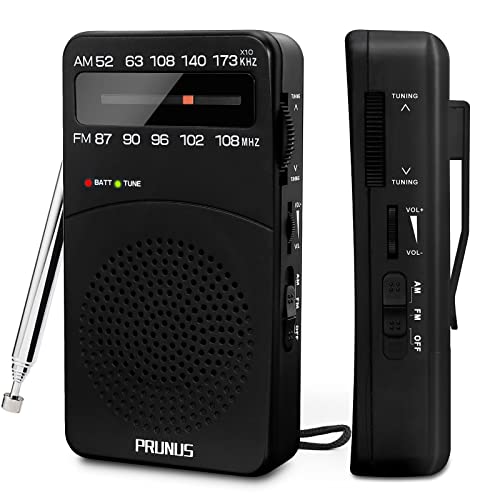
- Lightweight 4.2-ounce body with clip and lanyard
- Simple AM/FM controls and adjustable antenna
- Two-AA battery power with 3.5mm earphone output
Best For: Ultralight campsite listening and emergency kits
Best High-Capacity Power Bank

- Stated 12000mAh battery with solar and hand-crank charging
- AM/FM/NOAA reception with flashlight and reading lamp
- USB-C input and phone-charging capability
Best For: Extended off-grid camping and backup power
Best Rugged Outdoor Option
Roxicosly CR1030 Weather Radio

- IPX6 waterproof design for wet-weather camping
- AM/FM and seven NOAA bands with alerts
- 12000mAh battery, dual lights, and five charging methods
Best For: Rainy trips and rugged emergency preparedness
Best Compact All-Rounder
Zunate Multifunction Emergency Radio

- AM/FM/WB reception with adjustable antenna
- Solar, hand-crank, and Type-C charging
- LED flashlight, SOS alarm, and battery indicator
Best For: Campers wanting compact weather updates and flexible backup power
Best for Simple Emergency Readiness
Yoidesu Solar Hand Crank Radio

- AM/FM/WB reception with adjustable antenna
- Three charging methods and 2,000mAh battery
- LED light, SOS alarm, and battery indicator
Best For: Campers seeking basic weather reception and portable backup power
Best Overall – Midland ER310 Emergency Weather Radio
For campers who want a dedicated emergency radio for camping with several backup power options, the Midland ER310 combines AM/FM reception, NOAA weather scanning and alerts, lighting, and an SOS whistle in a compact 16-ounce design.
Best For: Campers who prioritize weather alerts and multifunction emergency features.
Pros:
- Supports multiple power sources, including solar power and six included AA batteries.
- NOAA weather scan and alert functionality helps monitor changing conditions.
- Built-in flashlight, SOS emergency light, and ultrasonic dog whistle add useful campsite and emergency functions.
Cons:
- Not water resistant, so it needs protection from rain and splashes.
- Its larger 9.61-inch length is less pocket-friendly than a mini radio.
The ER310 is a practical all-around choice when weather information and emergency signaling matter more than ultralight portability. Pack it in a protected compartment for camping trips.
Best Compact Pick – PRUNUS J-166 Portable AM/FM Radio
The PRUNUS J-166 is a straightforward emergency radio for camping when size and simple operation are priorities. It weighs 4.2 ounces without batteries, includes a clip and lanyard, and tunes AM/FM stations with a long adjustable antenna and DSP chip.
Best For: Campers who want a lightweight, pocketable radio for news, music, and talk programming.
Pros:
- Compact 2.7-by-1.1-by-5-inch design with a back clip and lanyard for easy carrying.
- Simple tuning, volume, and band/power controls are easy to operate.
- Runs on two AA batteries and offers a 3.5mm earphone jack for private listening.
- Long adjustable antenna and DSP chip are designed to support AM/FM reception.
Cons:
- Batteries are required but not included.
- It does not provide NOAA weather alerts, solar charging, or a hand crank.
- Not water resistant, despite being listed as dust resistant and shockproof.
This is best viewed as a basic battery radio rather than a full emergency station. Its low weight and clip-on design make it convenient for short hikes, campsite listening, or an emergency kit.
Best High-Capacity Power Bank – 12000mAh NOAA Weather Radio
This weather radio is designed for campers who want an emergency radio for camping that also supplies substantial backup power. It combines AM/FM/NOAA reception with a stated 12000mAh lithium battery, solar charging, hand-crank charging, USB-C input, lighting, and an SOS alarm.
Best For: Off-grid campers who want radio coverage, lighting, and phone-charging capability in one unit.
Pros:
- Offers five power options: solar, hand crank, 12000mAh lithium battery, USB-C input, and three AAA batteries.
- Receives NOAA, FM, and AM broadcasts and is designed for clear reception.
- Includes a focused flashlight and flip-up reading lamp with two brightness levels.
- Large controls, clear labels, and a non-slip grip support operation in low light.
Cons:
- The product notes specify three included AAA batteries, while the power description also references AAA battery backup; check the package details.
- Its 6.8-by-2.9-by-4.7-inch body is less minimal than a basic pocket radio.
The large battery and multiple charging methods make this a strong option for longer trips or backup kits. Fully charge it before use, as recommended in the supplied instructions.
Best Rugged Outdoor Option – Roxicosly CR1030 Weather Radio
The Roxicosly CR1030 is a rugged-style emergency radio for camping with AM/FM/NOAA reception, a stated 12000mAh battery, five charging methods, dual lights, and an SOS alarm. Its IPX6 waterproof rating makes it especially appealing for wet-weather outdoor use.
Best For: Campers who need weather resistance, emergency lighting, and phone backup power.
Pros:
- IPX6 waterproof construction is suited to rainy outdoor conditions.
- Provides AM/FM and seven NOAA bands for weather and emergency broadcasts.
- Combines a 5W adjustable-beam flashlight with a 12-LED reading lamp.
- Uses a built-in battery, Type-C cable, solar panel, hand crank, or three AAA batteries for power.
Cons:
- At 824 grams, it is substantially heavier than a compact portable radio.
- The feature-rich design may be more than casual campers need for basic listening.
With waterproofing, NOAA alerts, lighting, an SOS alarm, and phone-charging support, the CR1030 is built for demanding outdoor and emergency scenarios. Its weight is the main tradeoff for that broader capability.
Best All-Around Backup – Compact NOAA Hand Crank Radio
For campers wanting dependable emergency radios for camping, this compact model combines AM/FM/NOAA reception with several charging options. Its rechargeable battery, flashlight, and phone-charging output make it a practical addition to a backpack, car kit, or emergency supply bin.
Best For: Campers who want a lightweight radio with weather updates, lighting, and backup power options.
Pros:
- 2000mAh rechargeable battery supports hand-crank, solar, and USB-C charging.
- Receives AM, FM, and NOAA weather broadcasts.
- Includes a 3-LED flashlight and USB phone-charging output.
- Compact body with simple knobs and a telescopic antenna.
Cons:
- Specific reception quality will depend on location and conditions.
- The generic brand and compact design provide limited product detail beyond the listed features.
This is a well-rounded choice when you want one small device to cover weather information, basic illumination, and emergency charging during camping trips or outages.
Best Basic Emergency Setup – Rugged Weather Radio with SOS Alarm
This portable model is one of the more straightforward emergency radios for camping, pairing AM/FM/SW reception with hand-crank, solar, and USB charging. Its hard plastic shell, flashlight, and SOS alarm suit campers who value simple operation and basic emergency functions.
Best For: Outdoor users who want a simple, sturdy-feeling radio with lighting and an SOS alarm.
Pros:
- Supports hand-crank, solar, USB, and rechargeable-battery power.
- Offers AM, FM, and SW radio reception.
- Combines an LED flashlight, SOS alarm, and USB phone charging.
- Hard plastic casing is designed to handle minor bumps.
Cons:
- The supplied details do not list NOAA weather-band reception.
- Its 6.3-inch length is less compact than some alternatives in this roundup.
- Uses a nonstandard battery rather than a commonly specified battery format.
Choose this radio if basic controls, multiple charging methods, and an SOS function matter more than the smallest possible pack size or dedicated NOAA reception.
Best Splash-Resistant Pick – Wind-Up NOAA Radio with Torch
For camping bags exposed to light spray, this wind-up radio adds IPX3 splash resistance to AM/FM/NOAA reception and multiple power options. The 2000mAh battery, Type-C input, 3-LED torch, and SOS alarm cover several useful preparedness tasks without taking up much space.
Best For: Campers who want a compact radio with NOAA reception and protection from light splashes.
Pros:
- Supports hand-crank, solar, and Type-C charging for its 2000mAh battery.
- Receives AM, FM, and NOAA weather-band broadcasts.
- IPX3 splash resistance helps with light spray and splashes.
- Includes a 3-LED torch and SOS alarm.
Cons:
- IPX3 protection does not make the radio suitable for submersion.
- Solar charging is slow and depends on available sunlight.
- Reception depends on location, and the built-in speaker is mono.
This is a strong fit for campers who want weather-band access and basic lighting in a small, splash-resistant package, provided they understand its limits around water and solar charging.
Best Compact All-Rounder – Zunate Multifunction Emergency Radio
For shoppers comparing emergency radios for camping, the Zunate combines AM, FM, and weather-band reception with several charging options in a compact orange design. Its 2,000mAh battery, LED flashlight, SOS alarm, and battery-status indicator cover the basic communication and safety needs of short outdoor trips.
Best For: Campers and hikers who want a lightweight radio with weather updates, backup charging, and built-in safety lighting.
Pros:
- Receives AM, FM, and WB broadcasts with an adjustable antenna.
- Supports solar, hand-crank, and Type-C charging.
- Includes a bright LED light, SOS alarm, and charging indicator.
- Compact 5.9-by-3.14-by-2.36-inch body with a carrying strap.
Cons:
- The supplied details do not specify a phone-charging output.
- Its listed warranty is limited to 90 days.
The Zunate is a practical choice when portability and multiple power options matter most. It offers useful camping essentials without adding much bulk, though buyers seeking phone charging or a longer warranty may want to compare alternatives.
Best for Phone Backup – Emergency Hand Crank Radio
This emergency radio for camping adds phone backup to core preparedness features. It receives AM, FM, and NOAA broadcasts, offers solar, hand-crank, and Type-C recharging, and includes a USB output, flashlight, and SOS alarm in a compact black housing.
Best For: Campers and travelers who prioritize NOAA weather coverage and emergency phone charging in a small radio.
Pros:
- Receives AM, FM, and NOAA weather broadcasts.
- Offers solar, manual-crank, and Type-C charging with a 2,000mAh battery.
- Provides a 5V/1000mAh USB output for compatible phone charging.
- IPX3 splash-guarded housing with a bright torch and SOS alarm.
Cons:
- The speaker is mono rather than stereo.
- Phone charging is limited to compatible devices and the listed USB output.
Its strongest advantage is the combination of NOAA reception and a phone-charging output. The compact 7.52-ounce design is convenient for camping kits, while the IPX3 rating is intended for light rain and splashes rather than heavy water exposure.
Best for Simple Emergency Readiness – Yoidesu Solar Hand Crank Radio
For a straightforward addition to a camping emergency kit, this Yoidesu radio combines AM, FM, and weather-band reception with a 2,000mAh battery. Solar, hand-crank, and Type-C charging keep it usable away from outlets, while the LED light, SOS alarm, and battery indicator add basic outdoor readiness.
Best For: Campers, hikers, and households looking for a simple portable radio with weather reception and three charging methods.
Pros:
- Supports AM, FM, and WB reception with an adjustable antenna.
- Provides solar, hand-crank, and Type-C charging.
- Includes an LED light, SOS alarm, and real-time battery indicator.
- Lightweight design with a dedicated carrying strap.
Cons:
- The supplied specifications list connectivity as Ethernet, which is unusual for a portable radio.
- No phone-charging function is identified in the supplied notes.
- The listed manufacturer warranty lasts 90 days.
This model covers the essential functions without emphasizing extra connectivity. It is a sensible fit for basic camping and emergency storage, especially if you value a visible battery indicator and do not need a phone-charging port.
How We Picked These Emergency Radios for Camping
We focused on radios that provide useful communication and backup power away from reliable outlets. The selection includes AM/FM reception, NOAA or weather-band coverage, multiple charging methods, and practical emergency features such as LED lights, SOS alarms, and phone charging.
We also considered the needs of different campers. A lightweight radio may suit short weekend trips, while a larger battery and solar panel can be more useful for extended stays or emergency preparedness. Because specifications and performance can vary by seller and model version, check the current listing for battery capacity, charging ports, alert functionality, and included accessories before buying.
Quick Comparison
| Best For | Features to Prioritize | Models to Consider |
|---|---|---|
| Compact weekend camping | Low weight, battery operation, simple controls | PRUNUS J-166; Midland ER310 |
| Severe-weather awareness | NOAA/weather-band reception and alerts | Weather radios with NOAA alert support |
| Longer off-grid trips | Large battery, solar charging, hand crank | 12,000mAh solar and crank models |
| Emergency lighting | Bright LED flashlight and SOS function | Multifunction crank and solar radios |
| Phone backup power | USB or Type-C output and sufficient battery capacity | Models with phone-charging support |
Key Buying Factors for Emergency Radios for Camping
Power and Charging Options
Multiple charging methods provide flexibility. Replaceable or rechargeable batteries are convenient for regular use, while hand cranks remain useful when batteries and outlets are unavailable. Solar panels can extend runtime in direct sunlight, but they are generally a slow charging method rather than a complete substitute for precharging.
Weather Alerts and Reception
Look for AM/FM and NOAA or weather-band support if storm information is important in your area. A weather band alone does not guarantee automatic alerts, so verify that the specific model supports NOAA alerts and understand how the alert feature operates. Reception also depends on terrain, distance from transmitters, and antenna design.
Battery Capacity and Phone Charging
A larger capacity can power lights and charging functions for longer, but it usually adds size and weight. Phone charging is best treated as an emergency reserve: it may provide enough power for a call or message, but repeated full phone charges are unlikely from a small radio battery.
Durability, Size, and Controls
Choose a radio that is easy to operate in darkness and with cold or wet hands. Check the dimensions, weight, carrying handle, antenna, control layout, and any water-resistance claims. A compact radio is easier to pack, while a larger unit may offer a stronger light, louder speaker, or bigger battery.
Who Should Buy Which Emergency Radios for Camping?
- Choose the Midland ER310 if you want a recognizable emergency-radio format with core weather, lighting, and crank features.
- Choose the PRUNUS J-166 if low-cost, straightforward AM/FM listening and battery operation matter most.
- Choose a 12,000mAh model if extended backup power, solar charging, and phone charging are priorities.
- Choose a multifunction SOS model if you want one device for weather information, lighting, signaling, and basic power backup.
- Choose a smaller Type-C model if modern charging compatibility and packability are more important than maximum battery capacity.
Before heading out, fully charge the radio, test reception at home, pack spare batteries when supported, and store it where it can be reached quickly. The best emergency radio is the one you understand, maintain, and can operate when your usual power and communications are unavailable.