
The best emergency radios for beginners make it easier to receive weather alerts, news, and emergency information when power or cellular service is unavailable. The right model depends on whether you want simple broadcast reception, battery backup, or two-way communication.
We compare 10 options across ease of use, power sources, alert features, portability, and communication range so you can choose a radio that fits your preparedness plan.
Best 10 Emergency Radios for Beginners Picks for 2026
Best All-Around Pick

- AM/FM and NOAA weather scan with alerts
- Solar, battery, and multiple power options
- Built-in flashlight and dog whistle
Best For: Beginners building a versatile emergency kit
Best Simple Pocket Radio
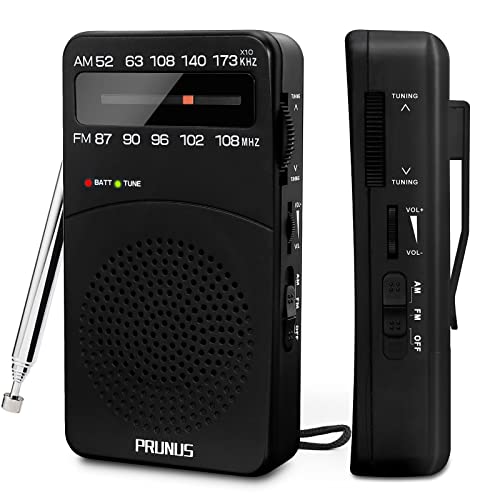
- Lightweight design with clip and lanyard
- Simple AM/FM tuning controls
- Battery and signal indicators
Best For: Portable everyday and backup listening
Best Compact Radio with Flashlight
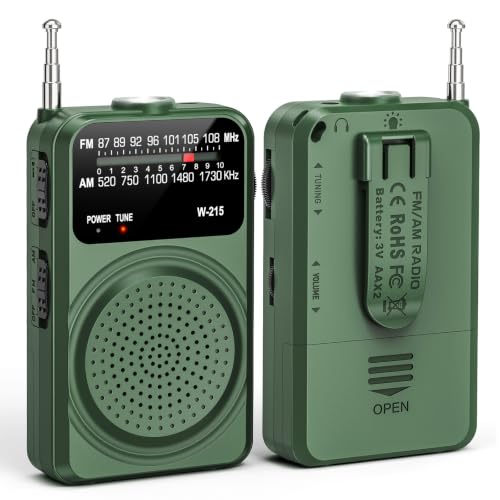
- Built-in LED flashlight
- Compact clip-and-lanyard design
- AM/FM reception with headphone jack
Best For: Simple outage and travel preparedness
Simple Weather Alert Pick

- S.A.M.E. county-level alert programming
- 80+ alerts with three alert modes
- Plug-in or three-AA battery operation
Best For: Families wanting simple localized weather warnings
Most Versatile Beginner Pick
Retevis RA79 Emergency Ham Radio

- 2m/70cm communication with NOAA reception
- USB-C charging and 1400mAh battery
- SOS alarm, flashlight, and 200 channels
Best For: Beginners wanting expandable two-way emergency communications
Simple NOAA Listening

- AM/FM and NOAA weather reception
- Large analog controls for easy tuning
- AC or four-C battery operation
Best For: Beginners and seniors who want simple emergency broadcasts
Best All-Around Pick – Midland ER310
For beginners comparing emergency radios for beginners, the Midland ER310 is a straightforward preparedness option with AM/FM reception, NOAA weather scan and alerts, and several ways to stay powered. Its built-in flashlight and ultrasonic dog whistle add practical emergency functions.
Best For: Beginners who want a multipurpose emergency radio with weather alerts and alternate power options.
Pros:
- Supports multiple power sources, including solar power and six included AA batteries.
- Scans AM/FM and NOAA weather information with alerts.
- Includes a built-in flashlight and ultrasonic dog whistle.
- Offers USB connectivity for compatible smartphones and tablets.
Cons:
- It is not water resistant.
- At 16 ounces and nearly 10 inches long, it is less pocket-friendly than compact radios.
The ER310 is a strong starting point for a home emergency kit because it combines familiar radio controls with useful backup features. Its larger size is a reasonable tradeoff for shoppers who prioritize versatility over minimal storage space.
Best Simple Pocket Radio – PRUNUS J-166
The PRUNUS J-166 keeps emergency radios for beginners simple: select AM or FM, tune with the rotary knob, and monitor the battery and signal indicators. Its small body, clip, and lanyard make it easy to add to an emergency kit or carry during routine outings.
Best For: Beginners who need an inexpensive, lightweight AM/FM radio with uncomplicated controls.
Pros:
- Compact 4.2-ounce design with a back clip and lanyard.
- Uses two AA batteries and includes a battery-status indicator.
- Features a 360-degree adjustable antenna and DSP chip for reception.
- Offers a built-in speaker and 3.5mm headphone jack.
Cons:
- Batteries are not included.
- It is battery powered only and lacks weather-alert, solar, or crank features.
- It is not water resistant.
This is a practical choice when the priority is a basic, portable broadcast radio rather than a full emergency station. The straightforward controls should suit first-time users, while the light weight makes it easy to keep ready.
Best for Two-Way Communication – Baofeng UV-5R Mini
For emergency radios for beginners who also need communication capabilities, the Baofeng UV-5R Mini goes beyond ordinary broadcast listening. It combines NOAA weather reception with two-way VHF/UHF radio functions, rechargeable USB-C power, and app-assisted programming.
Best For: Beginners who specifically want a programmable two-way radio alongside AM/FM and NOAA reception.
Pros:
- Supports up to 999 channels and VHF/UHF communication.
- Receives AM, FM, and NOAA weather alerts.
- Charges through USB-C from a car, power bank, laptop, or other USB source.
- Includes two antennas, a headset, battery, cable, and manual.
Cons:
- Its programming and ham-radio features may be more complex for absolute beginners.
- It is not water resistant.
- The supplied notes list no warranty.
The UV-5R Mini is better suited to users willing to learn two-way radio setup than to shoppers seeking a single-button emergency receiver. App programming and copy-frequency features can simplify setup, but its broader capabilities add a learning curve.
Best Compact Radio with Flashlight – Tendak Portable AM/FM Radio
The Tendak portable radio is an approachable option for emergency radios for beginners who want a small AM/FM unit with an extra light. Its rotary tuning, frequency scale, back clip, and lanyard keep operation and carrying simple during outages, travel, or outdoor use.
Best For: Beginners wanting a compact battery radio with a built-in flashlight and headphone output.
Pros:
- Compact 4.48-ounce design with a clip and lanyard.
- Includes a built-in LED flashlight for outages and nighttime use.
- Uses a DSP chip and telescopic antenna to support AM/FM reception.
- Has a speaker, tuning and volume controls, and a 3.5mm headphone jack.
Cons:
- Two AA batteries are required and not included.
- It does not provide NOAA weather alerts or alternate charging methods.
- It is not water resistant.
The Tendak offers more emergency utility than a basic pocket radio while retaining familiar controls. Choose it for convenient local broadcasts and illumination, but consider a weather-alert model if severe-weather notifications are a priority.
Advanced Two-Way Pick – Baofeng UV-5R Handheld Ham Radio
For beginners comparing emergency radios for beginners, the Baofeng UV-5R is a compact two-way option for users who want to communicate rather than only receive alerts. It provides 128 channels, dual-band operation, an emergency alert, and a built-in flashlight, but it requires familiarity with supported frequencies and basic radio programming.
Best For: Beginners who want a configurable handheld radio for outdoor communication and emergency backup.
Pros:
- Supports VHF/UHF frequency ranges of 144-148MHz and 420-450MHz.
- Offers 128 channels, dual-band display, dual standby, and adjustable transmit power.
- Includes an emergency alert, keypad lock, LED flashlight, and rechargeable 1800mAh battery.
- Supports manual programming, PC setup, and CHIRP quick programming.
Cons:
- Transmission is limited to the listed 144-148MHz and 420-450MHz ranges.
- It is not water resistant according to the supplied details.
- Programming may be less straightforward for first-time radio users.
The UV-5R is best viewed as a flexible communication tool, not a simple one-button weather receiver. Its channel capacity and programming support offer room to learn, while the flashlight and emergency alert add useful backup features.
Simple Weather Alert Pick – DreamSky NOAA Emergency Radio
For shoppers seeking emergency radios for beginners, the DreamSky NOAA radio offers a straightforward way to receive localized weather warnings without learning ham-radio controls. Its S.A.M.E. programming, multiple alert modes, FM reception, and plug-in or battery operation make it suitable for home preparedness and everyday listening.
Best For: Families and first-time users who prioritize localized weather alerts and simple home operation.
Pros:
- S.A.M.E. technology can target alerts for a specific county, with support for 23 customizable county codes.
- Provides 80+ alert events and voice, tone, and display alert modes.
- Includes digital FM radio, an LCD clock, alarm with snooze, and adjustable backlight settings.
- Runs from household power or three AA alkaline batteries during outages.
Cons:
- Three AA alkaline batteries are not included.
- Its primary role is receiving weather and FM broadcasts rather than two-way communication.
The DreamSky is the most approachable option here for a beginner who wants alerts at home. Localized programming can reduce irrelevant warnings, while dual power helps keep the radio usable when household electricity is unavailable.
Most Versatile Beginner Pick – Retevis RA79 Emergency Ham Radio
Among emergency radios for beginners, the Retevis RA79 balances guided controls with advanced communication features. It supports 2m and 70cm transmitting and receiving, NOAA alerts, USB-C charging, and 200 channels, making it a practical choice for users who want to start simply and expand into more customizable radio use.
Best For: Beginners who want two-way communication, weather reception, and room to grow into CHIRP or manual programming.
Pros:
- Supports 2m and 70cm bands plus AM, FM, and NOAA reception.
- Large screen, dedicated A/B band keys, and customizable side keys support easier operation.
- Includes an SOS alarm, flashlight, NOAA weather alert, and adjustable power levels.
- Its 1400mAh rechargeable battery supports USB-C charging, including from a power bank.
Cons:
- It is not water resistant according to the supplied details.
- CHIRP, VFO, DTMF, and team-management features may take time for beginners to learn.
- It is a two-way radio rather than a simple broadcast-only emergency receiver.
The RA79 is a strong middle ground for a new user who wants accessible controls now and more capability later. NOAA reception and USB-C charging improve preparedness, while 200 channels and programming support provide a clear upgrade path.
Simple NOAA Listening – Classic Portable AM/FM Radio
For beginners comparing emergency radios for beginners, this portable VERAVOXES model is a straightforward choice for receiving AM, FM, and NOAA weather broadcasts. Its analog tuning, large rotary controls, and dual AC/battery power keep setup simple for home use or an emergency kit.
Best For: Beginners, seniors, and households wanting an easy-to-operate weather radio with backup battery power.
Pros:
- Large rotary tuning and volume controls are designed for simple operation.
- Receives AM, FM, and NOAA weather broadcasts with a telescopic antenna.
- Runs from AC power or four C batteries for flexible home and emergency use.
- Includes a built-in speaker, bass controls, AUX input, and a two-year warranty.
Cons:
- Uses four C batteries, which may be less convenient than rechargeable power.
- Analog tuning offers fewer convenience features than a digital display.
- Mono audio output may not suit listeners seeking stereo sound.
This is the most beginner-friendly option of the group for one-way alerts and everyday radio listening. Choose it if simple controls and AC backup matter more than two-way communication.
Advanced Two-Way Communication – BAOFENG 5RM Handheld Radio
For beginners exploring emergency radios for beginners, the BAOFENG 5RM provides substantially more capability than a basic broadcast receiver. It combines NOAA and FM reception with two-way communication, a rechargeable USB-C battery, programmable channels, and included accessories.
Best For: Outdoor groups and prepared users who need two-way communication and are willing to learn more controls.
Pros:
- Supports NOAA weather reception, FM, VHF/UHF bands, and up to 999 channels.
- 10W output, two included antennas, and frequency-copy features support group use.
- Rechargeable 2500mAh battery can charge through USB-C from a power bank, computer, car, or wall adapter.
- Includes a color screen, flashlight, VOX, scanning, and multiple tone/code options.
Cons:
- The large feature set and programming options may be overwhelming for first-time radio users.
- Two-way operation requires compatible radios and appropriate channel setup.
- The supplied notes describe range and standby figures, but real-world performance can vary by terrain and conditions.
This model is a better fit for beginners who want to grow into radio communication rather than only monitor alerts. Its rechargeable design is practical, but expect a steeper learning curve than with an analog weather radio.
High-Power Survival Communication – BAOFENG 5RM Walkie Talkie
This BAOFENG 5RM is aimed at shoppers seeking emergency radios for beginners with high-power two-way functionality. It offers 999 channels, a high-definition display, and digital signal processing in a single handheld unit for outdoor, professional, or preparedness use.
Best For: Users who want a feature-rich handheld radio for camping, hunting, or emergency communication practice.
Pros:
- 10W high-power design and 999 channels provide extensive communication flexibility.
- Digital signal processing is described as supporting clear, stable calls in complex environments.
- High-definition display and user-oriented interface help organize available functions.
- Compatible with headsets, earpieces, and external antennas.
Cons:
- It is not water resistant, limiting suitability in wet conditions.
- The supplied notes do not list the included accessories or charging method in detail.
- Advanced handheld-radio features may require more setup and practice than a broadcast-only radio.
The 5RM is best viewed as a communications tool rather than a simple alert radio. It makes sense for buyers prioritizing channel capacity and high-power two-way use, provided they can protect it from moisture and learn its controls.
How We Picked the Best Emergency Radios for Beginners
We focused on the features that matter most to first-time buyers: reliable AM/FM reception, NOAA weather capability where listed, practical power options, readable controls, portability, and straightforward setup. Models with hand cranks, USB charging, replaceable batteries, or AC power received attention because backup options are valuable during outages.
We also separated broadcast receivers from two-way ham radios. A weather radio can listen for alerts without a license, while transmitting on many ham-radio frequencies requires appropriate licensing and operating knowledge. Advertised range varies substantially with terrain, buildings, antennas, battery condition, and local regulations.
Quick Comparison
| Radio type | Best for | Power options to look for | Learning curve |
|---|---|---|---|
| Basic AM/FM radio | News, music, and simple backup listening | AA/AAA batteries, USB, or AC | Low |
| NOAA emergency radio | Weather awareness and outages | Battery, USB, crank, or solar backup | Low to moderate |
| Handheld ham radio | Two-way communication and outdoor groups | Rechargeable battery and USB charging | Moderate to high |
Key Buying Factors for Emergency Radios for Beginners
Reception and Alerts
Choose AM/FM support for general broadcasts and NOAA compatibility if severe-weather information is a priority. A weather-band receiver is not necessarily the same as automatic alert functionality, so confirm whether the radio supports audible weather alerts rather than only manual tuning.
Power and Charging
Consider how you will recharge the radio during a prolonged outage. Replaceable batteries are easy to store, USB charging works well with power banks, and crank charging provides an emergency fallback but is best treated as backup rather than a primary power source. AC-capable models are convenient for home use.
Controls, Size, and Durability
Beginners generally benefit from a large tuning dial, clear labels, a strong speaker, and a compact design that is easy to store in an emergency kit. A flashlight, battery indicator, headphone jack, or USB output can add practical value, but do not sacrifice basic reception and dependable power for extra features.
Two-Way Radio Requirements
Ham radios can offer more communication flexibility than broadcast-only models, but programming channels and using transmit functions require care. Check frequency permissions, licensing rules, antenna design, battery capacity, and whether the included accessories suit your intended use. Do not assume a high wattage rating guarantees long range.
Who Should Buy Which Emergency Radios for Beginners?
Choose a simple AM/FM model if you want an inexpensive backup for news and household outages. Pick a NOAA emergency radio with multiple charging methods if weather alerts and preparedness are your main goals. A compact rechargeable unit suits camping, travel, and small emergency kits.
Buy a handheld ham radio only if you are willing to learn radio controls, follow local regulations, and potentially obtain a license before transmitting. For families or outdoor groups, two-way models may be worthwhile when everyone understands how to operate them. Whichever style you choose, test it periodically, keep spare batteries or a charged power bank available, and store the radio where it can be reached quickly.