
If you’re looking to enhance your microscopy imaging experience, choosing the right DSLR adapter can make a significant difference. With various models available for popular camera brands, you can achieve better magnification and focus. Each adapter brings unique features to the table, but not all are created equal. So, what should you consider before making a selection? Let’s explore the top options and factors to keep in mind.
AmScope Canon SLR/D-SLR Camera Adapter for Microscopes

If you’re a Canon camera user looking to elevate your microscopy experience, the AmScope CA-CAN-SLR adapter is an excellent choice. This robust metal adapter works seamlessly with various Canon SLR and DSLR models, offering 2X magnification. Weighing just 8.4 ounces and measuring 6 x 5 x 5 inches, it’s easy to handle. You’ll appreciate its compatibility with monocular, binocular, or trinocular photo/video ports. While users praise its build quality and picture consistency, some mention challenges with focus clarity at higher magnifications. Overall, it’s a solid investment for enhancing your microscopic imaging and comes with a 5-year warranty for peace of mind.
Best For: Canon camera users seeking to enhance their microscopy experience with a reliable and durable adapter.
Pros:
- Good Build Quality: The metal construction ensures durability and longevity.
- Easy to Clean: The adapter can be easily disassembled for maintenance and cleaning.
- Consistent Image Quality: Users report delivering clear and consistent pictures during microscopy.
Cons:
- Focus Clarity Issues: Some users experience difficulties achieving focus clarity, especially at higher magnifications.
- Blurry Images: There are reports of blurry images in high power settings, particularly in low light conditions.
- Lack of Rotation Prevention: A screw to prevent camera rotation would enhance usability, as noted by users.
AmScope Nikon SLR/D-SLR Camera Adapter for Microscopes

The AmScope Nikon SLR/D-SLR Camera Adapter is an excellent choice for Nikon camera owners looking to enhance their microscopic photography. Compatible with various Nikon models, this adapter features three mounting sizes—23.2mm, 30mm, and 30.5mm—allowing versatility. You’ll appreciate its solid metal construction and 2X magnification power. Users have reported good image quality, especially in RAW format, although some experienced issues like chromatic aberration. This adapter works best with monocular eyetubes, and while manual settings are required for ideal results, many find the setup straightforward. At a retail value of $400, it’s a worthwhile investment for serious microscopy enthusiasts.
Best For: Serious microscopy enthusiasts who own Nikon SLR/DSLR cameras and want to capture high-quality images of microscopic subjects.
Pros:
- Solid metal construction ensures durability and reliability.
- Good image quality, especially when shooting in RAW format.
- Versatile mounting sizes (23.2mm, 30mm, and 30.5mm) accommodate various microscope eyetubes.
Cons:
- Reports of chromatic aberration can affect image clarity.
- Some users experienced low resolving power and poor lens quality.
- Manual focus and exposure required, which may be challenging for beginners.
AmScope Canon Camera Adapter for Microscopes

For photographers and researchers using Canon cameras, the AmScope CA-CAN-SLR-III Canon Camera Adapter is an excellent choice for bridging the gap between microscopy and high-quality imaging. This metal adapter provides 2X magnification and connects easily to various microscopes, including monocular and trinocular types. Compatible with Canon DSLR models, it offers magnification between 12X and 15X, depending on your camera’s CMOS size. While many users appreciate its ease of use and image quality, some report issues like focus misalignment and underexposure, necessitating additional lighting. With proper adjustments, you can capture stunning details of specimens efficiently.
Best For: Photographers and researchers using Canon cameras who seek to capture high-quality images through microscopes.
Pros:
- Easy attachment to various Canon DSLR models and microscopes, including monocular and trinocular types.
- Effective magnification ranging from 12X to 15X, allowing for detailed observation of specimens.
- User-friendly design that facilitates capturing stunning specimen details with proper adjustments.
Cons:
- Common issues with focus misalignment and shadows in images, which can affect overall image quality.
- Underexposure in certain conditions may require additional lighting for optimal results.
- Reports of missing components and lack of instructions, leading to user dissatisfaction.
Telescope Camera Adapter for Nikon SLR Camera

Designed specifically for Nikon SLR and DSLR cameras, the Telescope Camera Adapter is an ideal choice for astrophotographers looking to capture stunning celestial images. This adapter seamlessly connects your camera body to a telescope, enabling both prime-focus and eyepiece-projection photography. You can photograph intricate details, like moon craters, by using fixed eyepieces or capture expansive scenes like gas nebulae by utilizing the telescope’s focal length. With an extension tube that accommodates eyepieces up to 38mm, you can adjust for the perfect shot. Plus, if you encounter any issues, reliable customer support is just an email away.
Best For: Astrophotographers using Nikon SLR and DSLR cameras seeking to enhance their celestial photography.
Pros:
- Versatile shooting options allow for both detailed close-ups and wide-field astrophotography.
- Compatible with a wide range of Nikon models, ensuring usability for many users.
- Adjustable extension tube facilitates perfect image sizing and clarity.
Cons:
- Not compatible with mirrorless cameras, limiting its use for some photographers.
- Requires fixed eyepieces for optimal image quality, which may necessitate additional purchases.
- Setup may be complex for beginners, requiring a learning curve to effectively utilize the adapter.
AmScope Nikon SLR/D-SLR Camera Adapter for Microscopes
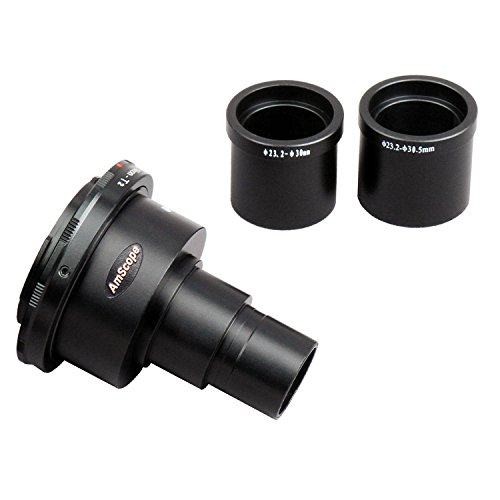
Photographers and researchers using Nikon SLR and DSLR cameras will find the AmScope CA-NIK-SLR-II adapter an essential tool for capturing high-quality images through microscopes. This adapter is compatible with various Nikon models, including the D40 through D7000, making it versatile for many users. With a solid metal construction and a standard 23.2mm T-mount connection, it guarantees durability and stability. The 2X magnification power enhances your viewing experience, whether you’re using a monocular, binocular, or trinocular photo/video port. Explore more product details online to see how this adapter can elevate your microscopy work.
Best For: Photographers and researchers using Nikon SLR and DSLR cameras who want to capture high-quality images through microscopes.
Pros:
- Versatile Compatibility: Works with a wide range of Nikon SLR/DSLR models, including D40 to D7000.
- Durable Construction: Made from solid metal, ensuring long-lasting stability and reliability.
- Enhanced Viewing: Provides 2X magnification power, improving the microscopy viewing experience.
Cons:
- Limited to Nikon: Only compatible with specific Nikon models, excluding G series cameras.
- Potential Fit Issues: May require additional adapters for some microscope models or setups.
- Manual Adjustment Needed: Users may need to manually adjust settings for optimal image quality.
0.35X CTV Microscope Adapter Mount Lens Adapter for Trinocular Stereo Microscope

Whether you’re a researcher or a hobbyist, the 5X CTV Microscope Adapter Mount Lens Adapter is perfect for enhancing your trinocular stereo microscope experience. This adapter boasts a 0.35X magnification, expanding your field of view for effective observation. Made from durable metal and optical glass, it guarantees stability and longevity. Users appreciate its excellent quality, though some note slight vignetting at the corners. The focus ring allows for independent adjustments, making it easier to see small structures clearly. Compatible with popular models like AmScope, this adapter is an essential tool for anyone serious about microscopy.
Best For: Researchers and hobbyists looking to enhance their trinocular stereo microscope experience with improved field of view and focus capabilities.
Pros:
- Excellent build quality from durable metal and optical glass ensures long-lasting use.
- 0.35X magnification expands the field of view for effective observation of small structures.
- Focus ring allows for independent adjustments, enhancing clarity during observations.
Cons:
- Some users report slight vignetting at the corners, which may affect the overall viewing experience.
- Additional spacers may be required for optimal focus capability, adding to setup complexity.
- Not all microscopes are compatible; may need to check for specific model compatibility.
Smartphone Camera Adapter for Microscope Eyepiece Tube 23.2mm

For anyone looking to enhance their microscopy experience, the Smartphone Camera Adapter for Microscope Eyepiece Tube 23.2mm offers a seamless way to capture stunning images. This compact, lightweight adapter fits smartphones with widths from 2.2 to 3.9 inches and works with microscopes featuring a 23.2mm optical tube. Its built-in WF16X eyepiece enables detailed viewing, making it perfect for both amateur and professional microscopy enthusiasts. You can easily document and share the beauty of microscopic subjects, transforming your smartphone into a powerful imaging tool. Just measure your microscope’s tube for the perfect fit, and you’re ready to start exploring.
Best For: This product is best for microscopy enthusiasts who want to easily capture and share detailed images using their smartphones.
Pros:
- Compact and lightweight design makes it easy to transport and use with various microscopes.
- Built-in WF16X eyepiece enhances viewing quality for better image capturing.
- Compatible with a wide range of smartphones (2.2 to 3.9 inches), allowing for versatility in usage.
Cons:
- Requires measurement of microscope tube for proper fit, which may be inconvenient for some users.
- Limited to microscopes with a 23.2mm optical tube, potentially restricting compatibility with other models.
- May not provide professional-grade image quality compared to dedicated microscope cameras.
OMAX Microscope Adapter 4 Canon D-SLR w 2X Lens
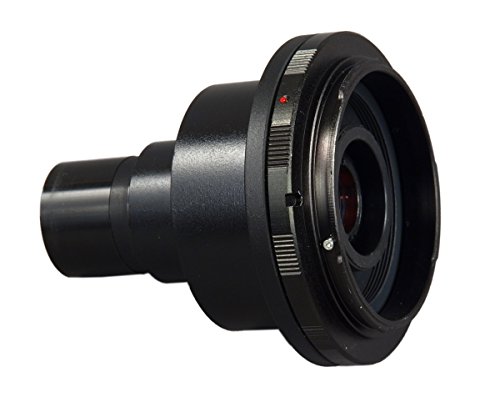
The OMAX Microscope Adapter for Canon D-SLR with a 2X lens is an excellent choice for educators and hobbyists enthusiastic to explore micro-photography without breaking the bank. It fits a wide range of Canon models and connects to most compound microscopes using a standard 23.2mm mount. Users appreciate the good image quality, although focusing can be tricky; a remote shutter release helps. Keep in mind that some have reported issues like dust particles and limited viewable fields. While it’s a budget-friendly option, be aware of its limitations and consider adapting your techniques for better results.
Best For: Educators, students, and hobbyists seeking an affordable way to explore micro-photography with Canon D-SLR cameras.
Pros:
- Good image quality for micro-photography at a modest price.
- Compatible with a variety of Canon D-SLR models and standard microscope mounts.
- Metal construction with a protective lens cover enhances durability.
Cons:
- Focusing can be challenging, often requiring a remote shutter release for best results.
- Reports of dust particles affecting image quality and limited viewable fields.
- Some users experience issues with blurry images and chromatic aberration at higher magnifications.
OMAX Microscope Adapter 4 Canon D-SLR w 2X Lens + 23.2-30.5mm Adapter
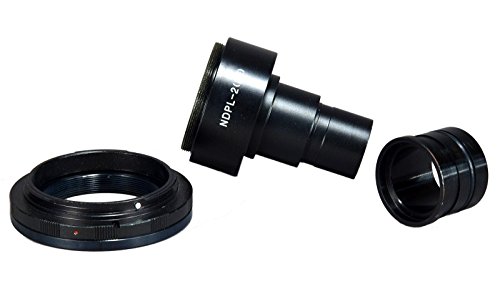
If you’re a Canon DSLR user looking to enhance your microscopy experience, the OMAX Microscope Adapter is an excellent choice. This adapter is compatible with a range of Canon cameras, including models like the 20D, 60D, and EOS Rebel series. It features a standard 23.2mm 2x lens mount, providing an equivalent magnification of 12x-15x, depending on your camera’s CMOS size. The included 23.2mm-30.5mm metal eyetube adapter guarantees a secure fit with stereo microscopes. Plus, its durable metal construction promises longevity. With a one-year warranty against manufacturing defects, you can invest in this adapter with assurance. Enhance your imaging today!
Best For: Canon DSLR users who want to enhance their microscopy experience with high-quality imaging capabilities.
Pros:
- Compatible with a wide range of Canon DSLR cameras, ensuring versatility for various users.
- Durable metal construction provides longevity and reliability for frequent use.
- Includes a 23.2mm-30.5mm metal eyetube adapter, ensuring a secure fit with stereo microscopes.
Cons:
- Limited to Canon cameras, which excludes users with other brands of DSLRs.
- Magnification may vary based on the CMOS size, which could affect consistency in imaging.
- Requires familiarity with microscopy equipment, potentially posing a learning curve for beginners.
Fotasy Cannon Lens Adapter – EF to C Mount

Photographers and videographers seeking to elevate their work with Canon EF and EFS lenses will find the Fotasy Cannon Lens Adapter – EF to C Mount an essential tool. This adapter seamlessly connects your DSLR lenses to C-mount systems, including CCTV and microscope cameras. With no electrical contacts, you’ll need to manually adjust exposure and focus, but this allows for greater creative control. The secure, no play locking leaf guarantees a stable connection during use. Ideal for those requiring manual operation, this adapter bridges the gap between professional-grade lenses and versatile imaging applications.
Best For: Photographers and videographers looking to adapt Canon EF and EFS lenses for use with C-mount systems while maintaining manual control over exposure and focus.
Pros:
- Versatile Compatibility: Works with a range of cameras, including DSLR, CCTV, and microscope systems.
- Creative Control: Manual adjustments for exposure and focus allow for enhanced creative expression.
- Stable Connection: No play locking leaf ensures a secure attachment between lens and camera, reducing the risk of accidental disconnection.
Cons:
- Manual Operation Required: Lacks automatic diaphragm and auto-focusing functions, which may be a drawback for some users.
- Learning Curve: Users may need time to adapt to manual adjustments, especially those accustomed to automatic settings.
- No Electrical Contacts: The absence of electrical connections means limited functionality compared to native lens systems.
Factors to Consider When Choosing DSLR Adapters for Microscopes
When choosing a DSLR adapter for your microscope, you’ll want to take into account several key factors to guarantee a good fit. Think about compatibility with your camera model, the magnification power options available, and the adapter’s material quality. Also, don’t overlook the mounting size flexibility and ease of installation, as these will impact your overall experience.
Compatibility With Camera Models
Choosing the right DSLR adapter for your microscope hinges on compatibility with your specific camera model. Different adapters cater to distinct brands, like Canon and Nikon, so it’s essential to match the adapter to your camera. For example, the AmScope CA-CAN-SLR fits a variety of Canon DSLRs, including the EOS Rebel series, while the AmScope CA-NIK-SLR works with many Nikon models, though not all. You’ll also need to check the mounting sizes, such as 23.2mm, 30mm, or 30.5mm, to guarantee a proper fit with your microscope. Additionally, some adapters may require extra components, like conversion adapters, for compatibility with monocular, binocular, or trinocular microscopes. Always verify these details before making your purchase.
Magnification Power Options
Understanding magnification power is vital for selecting the right DSLR adapter for your microscope. Most adapters offer around 2X magnification, effectively enlarging microscopic details and bridging the gap between eyepiece viewing and digital imaging. However, keep in mind that variations can arise due to your camera’s CMOS sensor size, impacting the actual magnification you’ll experience. Some adapters even allow you to use eyepieces for higher magnification, which is particularly useful for astrophotography or detailed specimen studies. It’s important to guarantee that the adapter’s magnification aligns with your microscope’s capabilities. This alignment helps prevent issues with focus clarity and overall image quality, ensuring you capture the finest details of your specimens.
Material Quality and Durability
Although you might focus on magnification power, the material quality and durability of DSLR adapters for microscopes are equally important factors to evaluate. Most high-quality adapters are made from metal, offering superior durability and stability compared to plastic options. This metal construction guarantees longevity and reliable performance, especially during frequent use. When you choose an adapter, look for products that meet ISO 9001 quality control standards, as this assures consistent material quality. Weighing between 7.7 to 8.4 ounces, metal adapters provide a solid feel that enhances their robustness. Remember, proper care and maintenance are essential to prevent corrosion and maintain peak performance over time. Investing in a durable adapter will pay off in the long run.
Mounting Size Flexibility
When selecting a DSLR adapter for your microscope, mounting size flexibility plays a significant role in guaranteeing compatibility across different models. Different microscopes often require adapters of varying sizes, like 23.2mm, 30mm, and 30.5mm. Opting for an adapter that offers multiple sizes enhances versatility, allowing one adapter to fit various eyepiece sizes. You’ll want a secure fit, as a loose adapter can lead to image distortion and misalignment. Additionally, choosing adapters designed for specific camera mounts, like T-mount or C-mount, guarantees better stability and performance. Finally, consider an adapter with adjustable mounting sizes to accommodate any future upgrades to your microscope equipment, enhancing your long-term usability and imaging experience.
Ease of Installation
Choosing the right DSLR adapter for your microscope can make installation a breeze. Look for adapters designed to fit standard mounting sizes like 23.2mm, 30mm, and 30.5mm to guarantee compatibility with most microscopes. Select models that offer multiple connection options or come with conversion adapters, simplifying the setup process. Clear instructions or an easy attachment mechanism can help you get started quickly, without needing specialized tools. Opt for durable materials, such as metal, to enhance stability and ease installation over time. Finally, consider adapters that allow for alignment adjustments, as these features greatly improve your overall installation experience, making it smoother and more efficient.
Image Clarity and Quality
Image clarity and quality are essential factors to take into account when selecting a DSLR adapter for your microscope. Different adapters can produce varying results; some users experience issues like chromatic aberration and blurriness, especially at higher magnifications. Most adapters offer around 2X magnification, which impacts the detail you can capture. Remember, the quality of your microscope’s objective lens is critical, as adapters can’t fix low resolving power. Achieving ideal focus often requires manual adjustments and may benefit from additional light sources to enhance exposure. Don’t forget that software enhancements, such as image stacking in Photoshop, can greatly improve sharpness and depth of field, making your images even more impressive.
Warranty and Support Availability
While selecting a DSLR adapter for your microscope, warranty and support availability can greatly impact your experience. Many adapters, like those from AmScope, offer a 5-year factory warranty, giving you peace of mind against manufacturing defects. Before purchasing, check the warranty details; some adapters, such as OMAX, typically include only a 1-year warranty. Customer support can also vary widely between manufacturers. Responsive service is essential for addressing any issues that arise. Don’t forget to review return policies, as some retailers, like Amazon, allow returns within 30 days. Access to reliable customer support and warranty information can notably enhance your experience, ensuring you’re covered for any potential problems or parts you might need.