
Choosing your first drawing tablet can feel complicated, especially when you are comparing compact pen tablets, shortcut-heavy models, and displays you draw on directly. The best choice depends on your budget, workspace, preferred software, and whether you want to learn with or without a built-in screen.
We selected 10 beginner-friendly options across several sizes and styles, from simple wired tablets to full-HD pen displays. Use the guide below to narrow the list by compatibility, controls, portability, and long-term value.
Best 10 Drawing Tablet for Beginners Picks for 2026
Best Beginner Drawing Tablet

- Large 10 x 6.25-inch workspace
- 16K battery-free stylus with tilt support
- Eight customizable keys and Android support
Best For: Beginners wanting a roomy, portable tablet with flexible controls
Best Simple Starter Tablet

- Compact 6 x 3.7-inch active area
- Battery-free pen with pen-on-paper feel
- Software and online training included
Best For: Students and beginners seeking a compact, uncomplicated setup
Best Shortcut-Heavy Tablet

- 10 x 6.25-inch drawing area
- 12 press keys and 16 soft keys
- Battery-free, tilt-supporting stylus
Best For: Beginners who want extensive shortcut customization and room to grow
Best Beginner Pen Display

- 11.6-inch Full HD drawing display
- Battery-free 8,192-level stylus with eraser
- Six keys plus programmable touch bar
Best For: Beginners who want to draw directly on a connected screen
Best Screen-Based Pick

- 13.3-inch laminated display
- 16,384 pressure levels
- Dual dial and shortcut controls
Best For: Beginners who want to draw directly on a screen
Best Wireless Starter

- Battery-free pressure-sensitive pen
- Bluetooth or USB-A connectivity
- Software and training included
Best For: Students and beginners wanting a screen-free wireless tablet
Best for Custom Shortcuts

- Large 10.5-by-6.56-inch area
- Three groups of eight shortcut keys
- Programmable scroll wheel
Best For: Beginners who want a large wired tablet with customizable controls
Best Screen-Based Starter

- 11.6-inch full-laminated anti-glare display
- Battery-free pen with 8192 pressure levels and tilt
- Red dial plus eight customizable shortcut keys
Best For: Beginners seeking a compact pen display for direct-on-screen drawing
Best Portable Screenless Pick

- Compact 6-by-4-inch active area and lightweight design
- Battery-free pen with 8192 pressure levels
- Six shortcut keys and broad computer compatibility
Best For: Beginners wanting a portable, screenless tablet for art and notes
Best Beginner Pen Display Value
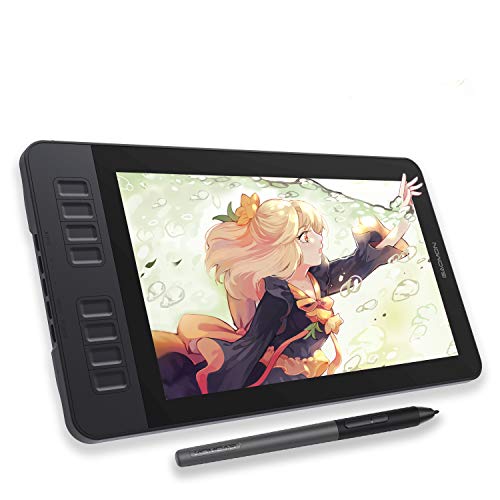
- 11.6-inch full HD matte IPS display
- Battery-free pen with 8192 pressure levels and tilt
- Eight shortcut keys plus two programmable pen buttons
Best For: Beginners who want direct-on-screen drawing and shortcut controls
Best Beginner Drawing Tablet – XPPen Deco 01 V3
The XPPen Deco 01 V3 is a strong drawing tablet for beginners who want a roomy workspace and plenty of shortcut controls without dealing with a rechargeable pen. Its 10 x 6.25-inch active area, battery-free stylus, and broad device compatibility make setup approachable for new digital artists.
Best For: Beginners who want a large, portable tablet with customizable controls and Android support.
Pros:
- 16,384 pressure levels and up to 60 degrees of tilt support smooth lines and shading.
- Eight customizable shortcut keys support both right- and left-handed users.
- Works with Windows, macOS, Android, ChromeOS, Linux, and major creative software.
- Includes a protective film, glove, stand, replacement nibs, and connection adapter.
Cons:
- It is a pen tablet without a built-in display, so you draw while viewing your computer or compatible Android device.
- Some operating systems require specific versions or updates for compatibility.
For beginners who prioritize drawing space, shortcut access, and easy portability, the Deco 01 V3 offers a well-equipped starting point. Its battery-free pen also removes one common maintenance task from the learning process.
Best Simple Starter Tablet – Wacom Intuos Small
The Wacom Intuos Small is a straightforward drawing tablet for beginners who prefer a compact design and an established pen experience. Its battery-free EMR pen, four ExpressKeys, and included software make it suitable for learning digital art, editing photos, or marking up documents.
Best For: Students, teachers, and new creators who want a compact tablet with included software and training.
Pros:
- Battery-free pen technology is designed to feel like pen on paper.
- Four ExpressKeys provide convenient shortcuts.
- Works with Windows, Mac, Chromebook, Android, and a wide range of creative software.
- Registration provides access to creative software and Wacom online training.
Cons:
- The 6 x 3.7-inch active area is smaller than the workspaces on the other listed pen tablets.
- Its 4,096 pressure levels are lower than some newer alternatives.
- It uses USB-A connectivity, which may require an adapter with newer devices.
The Intuos Small keeps the learning curve manageable with a compact footprint and familiar pen feel. It is a practical choice when software access and a trusted, simple setup matter more than a large drawing surface.
Best Shortcut-Heavy Tablet – HUION Inspiroy H1060P
The HUION Inspiroy H1060P is a drawing tablet for beginners who want a generous workspace and extensive shortcut customization. It combines a 10 x 6.25-inch active area with 12 programmable press keys and 16 soft keys, giving new artists room to grow into a more efficient workflow.
Best For: Beginners and hobbyists who want maximum shortcut flexibility, a large workspace, and Android compatibility.
Pros:
- Large 10 x 6.25-inch working area provides comfortable room for drawing.
- Battery-free stylus includes up to 60 degrees of tilt support.
- Offers 12 programmable press keys plus 16 programmable soft keys.
- Supports Windows, macOS, Android, Linux Ubuntu, and common creative software.
Cons:
- The many programmable controls may take time for beginners to configure.
- iPhone and iPad are not currently supported according to the supplied notes.
- Ubuntu use requires the Xorg display server rather than Wayland.
With its unusually large number of controls, the H1060P suits beginners who want to build efficient habits early. It is especially appealing for users who value customization and a spacious work area over the simplest possible interface.
Best Beginner Pen Display – XP-PEN Artist12
The XP-PEN Artist12 takes a different approach to a drawing tablet for beginners by putting an 11.6-inch Full HD drawing surface directly in front of you. Because you draw on the displayed image, it can feel more intuitive for newcomers, while six customizable keys and a programmable touch bar add workflow shortcuts.
Best For: Beginners who prefer drawing directly on a screen and have a compatible computer with HDMI and USB-A ports.
Pros:
- 11.6-inch 1920 x 1080 IPS display provides a direct on-screen drawing experience.
- Battery-free stylus offers 8,192 pressure levels and includes a digital eraser.
- Six customizable shortcut keys and a programmable touch bar support efficient navigation.
- Includes a pen holder, replacement nibs, glove, and a one-year warranty with lifetime technical support.
Cons:
- It must be connected to a computer to work.
- Setup requires available HDMI and USB-A ports or suitable adapters.
- The display-based design is less portable than a simple screenless pen tablet.
The Artist12 is a compelling entry point for beginners who find screenless tablets unfamiliar. Its direct drawing surface and Full HD display can make hand-eye coordination easier, provided your computer has the required connections.
Best Screen-Based Pick – HUION Kamvas 13 (Gen 3)
If you want a drawing tablet for beginners that shows your work directly on the display, the HUION Kamvas 13 (Gen 3) offers a more natural, pen-on-screen workflow. Its laminated 13.3-inch screen, included stand, and customizable controls make it approachable for learning digital art, while its computer connection requirement is important to plan for.
Best For: Beginners who want an on-screen drawing experience for illustration, painting, animation, or design and already have a compatible computer or laptop.
Pros:
- Fully laminated 13.3-inch Canvas Glass 2.0 display helps reduce glare and improve drawing accuracy.
- PenTech 4.0 provides 16,384 pressure levels, 2g initial activation force, and three customizable pen buttons.
- Includes five shortcut keys, dual dial controls, and an adjustable stand for a more comfortable workflow.
- Supports Windows, macOS, Linux, and compatible Android devices.
Cons:
- It is not standalone and must be connected to a computer, laptop, or compatible Android device.
- The full-featured USB-C cable is sold separately; a 3-in-1 cable is included.
The Kamvas 13 (Gen 3) is a strong choice if beginners prefer drawing directly on a screen and want room to grow into more advanced creative work. Its color coverage and factory calibration report are useful for users who care about consistent visuals.
Best Wireless Starter – Wacom Intuos Medium
The Wacom Intuos Medium is a practical drawing tablet for beginners who want a familiar, screen-free setup with wireless flexibility. Its battery-free pen, medium active area, and compatibility with common creative software make it a straightforward option for learning digital drawing, editing, and design.
Best For: Students, teachers, and new digital artists who want a reliable pen tablet that can connect by Bluetooth or USB-A.
Pros:
- Battery-free EMR pen is designed to provide a pen-on-paper feel.
- Bluetooth and USB-A connectivity support flexible use at a desk or away from it.
- Four ExpressKeys provide convenient shortcut access.
- Registration includes access to creative software and Wacom online training.
Cons:
- The tablet has no built-in screen, so you draw while viewing the computer display.
- Its 4,096 pressure levels are lower than the pressure specification of some newer models.
The Intuos Medium keeps the learning curve focused on core pen control rather than display settings. It is especially appealing for beginners who value wireless connectivity, included learning resources, and compatibility with Mac, Windows, and Chromebook workflows.
Best for Custom Shortcuts – HUION Inspiroy 2 Large
For beginners who prefer a larger screen-free workspace, the HUION Inspiroy 2 Large combines a 10.5-by-6.56-inch active area with extensive customizable controls. The scroll wheel, three shortcut groups, and battery-free stylus give new users plenty of room to build an efficient drawing or editing workflow.
Best For: Beginners, students, and creators who want a large drawing surface with programmable controls for art, image editing, notes, or design.
Pros:
- Large 10.5-by-6.56-inch active area provides room for drawing and editing gestures.
- Three sets of eight programmable shortcut keys can be customized for different applications.
- Programmable scroll wheel and battery-free PenTech 3.0 stylus support an efficient workflow.
- Works with compatible Mac, Windows, Linux, and Android devices and supports left-handed users.
Cons:
- It is not standalone and requires a wired connection to a computer, laptop, or compatible smartphone.
- The product has no internal power source and does not include a built-in display.
The Inspiroy 2 Large is a good fit when workspace and shortcut flexibility matter more than drawing directly on a screen. Its generous surface and configurable controls can remain useful as a beginner develops more advanced editing and illustration habits.
Best Screen-Based Starter – XP-Pen Artist12 Pro
The XP-Pen Artist12 Pro is a strong drawing tablet for beginners who want to draw directly on a display rather than learn with a screenless pad. Its 11.6-inch full-laminated screen, battery-free stylus, and customizable controls provide a familiar starting point for digital art, while the host-device requirement is important to plan for.
Best For: Beginners who want a compact pen display for drawing, painting, editing, or digital annotation.
Pros:
- Full-laminated, anti-glare display helps reduce parallax and reflections.
- Battery-free stylus offers 8192 pressure levels and up to 60 degrees of tilt support.
- Red dial and eight customizable shortcut keys can speed up common tasks.
- Works with Windows, macOS, ChromeOS, and Linux, subject to stated requirements.
Cons:
- It is a drawing monitor, not a standalone tablet, and must connect to a computer or other host device.
- The 11.6-inch screen may feel compact for users who prefer a larger workspace.
- Connection uses a 3-in-1 cable, so compatible ports are necessary.
For beginners who value direct-on-screen drawing and shortcut controls, the Artist12 Pro offers a comfortable feature set without requiring a rechargeable pen. Confirm your computer, operating system, and available ports before buying.
Best Portable Screenless Pick – Huion Inspiroy H640P
The Huion Inspiroy H640P is a practical drawing tablet for beginners who want an affordable, portable screenless pad. You draw while viewing your computer or compatible Android device, and the compact 6-by-4-inch active area keeps it easy to carry while still supporting pressure-sensitive sketching and editing.
Best For: Beginners who want a lightweight tablet for drawing, notes, photo editing, signatures, and remote-work tasks.
Pros:
- Compact design is 0.3 inches thick and weighs 0.61 pounds.
- Battery-free PW100 stylus provides 8192 pressure levels, 5080 LPI resolution, and 233 PPS report rate.
- Six customizable keys and two pen buttons support efficient shortcuts.
- Compatible with Mac, Windows, Linux, and Android 6.0 or later; supports left-handed use.
Cons:
- The 6-by-4-inch active area is smaller than many display tablets.
- It does not support iPhone or iPad.
- Because it is screenless, beginners must adjust to looking at the connected device while drawing.
The H640P makes a sensible first step for beginners who prioritize portability and value over an integrated screen. It is especially versatile for students, laptop users, and anyone who wants one pen device for art and everyday computer control.
Best Beginner Pen Display Value – GAOMON PD1161
The GAOMON PD1161 is a drawing tablet for beginners who prefer sketching directly on a full HD screen. Its 11.6-inch display combines a matte surface, vivid color coverage, a battery-free stylus, and programmable controls, making it suitable for learning digital illustration as well as notes and online collaboration.
Best For: Beginner artists and students who want an on-screen drawing experience with dedicated shortcut keys.
Pros:
- Full HD 11.6-inch IPS display includes a pre-installed matte film for a paper-like feel and reduced glare.
- 72% NTSC and 100% sRGB color coverage support vivid, smoothly graduated colors.
- Battery-free AP50 pen offers 8192 pressure levels and tilt functionality.
- Eight tablet keys and two pen buttons can be programmed for shortcuts.
Cons:
- It is not standalone and must connect to a Windows or Mac computer.
- The host computer needs available HDMI and USB ports, or an appropriate converter.
- Some systems may require the included power adapter if the computer cannot provide enough power.
The PD1161 is a well-rounded choice for beginners who want the immediacy of drawing on the screen without giving up shortcut controls. Check your computer’s ports and power capability before choosing this pen display.
How We Picked the Best Drawing Tablet for Beginners
We focused on features that matter most when learning digital art: dependable pen tracking, pressure sensitivity, comfortable active areas, useful shortcut controls, broad computer compatibility, and an approachable price. We also included both screenless pen tablets and pen displays because beginners have different preferences and budgets.
Models with battery-free pens generally reduce maintenance, while customizable keys and dials can speed up common actions such as undo, zoom, brush sizing, and canvas rotation. For display tablets, we considered screen size, resolution, laminated construction, tilt support, and the extra cables or desk space required.
Quick Comparison
| Tablet type | Best for | Main advantage | Potential trade-off |
|---|---|---|---|
| Small pen tablet | Portability and basic practice | Low cost and compact footprint | Less drawing room |
| Medium or large pen tablet | Illustration and longer sessions | More workspace and control | Takes up more desk space |
| Pen display | Direct on-screen drawing | Intuitive hand-eye coordination | Higher cost and more cables |
Key Buying Factors for a Drawing Tablet for Beginners
Screenless Tablet or Pen Display
A screenless tablet is usually the best value and works well once you become comfortable looking at your monitor while drawing. A pen display feels more natural because the cursor appears beneath the stylus, but it may require more desk space, cable management, and graphics hardware.
Active Area and Workspace
Small tablets are easy to carry and suitable for photo editing, notes, and introductory practice. Medium models offer a useful balance for most beginners, while large surfaces are better for broad arm movements and detailed illustration. Check your desk dimensions before choosing a larger model.
Pen and Pressure Features
Battery-free pens are convenient because they do not need charging. Pressure sensitivity helps vary line width and opacity, but driver quality and your art software often matter as much as the advertised number. Tilt support is useful for shading and brush effects when your software supports it.
Controls, Compatibility, and Connectivity
Shortcut keys can make creative programs faster, particularly for undo, zoom, and brush controls. Confirm that the tablet supports your operating system and preferred applications. Bluetooth can reduce cable clutter, while wired models are often simpler and more predictable.
Who Should Buy Which Drawing Tablet for Beginners?
Choose a compact pen tablet if you are learning on a budget, have limited desk space, or want something portable. Choose a medium tablet if drawing is a serious hobby and you want more room without a large workstation footprint. Choose a large tablet if you prefer broad strokes, work at a large monitor resolution, or expect to spend long sessions illustrating.
Choose a pen display if direct on-screen drawing is your priority and you can accommodate additional cables and desk space. Among the screen models, compare display size, full-laminated construction, shortcut controls, tilt support, and connection requirements rather than relying on resolution alone.
Before buying, confirm driver availability, included accessories, warranty coverage, and return terms. The right Drawing Tablet for Beginners is the one that fits your workflow comfortably enough that practicing feels easy rather than distracting.