
If you’re looking to enhance your smart home experience, exploring DIY IoT starter kits can be a great way to begin. These kits offer hands-on projects that help you develop your coding skills while building practical applications. With various options available, each kit brings unique components and tutorials to the table. But how do you choose the right one for your needs? Let’s uncover some top contenders that might just spark your interest.
KEYESTUDIO IOT ESP32 Smart Home Starter Kit for Arduino and Python
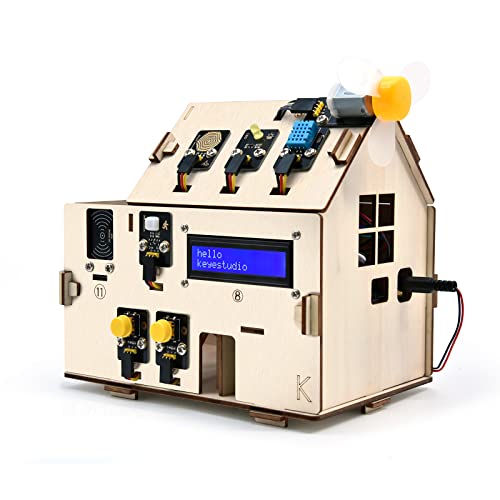
The KEYESTUDIO IOT ESP32 Smart Home Starter Kit is perfect for beginners aged 15 and up who want to immerse themselves in the world of home automation and coding. This kit lets you build a DIY wooden house while learning about electronics and programming through 13 engaging projects. You’ll explore essential modules like buttons, LEDs, and sensors, enhancing your understanding of smart home functionality. With supportive resources for C language and MicroPython, you can easily follow online tutorials. Just remember, it’s unassembled and requires 6 AA batteries to operate, so be prepared to upload code and get started on your smart home journey!
Best For: This product is best for beginners aged 15 and up who are interested in learning about home automation and coding.
Pros:
- Engaging hands-on projects that enhance learning in electronics and programming.
- Supports both C language and MicroPython, providing flexibility in coding.
- Smart home capabilities allow for practical application of learned concepts through real-world scenarios.
Cons:
- The kit comes unassembled, which may require additional time and effort to set up.
- Batteries are not included, necessitating a separate purchase of 6 AA batteries.
- Lack of paper instructions may pose a challenge for some users, relying solely on online resources for guidance.
SunFounder Ultimate Starter Kit for Arduino UNO IDE

Looking to explore the world of IoT and smart home projects? The SunFounder Ultimate Starter Kit for Arduino UNO IDE is an excellent choice. With 192 components and 87 engaging projects, you’ll start from simple LED blinking to building advanced robot cars and IoT applications. Designed for ages 8 and up, this kit comes with expert courses and extensive tutorials that guide you through essential concepts to more complex topics. Plus, enjoy dedicated support and a community forum for assistance. Immerse yourself in hands-on learning, build your confidence, and release your creativity with this versatile starter kit!
Best For: Beginners aged 8 and up who want to explore IoT, smart home projects, and robotics through hands-on learning.
Pros:
- Comprehensive kit with 192 components and 87 projects supports a wide range of learning experiences.
- Expert-designed courses and tutorials provide structured guidance from basic to advanced topics.
- Dedicated support and community forum enhance the learning experience with ongoing assistance.
Cons:
- May be overwhelming for complete beginners due to the extensive number of components and projects.
- Some users might find the quality of certain components varies.
- Limited advanced projects may not fully satisfy experienced users seeking more complex challenges.
KEYESTUDIO IoT Control Smart Farm Starter Kit for Arduino

Designed for DIY enthusiasts aged 15 and up, the KEYESTUDIO IoT Control Smart Farm Starter Kit for Arduino offers an engaging way to explore smart farming applications. This kit includes essential components like a photoresistor, soil moisture sensor, and water level sensor, all powered by the ESP32 wireless module. You’ll gain hands-on experience in automating and managing agricultural tasks intelligently. With detailed online tutorials and programming options for both Scratch and Arduino, you can easily navigate assembly and code uploading. Keep in mind that you’ll need to provide your own batteries. Get ready to innovate in the world of IoT!
Best For: DIY enthusiasts aged 15 and above who are interested in exploring smart farming applications and IoT technology.
Pros:
- Detailed online tutorials and video instructions enhance the learning experience.
- Includes essential sensors for intelligent agricultural automation and management.
- Offers programming flexibility with tutorials for both Scratch and Arduino.
Cons:
- The kit is unassembled and requires users to complete the assembly themselves.
- No pre-burned code is included, necessitating code uploading by the user.
- Batteries are not included and must be supplied separately.
ACEBOTT 3-in-1 ESP32 IoT Control Smart Factory Starter Kit

For teens aged 12 and up, the ACEBOTT 3-in-1 ESP32 IoT Control Smart Factory Starter Kit stands out as an ideal entry point into the world of electronics and programming. You’ll plunge into hands-on projects like a smart robotic arm and a conveyor belt sorting system, gaining practical skills in programming and electronic components. The kit includes 16 lessons and detailed coding tutorials, making it easy to learn. Plus, it’s a fantastic gift for birthdays or holidays, encouraging creativity and innovative thinking in your home STEAM lab. Get ready to build and explore the possibilities of IoT!
Best For: Teens aged 12 and up who are interested in learning about electronics and programming through hands-on projects.
Pros:
- Comprehensive Learning: Includes 16 lessons and coding tutorials for easy understanding.
- Hands-On Experience: Offers practical projects like a smart robotic arm and conveyor belt sorting system.
- Encourages Creativity: Ideal for fostering innovative thinking in a home STEAM lab environment.
Cons:
- Age Limit: Primarily designed for teens, which may limit use for younger children or adults.
- Complexity: Some projects may be challenging for complete beginners without prior knowledge in programming.
- Requires Additional Tools: May need extra tools or components not included in the kit for more advanced projects.
OSOYOO Robot Car Starter Kit for Arduino

The OSOYOO Robot Car Starter Kit for Arduino is perfect for tech enthusiasts and beginners alike who want to plunge into the world of programming and robotics. This STEM kit lets you control your robot car via an app on your Android or iOS device. You’ll learn essential skills like coding, electronics, and IoT while tackling projects like line tracking and obstacle avoidance. With components like an Arduino R3 board, ultrasonic sensor, and Bluetooth module, assembly is straightforward, aided by a tutorial CD. Rated 4.3 stars by users, it’s an engaging way to develop your mechanical and logical thinking skills.
Best For: The OSOYOO Robot Car Starter Kit is best for teens, adults, beginners, and enthusiasts interested in learning programming, coding, and robotics.
Pros:
- Engaging hands-on learning experience that enhances logical thinking and technical skills.
- Versatile control options through both Android and iOS apps, offering a user-friendly interface.
- Comprehensive assembly guide included, making it accessible for beginners.
Cons:
- Requires some prior knowledge of electronics for optimal understanding of assembly and functionality.
- Limited advanced features may not satisfy experienced users looking for more complex projects.
- Dependency on a smartphone for control might not appeal to all users.
ACEBOTT ESP32 Smart Farm STEM Kit for Kids Age 12

Looking to spark a love for technology and sustainability in your 12-year-old? The ACEBOTT ESP32 Smart Farm STEM Kit is perfect! This kit lets kids build IoT systems like automatic watering and solar windmills, all while being compatible with Arduino and Scratch. With 16 engaging tutorials, your child will learn coding and problem-solving skills, enhancing their creativity as they personalize projects. The solder-free assembly guarantees safety, using non-toxic materials. Ideal for home or classroom use, this kit makes learning fun and interactive. Rated 4.7 stars, it’s a fantastic gift choice that combines education with hands-on experience in automation.
Best For: The ACEBOTT ESP32 Smart Farm STEM Kit is best for kids aged 12 and older who are interested in technology, coding, and sustainability.
Pros:
- Engaging Learning Experience: Includes 16 tutorials that gradually enhance coding skills using Scratch and Arduino.
- Hands-On Projects: Offers practical experience with IoT systems like automatic watering and solar windmills, fostering creativity.
- Safe Assembly: Features solder-free assembly with non-toxic materials, ensuring safety for young users.
Cons:
- Age Limitations: Primarily designed for kids aged 12 and older, which may exclude younger children.
- Complexity for Beginners: Some projects may be challenging for complete beginners without prior coding knowledge.
- Limited Advanced Features: May not satisfy older teens or advanced learners looking for more complex projects.
OSOYOO Model 3 Robot Car DIY Starter Kit for Arduino

Ready to plunge into the exciting world of robotics? The OSOYOO Model 3 Robot Car DIY Starter Kit for Arduino is perfect for all skill levels. This all-encompassing kit equips you with everything needed to build a smart robot car. You’ll enjoy remote control via an app, while mastering functions like obstacle avoidance and line tracking. The step-by-step tutorial guides you through programming and assembly, enhancing your logical thinking and mechanical skills. It’s an ultimate gift for anyone interested in STEM, sparking curiosity and development in robotics and coding. Get ready to create, learn, and have fun!
Best For: Teens, adults, and professionals of all skill levels interested in learning robotics and coding.
Pros:
- Comprehensive kit includes all necessary components for building and programming the robot car.
- Step-by-step tutorial is beginner-friendly, promoting learning in programming and mechanical skills.
- Engaging and fun project that enhances logical thinking and encourages interest in STEM fields.
Cons:
- May require some prior knowledge of electronics for optimal assembly and programming.
- The complexity of certain functions might overwhelm absolute beginners.
- Limited to the functionalities provided in the kit, which may restrict advanced modifications.
ESP32 IOT Smart Home Starter Kit for Arduino IDE
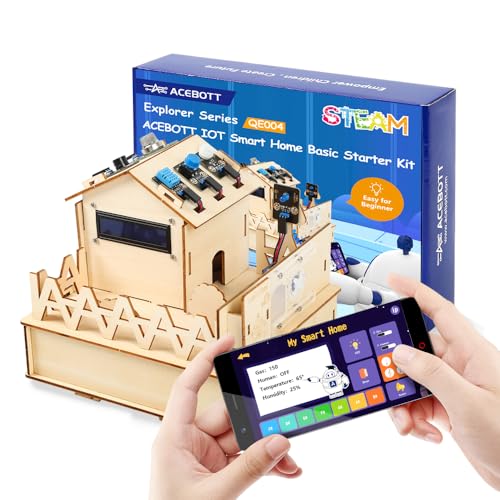
Designed for young tech enthusiasts aged 10 and up, the ESP32 IoT Smart Home Starter Kit for Arduino IDE offers an engaging introduction to programming and electronics. You’ll explore automation and wireless control with sensors like the DHT11 for temperature and humidity, and even a gas leak alert. The kit aligns with STEM education, featuring 16 project-based classes that help you confidently build smart home models. Crafted from eco-friendly plywood, it’s durable and easy to assemble. Plus, it’s a fantastic parent-child project, fostering creativity and communication while you learn together. Perfect for gifts or classroom use!
Best For: Young tech enthusiasts aged 10 and up who are interested in programming and electronics.
Pros:
- Integrates STEM education: Aligns with educational goals and offers hands-on learning experiences.
- Durable and eco-friendly design: Made from environmentally friendly plywood with clear assembly instructions.
- Encourages parent-child engagement: Serves as a collaborative project that fosters creativity and communication.
Cons:
- Age restriction: Not suitable for children under 10, potentially limiting its audience.
- Requires adult supervision: Some projects may need guidance, particularly for younger users.
- Limited advanced features: May not satisfy more experienced users looking for complex projects or components.
Official Arduino Starter Kit (K000007) – 12 DIY Projects
![Official Arduino Starter Kit [K000007] - 12 DIY Projects with Electronic Components & English Projects Book - Original Kit from Italy](https://m.media-amazon.com/images/I/51fPv6DsjQL._SL500_.jpg)
The Official Arduino Starter Kit (K000007) is the perfect choice for anyone enthusiastic to plunge into the world of electronics and programming, especially beginners. This complete DIY electronics kit includes everything you need to explore coding and circuit design through 12 hands-on projects. With a thorough English project book, you’ll receive step-by-step guidance for each project, making it easy to follow along. The high-quality components are genuine Arduino parts from Italy, ensuring durability and compatibility. Whether you’re just starting or revitalizing your skills, this kit is ideal for hobbyists, educators, and anyone looking to engage in creative electronics projects.
Best For: The Official Arduino Starter Kit is best for beginners and hobbyists eager to learn about electronics and programming through hands-on projects.
Pros:
- Comprehensive project book provides step-by-step guidance, ideal for beginners.
- High-quality genuine Arduino components ensure durability and compatibility.
- Suitable for all skill levels, making it a versatile choice for education and personal projects.
Cons:
- May be overwhelming for absolute beginners due to the variety of projects.
- Limited advanced projects may not satisfy experienced users seeking more challenges.
- Requires a computer and additional software for programming, which may not be included in the kit.
ELEGOO Mega R3 Project Ultimate Starter Kit for Arduino IDE

For aspiring makers and tech enthusiasts, the ELEGOO Mega R3 Project Ultimate Starter Kit for Arduino IDE stands out as an exceptional choice. This thorough kit features the MEGA2560 microcontroller and over 200 components, including an LCD1602 module and a GY-521 sensor module—no soldering required! You’ll find a PDF tutorial on CD with more than 35 lessons to enhance your learning. The components are neatly organized in a package with a clear listing, ensuring a smooth experience. With a focus on quality and customer satisfaction, this kit is perfect for beginners keen to plunge into the world of DIY electronics.
Best For: Beginners and aspiring makers looking to explore the world of DIY electronics with a comprehensive starter kit.
Pros:
- Includes over 200 components, providing a wide range of project possibilities.
- Comes with a detailed PDF tutorial featuring over 35 lessons, perfect for learning.
- Nicely packaged with organized components, making it user-friendly.
Cons:
- May be overwhelming for complete beginners due to the number of components.
- Some components might be too basic for advanced users seeking more complex projects.
- The included tutorial may not cover every possible application of the components.
Factors to Consider When Choosing DIY IoT Starter Kits
When you’re picking a DIY IoT starter kit, consider who it’s aimed at and the variety of projects it offers. You should also check the quality of the components and the educational resources that come with it. Finally, make sure it’s compatible with the programming languages you prefer to use.
Target Age Group
Choosing the right DIY IoT starter kit often hinges on the target age group, as different kits cater to various skill levels and interests. For younger learners aged 8 and up, look for kits that offer simpler projects and guided instructions, ensuring accessibility and engagement. These beginner-friendly options promote early interest in electronics and programming. If you’re targeting teens or adults, consider kits with more complex projects that explore deeper into coding and electronics, fostering advanced skills. Age-appropriate kits align project difficulty with cognitive development stages, keeping users motivated and challenged without feeling overwhelmed. By selecting a kit suited to the age group, you’ll enhance the learning experience and spark a passion for IoT technology.
Project Variety Offered
While selecting a DIY IoT starter kit, the variety of projects it offers plays an essential role in enhancing your learning experience. Some kits include as many as 87 hands-on projects, allowing you to explore different areas like smart home automation, smart farming, and robotics. This diverse range caters to various interests and skill levels, making your journey more engaging. Look for kits that blend simple and complex projects, enabling you to gradually develop your skills from basic electronics to advanced IoT applications. Additionally, some kits focus on specific themes, helping you gain specialized knowledge in areas like agriculture or home automation, ultimately boosting your expertise and confidence in IoT concepts.
Educational Resources Included
Educational resources included in DIY IoT starter kits can greatly enhance your learning experience, especially if they offer extensive online tutorials. Many kits provide step-by-step instructions and video guides, making it easier for you to assemble and program your projects. You’ll also find options for different programming languages, like Arduino and Scratch, catering to your unique learning style. As you progress, educational resources often cover topics from basic to advanced, helping you build confidence in coding and electronics. These kits typically emphasize hands-on projects, reinforcing theoretical knowledge while sparking creativity. Plus, community support and forums are usually available, offering you additional assistance and fostering collaboration as you navigate your IoT journey.
Component Quality Assurance
When selecting a DIY IoT starter kit, the quality of its components plays an essential role in guaranteeing your projects run smoothly and reliably. Higher quality sensors and modules enhance accuracy and functionality, making your efforts worthwhile. Look for kits that include genuine, durable components to reduce the chances of failure during assembly and operation. It’s also important to check for a thorough list of included parts, so you can verify their quality and guarantee everything you need is at hand. Well-organized packaging and clear labeling can simplify assembly, making the process less confusing and more enjoyable. Finally, detailed tutorials and support resources will guide you in effectively using the components, maximizing your learning experience.
Programming Language Compatibility
Selecting the right DIY IoT starter kit goes beyond just component quality; you’ll want to ascertain the programming languages it supports align with your goals. Many kits offer compatibility with popular languages like C/C++ and Python, which are staples in the IoT community. These languages provide a wealth of resources, making it easier for you to learn and execute your projects. If you’re new to coding, consider kits that support visual programming languages like Scratch for a more accessible entry point. Additionally, check for online tutorials and documentation in your chosen language, as these can enhance your learning experience. Opting for a kit that allows for scalability in programming languages ascertains you can grow from beginner to advanced coding as you progress.
Assembly Requirements and Support
Understanding assembly requirements and support is essential for a successful DIY IoT project, especially since many starter kits come unassembled. You’ll need to complete the assembly and upload code, which can boost your learning experience. Check if the kit includes online tutorials or resources, as not all come with paper instructions. It’s also vital to verify whether batteries are included, as some kits require separate purchases. The complexity of assembly varies, so assess the skill level needed to match your experience. Extensive support options, like community forums and dedicated assistance, can greatly enhance your troubleshooting process during assembly and coding, ensuring you have the help you need when challenges arise.
Hands-On Learning Experience
After assembling your DIY IoT kit and familiarizing yourself with the components, the hands-on learning experience truly begins. Engaging actively with these components helps you retain coding and electronics concepts through practical application. You’ll start with simple tasks, like blinking an LED, and gradually tackle more complex systems involving sensors and wireless communication. The online tutorials included typically offer step-by-step guidance, helping you navigate assembly and programming with confidence. As you build and program devices, you’ll sharpen your critical thinking and problem-solving skills while troubleshooting in real-time. Collaborating on projects with friends or family enhances your experience, fostering teamwork and communication skills as you explore technology together. Immerse yourself and enjoy the journey!
Real-World Application Focus
When you’re choosing a DIY IoT starter kit, it’s essential to focus on how well it translates to real-world applications. Look for kits that emphasize practical uses, like smart home automation or agricultural monitoring. Incorporate sensors and modules relevant to everyday tasks, such as temperature or motion detectors, to gain hands-on experience. Assess the project’s diversity; a variety of projects mimicking real-world problems enhances critical thinking and problem-solving abilities. Make certain the kit provides clear guidance on creating functional prototypes, bridging theory and practice. Additionally, kits featuring online tutorials and resources can help you implement IoT solutions across various contexts, preparing you for future technological challenges and making sure your learning experience is truly impactful.