
The best digital sound level meters make it easier to identify excessive noise, document changing sound levels, and check whether an environment meets your practical needs. This roundup compares ten options ranging from compact handheld testers to wall-mounted displays and data-logging meters.
Consider measurement range, weighting options, display visibility, logging capacity, alarms, and power requirements before choosing. The right meter depends on whether you need quick spot checks, continuous monitoring, or exportable records.
Best 10 Digital Sound Level Meters Picks for 2026
Best Classic Meter
Extech 407730 Digital Sound Level Meter

- 40–130 dB measurement range
- 0.1 dB resolution with max/min tracking
- Fast bar graph and included windscreen
Best For: General-purpose handheld sound checks
Best Wall-Mounted Display
DANOPLUS 13-Inch Decibel Meter Recorder

- 13-inch HD screen for distant viewing
- Stores up to one year of readings
- 16.4-foot sensor and adjustable alarms
Best For: Classrooms and fixed noise-monitoring installations
Best Portable Value
TopTes TS-501B Sound Level Meter

- 30–130 dB range with A/C weighting
- Backlit 2.25-inch LCD display
- Compact 5.3-ounce design with case
Best For: Portable everyday noise measurements
Best Data Logger
DANOPLUS DP-441 Digital Sound Meter

- Stores and exports up to 43,000 readings
- 30–130 dB range with A/C weighting
- Rechargeable with color alarms and PC support
Best For: Documented noise monitoring and PC analysis
Wall-Mount Visibility Pick
SW-525A Large-Display Sound Level Meter

- Large red LCD display
- 30–130 dB measurement range
- Automatic, wall-hanging design
Best For: Stationary noise monitoring with easy-to-see readings
Portable Feature Pick
RISEPRO HT-80A Digital Decibel Meter

- 30–130 dB range with ±1.5 dB accuracy
- Backlit display with data hold
- MAX/MIN and dual weighting functions
Best For: Portable checks across home, business, and industrial settings
Data-Logging Pick
GAIN EXPRESS SLM-442 Sound Level Meter

- Stores up to 3,100 records
- PC export via USB connection
- Graphical display and three-color alarms
Best For: Noise monitoring projects that require saved, reviewable data
Best Everyday Value
S8607 Digital Sound Level Meter

- 30–130 dB range with ±1.5 dB accuracy
- A-weighted readings with fast/slow modes
- MAX/MIN, hold, backlight, and auto-shutoff
Best For: General household, classroom, and workplace noise checks
Best Portable Dual-Weighting Pick
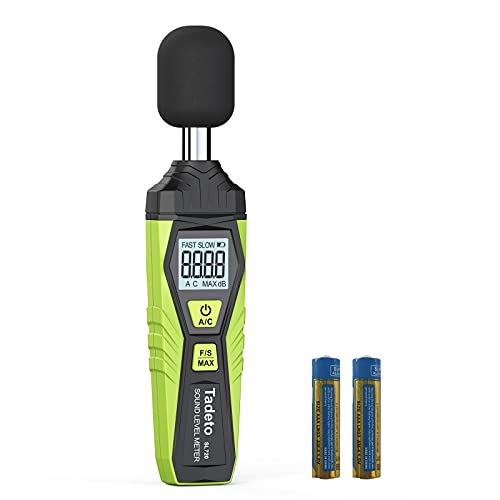
- 30–130 dB range with ±2.0 dB accuracy
- A and C weighting for varied sound checks
- Backlit 0.1 dB LCD with fast/slow response
Best For: Portable environmental and machinery noise measurement
Best Feature-Rich Option

- 30–130 dB range with ±1.5 dB accuracy
- Five adjustable measurement ranges
- A/C modes, alarms, MAX/MIN, and data hold
Best For: Detailed noise monitoring with alerts and adjustable ranges
Best Classic Meter – Extech 407730 Digital Sound Level Meter
The Extech 407730 is a straightforward choice among digital sound level meters when you want a familiar handheld design, a 40–130 dB range, and clear trend information from its fast analog bar graph. It also records maximum and minimum values for quick checks over time.
Best For: General-purpose sound measurements where A/C weighting, max/min readings, and a 0.1 dB display resolution are useful.
Pros:
- Measures 40–130 dB with 0.1 dB resolution and stated 2 dB accuracy
- Fast analog bar graph complements the digital display
- Includes max/min recording, max hold, auto power-off, and a windscreen
- Four AAA batteries are included
Cons:
- Its stated 2 dB accuracy is less precise than some newer meters in this roundup
- It does not list data logging or PC export features
The 407730 makes sense for users who want a conventional meter with useful peak and minimum tracking rather than a connected data-logging system. Its windscreen and battery operation also support convenient field use.
Best Wall-Mounted Display – DANOPLUS 13-Inch Decibel Meter Recorder
This DANOPLUS model stands out among digital sound level meters for rooms that need a highly visible, continuously monitored reading. Its 13-inch HD screen, long sensor cable, alarm functions, and extended data storage make it suited to shared spaces and fixed installations.
Best For: Classrooms, studios, homes, and other locations needing a large remote display and adjustable noise alarms.
Pros:
- Large 13-inch HD display with digits designed to be visible from a distance
- Records readings every 2 seconds and stores up to one year of data
- Includes adjustable audible and visual alarms
- Offers desktop or wall mounting and a 16.4-foot sensor cable
Cons:
- Its 12.6-inch-long body and 2.66-pound weight are less portable than handheld meters
- Requires a fixed-space setup rather than simple pocket use
- Alarm defaults to 120 dB and may require manual adjustment for the application
Choose this meter when visibility and ongoing monitoring matter more than compact size. The long sensor lead lets you place the display where it is easy to see while measuring from a more appropriate location.
Best Portable Value – TopTes TS-501B Sound Level Meter
The TopTes TS-501B is a compact option among digital sound level meters, combining a 30–130 dB range with A/C weighting, a backlit LCD, and simple max/min functions. Its light 5.3-ounce body and included case make it easy to carry for routine noise checks.
Best For: Home, office, workshop, school, factory, and neighborhood noise checks where portability and simple operation are priorities.
Pros:
- Measures 30–130 dB with A/C weighting and stated 1.5 dB accuracy
- Large 2.25-inch backlit LCD is easier to read in dim conditions
- Provides max/min readings and a data-hold function
- Includes three AAA batteries, a user manual, and a carry case
Cons:
- Does not list data logging or PC connectivity
- Its 30–130 dB range may not cover very quiet measurements below 30 dB
For everyday handheld use, the TS-501B offers a practical mix of range, weighting options, display visibility, and peak tracking. It is a particularly convenient pick when you want a meter that is ready to carry and use without a larger installation.
Best Data Logger – DANOPLUS DP-441 Digital Sound Meter
The DANOPLUS DP-441 is one of the more capable digital sound level meters here for documenting noise over time. It stores up to 43,000 readings, supports PC export, and adds a color alarm system, chart display, A/C weighting, and selectable fast or slow response.
Best For: Users who need rechargeable operation, detailed noise records, PC analysis, and configurable visual alerts.
Pros:
- Stores up to 43,000 records and exports data through a Windows PC connection
- Measures 30–130 dB with stated ±1.5 dB accuracy
- Offers A/C weighting and adjustable fast/slow response
- Includes three-color threshold lights, a line chart, analog bars, and DC output
Cons:
- PC connectivity and export are designed for Windows 7, 10, and 11
- Its feature set may be more than needed for occasional spot checks
- Charging takes about 1.5 hours, so battery planning still matters for extended use
The DP-441 is the strongest fit when measurements need to become a record you can review, export, or print. Its rechargeable design and real-time visual displays add convenience for recurring monitoring projects.
Wall-Mount Visibility Pick – SW-525A Large-Display Sound Level Meter
For straightforward monitoring, the SW-525A is one of the more practical digital sound level meters to consider. Its large red LCD display is designed for easy viewing, while the automatic operation and 30–130 dB measurement range keep everyday readings simple.
Best For: Wall-mounted or fixed-position noise monitoring where display visibility matters.
Pros:
- Large LCD display for at-a-glance readings
- Measures sound from 30 to 130 dB
- Automatic operation simplifies use
- Wall-hanging design suits stationary monitoring
Cons:
- Plastic acrylic construction may be less rugged than a professional metal-bodied meter
- Its fixed monitoring format is less convenient for portable use
The SW-525A is a focused choice for users who prioritize a prominent display and uncomplicated operation over advanced logging or handheld features.
Portable Feature Pick – RISEPRO HT-80A Digital Decibel Meter
The RISEPRO HT-80A is a versatile option among digital sound level meters, combining a 30–130 dB range with ±1.5 dB accuracy. Backlighting, data hold, MAX/MIN recording, and dual weighting options make it useful for checking noise in homes, workplaces, study settings, and industrial environments.
Best For: Portable noise checks that benefit from backlighting, peak/minimum readings, and flexible weighting.
Pros:
- Measures 30–130 dB with listed ±1.5 dB accuracy
- Offers FAST time weighting and Type A frequency weighting
- Includes data hold, MAX/MIN readings, and auto power off
- Backlit display supports use in dark environments
Cons:
- Its compact plastic construction may not suit heavy-duty handling
- The supplied notes do not specify data logging or PC export
Choose the HT-80A when you want a compact meter with useful on-device reading features rather than a dedicated long-term data logger.
Data-Logging Pick – GAIN EXPRESS SLM-442 Sound Level Meter
For users who need records as well as live readings, the GAIN EXPRESS SLM-442 stands out among digital sound level meters. It covers 30–130 dB(A) and 35–130 dB(C), stores up to 3,100 records, and connects to a PC for exporting data on supported Windows versions.
Best For: Noise inspections, classroom or office monitoring, and projects requiring saved measurements and PC review.
Pros:
- Stores up to 3,100 data records
- Supports PC connectivity and data export for Windows 7, 10, and 11
- Provides numerical and graphical readings with three-color light alerts
- Rechargeable operation offers up to 8 hours per charge
Cons:
- Its logging and export features may be more than needed for occasional spot checks
- Automatic shutdown activates after inactivity unless adjusted
- PC export depends on a compatible Windows computer
The SLM-442 is the strongest fit here for structured monitoring because it combines dual measurement modes, visual alarms, rechargeable power, and substantial onboard storage.
Best Everyday Value – S8607 Digital Sound Level Meter
For straightforward checks around classrooms, homes, offices, workshops, and traffic areas, this digital sound level meter covers a broad 30–130 dB range. Its 0.1 dB display resolution, A-weighted measurement, selectable response speeds, and compact 4.2-ounce design make it practical for routine noise monitoring.
Best For: General-purpose household, classroom, workplace, and environmental noise checks.
Pros:
- Measures 30–130 dB with ±1.5 dB accuracy and 0.1 dB resolution.
- Offers A-weighted readings plus fast and slow response modes.
- Includes MAX/MIN tracking, result hold, backlight, low-battery indicator, and automatic shutdown.
Cons:
- Uses A-weighted measurement only, unlike models with both A and C weighting.
- Readings below 30 dB or above 130 dB are shown as UNDER or OVER.
This is a well-rounded choice when you want essential measurement and logging functions without a bulky instrument. Its automatic shutdown and held readings are especially useful for occasional, hands-on checks.
Best Portable Dual-Weighting Pick – Tadeto SL720 Decibel Meter
The Tadeto SL720 is a portable digital sound level meter for monitoring noise in homes, factories, vehicles, offices, schools, and construction areas. It combines a 30–130 dB range with both A and C weighting, allowing basic environmental readings as well as sound-pressure checks around machinery and other higher-intensity sources.
Best For: Portable noise checks that benefit from both A-weighted and C-weighted measurements.
Pros:
- Measures 30–130 dB with stated accuracy of ±2.0 dB.
- Provides A/C weighting for environmental noise and machine sound-pressure analysis.
- Includes fast and slow response settings, MAX data hold, and a backlit 0.1 dB LCD.
Cons:
- Its stated ±2.0 dB accuracy is lower than the ±1.5 dB specification of some alternatives.
- Manual operation may require more user input during repeated measurements.
The SL720 stands out for flexibility rather than specialized logging features. Choose it if switching between A and C weighting matters more than having the highest stated accuracy in this group.
Best Feature-Rich Option – Tadeto TE017 Decibel Meter
For users who want more control over readings, the Tadeto TE017 is a feature-rich digital sound level meter with five adjustable measurement ranges inside its 30–130 dB span. It adds MAX/MIN monitoring, A/C weighting, fast and slow response modes, data hold, and audible and visual alarms for active noise checks.
Best For: Users who want adjustable ranges, alerts, and expanded monitoring controls.
Pros:
- Offers 30–130 dB measurement with ±1.5 dB accuracy.
- Provides five adjustable measurement ranges for more controlled testing.
- Combines A/C weighting, fast/slow response, MAX/MIN, data hold, and audible/visual alarms.
Cons:
- At 11.7 ounces, it is heavier than the 4.2-ounce S8607.
- The larger feature set may be more than needed for occasional basic readings.
The TE017 is the strongest fit when alerts and adjustable measurement ranges are priorities. Its broad control set supports more involved monitoring, while the backlit display helps with readings in dim locations.
How We Picked These Digital Sound Level Meters
We focused on meters with useful measurement ranges, readable displays, practical controls, and features that match common noise-testing tasks. The selection includes portable SPL testers, classroom and office displays, wall-mount models, and data loggers with internal memory or USB export. We also considered A/C weighting, MAX/MIN capture, data hold, backlighting, alarms, rechargeable power, and automatic shutoff.
Because specifications and included accessories can vary by listing, verify the current package contents, accuracy claims, sensor design, and warranty before ordering.
Quick Comparison
| Type | Best for | Features to prioritize |
|---|---|---|
| Portable handheld meter | Fast spot checks | Backlit display, data hold, MAX/MIN, A/C weighting |
| Wall-mounted display | Classrooms and shared spaces | Large screen, visible alarm, remote sensor |
| Data-logging meter | Audits and documentation | Memory capacity, timestamps, USB export, rechargeable battery |
| Professional-style tester | Frequent field measurements | Broad range, durable controls, clear weighting and response settings |
Key Buying Factors for Digital Sound Level Meters
Measurement Range and Accuracy
Most models here cover approximately 30 to 130 dB, which is suitable for everyday environmental, workplace, classroom, and equipment checks. A broad range is useful, but accuracy, calibration support, and consistent readings matter more than a large headline range when measurements will inform formal decisions.
Weighting and Response Modes
A-weighting approximates human hearing and is commonly used for general environmental noise. C-weighting captures more low-frequency energy and can help when evaluating machinery, music, or bass-heavy sounds. Fast and slow response settings can make changing readings easier to interpret.
Display, Alarms, and Controls
Choose a backlit LCD for dim areas and a large screen for group monitoring. MAX/MIN and data-hold functions help capture brief events. Visual or audible alarms are especially useful when a meter will remain in a classroom, office, studio, or workshop.
Recording, Power, and Portability
If you need evidence over hours or days, select a data logger with adequate memory, time records, and straightforward export. For occasional checks, a compact battery-powered meter may be simpler. Rechargeable models reduce disposable-battery use, while automatic shutoff helps preserve power.
Who Should Buy Which Digital Sound Level Meters?
Choose a basic handheld meter for household troubleshooting, quick workplace checks, and occasional equipment comparisons. A large wall-mounted model is better for classrooms, studios, offices, and other spaces where people need to see noise levels continuously. Select a data-logging meter when you need recorded trends, downloadable results, or documentation for repeated measurements. For more demanding field work, prioritize a reputable instrument with clearly stated accuracy, selectable weighting, stable readings, and calibration compatibility.