
The best digital barometers make pressure trends easier to read and apply, whether you are monitoring indoor conditions, checking weather changes, or measuring altitude outdoors.
This roundup compares 10 options across connected sensors, wireless weather stations, calibrated laboratory instruments, handheld meters, and multifunction hiking devices.
Best 10 Digital Barometers Picks for 2026
Best Connected Monitor
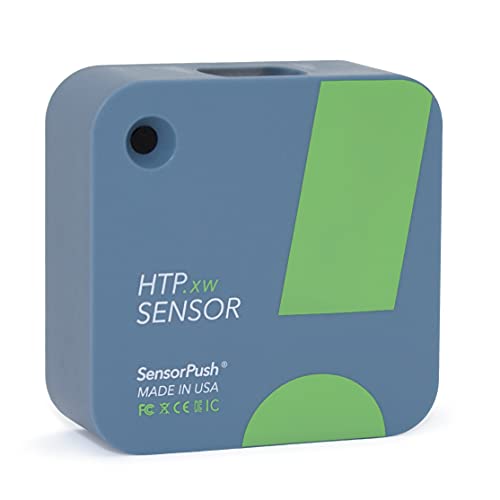
- Tracks pressure alongside temperature and humidity
- Stores 30 days onboard with unlimited in-app history
- Optional gateway supports remote monitoring
Best For: App-based environmental monitoring and long-term data logging
Best Calibrated Choice

- Includes NIST-traceable calibration certificate
- Measures pressure, temperature, and humidity
- Offers alarms and 24-hour min/max recall
Best For: Labs and indoor monitoring where documented calibration matters
Best Home Weather Station
La Crosse 308-1417 Weather Station

- Displays 24-hour pressure history and forecast trends
- Wireless outdoor sensor reaches up to 330 feet unobstructed
- Adds humidity, alerts, and atomic timekeeping
Best For: At-a-glance household weather monitoring
Best Portable Weather Meter
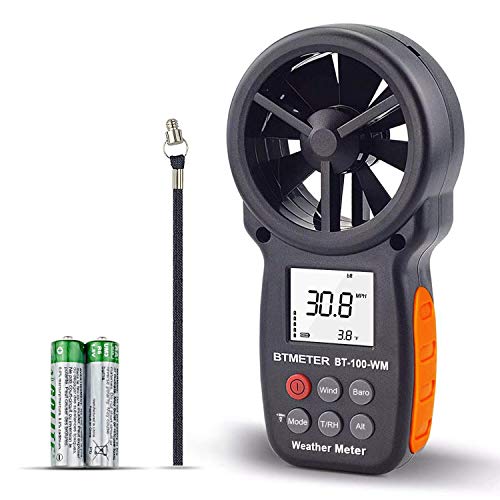
- Combines pressure readings with wind and weather measurements
- Logs 16 groups of barometric pressure data
- Compact design includes backlit display and tripod mount
Best For: Outdoor field checks and HVAC airflow testing
USB Precision Pick

- High-precision pressure sensor
- Convenient USB connection
- NMEA output for marine use
Best For: Computer-connected weather and marine data monitoring
Everyday Home Monitor
Digital Barometer Weather Forecast Clock

- 4-inch multifunction display
- Manual local-pressure calibration
- Desk or wall placement
Best For: At-a-glance indoor weather and comfort monitoring
Traceable Lab Choice

- NIST-traceable accuracy
- Four-line measurement display
- 24-hour minimum/maximum memory
Best For: Laboratory and accuracy-focused environmental monitoring
Best Home Weather Display

- Live pressure, forecast, temperature, and humidity display
- Large numerals for viewing from 5–6 feet
- Desk or wall-style mounting with altitude calibration
Best For: Home, garage, boats, patios, and golf carts
Best Pocket Hiking Instrument

- Measures pressure from 300 to 1100 mbar
- Tracks altitude from -2,300 to 29,500 feet
- Adds compass, thermometer, time, and backlight
Best For: Hiking, camping, climbing, and outdoor navigation
Best Backlit Outdoor Forecast Tool

- Combines barometer, altimeter, compass, thermometer, and timer
- Backlit display supports day and night readability
- Includes lanyard and predicts conditions 12–24 hours ahead
Best For: Mountaineering, hiking, camping, and outdoor sports
Best Connected Monitor – SensorPush HTP.xw
For buyers seeking digital barometers with app-based environmental tracking, the SensorPush HTP.xw combines barometric pressure readings with temperature, humidity, dew point, VPD, and heat-index monitoring. Its Bluetooth setup is designed to be quick, while onboard logging helps preserve readings between app updates.
Best For: Connected monitoring in homes, greenhouses, humidors, refrigerators, freezers, and other spaces where long-term environmental data matters.
Pros:
- Records pressure, temperature, humidity, dew point, VPD, and heat index.
- Offers 30 days of onboard data logging and unlimited in-app storage.
- Water-resistant design with up to 1–2 years of typical battery life.
- Optional G1 Gateway enables remote access and cloud monitoring.
Cons:
- Wi-Fi and remote access require the separately sold G1 Gateway.
- Bluetooth data updates when the sensor is within range rather than continuously from anywhere.
The HTP.xw is more than a standalone pressure display: it is a compact data logger for users who want context around changing conditions. Choose it when app history and multi-reading monitoring are more important than a dedicated desktop screen.
Best Calibrated Choice – Traceable Digital Barometer
Traceable Calibrated Digital Barometer, 7.25 - 14.94 PSI, 0.1 Hg Resolution, Accuracy of 0.12" Hg
Check Price On AmazonThis Traceable unit suits buyers who want digital barometers for controlled, measurable environments. It displays pressure, temperature, and relative humidity, adds trend and alarm functions, and includes an NIST-traceable calibration certificate with data.
Best For: Laboratories, plant areas, and other indoor settings where calibration documentation, alarms, and stored readings are useful.
Pros:
- Includes NIST-traceable calibration certification and data.
- Measures pressure, temperature, and relative humidity.
- Stores hourly minimum and maximum readings for the previous 24 hours.
- Provides high/low audible and visual alarms for all three measurements.
Cons:
- Optional PC software is needed for computer-based data capture.
- Its pressure range is specified in PSI and inches of mercury, which may not suit every workflow.
With a four-line LCD, pressure trend graph, wall mount, and flip-open stand, this is a practical instrument for visible indoor monitoring. Its calibration documentation makes it especially compelling when readings need stronger traceability than a casual home weather display provides.
Best Home Weather Station – La Crosse 308-1417 Weather Station
308-1417 Wireless Barometric Pressure Weather Station with WWVB Time, 330ft | Advanced Forecast
Check Price On AmazonFor a household-friendly take on digital barometers, the 308-1417 combines barometric pressure trends with indoor/outdoor temperature and humidity readings. Its wireless sensor, forecast display, atomic timekeeping, and alert functions make it a broad home weather station rather than a pressure-only instrument.
Best For: Home users who want at-a-glance pressure trends, basic forecasting, wireless outdoor readings, and automatic timekeeping.
Pros:
- Shows a 24-hour historical barometric pressure graph.
- Includes a weather-resistant wireless sensor with a listed 330-foot range without obstructions.
- Provides dynamic forecast indicators and customizable temperature alerts.
- Atomic self-setting time includes time-zone and daylight-saving options.
Cons:
- Requires five AA batteries, which are not included.
- Outdoor temperature accuracy is listed at plus or minus 2 degrees Fahrenheit.
- Forecasting is based on displayed pressure trends rather than a detailed professional weather service.
This model is a sensible pick when pressure information is just one part of a convenient home display. It offers more everyday utility than a specialized barometer, especially for users who value wireless outdoor readings and a clock alongside weather trends.
Best Portable Weather Meter – BTMETER BT-100WM Anemometer
The BTMETER BT-100WM is a handheld option for buyers who need digital barometers on the move. Along with atmospheric pressure, it measures wind speed, temperature, humidity, dew point, wind chill, and altitude, making it useful for field activities and airflow checks.
Best For: Shooting, hunting, sailing, kite flying, drone activities, outdoor weather checks, and HVAC airflow testing.
Pros:
- Measures pressure, wind speed, temperature, humidity, dew point, wind chill, and altitude.
- Supports five wind-speed units and multiple pressure, temperature, and elevation units.
- Logs 16 groups of barometric pressure data for comparison.
- Backlit LCD, tripod mount, auto shutoff, and low-battery indicator support field use.
Cons:
- Wind-speed accuracy is listed at plus or minus 5%, while temperature accuracy is plus or minus 2 degrees.
- Its barometric log stores 16 groups, less than a dedicated long-term monitoring system.
- It is a handheld meter rather than a continuously mounted home display.
This is the most versatile choice for portable measurements, particularly when pressure needs to be considered alongside wind and airflow. Select it over a stationary weather station when compact size, multiple units, and field readings are the priority.
USB Precision Pick – USB Barometer with Software
For users who need computer-connected digital barometers, this USB model combines a high-precision pressure sensor with a convenient USB connection. Its NMEA output also makes it relevant for marine applications and data-focused weather monitoring.
Best For: Weather analysis, forecasting, marine setups, and pressure-sensitive medical monitoring.
Pros:
- Uses a high-precision pressure sensor.
- Connects conveniently through USB.
- Provides NMEA output for marine applications.
- Supports weather analysis and forecasting data needs.
Cons:
- More specialized than a simple standalone home display.
- The supplied notes do not specify display or battery details.
This is a practical choice when pressure data needs to feed into software or a marine system. Buyers seeking an instrument for data integration should consider it ahead of a basic clock-style barometer.
Everyday Home Monitor – Digital Barometer Weather Forecast Clock
This multifunction unit is one of the more approachable digital barometers for daily indoor monitoring. It shows local pressure, pressure trend, weather icons, temperature, humidity, and time on a 4-inch display, with manual calibration for the current location.
Best For: Home, office, garage, RV, boat cabin, or workshop use where at-a-glance indoor weather information is useful.
Pros:
- Displays local pressure rather than only sea-level-corrected readings.
- Combines barometer, thermometer, hygrometer, clock, and weather icons.
- Offers manual pressure calibration through front buttons.
- Supports desk or wall placement and includes a short backlight function.
Cons:
- Pressure trends may take 24 to 48 hours to stabilize after setup or relocation.
- Weather icons are a simple reference based on local pressure changes, not a detailed forecast.
- It is intended for indoor use.
Choose this model if convenience and a broad set of household readings matter more than specialized data output. Its local-pressure focus also makes calibration and location differences important to understand before comparing readings with weather apps.
Traceable Lab Choice – Digital Laboratory Barometer
For laboratory and accuracy-conscious applications, this digital barometer is NIST traceable and provides more than a single pressure reading. Its four-line LCD tracks pressure, temperature, relative humidity, pressure trend, and time of day, while storing recent measurements for review.
Best For: Laboratory users and buyers who value traceable accuracy, environmental readings, and historical data recall.
Pros:
- NIST traceable for assured accuracy.
- Four-line LCD presents several measurements at once.
- Stores hourly minimum and maximum readings for the last 24 hours.
- Allows previous readings to be recalled with a button press.
Cons:
- The supplied notes do not specify the power source or battery life.
- Its laboratory-oriented feature set may be more than casual users need.
This model stands out among digital barometers when documentation and data history are priorities. The NIST traceability and 24-hour memory make it better suited to measured, repeatable monitoring than basic household weather displays.
Best Home Weather Display – Ambient Weather Clock
For shoppers comparing digital barometers for everyday weather awareness, the FUNcaster combines live barometric pressure with time, temperature, humidity, and a forecast on one large LCD display. Its calibration feature can help tailor readings to local altitude, while the compact design works on a desk or mounted to a clean hard surface.
Best For: Home, garage, patio, golf carts, boats, and other locations where an easy-to-read local weather display is useful.
Pros:
- Displays barometric pressure, forecast, temperature, humidity, and time together.
- Large numerals are designed to be readable from approximately 5–6 feet away.
- Supports altitude-based barometer calibration and fast-response sensor ports.
- Can be placed on a table or attached with hook-and-loop mounting.
Cons:
- Requires two AAA batteries, which are not included.
- Its design is geared toward stationary indoor or vehicle use rather than hiking.
This is a practical choice if you want a dedicated household or recreational display rather than a pocket instrument. The combination of readable information and adjustable calibration makes it especially useful for monitoring changing conditions around a home, boat, or golf cart.
Best Pocket Hiking Instrument – 8-in-1 Altimeter Compass
Among digital barometers for hiking and camping, this compact 8-in-1 instrument adds altitude, compass, temperature, time, and weather functions. It measures pressure from 300 to 1100 mbar and altitude from -2,300 to 29,500 feet, giving outdoor users several readings in one portable device.
Best For: Hikers, campers, and climbers who want barometric pressure, elevation, direction, and temperature in a single handheld tool.
Pros:
- Combines an altimeter, barometer, electronic compass, thermometer, and additional functions.
- Offers a broad altitude range from -2,300 to 29,500 feet.
- Compass uses an eight-direction display and responds to external magnetic fields.
- Includes a five-second electronic backlight for viewing readings.
Cons:
- The supplied notes do not specify included batteries or a lanyard.
- Its compact package dimensions may mean a smaller display than a stationary weather clock.
This model makes sense when portability matters more than a large, always-on display. Its combination of pressure, elevation, direction, and temperature readings is well suited to outdoor navigation and changing terrain.
Best Backlit Outdoor Forecast Tool – Portable 8-in-1 Altimeter
This portable option is one of the more versatile digital barometers for mountaineering and outdoor sports. Along with air pressure and altitude readings, it provides compass, thermometer, timer, and weather functions, while its bright backlight and included lanyard support use on day or night adventures.
Best For: Outdoor enthusiasts who want a compact, carry-ready instrument with altitude, pressure, navigation, temperature, and short-term weather forecasting.
Pros:
- Combines an altimeter, barometer, compass, thermometer, timer, and weather features.
- Measures elevations up to 29,500 feet or 9,000 meters.
- Backlit LCD is intended to improve readability in varying lighting conditions.
- Includes a lanyard for convenient carrying and a stated one-year warranty.
Cons:
- The supplied notes do not identify the battery type or battery life.
- Its weather forecast covers approximately 12–24 hours, so it is not a long-range forecast tool.
The defining advantage here is portability paired with a backlit display and weather forecasting. Choose it over a basic barometer if you want a broader set of outdoor readings in a carry-friendly format.
How We Picked the Best Digital Barometers
We organized these Digital Barometers by their most useful real-world applications rather than treating every model as interchangeable. The selection includes Bluetooth environmental sensors, wireless home weather stations, calibrated instruments for technical work, USB-connected models, handheld anemometers, and outdoor altimeter-compass devices.
Our priorities were measurement range, stated resolution and accuracy, display or connectivity options, portability, power requirements, and the usefulness of additional readings such as temperature, humidity, wind speed, altitude, or time. Calibration documentation matters especially for laboratory and professional use, while battery life and readability are more important for field instruments.
Quick Comparison
- Best for connected monitoring: SensorPush HTP.xw, with Bluetooth temperature, humidity, and pressure tracking.
- Best for calibrated measurements: Traceable and NIST-traceable laboratory barometers.
- Best for home weather information: The wireless weather station and weather forecast clock models.
- Best for wind and pressure readings: The BTMETER handheld anemometer and barometer.
- Best for computer-based logging: The USB barometer with software.
- Best for hiking: The multifunction altimeter, compass, thermometer, and barometer units.
Key Buying Factors for Digital Barometers
Accuracy, Resolution, and Calibration
Resolution describes the smallest displayed change, while accuracy describes how close the reading is to a reference value. A high-resolution display is not automatically highly accurate. For research, maintenance, or regulated work, choose a model with documented calibration or NIST traceability. For general weather awareness, trend consistency may be more useful than laboratory-level precision.
Pressure Units and Useful Range
Check whether the device supports the units you use, such as inches of mercury, millibars, hectopascals, or PSI. Home weather instruments commonly focus on atmospheric pressure, while technical models may provide a wider or specialized PSI range. Hikers should also confirm the altitude range and whether the barometer supports elevation adjustment.
Display, Connectivity, and Data Logging
A large always-on screen is convenient for a desk or wall, whereas Bluetooth or USB connectivity is better for reviewing trends over time. Consider app compatibility, software support, transmission distance, and whether the device stores readings when your phone or computer is unavailable.
Portability and Power
Handheld outdoor units should be compact, backlit, and easy to operate with gloves or in changing light. Home and laboratory models can prioritize a larger display and stable power source. Verify battery type, expected runtime, weather resistance, and mounting options before buying.
Who Should Buy Which Digital Barometers?
Choose a connected environmental sensor if you want remote monitoring of pressure, temperature, and humidity. Select a wireless weather station or forecast clock for an at-a-glance household display. Buyers who need defensible measurements should favor a calibrated or NIST-traceable instrument. A USB model suits users who want to collect readings on a computer, while an anemometer is the better fit for wind-related field checks.
For hiking, mountaineering, and travel, choose one of the multifunction outdoor instruments with an altimeter, compass, thermometer, and barometer. These devices offer more useful information in the field than a pressure-only model, but they generally require careful calibration and should not replace dedicated navigation or safety equipment.