
When storms, outages, or travel emergencies hit, a dependable radio can make a big difference. The best models do more than play weather updates—they give you alerts, light, and a backup way to charge essentials.
This roundup of crank radios for survival kits focuses on practical features that matter in real emergencies: NOAA alert reception, power options, battery life, and durability.
Best 10 Crank Radios for Survival Kits Picks for 2026
Compact Backup Power Hub
FosPower NOAA Emergency Weather Radio A1

- 7400mWh power bank for small device charging
- Hand crank, solar, and AAA battery power
- NOAA, AM/FM, flashlight, and reading light
Best For: compact emergency backup with phone charging
Rugged Multi-Band Ready Option
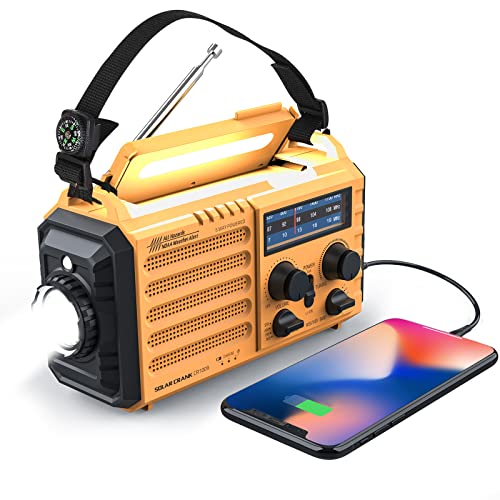
- Five power sources for backup flexibility
- AM/FM/SW plus seven NOAA channels
- Flashlight, reading lamp, SOS, and compass
Best For: rugged preparedness with multi-band coverage
Lightweight Pocket Survival Pick
Esky Emergency Hand Crank Radio

- USB, solar, and hand crank charging
- 2000mAh battery with NOAA and AM/FM
- Lightweight design with 140-lumen flashlight
Best For: portable kits and grab-and-go emergency use
Heavy-Duty Power and Signal Choice
OnLyee Emergency Radio 12000mAh

- 12,000mAh battery with phone charging
- Large solar panel plus hand crank backup
- NOAA, AM/FM, flashlight, and SOS alarm
Best For: robust hurricane and blackout preparedness
All-in-One NOAA Pick

- 7 NOAA weather bands with loud SOS alert
- Solar, hand crank, USB, and battery backup power
- Includes flashlight, reading lamp, compass, and USB output
Best For: A full-featured emergency kit radio for storms and outages
High-Capacity Value Pick

- 14800mWh battery with phone-charging support
- Four charging modes including solar and hand crank
- 3-mode flashlight plus motion sensor reading lamp
Best For: Longer outages and buyers who want stronger battery life
Rugged Power Pick
Leaton 10000mAh Emergency Radio

- 10000mAh battery with 6-8 hours of radio playtime
- IPX6 waterproof build for storms and splashes
- 48-LED lamp, 20-LED flashlight, SOS alarm, and compass
Best For: Rugged storm kits, travel bags, and off-grid emergency use
Storm-Ready Power
NITIGO 4000mAh NOAA Weather Alert Radio

- NOAA alerts plus AM/FM for everyday and emergency use
- USB, solar, and hand-crank charging with 4000mAh battery
- Flashlight, reading lamp, SOS alarm, and headphone jack
Best For: Families and preppers wanting a well-rounded emergency radio
Compact Backup
iRonsnow Solar Emergency Hand Crank Weather Radio
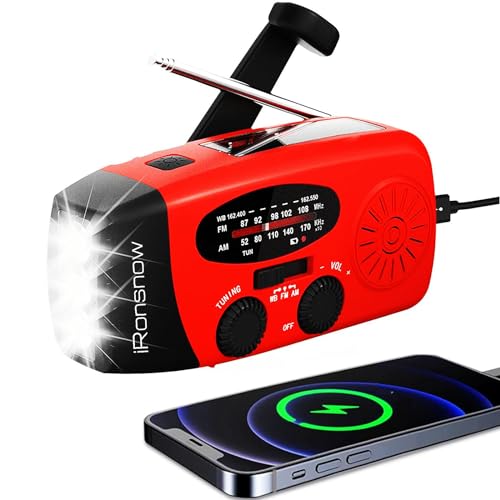
- NOAA and AM/FM reception in a compact body
- USB-C, solar, and hand-crank charging with 2000mAh battery
- Battery indicator, flashlight, and SOS alarm flashing mode
Best For: Compact go-bags and travelers who want the basics
High-Capacity Field Kit
QAUYYW 74000mWh Emergency Radio

- Very large 74,000mWh battery for longer emergency use
- USB-C, hand crank, and solar charging options
- NOAA, AM/FM/SW bands with flashlight, lamp, and SOS siren
Best For: Users wanting maximum runtime and a bigger backup battery
Compact Backup Power Hub – FosPower NOAA Emergency Weather Radio A1
If you’re comparing crank radios for survival kits, this FosPower model stands out for pairing emergency broadcasting with backup charging. It combines NOAA weather access, AM/FM reception, a hand crank, solar charging, AAA battery support, and a built-in power bank, making it a practical all-in-one option for outages and outdoor emergencies.
Best For: Users who want a compact emergency radio with phone-charging backup and multiple power sources.
Pros:
- 7400mWh (2000mAh) power bank can help power a small phone or tablet in an emergency.
- Three power sources: hand crank, solar panel, and AAA batteries.
- Includes a 4-LED reading light and 1W flashlight for low-light situations.
- Receives NOAA weather broadcasts plus AM/FM stations.
Cons:
- Relies on AAA batteries when you cannot regenerate power.
- Power bank is sized for small devices rather than larger electronics.
Overall, this is a well-rounded survival-kit radio for anyone who wants essentials in a single portable package. The added flashlight, SOS alarm, and lifetime warranty make it especially appealing as a dependable emergency backup.
Rugged Multi-Band Ready Option – Raynic Weather Radio CR1009
For buyers searching crank radios for survival kits, the Raynic Weather Radio brings a strong mix of backup power and alert features. It offers five power sources, NOAA weather alerts, AM/FM/SW reception, and built-in lighting, which makes it a practical pick for home preparedness, travel, and outdoor use.
Best For: People who want a rugged emergency radio with multiple charging options and multi-band reception.
Pros:
- Five power sources, including hand crank, solar, AC, rechargeable battery, and AAA battery support.
- Receives AM/FM/SW plus seven preset NOAA weather channels.
- Includes a 3W flashlight, 2.5W reading lamp, SOS alarm, and compass.
- Water-resistant IPX3 design suits home and outdoor preparedness.
Cons:
- NOAA alerts require the radio to be powered on and manually tuned.
- Larger than pocket-size alternatives, so it is less compact for minimal kits.
This is a versatile emergency radio for users who value layered backup power and broader station coverage. The added headphone jack and included accessories give it extra utility in a longer-term kit.
Lightweight Pocket Survival Pick – Esky Emergency Hand Crank Radio
If you want crank radios for survival kits that stay easy to carry, the Esky Emergency Hand Crank Radio is built for portability. It combines hand crank, solar, and USB charging with NOAA, AM/FM reception, an SOS alarm, and a bright LED flashlight, making it a simple grab-and-go emergency tool.
Best For: Campers, travelers, and emergency kits that need a small, lightweight radio.
Pros:
- Three charging methods: USB, solar panel, and hand crank.
- Built-in 2000mAh rechargeable battery supports extended use.
- 140-lumen 3-LED flashlight helps light up dark spaces.
- Portable and lightweight with a lanyard for easy carry.
Cons:
- Smaller battery capacity than some larger emergency radio options.
- Focuses on core survival features rather than advanced extras.
This model makes sense if you want a dependable emergency radio without adding much bulk to a bag or trunk. Its straightforward feature set covers the basics well for camping, storms, and everyday preparedness.
Heavy-Duty Power and Signal Choice – OnLyee Emergency Radio 12000mAh
Among crank radios for survival kits, this OnLyee emergency radio is aimed at users who want larger backup capacity and stronger illumination. It includes NOAA weather band reception, AM/FM, a 12,000mAh battery, a large solar panel, hand crank backup, and multiple lighting options for outages and severe weather.
Best For: People building a more robust emergency kit for hurricanes, blackouts, and outdoor backup power.
Pros:
- Large 12,000mAh rechargeable battery can charge phones and small USB devices.
- Oversized 8500mm² solar panel plus hand crank and USB-C input.
- Features NOAA weather band, AM/FM, a 5W flashlight, and a 12-LED reading lamp.
- IPX6 water-resistant design adds durability for stormy conditions and outdoor use.
Cons:
- More feature-rich than basic emergency radios, so it may be more than minimal kits need.
- Its larger battery and lighting setup may be less compact than smaller options.
Overall, this is a strong option for buyers who want more power reserve and more visible lighting in one emergency unit. The clear reception, SOS alarm, and rugged build make it a capable fit for serious preparedness.
All-in-One NOAA Pick – Hand Crank Weather Radio
For crank radios for survival kits, this NOAA weather radio stands out as a flexible all-in-one option with weather alerts, multiple charging methods, and built-in lighting. It is designed to keep you informed during severe weather while also giving you a practical backup power source for phones and basic visibility when the lights go out.
Best For: Users who want a feature-packed emergency radio for home kits, camping, and hurricane prep.
Pros:
- Certified NOAA weather alert radio with 7 preset weather bands and loud SOS alarm.
- Multiple power options: solar, hand crank, USB, power plug, built-in rechargeable battery, and AAA backup batteries.
- Includes AM/FM/shortwave reception plus earbud jack for private listening.
- Built-in LED flashlight, reading lamp, compass, and USB output for charging phones.
Cons:
- AAA batteries and power plug are not included.
- Phone charging is limited to emergency use through the USB output.
This is a practical choice if you want one device to cover weather alerts, light, and backup charging in a survival kit. The mix of solar, crank, and battery power makes it easier to keep ready before and during an outage.
High-Capacity Value Pick – MD-090P Emergency Radio
Among crank radios for survival kits, this upgraded emergency radio focuses on battery capacity and strong lighting. It combines NOAA weather alerts, phone charging, and several power options so it can stay useful through outages and storm recovery.
Best For: Buyers who want a high-capacity emergency radio with strong light output and broad storm coverage.
Pros:
- 14800mWh rechargeable battery can charge more than one smartphone.
- Four charging modes: micro USB, solar, hand crank, and rechargeable battery.
- NOAA weather band access for local hazard and storm information.
- Super-bright 3-mode flashlight plus motion sensor reading lamp.
Cons:
- Uses Micro USB rather than USB-C for charging input.
- Bulky feature set may be more than minimal-kit buyers need.
This model is a strong fit if your main goal is staying powered and visible during emergencies. The larger battery and upgraded lighting make it especially useful for longer outages and family preparedness.
Rugged Power Pick – Leaton 10000mAh Emergency Radio
If you are comparing crank radios for survival kits, this Leaton model is built around ruggedness and dependable backup power. It adds a large 10000mAh battery, waterproof construction, and dual lighting, making it a practical choice for storm kits, camping, and glove-box preparedness.
Best For: Preppers and travelers who want a waterproof emergency radio with a large battery and compact form.
Pros:
- 10000mAh real-capacity battery supports 6-8 hours of radio playtime on a full charge.
- IPX6 waterproof and rugged body for storms, splashes, and rough conditions.
- Includes 48-LED reading lamp, 20-LED flashlight, SOS alarm, and built-in compass.
- USB-C input supports 2A fast charging; solar and hand crank act as backup sources.
Cons:
- USB-C output is limited to 5V/1A emergency slow charging for phones.
- Manual tuning is required; it does not include S.A.M.E. automated alerts.
This is a solid pick for people who want a tougher emergency radio that can handle wet weather and rough storage. The larger battery and waterproof build make it especially practical for bug-out bags and vehicle kits.
Storm-Ready Power – NITIGO 4000mAh NOAA Weather Alert Radio
If you’re comparing crank radios for survival kits, the NITIGO model stands out for its balanced mix of alerting, lighting, and backup charging. It receives NOAA weather alerts plus AM/FM bands, and its 4000mAh battery can be recharged by USB, solar, or hand crank for use during outages and outdoor trips.
Best For: Families and preppers who want a feature-rich emergency radio with strong alert coverage and built-in lighting.
Pros:
- NOAA weather alerts with AM/FM support for emergency updates and daily listening.
- Three charging options: USB, solar, and hand crank, backed by a 4000mAh battery.
- Includes an LED flashlight, rotating reading lamp, SOS alarm, and headphone jack.
- High-gain antenna is designed for stronger, clearer reception.
Cons:
- Larger feature set may be more than you need for a very basic kit.
- Battery capacity is lower than some larger-capacity competitors in this group.
Overall, this is a practical all-around choice if you want a survival radio that can alert, light, and recharge from multiple sources without much fuss.
Compact Backup – iRonsnow Solar Emergency Hand Crank Weather Radio
For shoppers building crank radios for survival kits, the iRonsnow is a compact option that keeps the essentials in reach. It covers NOAA, AM/FM, and includes USB-C charging, solar, and hand crank power, plus a battery level indicator so you can see how much backup you have left.
Best For: Compact emergency kits and users who want simple backup power with status visibility.
Pros:
- 2000mAh battery with USB-C, solar, and hand-crank charging.
- Battery level indicator helps track remaining charge at a glance.
- Includes an LED flashlight and SOS alarm flashing mode.
- Compact size makes it easier to pack in a go-bag or travel kit.
Cons:
- Smaller battery capacity than larger emergency radio models.
- Flashlight design may vary by version, as shipments are random.
This is a straightforward survival radio for people who want a smaller footprint without giving up the core emergency functions that matter most.
High-Capacity Field Kit – QAUYYW 74000mWh Emergency Radio
If you want crank radios for survival kits with more runtime, the QAUYYW model is built around a very large 74,000mWh battery and multiple charging modes. It supports NOAA, AM/FM, and SW bands, and adds a flashlight, reading lamp, SOS siren, and phone/USB charging support for emergency use.
Best For: Users who want maximum battery capacity and longer lighting runtime in a home or field emergency kit.
Pros:
- Large 74,000mWh battery with up to 35 hours of radio use at medium volume.
- Up to 50 hours of reading light runtime for extended outages.
- Three charging options: USB-C, hand crank, and solar.
- Includes NOAA alerts, AM/FM/SW tuning, flashlight, reading lamp, and SOS siren.
Cons:
- NOAA alerts must be manually tuned and powered on to receive broadcasts.
- Feature-rich design may be more radio than a minimal emergency kit needs.
For buyers who prioritize long runtime and a bigger backup battery, this is the most capacity-focused option in the group.
How We Picked These Crank Radios for Survival Kits
We focused on emergency-ready radios that are easy to power, simple to use, and useful when the grid is down. Priority went to NOAA weather alert support, multiple charging methods, battery capacity, flashlight usefulness, and portability. We also considered whether each radio fits a bug-out bag, home emergency kit, or vehicle grab-and-go setup.
Quick Comparison: What Matters Most
For most buyers, the biggest tradeoff is size versus runtime. Higher-capacity units are better for extended outages, while smaller radios are easier to pack and carry. Solar charging is helpful for long emergencies, but hand crank backup remains essential. If you want one device to cover alerts, light, and occasional phone charging, choose a model with a stronger battery and USB output.
Key Buying Factors for Crank Radios for Survival Kits
Alert Reception and Tuner Bands
Look for NOAA weather alerts first, then consider AM/FM and shortwave if you want broader broadcasts. Clear emergency reception matters more than extra features.
Power Options and Battery Capacity
A good survival radio should offer hand crank, solar, USB charging, and an internal rechargeable battery. Larger mAh or mWh ratings usually mean longer use between charges, but real-world performance still depends on volume, flashlight use, and signal strength.
Light, SOS, and Practical Tools
A built-in flashlight is useful, but brightness and beam quality vary. SOS alarms, reading lamps, and phone-charging outputs can add real value in a blackout, especially if the radio stays in a central emergency kit.
Portability and Everyday Readiness
The best Crank Radios for Survival Kits are compact enough to store without hassle, yet sturdy enough to survive rough handling. If you plan to keep one in a car, bag, or home closet, ease of deployment matters as much as specs.
Who Should Buy Which Crank Radios for Survival Kits?
Choose a higher-capacity radio if you want the best option for longer outages, group use, or phone backup. Pick a compact, lower-cost model if you mainly want weather alerts and a flashlight for a small home kit. If you want maximum peace of mind, prioritize NOAA alerts, multiple charging methods, and a battery size that matches how long you may be off-grid.
For most shoppers, the best choice is the radio that balances reliability, simple controls, and enough backup power to stay useful when conditions are at their worst.