
A compound microscope with a camera makes it easier to inspect slides, document findings, and share live views with students or colleagues. The right model depends on more than maximum magnification: optics, camera quality, mechanical controls, lighting, and software all affect everyday results.
We compare 10 popular binocular, monocular, and trinocular options for classroom work, home laboratories, teaching, and more demanding specimen imaging.
Best 10 Compound Microscopes with Cameras Picks for 2026
Best Value Classroom Pick
AmScope B120 5MP Binocular Microscope
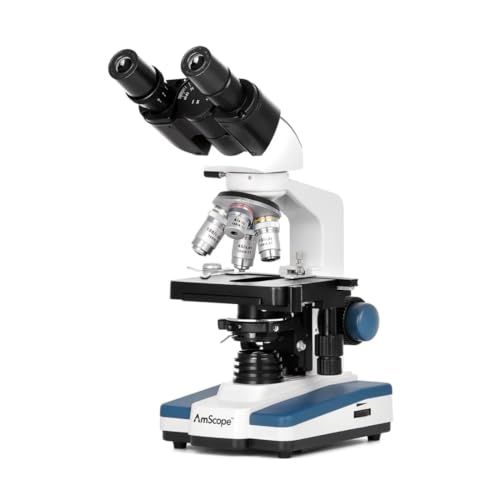
- 40X-2500X magnification range
- 5MP USB camera with software
- Daylight-balanced LED illumination
Best For: Students, educators, and budget-conscious lab users
Best Full-Size Lab Setup
AmScope OMAX M837ZL-C100U 10MP

- Trinocular viewing head
- 10MP digital imaging
- 3D mechanical stage
Best For: Laboratory users needing dedicated camera integration
Most Versatile High-Magnification Option

- 40X-5000X magnification
- HD USB electronic eyepiece
- Includes extensive lab accessory kit
Best For: Advanced users and teaching labs needing broad magnification
Best Compact Digital Lab Model

- 5MP color CMOS camera
- Trinocular viewing head
- Compact mechanical-stage design
Best For: Small labs and Windows users needing digital documentation
Best High-Magnification Kit

- Stated 40x–5000x magnification range
- HD digital eyepiece and phone mount
- Includes slides, tools, and cleaning supplies
Best For: Feature-rich biological observation and learning
Best Cordless Option
AmScope Digital Monocular Microscope

- 1.3MP camera with USB 2.0 output
- Cordless battery-powered operation
- 40x–1000x range with three objectives
Best For: Portable classroom and hobby microscopy
Best Mechanical-Stage Setup

- 1.3MP USB camera for recording and sharing
- Four achromatic objectives up to 100x
- Stable double-layer XY mechanical stage
Best For: Digital viewing with controlled specimen positioning
Best All-in-One Imaging Kit
SWIFT SW380T 5MP Trinocular Microscope

- 40X–2500X magnification with six viewing levels
- 5MP camera and Mac/Windows analysis software
- Includes smartphone adapter and 200 slide accessories
Best For: Users who want a complete microscope and digital imaging setup
Best Classroom Camera Bundle
Swift SW350T 5MP Trinocular Microscope

- 40X–2500X range with DIN achromatic objectives
- 5MP camera includes stitching, EDF, and measurement software
- Mechanical stage and prepared-slide starter set
Best For: Education, clinical demonstrations, and routine specimen imaging
Best Research-Oriented Set
SWIFT SW350T 2MP Trinocular Microscope

- Research-grade 40X–2500X achromatic optical system
- USB camera with stitching, EDF, and measurement software
- Includes 100 slides and 100 glass cover slips
Best For: Labs, clinics, STEM education, and advanced specimen documentation
Best Value Classroom Pick – AmScope B120 5MP Binocular Microscope
If you want compound microscopes with cameras for classroom work, home labs, or basic professional use, the AmScope B120 combines binocular viewing with a 5MP USB camera. Its 40X-2500X range, LED illumination, and included imaging software make it a practical all-in-one option.
Best For: Students, educators, and users who want an economical microscope with straightforward digital image capture.
Pros:
- Broad 40X-2500X magnification range for educational and laboratory applications
- 5MP USB camera includes software for capturing and analyzing images
- Bright, daylight-balanced LED illumination with a fly-eye lens
- Backed by a 5-year manufacturer warranty
Cons:
- Binocular rather than trinocular viewing may be less convenient for continuous camera observation
- Requires a compatible laptop for digital camera use
The B120 is a well-rounded choice when value and versatility matter more than advanced trinocular workflow. It offers useful magnification and digital documentation without moving into a more specialized lab configuration.
Best Full-Size Lab Setup – AmScope OMAX M837ZL-C100U 10MP
Among compound microscopes with cameras, this AmScope OMAX model stands out for its full-size laboratory format and trinocular design. It pairs 40X-2500X magnification with LED lighting, a 3D mechanical stage, and a 10MP digital setup for detailed documentation.
Best For: Laboratory users who want a full-size trinocular microscope for observation and digital imaging.
Pros:
- Trinocular configuration supports dedicated camera integration
- 10MP camera specification is suited to detailed digital imaging
- 40X-2500X range covers common compound microscopy tasks
- 3D mechanical stage and LED illumination support controlled specimen handling
Cons:
- Its full-size lab configuration may be more equipment than casual users need
- The supplied notes do not specify the included camera connection or software details
This model is a strong fit for buyers prioritizing a laboratory-style platform and higher-resolution digital capture. The trinocular head also makes it more practical for sharing live views while documenting specimens.
Most Versatile High-Magnification Option – Woehrsh Trinocular Microscope
For buyers comparing compound microscopes with cameras at the high-magnification end, this Woehrsh trinocular model offers a stated 40X-5000X range and an HD USB electronic eyepiece. Its adjustable viewing components, dual mechanical stage, and included laboratory accessories give it a broad setup for teaching and specimen work.
Best For: Advanced home users, educators, and laboratory applications requiring extensive magnification and included specimen accessories.
Pros:
- 40X-5000X magnification range offers substantial flexibility
- Trinocular head includes an electronic eyepiece for computer viewing
- Dual mechanical stage with coaxial coarse and fine focusing
- Includes slides, coverslips, specimens, tools, and a cell phone holder
Cons:
- The supplied notes do not specify the electronic eyepiece’s pixel resolution or software
- Its extensive accessories and high magnification may be unnecessary for basic coursework
- Listed 240-volt power may require buyers to verify electrical compatibility
This is the most feature-rich option in the group for users who want a wide magnification range and a ready-to-use accessory kit. Verify power requirements and camera specifications before purchase to ensure it matches your setup.
Best Compact Digital Lab Model – OMAX M83EZ-C50S 5MP
The OMAX M83EZ-C50S is a practical choice among compound microscopes with cameras for users who want a compact trinocular lab instrument. It combines 40X-2500X magnification with a 5MP color CMOS camera, USB 2.0 connectivity, mechanical staging, and adjustable LED illumination.
Best For: Students, educators, and small lab workspaces needing trinocular viewing and Windows-compatible digital imaging.
Pros:
- 5MP color camera supports digital specimen documentation
- Trinocular head allows camera use alongside eyepiece viewing
- Double-layer mechanical stage and coaxial focus controls aid precise positioning
- Variable-intensity LED illumination includes an Abbe condenser with iris diaphragm and filters
Cons:
- USB 2.0 is an older connection standard
- Camera compatibility is specified for Windows and may not suit every computer setup
- Maximum magnification is 2500X, below the Woehrsh model’s stated range
With its compact footprint and detailed illumination controls, the M83EZ-C50S is well suited to routine classroom and laboratory microscopy. It is especially appealing when a dedicated camera path matters but workspace is limited.
Best High-Magnification Kit – Woehrsh Trinocular Microscope
If you want compound microscopes with cameras for detailed viewing and digital sharing, this Woehrsh trinocular model combines a USB camera with a broad stated 40x–5000x magnification range. Its achromatic objective, mechanical stage, adjustable optics, and included laboratory accessories make it a flexible option for home learning, school work, and biological observation.
Best For: Buyers seeking a feature-rich trinocular microscope with extensive magnification and a substantial starter accessory kit.
Pros:
- Includes an HD digital eyepiece and phone mount for capturing or sharing observations.
- Provides dual WF10x and WF25x eyepieces, 2x magnifiers, and an achromatic objective.
- Dual-layer stage, coaxial coarse/fine focus, LED illumination, and adjustable diopter and interpupillary distance support comfortable use.
- Includes slides, cover slips, tissue sections, tools, and cleaning supplies.
Cons:
- The extensive 40x–5000x range may be more than casual users need.
- The supplied specifications list differing maximum magnification figures, so confirm the intended configuration before buying.
This is a versatile package for users who want room to experiment with magnification, accessories, and digital viewing. Its many adjustments and included supplies are especially useful for educational or hobby laboratories.
Best Cordless Option – AmScope Digital Monocular Microscope
For shoppers comparing compound microscopes with cameras, the AmScope M158C-2L-E1 offers a straightforward digital setup with a 1.3MP USB camera and 40x–1000x magnification. Its cordless power, rotating monocular head, achromatic objectives, and upper and lower LED lighting make it practical for classroom demonstrations and portable use.
Best For: Students, educators, and hobbyists who want a cordless compound microscope with basic computer or projector connectivity.
Pros:
- 1.3MP camera with USB 2.0 output supports image capture and display on a computer or projector.
- Cordless, battery-powered design can be convenient for demonstrations and flexible placement.
- Includes 4x, 10x, and 40x achromatic objectives for 40x–1000x magnification.
- Upper and lower LED illumination, rheostat control, and coaxial coarse/fine focus help with specimen viewing.
Cons:
- The 1.3MP camera is more basic than higher-resolution digital imaging systems.
- The plain stage uses clips rather than a mechanical stage for slide movement.
- The monocular design may be less comfortable for extended viewing than a binocular or trinocular model.
This AmScope is a sensible choice when portability and uncomplicated digital output matter more than advanced stage controls or very high magnification. It covers common educational and hobby microscopy needs without an overly complex configuration.
Best Mechanical-Stage Setup – Poothoh Trinocular Microscope
Among compound microscopes with cameras, the Poothoh trinocular model is built for users who want digital viewing alongside hands-on specimen control. It combines a 1.3MP USB camera with four achromatic objectives, LED bright-field lighting, a variable diaphragm, and a double-layer mechanical stage for laboratory, educational, and enthusiast applications.
Best For: Users who prioritize stable XY slide positioning and computer-based viewing, recording, or live sharing.
Pros:
- 1.3MP USB 2.0 camera supports viewing on Mac OS X and Windows computers, plus recording and image capture.
- Four achromatic objectives—4x, 10x, 60x, and 100x—provide multiple magnification choices.
- Double-layer metal mechanical stage enables steadier X/Y movement across a specimen.
- LED bright-field illumination and a variable diaphragm allow control over specimen lighting.
Cons:
- The camera resolution is modest for users seeking highly detailed digital images.
- The listed objective set may require careful technique at the highest magnifications.
- The product is positioned toward professional and research-oriented use, which may exceed casual viewing needs.
This model makes the most sense when precise slide movement and computer sharing are central to your workflow. Its trinocular design and mechanical stage are useful for classrooms, demonstrations, and repeated observation of small specimen areas.
Best All-in-One Imaging Kit – SWIFT SW380T 5MP Trinocular Microscope
For shoppers comparing compound microscopes with cameras, the SWIFT SW380T stands out as a complete imaging package. It combines 40X–2500X magnification, a trinocular head, a 5MP camera, compatible software, and useful slide-preparation accessories.
Best For: Clinicians, students, and hobbyists who want high magnification plus photo, video, livestreaming, and measurement capabilities.
Pros:
- Six magnification levels from 40X to 2500X using four DIN achromatic objectives.
- Includes a 5MP camera with Windows and Mac-compatible software featuring stitching, EDF, and measurement tools.
- Includes a smartphone adapter, 100 blank slides, 100 cover slips, and lens-cleaning paper.
- Rotatable Siedentopf head and 30-degree viewing angle support shared and extended use.
Cons:
- The 110-volt corded design may require consideration when used outside compatible electrical systems.
- The extensive accessory bundle may be more than casual users need.
The SW380T is a strong choice when digital documentation matters as much as optical viewing. Its broad magnification range and generous starter accessories make it particularly practical for classrooms, clinics, and serious home laboratories.
Best Classroom Camera Bundle – Swift SW350T 5MP Trinocular Microscope
The Swift SW350T is a practical option among compound microscopes with cameras for teaching, clinical work, and home study. Its 5MP camera, 40X–2500X range, mechanical stage, and prepared-slide starter set provide a balanced setup without requiring many immediate add-ons.
Best For: High school and university students, clinicians, and hobbyists who need shared viewing and straightforward digital capture.
Pros:
- Four DIN achromatic objectives provide six magnification levels from 40X to 2500X.
- 5MP camera software for Windows and Mac supports stitching, EDF, and measurement.
- LED illumination, adjustable brightness, and an Abbe condenser help illuminate slide specimens.
- Includes five prepared slides and five blank slides for getting started quickly.
Cons:
- The included slide assortment is smaller than the accessory package supplied with the SW380T.
- Its 240-volt specification should be checked against the intended power setup.
With a large double-layer mechanical stage and camera-ready trinocular design, the SW350T is well suited to demonstrations and routine specimen documentation. It offers useful imaging features while keeping the overall package focused on core microscope work.
Best Research-Oriented Set – SWIFT SW350T 2MP Trinocular Microscope
For buyers seeking compound microscopes with cameras for structured lab or STEM work, this SWIFT SW350T emphasizes controlled positioning and documentation. It pairs 40X–2500X achromatic optics with a USB 2.0 camera, analysis software, a mechanical stage, and a 200-piece slide-and-cover-slip bundle.
Best For: Educational institutions, research laboratories, clinics, and advanced hobbyists working with biological or clinical specimens.
Pros:
- Research-oriented optical setup includes 4X, 10X, 40X, and 100X oil objectives plus 10X/25X eyepieces.
- USB 2.0 camera supports photo and video capture through the dedicated trinocular port.
- Windows and Mac software includes image stitching, Extended Depth of Field, and measurement tools.
- Includes 100 blank slides and 100 glass cover slips, along with a solid-metal body and X-Y mechanical stage.
Cons:
- The supplied notes identify the camera as 2.0MP, despite the product title referencing 1.3MP; buyers should verify the current listing.
- The 240-volt corded specification may limit plug-and-power compatibility.
- The advanced features and oil objective are likely unnecessary for casual viewing.
This version is aimed at users who value specimen control, repeatable positioning, and a substantial slide-preparation supply. It is a better fit for formal coursework or laboratory-style documentation than for simple introductory microscopy.
How We Picked the Best Compound Microscopes with Cameras
We focused on the features that have the greatest effect on practical use: optical configuration, stated magnification range, camera resolution, stage construction, illumination, and connection options. We also considered whether each microscope is better suited to teaching, casual inspection, documentation, or more advanced laboratory work.
Because advertised specifications can vary by configuration, treat included accessories, operating-system support, and camera adapters as important details to verify before ordering. A higher megapixel count can help with documentation, but it does not automatically mean sharper images if the optics or lighting are weak.
Quick Comparison
| Priority | Look for | Best suited to |
|---|---|---|
| Easy teaching and sharing | Binocular or trinocular viewing with a USB camera | Classrooms, demonstrations, and group instruction |
| Detailed documentation | Higher-resolution camera, stable stage, and compatible software | Lab records, presentations, and specimen libraries |
| Flexible observation | Trinocular head and mechanical stage | Users who want to view and capture images simultaneously |
| Portable or occasional use | Compact design, LED illumination, or cordless operation | Home users and mobile lessons |
Key Buying Factors for Compound Microscopes with Cameras
Optics and Useful Magnification
Most models in this roundup cover common objectives such as 4x, 10x, 40x, and 100x oil immersion, producing roughly 40x to 1,000x useful magnification. Claims of 2,500x or 5,000x may be achieved through eyepiece or digital enlargement rather than additional optical detail. Prioritize objective quality and focusing precision over the largest number on the box.
Camera Resolution and Connection
A 1.3MP camera can work for live demonstrations, while 5MP and 10MP cameras generally provide more room for cropping and documentation. Check whether the camera connects by USB, which operating systems the software supports, and whether the included adapter fits the trinocular port. Frame rate matters too if you need smooth live viewing.
Head, Stage, and Controls
Binocular heads are comfortable for direct viewing, while trinocular designs let you use the eyepieces and camera at the same time. A two-layer mechanical stage is preferable for precise slide movement. Coaxial coarse and fine focusing, a sturdy frame, and a smooth stage are especially valuable at higher magnifications.
Lighting and Maintenance
LED illumination is bright, efficient, and usually easier to maintain than older bulb systems. Look for adjustable intensity and a condenser with an iris diaphragm. If you plan to use oil-immersion objectives, confirm that the kit includes or supports the necessary oil and that cleaning instructions are clear.
Who Should Buy Which Compound Microscopes with Cameras?
Students and families: Choose an approachable LED model with straightforward controls, a mechanical stage, and a camera that supports your computer.
Teachers: A trinocular microscope with a dependable USB camera is usually the most flexible choice for live demonstrations and shared viewing.
Serious hobbyists: Prioritize binocular comfort, better objectives, fine focusing, and a stable stage over inflated digital magnification claims.
Laboratory and research users: Look for a research-oriented trinocular configuration, higher-resolution imaging, compatible measurement software, and documented optical specifications. For regulated or publication-critical work, confirm calibration and camera compatibility before purchase.