
The best compound microscopes for students make it easier to explore cells, prepared slides, plant samples, and other specimens with enough clarity to support real learning. The right model should balance useful magnification with dependable optics, smooth focusing, stable construction, and simple controls.
Our selection includes beginner-friendly kits, cordless models, binocular and monocular designs, and microscopes with digital or educational accessories. Use the guide below to narrow the choices by age, experience, classroom needs, and budget.
Best 10 Compound Microscopes for Students Picks for 2026
Top Pick
AmScope B120 Binocular Microscope
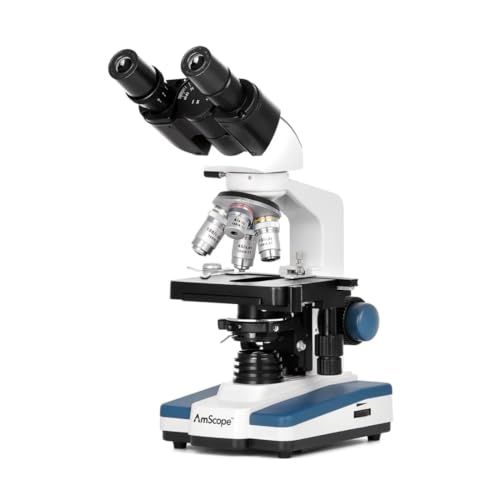
- 40X–2500X magnification
- 5MP USB camera with software
- Binocular LED viewing
Best For: Students and labs needing digital imaging
Best Cordless Option
AmScope M150 Student Microscope

- 40X–1000X magnification
- All-metal frame and glass optics
- AC or three-AA-battery power
Best For: Home school and portable student use
Best Starter Kit
Emarth 52-Piece Student Microscope
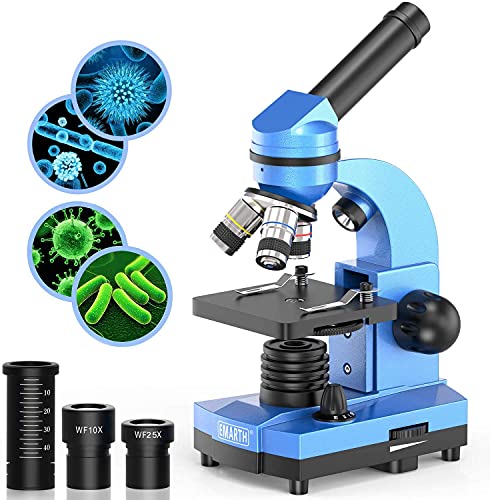
- 40X–1000X magnification
- 52-piece educational kit
- Dual LED illumination and color filters
Best For: Young beginners and homeschool experiments
Best Complete Set
PalliPartners High-Power Microscope

- 100X–2000X magnification
- 28 slides plus phone adapter
- Top and bottom LED lighting
Best For: Students wanting slides and smartphone imaging
Wide-View Binocular Pick
Herwicm 40X-2500X Compound Microscope

- Binocular wide-angle eyepieces
- Dual LED illumination
- Mechanical stage with coaxial focus
Best For: Students wanting comfortable binocular viewing and flexible lighting
Beginner-Friendly Classroom Pick
TOMLOV CM101 Compound Microscope

- Coarse and fine coaxial focus
- Achromatic 4X/10X/40X objectives
- Prepared and blank slides included
Best For: Students beginning classroom, homeschool, or home microscopy
Accessory-Rich Education Pick
BEBANG 2000X Student Microscope
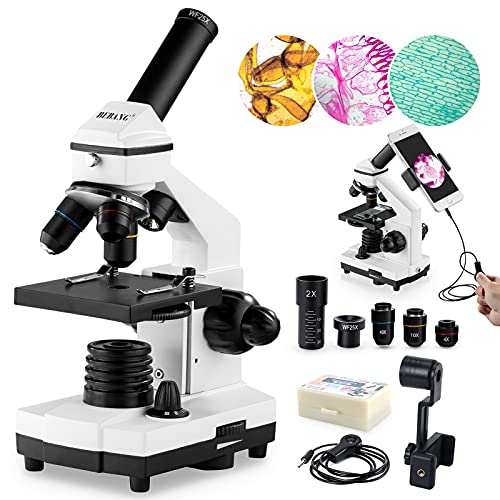
- Six listed magnification settings
- Dual LED brightfield illumination
- Phone adapter, slides, and carrying bag
Best For: Students needing a portable biology education starter kit
Best All-Around Kit
M2 Compound Monocular Microscope

- 40X–2000X range with multiple eyepieces and objectives
- Includes slides, tools, cleaning tissues, and hard case
- Metal build with dual LEDs and smartphone adapter
Best For: Students wanting a complete, durable microscope kit
Best for Adjustable Lighting
PALOBIL Student Compound Microscope

- Six listed magnification settings up to 2000X
- Top and bottom LED lighting for different specimens
- Includes phone adapter and beginner experiment supplies
Best For: Students examining both opaque and translucent objects
Best Portable Rechargeable Option
MAXLAPTER 2000X Beginner Microscope

- 40X–2000X magnification with multiple objectives
- USB-C rechargeable battery supports up to four hours
- Lightweight metal design with slides, bag, and phone holder
Best For: Beginners needing a lightweight cordless microscope
Top Pick – AmScope B120 Binocular Microscope
For students who need more than a basic classroom scope, this AmScope model is a strong option among compound microscopes for students. It combines binocular viewing, 40X–2500X magnification, LED illumination, and a 5MP USB camera for capturing and analyzing specimens.
Best For: Students, labs, and clinics that want digital imaging and a broad magnification range.
Pros:
- Binocular design supports comfortable viewing.
- 40X–2500X magnification suits a range of educational observations.
- Includes a 5MP USB camera and professional software.
- Bright, daylight-balanced LED illumination.
Cons:
- Requires a corded electrical connection.
- Its camera and software may be more than beginners need.
The B120 is a well-equipped choice for students progressing from basic observation to digital documentation, especially where a computer-compatible camera is useful.
Best Cordless Option – AmScope M150 Student Microscope
The AmScope M150 is a practical choice among compound microscopes for students who need a straightforward scope for home school or classroom science. Its all-metal frame, glass optics, five magnification settings, and dual power options make it flexible for study spaces and demonstrations.
Best For: Elementary through high school students, homeschool use, and portable science activities.
Pros:
- Offers 40X, 100X, 250X, 400X, and 1000X settings.
- All-metal construction provides a sturdy framework.
- Glass optical elements support clear viewing.
- LED lighting can run from an outlet or three AA batteries.
Cons:
- Monocular viewing is less convenient for extended two-eye observation.
- Maximum magnification is lower than some models in this roundup.
Choose the M150 when durability and cordless flexibility matter more than digital features or extremely high magnification.
Best Starter Kit – Emarth 52-Piece Student Microscope
For younger learners, this Emarth kit offers a hands-on introduction to compound microscopes for students. It pairs 40X–1000X magnification with 52 educational accessories, dual illumination, color filters, and a metal frame for guided experiments at home or in school.
Best For: Children ages 8–12, homeschool science, and adult beginners who want supplies included.
Pros:
- Includes prepared slides, blank slides, and experiment tools.
- Top and bottom LED illumination handles opaque and translucent specimens.
- Six color filters can help enhance contrast.
- Metal construction and a rotatable head support stable use.
Cons:
- Batteries are not included.
- Plastic components are included alongside the metal construction.
This is a convenient starter package for students who want to begin experimenting immediately without assembling a separate collection of slides and tools.
Best Complete Set – PalliPartners High-Power Microscope
The PalliPartners model is a feature-rich option among compound microscopes for students, combining 100X–2000X magnification with dual LED lighting, slides, and smartphone accessories. Its top light supports opaque objects, while bottom illumination is intended for translucent biological specimens.
Best For: Middle and high school students, homeschoolers, and adults wanting a ready-to-use educational set.
Pros:
- Provides 100X–2000X magnification with glass optics.
- Includes 10 prepared slides and 18 blank slides.
- Dual illumination expands the types of specimens students can examine.
- Phone adapter and Bluetooth shutter support specimen photography.
Cons:
- The included setup uses a narrower 30-degree viewing angle.
- Phone photography depends on compatible smartphone positioning and setup.
- Adult supervision is recommended for younger users.
With its broad magnification range and included imaging accessories, the PalliPartners is suited to students who want a complete kit for both observation and documentation.
Wide-View Binocular Pick – Herwicm 40X-2500X Compound Microscope
For students who want a more comfortable viewing experience, this compound microscope for students combines binocular eyepieces with a broad field of view and dual LED illumination. Its 4X, 10X, and 40X objectives, WF10X and WF25X eyepieces, and mechanical stage support a wide range of classroom and home observations.
Best For: Students and beginners who prefer binocular viewing and flexible top-and-bottom lighting.
Pros:
- Binocular, ultra-wide-angle eyepieces are designed for clear viewing with reduced eye fatigue.
- Top and bottom LED lights support both surface and transparent-specimen observation.
- Coaxial coarse and fine focusing controls allow quicker positioning and more precise adjustment.
- Large mechanical stage with a spiral moving scale provides controlled specimen movement.
Cons:
- The listed 40X-2500X range may be more capability than a beginner needs for basic assignments.
- Its corded-electric design may be less convenient for locations without nearby power.
This is a feature-rich option for learners who value binocular comfort, adjustable lighting, and a more substantial mechanical-stage setup for repeated microscopy work.
Beginner-Friendly Classroom Pick – TOMLOV CM101 Compound Microscope
The TOMLOV CM101 is a practical compound microscope for students who are learning the basics of specimen preparation and focusing. Its monocular layout, 4X-first workflow, achromatic objectives, included slides, and dual LED system make it suitable for classroom study, homeschool STEM projects, and introductory home microscopy.
Best For: Students and first-time users who want a straightforward kit with learning accessories included.
Pros:
- Coarse and fine coaxial controls help users locate specimens and then refine details.
- 4X, 10X, and 40X achromatic objectives pair with WF10X and WF25X eyepieces for up to 2000X listed magnification.
- Top and bottom LEDs accommodate transparent specimens as well as surface details.
- Includes five prepared slides, five blank slides, coverslips, and a one-year manufacturer warranty.
Cons:
- The monocular design does not provide the binocular viewing comfort of some alternatives.
- The included six-position color filter disc may add setup choices that absolute beginners must learn.
With its guided focusing approach and useful starter accessories, the CM101 is a sensible entry point for students who want an uncomplicated microscope kit rather than a highly specialized instrument.
Accessory-Rich Education Pick – BEBANG 2000X Student Microscope
For buyers comparing compound microscopes for students, the BEBANG YW-3006 emphasizes educational convenience. It combines 4X, 10X, and 40X objectives with WF25X and 2X magnification options, dual LED lighting, a phone adapter, slides, and a carrying bag for school, home teaching, or supervised biology activities.
Best For: Students and families who want a portable starter kit with observation accessories and smartphone compatibility.
Pros:
- Offers six listed magnification settings from 100X through 2000X using the supplied eyepiece and lens combinations.
- Coarse and fine focusing knobs support more precise image adjustment.
- Dual LED illumination, a 0.65 NA condenser, and disc diaphragm support brightfield observation.
- Includes a phone adapter, 15-piece slide set, carrying bag, and additional operating accessories.
Cons:
- Its monocular design may be less comfortable for extended viewing than a binocular microscope.
- The listed maximum magnification depends on combining the supplied optical components rather than the objectives alone.
This model stands out when included accessories and portability matter as much as the microscope itself, particularly for students sharing lessons between school, home, and one-on-one instruction.
Best All-Around Kit – M2 Compound Monocular Microscope
For students who want a complete setup, this compound microscope for students combines 40X–2000X magnification, achromatic objectives, dual LED lighting, and a selection of starter supplies. Its metal construction and included case make it practical for classroom, home-lab, or field use.
Best For: Students and beginners who want a well-equipped microscope kit with phone-sharing capability and portable storage.
Pros:
- Wide 40X–2000X magnification range with 10X and 25X eyepieces plus 4X, 10X, and 40X objectives.
- Includes prepared and blank slides, tweezers, a dropper, and lens-cleaning tissues.
- Smartphone adapter supports photos and video for projects or sharing.
- All-metal frame, dual LED lighting, dual power supply, and hard-shell carry case.
Cons:
- At nearly 3 kg, it is less convenient to carry than the lighter kits in this roundup.
- Its broad feature set may be more than a casual beginner needs.
The M2 is a strong choice when durability, accessories, and flexible power options matter as much as magnification. The two-year manufacturer warranty is also a useful extra for regular student use.
Best for Adjustable Lighting – PALOBIL Student Compound Microscope
This compound microscope for students offers six listed magnification settings from 100X to 2000X, a metal frame, and adjustable top and bottom illumination. Those lighting options make it flexible for viewing translucent specimens as well as opaque objects such as coins or jewelry.
Best For: Homeschoolers, science students, and beginners who need adjustable illumination for varied specimens.
Pros:
- Provides six magnification settings using a 25X eyepiece, optional 2X lens, and 4X, 10X, and 40X objectives.
- Adjustable incident and transmitted LED lighting supports opaque and translucent samples.
- Includes a phone adapter, prepared slides, blank slides, droppers, tweezers, and other beginner accessories.
- Metal frame and carrying-oriented protective packaging support storage and transport.
Cons:
- Three AA batteries are required and are not included, although an AC adapter is supplied.
- The one-year warranty is shorter than the warranty supplied with the M2 kit.
With its separate top and bottom lighting controls, the PALOBIL is especially adaptable for classroom demonstrations and homeschool experiments. It is a sensible pick for students likely to examine more than standard transparent slides.
Best Portable Rechargeable Option – MAXLAPTER 2000X Beginner Microscope
Students who need a lighter setup may prefer this rechargeable compound microscope for students. It reaches 40X–2000X magnification, uses adjustable LED illumination plus a mirror, and includes a USB-C rechargeable battery rated for up to four hours of continuous use after charging.
Best For: Young learners, beginners, and students who value portability, cordless use, and quick setup.
Pros:
- 40X–2000X range with WF10X and WF25X eyepieces and 4X, 10X, and 40X objectives.
- USB-C rechargeable battery provides up to four hours of continuous use after a full charge.
- Adjustable LED angle and brightness, along with a mirror, help accommodate viewing conditions.
- Includes five prepared slides, a phone holder, storage bag, and metal frame.
Cons:
- The included slide selection is smaller than the kits with broader accessory assortments.
- Its one-year manufacturer warranty is relatively limited.
At about 0.62 kg, the MAXLAPTER is the most portable option here and is easy to position for home projects or classroom activities. Its rechargeable design also avoids relying on disposable batteries during use.
How We Picked the Best Compound Microscopes for Students
We evaluated these Compound Microscopes for Students based on the features that matter most during repeated learning and observation. Our priorities included optical design, useful rather than merely advertised magnification, focusing control, stage stability, illumination, portability, and overall ease of use.
We also considered whether each microscope suits its intended audience. A child’s starter kit may be judged by simplicity and included slides, while a high-school or college student may benefit more from a mechanical stage, fine focus, binocular viewing, or a digital camera. Accessories can add value, but they should not outweigh the quality of the microscope itself.
Quick Comparison
| Best For | Features to Prioritize | Recommended Style |
|---|---|---|
| Young beginners | Simple controls, durable body, included slides | Monocular starter kit |
| Middle and high school students | Fine focus, mechanical stage, multiple objectives | Student compound microscope |
| Frequent or advanced use | Better optics, stable construction, ergonomic viewing | Binocular or higher-quality monocular model |
| Shared classrooms | Bright LED lighting, easy adjustments, sturdy stage | Full-size student model |
Key Buying Factors for Compound Microscopes for Students
Magnification and Optical Quality
Most student microscopes offer combinations ranging from 40x to 400x, with some claiming 1,000x, 2,000x, or more. Higher magnification is not automatically better. At extreme levels, image quality depends heavily on objective design, specimen preparation, lighting, and focusing precision. For general biology, clear 40x, 100x, and 400x views are often more useful than a blurry maximum setting.
Focusing and Stage Control
Coarse focus moves the image quickly, while fine focus makes small adjustments for sharpness. Fine focus is particularly important at higher power. A mechanical stage is another worthwhile upgrade because it lets students move slides gradually and predictably instead of gripping the slide directly.
Lighting and Power
LED illumination is cool, bright, and energy efficient. Dual-lighting systems can support different specimen types, but transmitted light through a slide is the essential feature for compound microscopy. Cordless operation is convenient for demonstrations or flexible study areas, though rechargeable battery life and charging requirements should be considered.
Viewing Comfort and Build
Monocular microscopes are usually compact and affordable. Binocular models can be more comfortable during longer sessions and may make shared use easier. Look for a stable base, smooth controls, a secure stage, and a head that does not wobble when focusing.
Who Should Buy Which Compound Microscopes for Students?
Choose a beginner kit for younger children or first-time users who need guided activities and ready-to-use accessories. Select a full-size monocular model for students learning core biology skills on a budget. A mechanical-stage microscope is the better choice for frequent slide work, while a binocular model makes sense for older students who spend longer periods at the instrument. If documenting observations matters, consider a model with a digital camera, but verify software and device compatibility before buying.