
The best compound microscopes for children make hands-on biology more engaging, but high magnification alone does not guarantee a good learning experience. A useful beginner microscope should be easy to focus, stable on a desk, and supplied with enough slides and tools to encourage exploration.
We compared 10 popular options across magnification ranges, included accessories, lighting, portability, and age-appropriate usability to help families, educators, and homeschoolers choose with confidence.
Best 10 Compound Microscopes for Children Picks for 2026
Top All-Around Pick
Emarth 40X–1000X Kids Microscope Kit
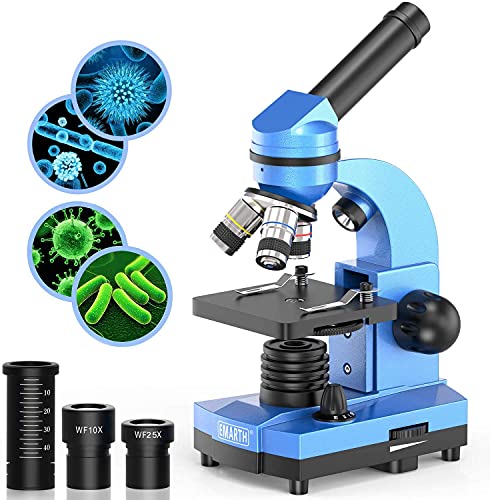
- 40X–1000X magnification with dual LED illumination
- 52-piece kit includes prepared and blank slides
- Metal frame with focusing controls and color filters
Best For: Ages 8–12, homeschool, and beginner biology study
Best for Younger Explorers
National Geographic 400X Kids Microscope

- Easy-to-use controls and dual LED lighting
- Includes prepared slides, rocks, minerals, and blank slides
- Lab guide provides activities and experiment support
Best For: Children ages 6 and up starting guided microscopy
Highest Magnification Option
BEBANG 100X–2000X Biology Microscope
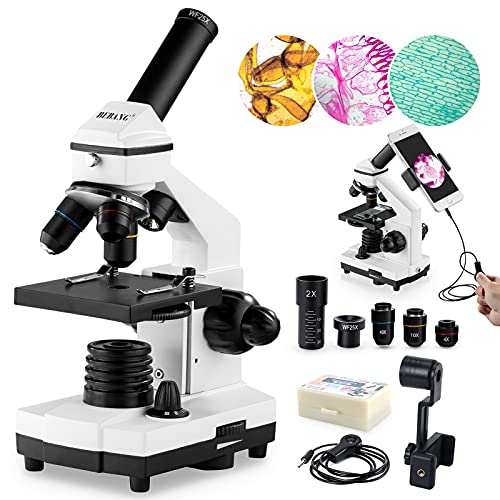
- Six settings reach 2000X magnification
- Coarse and fine focus with a metal frame
- Includes phone adapter, slides, accessories, and bag
Best For: Older students, adults, and biology hobbyists
Best for Easy Setup
National Geographic Dual LED Microscope

- Dual LED viewing for slides and 3D objects
- 50+ accessories with prepared and blank slides
- 20x and 50x optical magnification
Best For: Young beginners wanting a guided, ready-to-use STEM kit
High-Magnification Choice
MAXLAPTER 2000X Compound Microscope

- 40x–2000x magnification range
- Rechargeable USB-C battery with up to four hours of use
- Metal frame, prepared slides, case, and phone holder
Best For: Students and beginners wanting broad magnification and durability
Best Starter Kit
Uarzt 58-Piece Kids Microscope

- 58-piece set with 13 prepared and 31 blank slides
- Includes basic lab tools and a colorful learning guide
- Carrying case supports organized storage and transport
Best For: Young beginners needing lots of guided, hands-on materials
Best with Extra Features
MAXLAPTER 100X-1200X Kids Microscope

- Five magnification settings up to 1200x
- 50-piece kit with prepared and blank slides
- LED light and carrying case included
Best For: Children ages 8–12 starting biology experiments
Best for Phone Sharing
HKMK 40X-2000X Compound Microscope

- Magnification reaches 2000x
- Includes smartphone adapter and experiment supplies
- LED and reflector provide two lighting options
Best For: Students documenting homeschool or lab observations
Best for Adjustable Lighting
PALOBIL 100X-2000X Kids Microscope

- Top and bottom LED lighting are adjustable
- Six magnification settings up to 2000x
- Metal frame and smartphone adapter included
Best For: Older beginners examining translucent and opaque specimens
Top All-Around Pick – Emarth 40X–1000X Kids Microscope Kit
For shoppers comparing compound microscopes for children, the Emarth 40X–1000X model offers a substantial starter setup with a metal frame, LED lighting, and 52 included pieces. Its dual illumination and color filters support a range of school, homeschool, and beginner biology activities.
Best For: Kids ages 8–12, homeschool learners, and adult beginners who want a more substantial educational microscope.
Pros:
- 40X–1000X magnification with an achromatic objective lens.
- Top and bottom LED illumination helps with opaque and translucent specimens.
- 52-piece kit includes prepared slides, blank slides, and experiment tools.
- Metal construction, smooth focusing, and six color filters add practicality.
Cons:
- Batteries are not included.
- The higher-powered design may require more patience from younger beginners.
This is a strong choice when you want a real compound microscope rather than a basic toy. The sturdy build and broad kit make it suitable for repeated science activities at home or in a classroom setting.
Best Organized Starter Set – AmScope M30 52-Piece STEM Microscope
The AmScope M30 is a practical option among compound microscopes for children, pairing six magnification settings with a portable design and a hard ABS carrying case. Its rotating color filter wheel and included slide tools help make early microscopy lessons more approachable.
Best For: Young students who need a portable, complete STEM kit for guided science exploration.
Pros:
- Six settings span 120X to 1200X magnification.
- LED illumination and a rotating color filter wheel support specimen viewing.
- 52-piece kit includes sample slides and other accessories.
- Hard ABS case helps with storage and portability.
Cons:
- The monocular viewing head offers one-eye viewing only.
- Plastic slides may be less durable than glass alternatives.
With a metal body, manageable controls, and a carrying case, this AmScope kit balances classroom utility with portability. It is especially appealing when organization and transport matter as much as magnification.
Best for Younger Explorers – National Geographic 400X Kids Microscope
For families seeking compound microscopes for children ages six and up, this National Geographic kit emphasizes ease of use and hands-on discovery. Large focus knobs, a soft-touch eyepiece, and upper-and-lower LED lights make it approachable for first experiments.
Best For: Younger children beginning microscopy through guided activities, prepared specimens, and simple at-home experiments.
Pros:
- Three magnification levels reach up to 400X.
- Large focus knobs and an adjustable platform are designed for easier handling.
- Includes six prepared plant slides, six rocks and minerals, and six blank slides.
- Lab guide, pipette, dish, tweezers, activities, and stickers encourage continued use.
Cons:
- Plastic construction may be less durable than metal-frame models.
- Its 400X maximum is lower than the other microscopes in this roundup.
This kit prioritizes engagement over advanced magnification. The supplied specimens and learning guide give children clear projects to start with, making it a friendly introduction to microscope-based science.
Highest Magnification Option – BEBANG 100X–2000X Biology Microscope
The BEBANG combines a 100X–2000X range with coarse and fine focusing, dual LED illumination, and a metal frame. Among compound microscopes for children, it is better suited to supervised students or families who want a more advanced biology setup, including a phone adapter for recording observations.
Best For: Older students, adult beginners, and hobbyists who want high magnification for school or home biology work.
Pros:
- Six magnification settings range from 100X to 2000X.
- Coarse and fine focus knobs support more precise adjustment.
- Top-and-bottom LED illumination includes a condenser and disc diaphragm.
- Includes a phone adapter, 15-slide set, accessories, and carrying bag.
Cons:
- The advanced 2000X range may be excessive for very young children.
- It requires AC or battery power, adding setup considerations.
- The kit includes fewer listed items than some 52-piece alternatives.
This model stands out for users who value maximum magnification and focusing control. Its phone adapter and metal construction add useful features, but younger children will likely benefit from adult supervision.
Best for Easy Setup – National Geographic Dual LED Microscope
For families seeking compound microscopes for children ages 8–12, this National Geographic science kit offers a straightforward introduction to slide-based biology and three-dimensional objects. Its dual LED setup, prepared specimens, and included activity supplies make it easy to begin exploring right away.
Best For: Young beginners who want a guided, ready-to-use STEM microscope kit.
Pros:
- Dual LED illumination supports both slides and 3D objects.
- Includes 10 prepared slides, 10 blank slides, and 50+ accessories.
- 20x and 50x optical magnification is designed for accessible beginner use.
- Includes a padded storage container, learning guide, and one-year manufacturer-defect warranty.
Cons:
- Its maximum listed magnification is lower than the other compound microscopes in this roundup.
- Battery power means batteries are required for use.
This is a strong choice when ease of use and a broad assortment of accessories matter more than advanced magnification. The included geode and blank slides also give children room to move beyond the prepared samples.
High-Magnification Choice – MAXLAPTER 2000X Compound Microscope
This MAXLAPTER model stands out among compound microscopes for children and beginners with its wide 40x–2000x magnification range and more substantial metal construction. It is suited to users who want to examine very small biological details and potentially document discoveries with a phone.
Best For: Older children, students, and beginners seeking broad magnification and a sturdier microscope platform.
Pros:
- 40x–2000x magnification uses multiple eyepieces and achromatic objectives.
- Rechargeable USB-C battery provides up to four hours of continuous use after charging.
- Adjustable LED illumination and a mirror help accommodate different viewing conditions.
- Includes five prepared slides, a carrying case, and a phone holder.
Cons:
- The higher magnification range may be more than a young beginner needs.
- The kit includes fewer prepared slides than the other options here.
Choose this microscope if magnification flexibility, rechargeable power, and a metal frame are priorities. Its phone holder adds a useful way to capture and share observations for school projects or family science activities.
Best Starter Kit – Uarzt 58-Piece Kids Microscope
For younger learners, this Uarzt kit provides a simple entry point into compound microscopes for children ages 5–12. The 58-piece package combines prepared and blank slides with basic tools, a guide, and a carrying case for hands-on activities at home or in a classroom.
Best For: Preschool and elementary-age beginners who benefit from lots of materials and guided exploration.
Pros:
- Includes 13 prepared slides and 31 blank slides for immediate and DIY activities.
- Comes with practical tools such as tweezers, a dropper, and a scalpel.
- Carrying case keeps the microscope and accessories organized between sessions.
- Designed for home learning, classrooms, and parent-child activities.
Cons:
- Requires two AA batteries, which are not included.
- The manufacturer describes it as an introductory tool rather than professional laboratory equipment.
- Its listed maximum magnification is 1200x, below the MAXLAPTER’s 2000x rating.
This is the most activity-focused option for families who want a large supply of slides and accessories at the outset. Its beginner positioning and organized case make it especially practical for supervised early STEM exploration.
Best with Extra Features – MAXLAPTER 100X-1200X Kids Microscope
For families comparing compound microscopes for children, the MAXLAPTER kit stands out as a ready-to-use introduction to slide-based exploration. It combines multiple magnification settings, LED illumination, prepared and blank slides, and a carrying case for organized home or on-the-go use.
Best For: Children ages 8–12 beginning biology and natural-science experiments.
Pros:
- Offers 100x, 200x, 300x, 600x, and 1200x magnification through interchangeable eyepieces and objectives.
- Includes 50 accessories, including prepared slides, blank slides, tweezers, a dropper, and basic specimen-preparation tools.
- LED lighting, a rotating color filter wheel, and a protective ABS carrying case support beginner-friendly use.
Cons:
- The kit is battery powered, so batteries are required for portable use.
- Its monocular design may be less comfortable for extended viewing than a binocular microscope.
This is a practical starter package when included materials and portability matter as much as magnification. The broad accessory selection lets children begin observing immediately and gradually try making their own slides.
Best for Phone Sharing – HKMK 40X-2000X Compound Microscope
The HKMK is a flexible choice among compound microscopes for children, with magnification from 40x to 2000x and a smartphone mount for documenting observations. Its dual lighting options and included experiment supplies make it suitable for students working at home or in a homeschool setting.
Best For: Students who want high magnification and the option to capture microscope views with a smartphone.
Pros:
- Provides a 40x–2000x range using 4x, 10x, and 40x objectives, eyepieces, and a 2x extender.
- Uses both a battery-powered LED and a reflector for different lighting environments.
- Includes a phone adapter, specimen slides, blank cover slips, and tools such as a petri dish, scalpel, tweezers, and dropper.
- The damped focusing knob is designed for controlled, fine adjustments.
Cons:
- The extensive magnification range may require adult guidance while beginners learn focusing and slide preparation.
- Smartphone compatibility is useful, but the notes do not specify supported phone models or case sizes.
Choose this model if recording or sharing observations is important. It offers a substantial experiment kit and two illumination methods, while the fine-focus control can help students improve their viewing technique.
Best for Adjustable Lighting – PALOBIL 100X-2000X Kids Microscope
For buyers seeking compound microscopes for children that can handle more than standard prepared slides, the PALOBIL combines 100x–2000x magnification with adjustable top and bottom lighting. Its metal frame, phone adapter, and beginner accessory kit support classroom, homeschool, and introductory laboratory activities.
Best For: Older children, beginners, and families exploring both translucent specimens and opaque objects.
Pros:
- Offers six stated magnification settings from 100x to 2000x using a 25x eyepiece, optional 2x lens, and 4x, 10x, and 40x objectives.
- Adjustable incident and transmitted LED lighting can illuminate opaque and translucent specimens.
- Includes a smartphone adapter and an 11-piece beginner experiment kit with prepared and blank slides.
- The metal frame is described as sturdy, and the five-color disk aperture can help with contrast and ambient-light control.
Cons:
- Three AA batteries are required and are not included, although an AC adapter is included.
- Its 1.65 kg weight makes it less portable than lighter beginner kits.
- The larger number of controls and lighting options may be more than a young first-time user needs.
This is the most versatile pick of the group for varied specimen work and repeated educational use. The adjustable lighting and sturdy metal construction are particularly useful when observations extend beyond prepared biological slides.
How We Picked the Best Compound Microscopes for Children
We focused on features that affect real-world learning rather than relying on the highest advertised magnification. Our comparison considered optical range, focusing controls, illumination, construction, included slides and specimens, phone compatibility, carrying options, and overall kit value. We also looked for setups that can support both guided activities and independent discovery.
Magnification claims can be optimistic, so buyers should treat a 2,000x label as a maximum setting rather than a guarantee of useful detail. For most beginner observations, clear optics and steady focusing matter more than extreme magnification.
Quick Comparison
| Best For | What to Prioritize | Useful Features |
|---|---|---|
| Young beginners | Simple controls and stability | Prepared slides, straightforward lighting |
| STEM exploration | Broad magnification range | Specimen tools, activity materials |
| Homeschooling | Complete educational value | Multiple slides, experiments, durable case |
| Sharing observations | Imaging compatibility | Phone adapter or camera-ready design |
| Older students | Better control and flexibility | Fine focus, mechanical stage, rechargeable or adjustable lighting |
Key Buying Factors for Compound Microscopes for Children
Magnification and Optical Clarity
A range around 40x to 400x is useful for many introductory specimens, while 1,000x or higher can support more advanced work when the optics, illumination, and focusing system are capable. Look for clearly stated objective lenses and a smooth focus mechanism.
Lighting and Specimen Viewing
LED illumination is typically cool, consistent, and economical. Dual-light designs can help children view both prepared slides and thicker, solid objects, although compound microscopes are primarily intended for thin, translucent samples.
Included Kit Contents
Prepared slides let a child start immediately, while blank slides, covers, droppers, tweezers, and specimen containers support ongoing experiments. A carrying case is valuable when the microscope will be stored away or transported between rooms.
Ease of Use and Durability
Children benefit from a stable base, a manageable stage, large adjustment knobs, and clear instructions. Check the recommended age and supervise work involving glass slides, stains, sharp tools, or biological specimens.
Who Should Buy Which Compound Microscopes for Children?
Choose a simple, stable kit with prepared slides for younger children and first-time users. Families seeking a more complete science activity should consider a kit with numerous accessories, experiment materials, and storage. Older students and homeschoolers may benefit from higher magnification, finer focusing, a sturdier stage, and the ability to capture images with a phone adapter.
If portability matters, prioritize a carrying case and compact design. If long-term use matters more, spend less attention on accessory count and more on optical clarity, mechanical quality, and a microscope that can grow with the learner.