
A dependable compass can help you stay oriented when trails are unclear, visibility drops, or your phone battery runs out. The right model should match your navigation skills, map use, and the conditions you expect to encounter.
We selected 10 compasses for hiking that cover beginner recreation, backpacking, orienteering, military-style navigation, and professional-level backcountry use.
Best 10 Compasses for Hiking Picks for 2026
Professional Pick
SUUNTO MC-2 Global Mirror Compass

- Global balance with Metric UTM scales
- Mirror sighting, clinometer, and declination adjustment
- Compact, low-light capable, and battery-free
Best For: Serious hikers and demanding backcountry navigation
Rugged Survival Choice
Cammenga Tritium Lensatic Compass

- Military-grade waterproof and shockproof construction
- Self-powered tritium illumination for over 12 years
- Includes pouch, lanyard, case, and instructions
Best For: Rugged hiking, survival, and low-light navigation
Lightweight Trail Pick

- Compact 1.6-ounce baseplate design
- Magnifying lens and metric scales aid map reading
- Luminous markings support low-light navigation
Best For: Lightweight hiking and orienteering in the northern hemisphere
Budget Adventure Option
Sportneer Orienteering Compass

- Rear sight lens helps magnify the dial
- Waterproof, shock-resistant metal housing
- Includes glow markings, strap, and pouch
Best For: Casual hiking, camping, scouting, and beginner navigation
Simple Trail Navigator

- Simple baseplate design for recreational navigation
- Liquid-filled capsule and steel needle
- Lightweight, battery-free construction
Best For: Everyday hiking and map reading
Rugged Expedition Tool
AOFAR AF-4074 Military Compass

- Durable waterproof metal construction
- Luminous 360-degree dial and sighting system
- Includes inclinometer and slope measurement
Best For: Feature-rich outdoor navigation
Beginner Map Reader
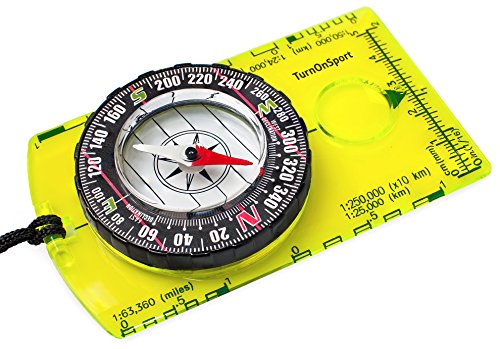
- Lightweight acrylic baseplate design
- Rotating bezel and liquid-filled needle
- Magnifying glass with 1:24000 scale
Best For: Beginners, scouts, and basic map navigation
Rugged Sighting Pick
Multifunctional Military Sighting Compass

- Clinometer measures slope angles and elevation
- Luminous dial, bubble level, and sighting lens
- Waterproof aluminum body with pouch and lanyard
Best For: Backcountry hiking and steep mountain terrain
Group Gear Pick
Four-Pack Orienteering Compasses

- Includes four lightweight compasses
- Rotating bezel and precise needle for navigation
- Ruler, metric scale, magnifier, and lanyards
Best For: Groups, beginners, and basic map reading
Night Navigation Pick
Military Lensatic Sighting Compass
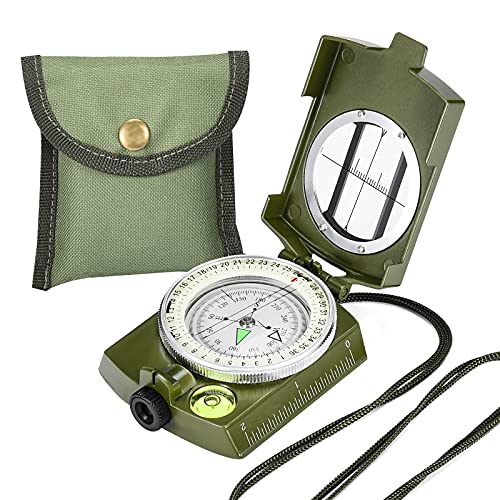
- Waterproof and shakeproof military-style construction
- Damping oil and bubble level support stable readings
- Fluorescent interface with pouch and detachable lanyard
Best For: Rugged hikes, camping, and low-light navigation
Professional Pick – SUUNTO MC-2 Global Mirror Compass
For hikers who want advanced direction-finding features, the SUUNTO MC-2 is a professional mirror compass built for precise navigation. Its global balancing, Metric UTM scales, sighting notch, declination adjustment, and clinometer make it a strong choice among compasses for hiking in demanding terrain.
Best For: Serious hikers, trekkers, trail runners, and alpine users who need precise bearings and advanced features.
Pros:
- Global balance with Metric UTM scales and an inch ruler
- Mirror sighting system, sighting hole, and notch support accurate bearings
- Includes declination adjustment and a clinometer
- Operates in low light and requires no batteries
Cons:
- Advanced features may be more than casual hikers need
- Its professional mirror-compass design may require practice to use effectively
The MC-2 is a feature-rich, durable navigation tool for users who value precision and versatility. Its compact format and included lanyard with wrist lock make it practical for backcountry travel.
Rugged Survival Choice – Cammenga Tritium Lensatic Compass
The Cammenga Official US Military Tritium Lensatic Compass is designed for dependable navigation in harsh conditions. With a waterproof, shockproof, sand-proof build and self-powered tritium illumination, it is one of the more rugged compasses for hiking, camping, and survival use.
Best For: Hikers, campers, and survival-minded users who prioritize durability and low-light operation.
Pros:
- Military-grade design made to US military standards
- Seven tritium micro lights provide illumination for over 12 years
- Waterproof, shockproof, damage-resistant, and sand-proof
- Operates from -50°F to 150°F
Cons:
- Lensatic handheld design is bulkier than a lightweight baseplate compass
- Its tactical feature set may be unnecessary for simple trail navigation
For users expecting demanding weather and rough handling, the Cammenga emphasizes resilience and long-term low-light visibility. The included pouch, lanyard, storage case, and instruction booklet add practical carrying and storage support.
Lightweight Trail Pick – SUUNTO A-30 Hiking Compass
The SUUNTO A-30 is a compact baseplate compass for hikers who want straightforward map navigation without excessive bulk. Its high-grade steel needle, fixed declination, metric scales, magnifying lens, and luminous markings make it a practical option among compasses for hiking and orienteering.
Best For: Hikers and orienteers seeking a lightweight, map-friendly compass for northern hemisphere use.
Pros:
- Lightweight 1.6-ounce design
- Transparent baseplate with magnifying lens for map work
- Luminescent markings support low-light use
- High-grade steel needle with jewel bearing
Cons:
- Balanced for northern hemisphere use rather than global use
- Fixed declination is less adjustable than a compass with user-set declination
The A-30 focuses on essential trail and map-navigation features in a small package. It is a sensible choice for hikers who value low weight and simple operation over mirror sighting or advanced global features.
Budget Adventure Option – Sportneer Orienteering Compass
The Sportneer compass combines a metal base and cover with a rear sight lens, glow-in-the-dark markings, and included carrying accessories. For shoppers comparing compasses for hiking, it offers a portable design suited to camping, scouting, backpacking, and introductory outdoor navigation.
Best For: Casual hikers, campers, scouts, and beginners who want a portable compass with a strap and pouch.
Pros:
- Rear sight lens magnifies the dial for easier readings
- Waterproof and shock-resistant metal construction
- Fluorescent markings glow after exposure to light
- Includes a strap and storage pouch
Cons:
- At 7.2 ounces, it is heavier than a lightweight baseplate compass
- The supplied notes do not list a warranty
- The strap may feel slightly heavy for children
The Sportneer is a practical, accessory-rich option for everyday outdoor use and learning basic navigation. Its rugged housing and glow feature add convenience, while the heavier metal construction may appeal more to durability-focused users than ultralight hikers.
Simple Trail Navigator – Compact Suunto A-10
For hikers seeking straightforward compasses for hiking, the Suunto A-10 keeps navigation uncomplicated. Its compact baseplate design includes inch and centimeter scales, a fixed declination, and a liquid-filled capsule for stable operation.
Best For: Recreational hiking, trekking, trail running, and basic map-and-compass navigation.
Pros:
- Minimalistic design is fast and simple to use.
- High-grade steel needle with jewel bearing.
- Compact, lightweight construction with lanyard mounting.
- Requires no batteries.
Cons:
- Balanced for northern hemisphere use.
- Designed for recreational navigation rather than feature-heavy surveying.
The A-10 is a practical choice when you want a dependable, portable compass without extra complexity. Its fixed declination and map scales make it especially suitable for everyday trail navigation.
Rugged Expedition Tool – AOFAR AF-4074 Military Compass
The AOFAR AF-4074 is a feature-rich option among compasses for hiking, camping, and outdoor navigation. Its metal body, liquid-filled luminous dial, sighting features, inclinometer, and waterproof construction are suited to users who want more than a basic direction finder.
Best For: Hiking, camping, mapping, geology activities, boating, and outdoor positioning where extra measurement features are useful.
Pros:
- Waterproof, shakeproof design with a zinc die-cast body.
- Includes a 360-degree floating dial and luminous markings.
- Offers slope measurement, an inclinometer, magnifier, and adjustable prism lens.
- Supports tripod mounting and includes a lanyard and carrying bag.
Cons:
- More complex than a basic recreational compass.
- Metal construction may be less convenient for minimalist packers.
Choose the AF-4074 if rugged construction and multiple navigation functions matter more than simplicity. It is a versatile field instrument for varied outdoor activities and comes with a two-year warranty.
Beginner Map Reader – Scout Orienteering Compass
This orienteering compass is a user-friendly pick for compasses for hiking, camping, and backpacking. Its acrylic baseplate, rotating 360-degree bezel, liquid-filled needle, magnifying glass, and 1:24000 ruler scale support basic route planning and map reading.
Best For: Beginner hikers, campers, scouts, families, and anyone learning manual map navigation.
Pros:
- Lightweight, portable design with a lanyard.
- Liquid-filled capsule helps the needle swing freely toward north.
- Includes a magnifying glass for reading maps.
- Rotating bezel and orienting lines support route planning.
Cons:
- Plastic construction may be less rugged than a metal compass.
- Short 30-day warranty.
This compass offers the essential features beginners need without adding unnecessary complexity. Its lightweight format and map-reading scale make it a convenient choice for day hikes, scout activities, and introductory navigation practice.
Rugged Sighting Pick – Multifunctional Military Sighting Compass
For hikers who want more than basic direction finding, this multifunctional compass combines a luminous dial, sighting lens, bubble level, and clinometer in a rugged aluminum-alloy body. It is a feature-rich choice for compasses for hiking, especially on steep or demanding terrain.
Best For: Backcountry hikers, climbers, scouts, and outdoor users who need sighting and slope-measurement features.
Pros:
- Integrated clinometer measures slope angles, elevation, and potential avalanche hazards.
- Liquid-filled design, bubble level, luminous dial, and magnifying viewer support easier readings.
- Waterproof aluminum construction includes a rotating bezel, tripod mount, pouch, and lanyard.
Cons:
- Its 175 g weight and multiple components may feel less convenient than a basic map compass.
- The advanced sighting and clinometer features may be unnecessary for casual trail use.
This is the most capable option here for users who expect rugged conditions and want navigation tools beyond a simple bearing compass. The clinometer and sighting system add practical value for mountainous routes.
Group Gear Pick – Four-Pack Orienteering Compasses
This four-pack gives hiking groups, families, or outdoor classrooms multiple lightweight compasses for map reading and basic navigation. Each compass includes a rotating bezel, magnifier, ruler, and metric scale, making it a practical budget-oriented option among compasses for hiking.
Best For: Groups, beginners, students, and hikers who want several compact compasses for basic trail navigation.
Pros:
- Four compasses are included for group use or as spare navigation tools.
- Rotating bezel and precise needle support directional readings.
- Built-in ruler, metric scale, magnifier, lanyard, and lightweight plastic design add convenience.
Cons:
- Plastic construction may not feel as rugged as the metal military-style alternatives.
- The set is intended for basic map reading rather than advanced sighting or slope measurement.
If you need several simple navigation tools at once, this pack is the most practical choice. Its compact design and map-oriented features suit introductory or casual hiking, while the four-pack adds useful redundancy.
Night Navigation Pick – Military Lensatic Sighting Compass
This lensatic compass is designed for hikers who prioritize a military-style build, stable readings, and visibility in low light. Its damping oil, bubble level, fluorescent interface, and carrying pouch make it a dependable-feeling option for rugged compasses for hiking.
Best For: Hikers, campers, and emergency-preparedness users who need a portable compass for demanding outdoor conditions and nighttime visibility.
Pros:
- Waterproof and shakeproof construction is designed for harsh outdoor use.
- Damping oil and a built-in bubble level help stabilize and improve readings.
- Fluorescent interface, canvas pouch, and detachable lanyard support low-light carry and access.
Cons:
- The lensatic military design may require more familiarity than a simple baseplate compass.
- Its listed dimensions are relatively large, which may be less convenient for ultralight hikers.
This compass balances rugged outdoor construction with practical low-light features. It is a strong fit when durability, portability, and nighttime direction finding matter more than map-measuring extras.
How We Picked These Compasses for Hiking
We focused on practical navigation features rather than appearance alone. The selection includes baseplate compasses for map reading, lensatic models for sighting distant landmarks, and compact recreational options for casual day hikes. We also considered readability, durability, portability, declination adjustment, accessories, and suitability for different experience levels.
Models with luminous markings or glow-in-the-dark components can be useful in low light, while waterproof or impact-resistant construction is valuable for exposed, wet, and demanding routes. Where included, features such as magnifiers, rulers, inclinometers, carrying pouches, and lanyards add convenience but should not replace sound navigation skills.
Quick Comparison
| Type | Best For | Features to Look For |
|---|---|---|
| Basic baseplate | Beginners and day hikers | Clear direction-of-travel arrow, ruler, and readable markings |
| Advanced baseplate | Backpackers and map users | Adjustable declination, magnifier, luminous markings, and stable housing |
| Lensatic | Precise sighting and rugged use | Peep sight, folding cover, durable case, and clear degree scale |
| Multi-pack | Groups, classes, or backups | Consistent markings, protective storage, and useful accessories |
Key Buying Factors for Compasses for Hiking
Compass Style
A baseplate compass is generally the easiest choice for learning map-and-compass navigation. Its transparent plate lets you align bearings and map features at the same time. Lensatic compasses are better suited to direct sighting and military-style navigation, but their folding design can require more practice.
Declination Adjustment
Magnetic north and true north are not identical in many regions. An adjustable declination feature makes it easier to account for that difference and reduces calculation errors. If you travel between areas, check whether the adjustment can be reset easily.
Readability and Low-Light Use
Choose a compass with clear degree markings, a readable bezel, and a needle that settles quickly. Luminous markings help during dawn, dusk, or poor-weather navigation, but they still need to be charged by light and should not be treated as a substitute for a headlamp.
Durability and Size
Water resistance, a secure lanyard, and a tough housing matter on wet or rocky trails. A compact model is easier to carry, while a larger baseplate may be simpler to read and more useful with topographic maps.
Who Should Buy Which Compasses for Hiking?
Beginners and casual hikers: Choose a simple baseplate model with clear markings and a straightforward layout. It is easier to learn and usually lighter than a sighting compass.
Backpackers and map users: Look for adjustable declination, a transparent baseplate, a ruler, and possibly a magnifier. These features support route planning and accurate bearing work.
Serious navigators: Consider an advanced baseplate or lensatic compass with luminous markings, stable construction, and reliable sighting features. Practice with it before depending on it in remote terrain.
Families, classes, and groups: A multi-pack can provide affordable spares for instruction or shared trips. Verify each compass before use and teach everyone how to take and follow a bearing.
Whichever model you choose, pair it with a current topographic map and learn basic techniques in familiar terrain first. A compass is most useful when you understand declination, orienting a map, taking a bearing, and confirming your position with landmarks.