
Learning to navigate with a compass is easier when you start with a clear baseplate, readable markings, and controls that match your experience. The best compasses for beginners make map work less intimidating while remaining useful on hikes, camping trips, and emergency outings.
This roundup compares 10 practical options, from simple recreational compasses to models with adjustable declination, sighting mirrors, magnifiers, and luminous markings. Use the guide below to choose the right balance of simplicity, durability, and navigation features.
Best 10 Compasses for Beginners Picks for 2026
Rugged Pick

- Durable waterproof and shock-resistant metal body
- Magnifying rear sight lens supports precise readings
- Glow-in-the-dark markings for low-light use
Best For: Camping, scouting, and rugged outdoor practice
Low-Light Navigation Pick

- Transparent baseplate and magnifying lens aid map reading
- Luminous markings support low-light navigation
- Lightweight design with no batteries required
Best For: Hiking and orienteering with maps
Learning Pick
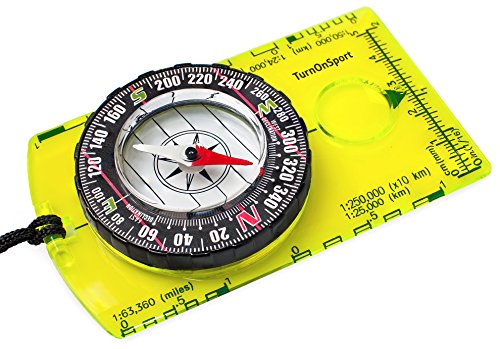
- Rotating bezel and liquid-filled capsule support basic navigation
- Includes magnifier and 1:24000 map scale
- Lightweight design is suitable for scouts and beginners
Best For: Learning map reading and introductory orienteering
Simple Everyday Pick

- Minimalist design is straightforward for beginners
- Liquid-filled capsule supports stable operation
- Compact baseplate includes inch and centimeter scales
Best For: Recreational hiking and basic map navigation
Best Overall Lensatic Pick

- Lensatic design with prism lens and bubble level
- Water-resistant aluminum construction
- Glow-in-the-dark interface for low-light reading
Best For: Beginners wanting a durable, feature-rich hiking compass
Best Beginner Multipack
4-Piece Orienteering Compass Set

- Four lightweight compasses in one set
- Rotating bezel and precise needle
- Built-in ruler and metric scale
Best For: Groups, families, and beginners learning map navigation
Best for Sighting Practice
Tactical Lensatic Survival Compass

- Optical eyepiece for taking bearings
- Dual 360-degree bearing scales
- Metal, weather-resistant construction
Best For: Beginners practicing bearings in rugged outdoor settings
Best Advanced Pick
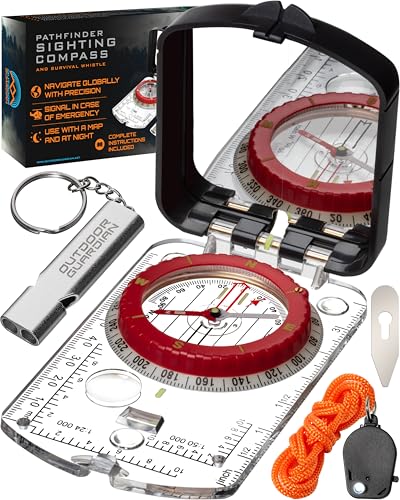
- Global needle and adjustable declination
- Mirror sighting with luminous dial and LED
- Clinometer, magnifier, and survival whistle
Best For: Beginners building hiking, orienteering, and survival skills
Best Clip-On Pick

- Built-in carabiner for quick access
- Liquid-filled directional readings
- Lightweight aluminum body with luminous markers
Best For: Portable hiking, camping, and basic navigation
Best Starter Multipack
Trcosenp Mini Orienteering Compass

- Four compasses for group practice
- Magnifier and 1:24000 ruler scale
- Lightweight waterproof design with lanyards
Best For: Kids, families, and beginner navigation lessons
Rugged Pick – Sportneer Metal Compass
For beginners seeking compasses for beginners, the Sportneer offers a durable metal build, a magnifying rear sight lens, and straightforward directional readings. Its waterproof, shock-resistant design and glow-in-the-dark markings make it practical for varied outdoor conditions.
Best For: Camping, hiking, scouting, survival practice, and beginners who want a rugged compass with nighttime visibility.
Pros:
- Rear sight lens magnifies the dial for more precise readings.
- Waterproof and shock-resistant metal construction.
- Fluorescent markings and north indicator glow after exposure to light.
- Includes a carrying strap and storage pouch.
Cons:
- At 7.2 ounces, it may feel slightly heavy for some children.
- Requires exposure to light before the markings glow.
- Keeping it level is important for accurate needle movement.
This is a sensible choice if durability and added low-light visibility matter more than minimizing weight. The included strap and pouch also make it convenient for carrying on outdoor trips.
Low-Light Navigation Pick – SUUNTO A-30 Compass
The SUUNTO A-30 is a compact option for people comparing compasses for beginners and wanting a map-friendly design. Its transparent baseplate, magnifying lens, luminous markings, and high-grade steel needle provide a practical setup for hiking and orienteering.
Best For: Hikers and orienteers who want a lightweight, map-compatible compass with low-light markings.
Pros:
- Magnifying lens and transparent baseplate help with map use.
- Luminescent markings support readings in low-light conditions.
- High-grade steel needle with jewel bearing is designed for accurate operation.
- Lightweight 1.6-ounce construction requires no batteries.
Cons:
- Balanced for northern hemisphere use.
- Uses a fixed declination rather than an adjustable declination feature.
- Its compact design may offer fewer extras than a rugged military-style compass.
With its light weight and transparent baseplate, the A-30 is approachable for learning map-and-compass basics. It is especially appealing when low-light markings and portability are priorities.
Learning Pick – Orienteering Scout Compass
This orienteering compass is a practical starting point for beginners researching compasses for beginners, with a rotating 360-degree bezel, directional needle, orienting lines, and a transparent acrylic baseplate. Its ruler scale and magnifying glass also support basic topographic map work.
Best For: Scouts, students, families, and new hikers learning route mapping and basic land navigation.
Pros:
- Rotating bezel and azimuth bearing support basic direction setting.
- Liquid-filled capsule helps the magnetic needle swing freely.
- Includes a magnifying glass and 1:24000 ruler scale for map reading.
- Lightweight handheld design includes a lanyard.
Cons:
- Made from plastic rather than metal.
- Its 30-day warranty is shorter than some alternatives.
- Manual navigation requires practice to use accurately.
This model emphasizes accessible learning features rather than premium construction. The map scale, magnifier, and lanyard make it a useful introductory tool for classroom, scouting, or casual outdoor use.
Simple Everyday Pick – SUUNTO A-10 Compass
The SUUNTO A-10 keeps things simple for shoppers choosing compasses for beginners. It combines a compact baseplate design with a high-grade steel needle, liquid-filled capsule, inch and centimeter scales, and a fixed declination setting for recreational navigation.
Best For: Recreational hikers and beginners who want a straightforward compass for map-based navigation.
Pros:
- Minimalist design is fast and simple to use.
- Liquid-filled capsule supports stable needle operation.
- High-grade steel needle uses a jewel bearing.
- Compact, portable construction needs no batteries.
Cons:
- Balanced for northern hemisphere use.
- Uses fixed declination rather than an adjustable setting.
- Has fewer specialized features than the A-30 or Sportneer models.
The A-10 is a strong fit for buyers who prefer a no-frills learning compass from an established manufacturer. Its simple controls can make basic map-and-compass practice less distracting.
Best Overall Lensatic Pick – Durable Pocket Hiking Compass
Compass, Hiking Compass for Survival with Lensatic – Water-Resistant Durable and Pocket-Sized
Check Price On AmazonFor beginners seeking dependable compasses for beginners, this pocket-sized lensatic model combines clear readings with practical features for camping, hiking, and mountaineering. Its water-resistant aluminum construction and included carrying options make it convenient for regular outdoor use.
Best For: Beginners who want a durable, feature-rich compass for hiking and low-light navigation.
Pros:
- Lensatic function, prism lens, bubble level, and clear scales support precise readings.
- Water-resistant aluminum construction is designed for rough outdoor conditions.
- Fluorescent markings and a glow-in-the-dark interface aid nighttime reading.
- Compact design includes a carrying case, lanyard, or pouch for portability.
Cons:
- Its 0.22 kg weight may be more than a basic plastic compass.
- The advanced lensatic features may require a little practice for first-time users.
This is a strong all-around choice if you want beginner-friendly portability without giving up sighting and low-light features. The 91-day warranty is worth noting when comparing long-term coverage.
Best Beginner Multipack – 4-Piece Orienteering Compass Set
This four-piece set offers an accessible way to get started with compasses for beginners, especially for groups, families, or backup kits. Each lightweight compass includes a rotating bezel, ruler, metric scale, and lanyard for basic map reading and outdoor navigation.
Best For: Beginners, families, or groups who need multiple lightweight compasses for map-based activities.
Pros:
- Four compasses provide useful quantity for groups or spares.
- Rotating bezel and precise needle support directional guidance.
- Built-in ruler and metric distance scale assist with map reading.
- Lightweight handheld design includes a lanyard for convenient carrying.
Cons:
- Plastic construction may feel less rugged than an aluminum compass.
- The set does not list specialized lensatic or nighttime-reading features.
Choose this set when value and quantity matter most. Its straightforward layout and map-measuring tools make it a practical starting point, while the one-year warranty adds useful coverage.
Best for Sighting Practice – Tactical Lensatic Survival Compass
Beginners comparing compasses for beginners may appreciate this tactical-style model for learning how to take bearings. Its optical eyepiece, dual 360-degree scales, metal base and cover, and glow-in-the-dark interface provide useful tools for hiking, climbing, biking, exploring, and other outdoor activities.
Best For: Beginners who want to practice sighting bearings and need a rugged, weather-resistant compass.
Pros:
- Optical eyepiece supports taking bearings to and from visible objects.
- Azimuth and reversed 360-degree scales add flexibility for bearing work.
- Metal base and cover provide durable, weatherproof construction.
- Fluorescent markings and glow-in-the-dark features help in low light.
Cons:
- The tactical sighting features may have a steeper learning curve than a basic compass.
- At 0.18 kg, it is compact but not the lightest possible option.
This model is a good fit when bearing practice and rugged construction are priorities. Its lanyard mount helps keep it accessible, while the lensatic design gives beginners room to build more advanced navigation skills.
Best Advanced Pick – Pathfinder Sighting Compass
For beginners who want room to build navigation skills, the Pathfinder Sighting Compass combines a mirrored sighting system with practical survival features. Its adjustable declination, global needle, luminous dial, and included LED make it a versatile choice for learning map-and-compass navigation in varied conditions.
Best For: Beginners progressing into hiking, orienteering, and survival training.
Pros:
- Global needle and adjustable declination support more accurate readings.
- Mirrored sighting design, rotating bezel, and six measurement scales add navigation flexibility.
- Includes a clinometer, 3x magnifying lens, LED light, and survival whistle.
- Compact, liquid-filled, waterproof design with luminous markings.
Cons:
- Its many features may feel more complex than necessary for a first compass.
- At 4.3 inches long, it is less minimal than a pocket clip-on model.
The Pathfinder is a strong choice if you want one compass that can support beginner practice while offering advanced sighting and emergency features as your skills develop.
Best Clip-On Pick – Coghlan's Carabiner Compass
Coghlan’s Compass is a straightforward option for beginners who want a lightweight navigation tool that stays attached to their gear. The liquid-filled housing, luminous directional markers, and built-in carabiner make it convenient for hiking, camping, and basic outdoor practice.
Best For: Beginners who prioritize portability and quick access.
Pros:
- Built-in carabiner clips to a backpack, belt, or other outdoor gear.
- Liquid-filled design supports smooth directional readings.
- Glow-in-the-dark markers help with low-light visibility.
- Lightweight aluminum construction weighs 0.6 ounces.
Cons:
- It does not include advanced features such as declination adjustment or a sighting mirror.
- The compact format may offer less map-reading functionality than a baseplate compass.
This is an appealing starter compass for simple directional checks, especially when you want something small that can remain clipped to your day-hiking or camping setup.
Best Starter Multipack – Trcosenp Mini Orienteering Compass
For beginners learning map reading together, this four-piece compass set offers accessible tools for practice at home, on field trips, or outdoors. Each compact compass includes orienting lines, a rotating bezel, a magnifying glass, and a 1:24000 ruler scale for basic route plotting.
Best For: Kids, families, and groups learning introductory map-and-compass skills.
Pros:
- Four compasses make it practical for group instruction or shared outdoor activities.
- Clear orienting lines and a sensitive magnetic needle are designed for beginner use.
- Magnifying glass and 1:24000 scale support basic topographic map reading.
- Lightweight waterproof acrylic construction includes lanyards for portability.
Cons:
- The plastic construction may feel less substantial than an aluminum or metal compass.
- The supplied notes do not mention advanced declination adjustment or a sighting mirror.
This multipack is a practical teaching choice when several beginners need their own compass, with enough map-reading features to make introductory navigation lessons hands-on.
How We Picked the Best Compasses for Beginners
We focused on features that help new users learn accurate map-and-compass navigation without adding unnecessary complexity. The selection includes straightforward baseplate designs, compact recreational models, lensatic and mirror compasses, and multifunctional tools with map scales or magnifiers.
We also considered practical outdoor details: liquid-filled or stabilized needles, readable degree markings, luminous elements for low-light use, adjustable declination, water resistance, portability, and included carrying accessories. A beginner compass should be easy to read and hold steady before it adds advanced navigation functions.
Quick Comparison
| Compass Type | Best For | Notable Features |
|---|---|---|
| Basic baseplate | First-time hikers and students | Simple bearings, map reading, lightweight design |
| Advanced baseplate | Orienteering and backpacking | Declination adjustment, scales, magnifier |
| Mirror or sighting compass | Longer-distance bearings | Improved sighting accuracy and luminous components |
| Lensatic compass | Survival practice and rugged use | Protected housing, sighting system, compact format |
| Multi-pack or mini compass | Training, groups, or backup use | Low-cost redundancy and portability |
Key Buying Factors for Compasses for Beginners
Baseplate and Readability
A transparent, stable baseplate makes it easier to align the compass with a map and follow a bearing. Look for large cardinal directions, clear degree markings, and a bezel that turns smoothly without excessive play.
Declination Adjustment
Magnetic north and true north differ in many locations. Adjustable declination is valuable if you plan to navigate regularly or travel between regions. If you are just learning, a fixed-declination model can be simpler, provided you understand how to account for local variation.
Needle Stability and Construction
A liquid-filled housing generally helps the needle settle faster. Water resistance, a durable capsule, and a protective case matter for hiking, camping, and survival kits. A lanyard or strap can also reduce the chance of dropping the compass.
Low-Light and Sighting Features
Luminous markings are useful at dusk or in shaded conditions. Mirror compasses and sighting systems can improve bearing accuracy, but they require practice and may be more than a casual hiker needs.
Who Should Buy Which Compasses for Beginners?
- New hikers: Choose a simple baseplate compass with clear markings and minimal controls.
- Map-reading learners: Look for ruler scales, a transparent plate, and possibly a magnifier.
- Backpackers and orienteers: Prioritize adjustable declination, a stable needle, and precise bezel markings.
- Survival-kit buyers: Consider a compact, water-resistant lensatic or tactical-style model, while practicing before relying on it in an emergency.
- Families, classes, or groups: Multi-packs provide several basic compasses for instruction and backup use.
Whichever model you choose, learn with a topographic map and practice taking, following, and reversing bearings in familiar terrain before depending on the compass in remote conditions.