
Compact telescope guide cameras can make lunar, planetary, and deep-sky imaging easier without adding much weight or bulk to your telescope setup. The right model depends on more than resolution: sensor size, sensitivity, connection type, software support, and compatibility with your guidescope or focuser all matter.
We compare 10 compact camera options, from simple USB eyepiece cameras to dedicated monochrome guide cameras, so you can match your budget and imaging goals with a practical choice.
Best 10 Compact Telescope Guide Cameras Picks for 2026
Compact Guide Camera Pick

- 1.23MP color sensor with 3.75-micron pixels
- 1.25-inch body with ST4 guide interface
- Works with PHD2, NINA, and other software; not ASI AIR
Best For: Compact autoguiding and planetary imaging
Mini Guide Scope Choice
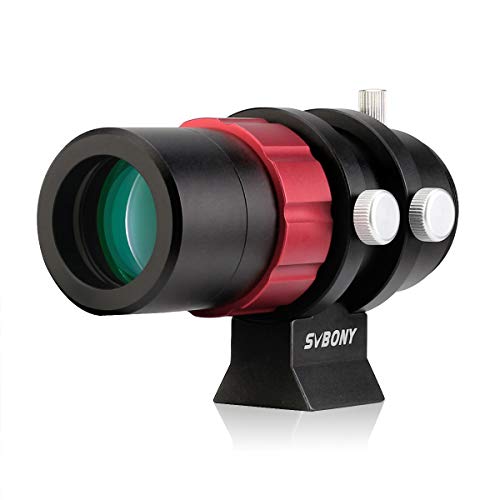
- 30mm aperture with f/4 optics and wide field
- 1.25-inch and M42 interfaces
- 45mm back focus with adjustable mounting rings
Best For: Wide-field guiding with compatible astronomy cameras
Wireless Imaging Alternative
Telonixium 4K Telescope Camera

- 8MP sensor with 4K video support
- 2.8-inch IPS screen and Wi-Fi viewing
- Fits eyepieces from 23mm to 60mm
Best For: Wireless observation, recording, and beginner astrophotography
Monochrome Guiding Upgrade

- 2.1MP monochrome CMOS sensor
- Larger field of view for finding guide stars
- 60g body fits directly into a 1.25-inch focuser
Best For: Monochrome autoguiding and lunar or planetary imaging
Best Plug-and-Play Pick

- 7.05MP IMX415 color sensor
- Up to 30FPS at 1080p
- 1.25-inch USB telescope connection
Best For: Beginners capturing the Moon, planets, and live computer views
Best 4K Lunar Option
FIBONAX 4K 8MP Telescope Camera

- 8MP sensor with up to 4K video
- UVC plug-and-play viewing
- Removable IR-cut filter
Best For: Detailed lunar and planetary video on compatible computers
Best Low-Noise Entry-Level Pick

- IMX662 color sensor with low readout noise
- ROI, BIN2×2, and frame buffering
- 1.25-inch interface for planetary imaging
Best For: Entry-level planetary photography and electronically assisted astronomy
Best WiFi Compact Telescope Camera

- Wireless phone viewing and remote control
- 2K video plus high-resolution still capture
- Fits 25mm–50mm eyepieces; includes battery and storage
Best For: Casual lunar, planetary, microscope, and daytime viewing
Best Beginner Compact Telescope Camera
SVBONY SV105 USB Planetary Camera
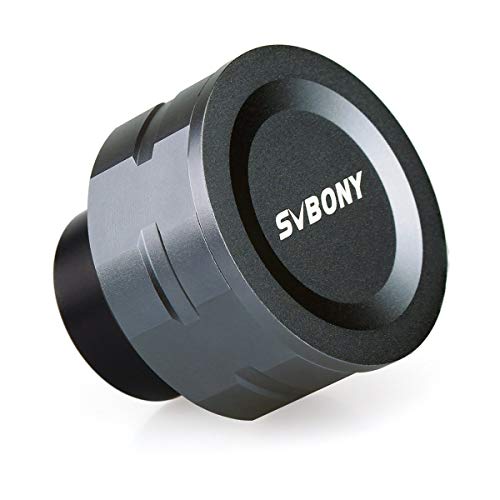
- Beginner-friendly plug-and-play USB design
- 1.25-inch format with filter thread
- Full HD recording up to 30fps and 2K video support
Best For: Computer-based lunar and planetary imaging
Best High-Resolution Compact Telescope Camera
SVBONY SC715C IMX715 Planetary Camera

- IMX715 sensor supports detailed 4K planetary imaging
- USB 3.0 capture reaches up to 45.5fps
- Includes software support and an ST4 autoguider port
Best For: Advanced computer-based planetary astrophotography
Compact Guide Camera Pick – SVBONY SV905C
The SVBONY SV905C is a compact telescope guide cameras option for users who want a small 1.25-inch camera for autoguiding or planetary imaging. Its 1.23MP color sensor, 3.75-micron pixels, and ST4 interface make it a practical fit for supported guiding setups.
Best For: Autoguiding and planetary imaging with a 1.25-inch guide scope or off-axis guider.
Pros:
- Compact 1.25-inch body fits different focal-length guide lenses and OAG setups.
- High peak QE and low read noise can help with faint guide stars.
- Supports USB 2.0, ST4, and software such as PHD2, NINA, and TheSky.
Cons:
- Not compatible with ASI AIR.
- Color resolution is limited to 1.23MP.
- Driver software must be downloaded separately.
Choose the SV905C when compact dimensions and broad guiding-software support matter most. Confirm compatibility with your imaging controller before buying, especially if you use ASI AIR.
Mini Guide Scope Choice – SVBONY SV165 30mm
The SVBONY SV165 is a compact telescope guide cameras companion rather than a camera itself: it provides a 30mm, f/4 optical path for compatible autoguiding cameras. Its wide field of view and 45mm back focus are designed to simplify target finding and focusing.
Best For: Pairing a small guide camera with a wide-field mini guide scope for deep-sky astrophotography.
Pros:
- Compatible with many 1.25-inch and M42-mounted guiding cameras.
- f/4 optics and a 2.86-degree field of view help locate targets quickly.
- 45mm back focus and nylon-tipped thumbscrews support convenient setup and positioning.
Cons:
- Some cameras require additional accessories to reach focus.
- Cannot be used with a dielectric mirror star diagonal for focusing.
- Manual focusing is required.
This is a sensible choice when you need a lightweight optical guide scope to complement compact telescope guide cameras. Check your camera’s mounting and focus requirements before ordering.
Wireless Imaging Alternative – Telonixium 4K Telescope Camera
The Telonixium 4K Wireless Telescope Camera takes a different approach to compact telescope guide cameras, emphasizing live viewing and recording rather than dedicated autoguiding. Its 8MP sensor, built-in screen, Wi-Fi, and universal locking groove make it useful for observational imaging with multiple optical instruments.
Best For: Beginners who want wireless telescope viewing, high-resolution recording, and app-based sharing.
Pros:
- 8MP sensor supports 4K video and up to 64MP image capture.
- Rotatable 2.8-inch IPS screen provides real-time viewing without a separate display.
- Universal mounting groove fits eyepieces from 23mm to 60mm.
- Built-in battery, Wi-Fi, time-lapse, and support for microSD cards up to 512GB add flexibility.
Cons:
- Its notes do not identify dedicated autoguiding or ST4 support.
- Manual focus is required.
- It is larger and feature-oriented compared with a simple guide camera.
Consider this model if your priority is convenient electronic observation and recording rather than closed-loop telescope guiding. The universal fit and wireless controls are especially appealing for beginner-friendly setups.
Monochrome Guiding Upgrade – ZWO ASI174MM-MINI
ZWO ASI174MM-MINI 2.1 MP CMOS Monochrome Astronomy Camera with USB 2.0# ASI174MM-MINI
Check Price On AmazonThe ZWO ASI174MM-MINI is a compact monochrome option among compact telescope guide cameras, built for autoguiding and monochrome lunar, planetary, or solar imaging. Its 2.1MP sensor, larger field of view, and 5.86-micron pixels are designed to help locate potential guide stars.
Best For: Astrophotographers seeking a lightweight monochrome guide camera for guide scopes or off-axis guiders.
Pros:
- Larger sensor and high QE can help reveal more and fainter guide stars.
- Slides directly into a 1.25-inch focuser and weighs just 60g.
- Captures up to 18.4 frames per second at maximum resolution.
- USB 2.0 power and data connection works with supported Mac and Windows systems.
Cons:
- Monochrome output is less suited to users who specifically want color imaging.
- Requires a separate safe solar filter for solar work.
- Uses USB 2.0 rather than a newer, faster interface.
The ASI174MM-MINI is a strong fit when guide-star availability and a lightweight 1.25-inch form factor outweigh the need for color. Its monochrome sensor also gives it added flexibility for lunar and planetary work.
Best Plug-and-Play Pick – SVBONY SV205
For shoppers comparing compact telescope guide cameras, the SVBONY SV205 is a straightforward USB option for lunar, planetary, and terrestrial viewing. Its 1.25-inch barrel fits many standard telescope focusers, while plug-and-play operation and support for Windows, Linux, Android, and macOS laptops make it practical for computer-based observing.
Best For: Beginners who want an easy-to-use camera for bright planets, the Moon, and shared live viewing.
Pros:
- 7.05MP IMX415 color sensor with dark-light compensation for improved low-light clarity.
- Records up to 30FPS at 1920×1080 in MJPG format.
- 1.25-inch machined aluminum adapter barrel and included USB 3.0 cable.
- Plug-and-play use without a dedicated driver; macOS laptops can use Astroamx Capture.
Cons:
- Not compatible with Apple phones or tablets.
- Manual focus is required.
- Compatibility depends on having a suitable 1.25-inch telescope interface or adapter.
The SV205 emphasizes simplicity and high-resolution planetary capture rather than advanced deep-sky imaging. It is a sensible compact choice when easy computer viewing and a generous pixel count matter most.
Best 4K Lunar Option – FIBONAX 4K 8MP Telescope Camera
Among compact telescope guide cameras, this FIBONAX model stands out for its 8MP sensor and up-to-4K video support. It uses a standard 1.25-inch connection, works with UVC-compatible software on Windows, macOS, and Linux, and is designed primarily for lunar and planetary imaging.
Best For: Users prioritizing detailed Moon and bright-planet video with a lightweight metal camera body.
Pros:
- 8MP sensor supports up to 4K video and high-frame-rate 1080p capture.
- Standard UVC viewing avoids the need for a dedicated driver.
- Optional ASCOM support is available for compatible Windows astronomy applications.
- Removable IR-cut filter, M28.5×0.6 filter thread, and approximately 110g compact housing.
Cons:
- Does not autofocus; focus must be adjusted through the telescope.
- Requires sufficient focuser travel, so a 1.25-inch fit does not guarantee focus.
- Designed mainly for lunar and planetary imaging, not long-exposure deep-sky photography.
This camera offers a strong feature set for high-resolution bright-object capture, especially if your telescope can reach focus with a 1.25-inch electronic eyepiece. Its software flexibility is useful, but manual setup remains part of the process.
Best Low-Noise Entry-Level Pick – SVBONY SV305C
The SVBONY SV305C is one of the more capable compact telescope guide cameras for entry-level planetary imaging and electronically assisted astronomy. Its IMX662 color sensor, ROI controls, pixel binning, and built-in image buffer give users more control over capture speed and sensitivity than a basic webcam-style telescope camera.
Best For: Beginners and EAA users who want an upgrade-friendly camera for lunar, planetary, and high-speed observing.
Pros:
- IMX662 back-illuminated color sensor with low readout noise, no glow, and improved NIR sensitivity.
- ROI and BIN2×2 functions can improve capture rates or sensitivity.
- 128MB DDRIII buffer helps cache frames when USB transfer is interrupted or busy.
- Supports one-key planetary and long-exposure modes in SharpCap and includes a 1.25-inch interface.
Cons:
- Lower 2.1MP sensor resolution than the other listed cameras.
- Manual focus is required.
- The built-in UV/IR-cut filter is not removable, although the protective glass is detachable.
The SV305C is a practical choice when capture control and noise performance matter more than headline resolution. Its ROI, binning, buffering, and SharpCap integration give it useful flexibility for planetary work and EAA setups.
Best WiFi Compact Telescope Camera – EP907 4MP Eyepiece Camera
For a compact telescope guide cameras roundup, the EP907 stands out as a wireless option for observers who want to view and record through a phone. Its 25mm–50mm eyepiece compatibility, built-in battery, and included 32GB TF card make it a convenient choice for lunar, planetary, microscope, and daytime viewing.
Best For: Beginners and casual users who want wireless phone viewing, straightforward recording, and a compact camera for telescopes or microscopes.
Pros:
- 4MP sensor supports still images up to 24MP and 2K video at 30fps.
- Built-in WiFi enables remote viewing and control from a phone.
- Includes a 1500mAh battery, 32GB TF card, interval shooting, and time-lapse recording.
- Fits eyepieces from 25mm to 50mm and weighs only 95g.
Cons:
- Requires the Lercenker app and a specific WiFi connection process.
- Its compatibility is based on 25mm–50mm eyepieces, so it is not a universal fit.
- Designed around battery-powered WiFi use rather than a direct computer USB workflow.
The EP907 is a practical pick when portability and wireless sharing matter more than advanced computer-based capture. Its simple mounting system and included storage reduce setup friction for casual astrophotography.
Best Beginner Compact Telescope Camera – SVBONY SV105 USB Planetary Camera
Among compact telescope guide cameras, the SVBONY SV105 is a straightforward USB eyepiece for beginners moving into lunar and planetary imaging. Its standard 1.25-inch format, plug-and-play design, and support for common capture software make it suitable for connecting a telescope to a laptop or PC.
Best For: Beginners who want an affordable, computer-connected camera for recording the Moon, bright planets, and terrestrial targets.
Pros:
- Standard 1.25-inch format with an M28.5×0.6 filter thread.
- IMX307 color sensor records up to 1920×1080 at 30fps and supports 2K video.
- Plug-and-play operation works with SharpCap, AstroDMx Capture, or USB Camera depending on the operating system.
- Dark-light compensation helps improve clarity in low-light conditions.
Cons:
- Requires a connected computer or compatible Android device for capture.
- Not compatible with Apple phones or tablets, although it supports macOS laptops.
- Manual focus requires adjustment through the telescope setup.
The SV105 keeps the learning curve manageable while providing useful planetary video capability. It is a better fit for users comfortable with a USB workflow than for anyone seeking standalone or wireless operation.
Best High-Resolution Compact Telescope Camera – SVBONY SC715C IMX715 Planetary Camera
For advanced users comparing compact telescope guide cameras, the SVBONY SC715C prioritizes detailed planetary imaging and high-speed computer capture. Its IMX715 sensor, USB 3.0 interface, software support, and ST4 autoguider port make it a more capable option for an established astronomy imaging setup.
Best For: Experienced astrophotographers who want high-resolution planetary video, low-noise imaging, and guiding support through a computer-based setup.
Pros:
- 1.45µm-pixel IMX715 color sensor is designed for detailed 4K planetary imaging.
- USB 3.0 transfers full-resolution video at up to 45.5fps.
- 512MB DDR3 cache helps maintain smooth, lossless frame handling.
- Supports SharpCap, AstroDMx Capture, NINA, and an ST4 autoguider connection.
Cons:
- Not compatible with smartphones and requires dedicated software.
- The camera has no built-in focus adjustment; focusing must be done with the telescope focuser.
- Its advanced features may be unnecessary for casual observers.
The SC715C offers the strongest performance focus of these three cameras, particularly for users who already use astronomy software and a compatible mount. Its lightweight 147g body also helps limit added load on the telescope.
How We Picked These Compact Telescope Guide Cameras
We focused on cameras and camera-style electronic eyepieces suited to compact astronomy rigs, guiding, planetary imaging, and entry-level deep-sky capture. Our comparison considered sensor technology, resolution, pixel size, color or monochrome output, USB or Wi-Fi connectivity, optical format, and likely software compatibility.
Because these products serve different roles, resolution alone does not determine which camera is best. A sensitive monochrome sensor may be preferable for guiding, while a color camera with higher resolution can be more convenient for lunar and planetary imaging. We also considered the practical value of 1.25-inch compatibility, included connectivity, and ease of use for beginners.
Quick Comparison
- Best for dedicated guiding: A sensitive monochrome camera paired with a suitable guidescope.
- Best for simple planetary imaging: A USB color camera with a small pixel size and dependable capture software.
- Best for flexible beginner use: A 1.25-inch electronic eyepiece-style camera that works with common telescope accessories.
- Best for wireless convenience: A Wi-Fi model when reducing cables matters more than maximum control or lowest latency.
- Best for higher-resolution viewing: An 8MP-class or 7MP-class camera, provided the telescope and computer can handle the data.
Key Buying Factors for Compact Telescope Guide Cameras
Sensor Sensitivity and Type
For guiding, sensitivity and clean performance in short exposures are usually more important than headline megapixels. Monochrome sensors can provide strong guide-star contrast, while color sensors are easier for casual planetary and terrestrial viewing. Check the sensor size and pixel size as well as the resolution.
Connection and Software Support
USB cameras generally offer a direct, low-latency connection and are a practical choice for guiding software. Wireless cameras reduce cable clutter but may introduce setup steps, network dependence, or delays. Before buying, confirm support for your operating system and preferred capture or guiding software.
Optical Fit and Field of View
Many compact models use a 1.25-inch barrel, but that does not guarantee the same field of view or focus position. Verify that the camera can reach focus in your telescope, guidescope, or adapter. Sensor size also affects framing: larger sensors capture a wider field but may require better corrected optics.
Power, Data Rate, and Mounting
Higher-resolution cameras generate larger files and may need faster USB connections and a capable computer. Check cable length, power requirements, threaded mounting options, and whether the camera includes the adapters you need.
Who Should Buy Which Compact Telescope Guide Cameras?
Choose a dedicated monochrome guide camera if accurate tracking is your priority, especially for deep-sky imaging. Choose a color planetary camera if you mainly photograph the Moon, planets, or bright targets and want straightforward previews. Choose a high-resolution model if your telescope, mount, and computer can manage larger data streams and you want more cropping flexibility. Choose a wireless camera if convenient remote viewing is more important than the simplest guiding workflow.
For most buyers, the safest starting point is a USB camera with broad software support and a 1.25-inch fit. Confirm the camera’s focus requirements and compatibility with your mount before prioritizing extra megapixels.