
The best compact sleeping bags balance low packed size with dependable warmth, weather resistance, and enough room to sleep comfortably. This roundup compares 10 options for backpacking, camping, scouts, emergencies, and warm-weather travel.
Use the buying guide below to match temperature ratings, insulation, shape, weight, and compression features to the conditions you expect to encounter.
Best 10 Compact Sleeping Bags Picks for 2026
Best Lightweight Pick
ECOOPRO Warm Weather Sleeping Bag
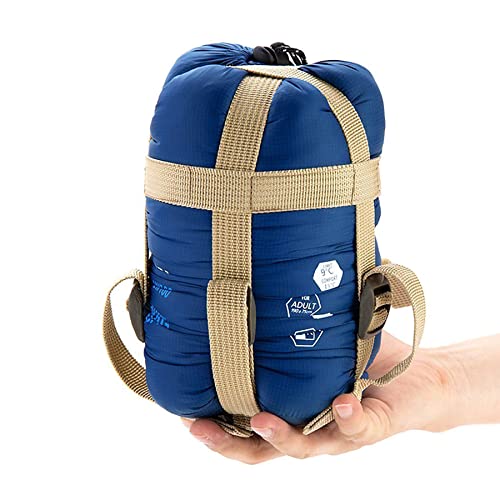
- About 1.7 pounds for easier carrying
- Waterproof nylon shell
- Compresses to about 11 inches
Best For: Warm-weather backpacking and camping
Best Ultralight Summer Pick

- About 1.5 pounds
- Compresses to approximately 6.9 inches
- Compatible bags can zip together
Best For: Ultralight summer backpacking
Best Mummy Design
OneTigris Bushcrafter’s Sleeping Bag

- Three-season rating for cooler conditions
- Mummy shape with hood
- Water-repellent, quick-dry materials
Best For: Three-season camping and bushcrafting
Lightest Warm-Weather Value
Ultralight Compact Sleeping Bag

- Weighs only 1.5 pounds
- Converts to a blanket or quilt
- Includes a compression sack
Best For: Warm-weather backpackers and flexible camp use
Tall Camper Choice
Ultralight 3-4-Season Compact Sleeping Bag

- 1.5 pounds with a 4.7-by-7.9-inch packed size
- 79-inch length for taller campers
- Machine-washable continuous microfiber fill
Best For: Taller, lighter campers prioritizing packability
Versatile 3-Season Pick
Sportneer Compact Sleeping Bag

- 3-season design with a 50–80°F comfort range
- Adjustable hood and two-way bottom zipper
- 87 x 31.5 inches; includes carry bag
Best For: Roomy camping and family outings across milder seasons
Ultralight Travel Choice
Naturehike Compact Sleeping Bag

- 1.68-pound weight with compact 5 x 12-inch storage
- Roomy envelope shape for adults or children
- Includes compression sack for backpacking and travel
Best For: Lightweight trips where packed size is a top priority
Cold-Weather Mummy Pick
Teton 20°F Compact Sleeping Bag

- 20°F rating for colder camping conditions
- Compressible microfiber insulation and stuff sack
- Draft tube, roomy footbox, and soft liner
Best For: Backpacking and camping when warmth matters more than minimum weight
Best Lightweight Pick – ECOOPRO Warm Weather Sleeping Bag
For shoppers comparing compact sleeping bags for warm-weather camping, the ECOOPRO stands out for its low 1.7-pound weight and compressible design. Its waterproof nylon shell, polyester lining, and 83-by-30-inch envelope shape make it a practical choice for backpacking, hiking, and general outdoor use.
Best For: Warm-weather backpacking, camping, hiking, and users who prioritize low pack weight.
Pros:
- Weighs about 1.7 pounds and compresses to approximately 11 inches in height.
- Waterproof, weatherproof nylon outer material helps handle moisture.
- 83-by-30-inch design fits most adults and can accommodate two children.
- Can also be used as a camping comforter.
Cons:
- Its 55–60°F comfort range is intended for warm conditions rather than cold-weather camping.
- Envelope construction may provide less heat retention than a mummy bag.
The ECOOPRO is a sensible compact sleeping bag for summer trips and lightweight packing. Choose it when portability and moisture resistance matter more than deep-cold insulation.
Best Spacious Option – SOULOUT 3-4 Season Sleeping Bag
The SOULOUT is a roomy choice among compact sleeping bags, combining an 86.6-by-32.7-inch rectangular shape with insulation rated for 32–77°F. It packs into an included sack and is machine washable, making it useful for camping, travel, and shared family outdoor gear.
Best For: Adults and teens who want extra room, broad seasonal versatility, and easy cleaning.
Pros:
- Spacious rectangular design fits users up to 7.1 feet tall.
- Water-resistant outer shell helps repel light rain, moisture, and dew.
- Thick insulation is suited to spring, fall, and cooler summer nights.
- Rolls into the included stuff sack and is machine washable.
Cons:
- At about 4.5 pounds, it is heavier than the other compact options here.
- Its packed dimensions of approximately 9.1 by 13.8 inches may take more space in a backpack.
The SOULOUT favors comfort and coverage over minimum pack weight. It is a strong fit for car camping, travel, or backpackers willing to carry a heavier sleeping bag for a roomier interior.
Best Ultralight Summer Pick – Warm Weather Sleeping Bag
If your priority is minimizing pack size, this warm-weather model is one of the most compact sleeping bags in the group. It weighs about 1.5 pounds, compresses to a small sack, and provides comfort around 59°F for backpacking, camping, travel, and youth outdoor activities.
Best For: Ultralight summer backpacking, scouts, travel, and warm indoor or outdoor use.
Pros:
- Weighs approximately 1.5 pounds for lightweight transport.
- Compresses to roughly 6.9 inches in height, with a supplied compression sack.
- Breathable polyester pongee lining and soft synthetic filling support warm-weather comfort.
- Two bags can be zipped together to create a larger sleeping setup.
Cons:
- The approximately 59°F comfort rating limits it to warm-weather use.
- Its 75-by-29.5-inch dimensions may be less suitable for taller adults.
- Designed for compactness rather than heavy insulation.
This is a practical compact sleeping bag for summer trips where every ounce and inch of pack space count. It is less appropriate for cool-weather camping or users needing a long, heavily insulated bag.
Best Mummy Design – OneTigris Bushcrafter’s Sleeping Bag
The OneTigris Bushcrafter’s Sleeping Bag brings a warmer three-season design to the compact sleeping bag category. Its mummy shape, hood with cord stop, water-repellent pongee shell, and 7.8-by-16.5-inch stuff sack suit camping, hiking, bushcrafting, and emergency outdoor use.
Best For: Three-season camping and hikers who prefer a warmer mummy-style bag with a hood.
Pros:
- Three-season design is rated for approximately 46.4–59°F conditions.
- Mummy shape and cord-stopped hood help provide more coverage.
- Water-repellent 300T pongee shell offers splash resistance and quick-dry performance.
- YKK anti-snag zippers and machine-washable construction add convenience.
Cons:
- At about 3.1 pounds, it is heavier than the warm-weather ultralight options.
- The 7.8-by-16.5-inch packed tube is relatively large for a compact sleeping bag.
- Its mummy shape offers less unrestricted room than a rectangular bag.
The OneTigris is a balanced option for cooler three-season outings where warmth, hood coverage, and durable outdoor materials are more important than the smallest possible pack size.
Roomy 3-Season Pick – Hooded Compact Sleeping Bag
This compact sleeping bag offers a roomy envelope shape for adults or teens, with a water-resistant shell, hood, and compression sack. Its 50°F–80°F comfort range makes it a practical choice for spring, summer, and fall camping, sleepovers, and car-based trips.
Best For: Adults and teens who want a roomy, washable sleeping bag for mild three-season use.
Pros:
- Spacious 33-by-86.6-inch design fits campers up to about 5’11”.
- Adjustable hood and foot zipper help retain or release heat.
- Machine washable and includes a compression sack for storage and transport.
- Left-zip version can pair with a right-zip bag to create a double sleeping bag.
Cons:
- At 3 pounds, it is heavier than the 1.5-pound options in this roundup.
- Its 50°F comfort range is intended for mild weather rather than cold-weather camping.
This is a sensible compact sleeping bag for flexible indoor and outdoor use, especially when roominess and easy cleaning matter more than minimum pack weight.
Lightest Warm-Weather Value – Ultralight Compact Sleeping Bag
Weighing just 1.5 pounds, this compact sleeping bag is designed for warm-weather camping, hiking, and backpacking. It includes a compression sack and can convert into a blanket or quilt, giving travelers more flexibility when pack space and low weight are priorities.
Best For: Warm-weather hikers, campers, and travelers who value a lightweight, versatile sleep system.
Pros:
- Light 1.5-pound design is easier to carry on longer treks.
- Two-way zipper allows two bags to connect or the bag to open flat as a blanket.
- Compression sack helps reduce packed size and organize gear.
- Foot zippers and a breathable lining support ventilation in warmer conditions.
Cons:
- The 50°F–70°F range makes it less suitable for colder nights.
- At 75 inches long, it offers less length than the 79- and 86.6-inch alternatives.
This is a useful compact sleeping bag for summer-focused trips where a low carry weight and blanket-conversion option are more important than extended-season warmth.
Tall Camper Choice – Ultralight 3-4-Season Compact Sleeping Bag
This compact sleeping bag combines a 1.5-pound weight with a 4.7-by-7.9-inch packed size, making it easy to stow in a backpack, saddlebag, or car. Its 79-inch length accommodates taller campers, while the 50°F–77°F comfort range adds versatility for spring, summer, fall, and some layered early-winter use.
Best For: Taller adults and teens who want an ultralight bag with a compact packed size.
Pros:
- Weighs 1.5 pounds and packs down to about 7.9 inches.
- 79-inch length is designed for campers up to about 6’7″.
- Continuous microfiber fill is intended to resist clumping after machine washing.
- Dual-side auto-lock zipper opens from inside or outside and helps prevent accidental unzipping.
Cons:
- The recommended user weight is under 165 pounds.
- Its 50°F comfort rating is not intended for genuinely cold conditions despite the broader season description.
Choose this model when a small packed footprint and extra length are key priorities. It is especially appealing for tall campers who still want backpack-friendly weight.
Versatile 3-Season Pick – Sportneer Compact Sleeping Bag
For campers who want compact sleeping bags with broad seasonal flexibility, the Sportneer combines a rectangular shape, hood, and portable carry bag. Its 3.3-pound build and 87-by-31.5-inch dimensions make it a practical option for camping, hiking, and travel.
Best For: Campers and families wanting a roomy, portable bag for spring, summer, and fall outings.
Pros:
- Rated for a broad 50–80°F comfort range and listed for 3-season use.
- Two-way zipper and adjustable hood drawstring improve flexibility and warmth.
- Includes a carry bag and uses polyester outer, lining, and fill materials.
Cons:
- At 3.3 pounds, it is heavier than the lightest backpacking options.
- The supplied temperature information may not make it the best choice for severe winter conditions.
The Sportneer is a sensible all-purpose choice when comfort, hood coverage, and easy storage matter more than minimum pack weight.
Ultralight Travel Choice – Naturehike Compact Sleeping Bag
The Naturehike is one of the more packable compact sleeping bags in this roundup, weighing 1.68 pounds and compressing to roughly 5 by 12 inches. Its envelope shape and 80.7-by-33.5-inch layout provide useful room for backpacking, camping, and travel.
Best For: Backpackers and travelers prioritizing low weight and small packed volume.
Pros:
- Weighs only 1.68 pounds and includes a compression sack.
- Roomy envelope design supports easier entry, exit, and movement.
- Durable nylon construction features reinforced seams and tested zippers.
Cons:
- The listed 59°F/32°F rating may require additional insulation in colder conditions.
- The supplied notes recommend pairing it with a sleeping pad for better warmth.
Choose the Naturehike when packability is the deciding factor. It offers generous dimensions for its weight, though cold-weather users should plan their sleep system carefully.
Cold-Weather Mummy Pick – Teton 20°F Compact Sleeping Bag
For colder trips, the Teton pairs a mummy shape with a stated 20°F temperature rating and compressible microfiber insulation. At 2.9 pounds, it is still suitable for backpacking and hiking while adding features aimed at retaining warmth and improving comfort.
Best For: Campers and backpackers seeking a warmer mummy-style bag with a compacting fill.
Pros:
- 20°F rating supports colder camping conditions than the warmer-season options here.
- Microfiber insulation is designed to pack down while retaining loft.
- Roomy footbox, soft liner, zipper draft tube, and included stuff sack improve usability.
- Lifetime warranty covers defects in materials or workmanship for the original owner.
Cons:
- At 2.9 pounds, it is heavier than the Naturehike option.
- The mummy shape may feel less open than a rectangular or envelope bag.
- The listed maximum height recommendation is 72 inches.
The Teton is the strongest fit of these three for colder-weather camping, especially if warmth-focused features and a manufacturer lifetime warranty outweigh the extra weight.
How We Picked These Compact Sleeping Bags
We focused on sleeping bags that are easier to pack and carry than traditional bulky models, while still offering practical protection for outdoor use. The selection includes warm-weather designs, three-season bags, mummy shapes, envelope styles, and options sized for adults or children.
Key considerations included advertised temperature range, packed size, overall weight, insulation type, water resistance, included compression sack, zipper design, and versatility for camping, hiking, backpacking, and emergency use. Temperature ratings are useful for comparison, but personal warmth, clothing, sleeping pads, humidity, and wind can significantly affect comfort.
Quick Comparison
| Best For | What to Prioritize | Suitable Styles |
|---|---|---|
| Summer backpacking | Low weight and small packed size | Warm-weather or ultralight bags |
| Three-season camping | Lower temperature rating and draft control | Mummy or insulated envelope bags |
| Family and youth camping | Simple use, roomier fit, and value | Adult-and-child or versatile designs |
| Wet or changeable conditions | Water-resistant shell and reliable insulation | Weather-resistant mummy bags |
Key Buying Factors for Compact Sleeping Bags
Temperature Rating
Choose a bag based on the coldest conditions you realistically expect, not the warmest. A summer bag may be lighter and smaller, while a three-season model provides more flexibility. If you sleep cold, select extra warmth rather than relying only on the lower limit rating.
Weight and Packed Size
For backpacking, every ounce matters. Compare both the listed weight and the compressed dimensions. A compression sack can reduce storage volume, but avoid storing synthetic or down insulation compressed for long periods, as this can reduce loft over time.
Shape, Fit, and Insulation
Mummy bags generally retain heat efficiently and reduce bulk, while rectangular or envelope designs offer more freedom to move. Check the shoulder, hip, and foot dimensions before buying. Synthetic insulation is typically affordable and handles damp conditions well; down can provide excellent warmth-to-weight performance but requires more care around moisture.
Shell, Zippers, and Accessories
Look for a durable shell, smooth zipper operation, draft protection, and a hood or drawcord when colder conditions are likely. A stuff sack makes transport easier, but confirm whether it is designed for compression or only storage. Water resistance helps with condensation and light moisture but does not make a sleeping bag waterproof.
Who Should Buy Which Compact Sleeping Bags?
Choose an ultralight warm-weather model if you primarily camp in mild climates and want the smallest possible pack. A three-season sleeping bag is the better all-purpose choice for variable spring, summer, and fall trips. Select a mummy-style bag when warmth and pack efficiency matter most, especially for backpacking or colder nights.
Families, scouts, and occasional campers may prefer a roomier, simpler design that is easy to enter and exit. For winterlike conditions, verify the actual comfort rating carefully and pair the bag with an insulated sleeping pad. Regardless of style, prioritize the model whose temperature rating, fit, and packed size match your specific trips rather than choosing solely by the lowest price.