
A good monopod gives photographers extra stability without the bulk of a full tripod. The best compact camera monopods are light enough to travel with, quick to deploy, and strong enough for your camera and lens combination.
We compared 10 portable models across carbon fiber and aluminum designs, maximum height, folded size, load capacity, feet, handles, and included accessories to help you choose the right support for your shooting style.
Best 10 Compact Camera Monopods Picks for 2026
Lightweight Carbon Fiber Pick
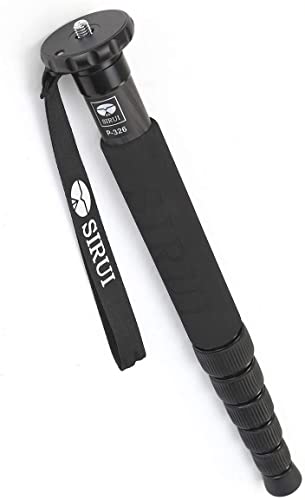
- 400-gram carbon-fiber build
- 15-inch folded size
- 22-pound maximum load
Best For: Travel photographers wanting a lightweight, compact monopod
Travel-Friendly Aluminum Option

- 61-inch maximum height
- 0.83-pound portable design
- Monopod, selfie-stick, and hiking modes
Best For: Travel and outdoor creators needing multiple carry options
Heavy-Duty Carbon Fiber Choice

- 10-kilogram/22-pound load rating
- 15-inch folded length
- Includes phone holder and metal spike
Best For: Telephoto, sports, wildlife, and interview photography
Convertible Support System

- Tripod converts to monopod
- 71-inch maximum height
- 360-degree ball head
Best For: Creators wanting one tripod and monopod for cameras or phones
Best Value
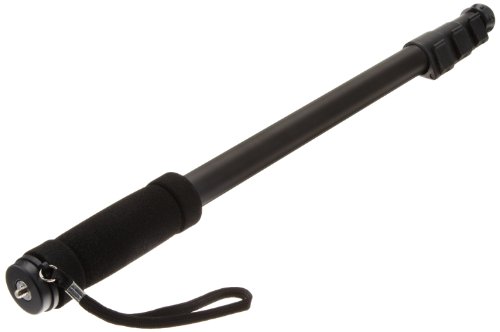
- 67-inch maximum height
- Lightweight aluminum build
- Rubber foot and retractable spikes
Best For: Budget-friendly general camera support
Best Travel Design
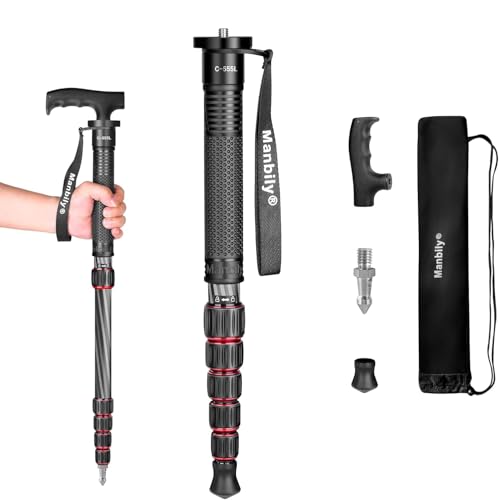
- Folds to 15.7 inches
- Supports up to 15.4 pounds
- Converts to a trekking pole
Best For: Travel, sports, and wildlife photography
Best All-Terrain Option

- 63-inch maximum height
- 17-inch folded length
- Rubber and metal foot options
Best For: Outdoor shooting across varied surfaces
Versatile 2-in-1 Support

- Converts between tripod and monopod use
- Supports cameras up to 13 pounds
- Folds to a 4.5-inch diameter
Best For: Travelers and creators seeking versatile, higher-capacity support
Ultra-Light Travel Pick

- Weighs just 0.59 pounds
- Collapses to 16.75 inches
- Supports up to 5 pounds
Best For: Lightweight hiking, travel, and everyday camera support
Heavy-Duty Compact Stick

- Supports up to 15.4 pounds
- Folds to 15.7 inches
- Includes rubber and metal feet
Best For: Outdoor photographers needing strong, adaptable support
Lightweight Carbon Fiber Pick – SIRUI P-326
SIRUI Camera Monopod P-326 6 Section Carbon Fiber Compact Lightweight Travel Monopod
Check Price On AmazonFor photographers seeking compact camera monopods, the SIRUI P-326 combines a 6-section carbon-fiber design with a 15-inch folded size. Its 400-gram weight and 22-pound maximum load make it a portable option for compatible cameras and heavier setups.
Best For: Travel photographers who prioritize low weight, compact storage, and high stated load capacity.
Pros:
- Lightweight 8X carbon fiber construction weighs 400 grams.
- Six sections fold to approximately 15 inches for travel.
- Reversible 1/4-inch-20 and 3/8-inch-16 mounting screw supports different camera setups.
- Silicon twist locks, wrist strap, and insulated hand grip add practical handling features.
Cons:
- It is a single monopod rather than a freestanding tripod.
- The supplied details do not indicate water resistance.
The P-326 is a strong fit when portability matters but you still want a generous load rating. Its carbon-fiber build and reversible mounting plate make it especially versatile for travel-oriented camera kits.
Travel-Friendly Aluminum Option – ULANZI TB12
The ULANZI TB12 is a practical choice among compact camera monopods, extending to 61 inches while folding to 16.9 inches. Its 0.83-pound aluminum construction is designed for travel, hiking, and on-the-go camera use.
Best For: Hobbyist photographers and creators who want one portable support tool for photography, selfies, and outdoor activities.
Pros:
- Lightweight 378-gram design fits easily into a 20-inch carry-on.
- Five-section construction offers height settings from 16.9 to 61 inches.
- Supports equipment up to 11.02 pounds.
- Can function as a monopod, selfie stick, walking stick, hiking stick, or trekking pole.
Cons:
- Aluminum construction is heavier than the carbon-fiber alternatives in this roundup.
- It is not water resistant according to the supplied details.
The TB12 emphasizes flexibility and portability rather than specialized professional features. Its multiple modes and carry-on-friendly folded size make it a convenient companion for travel and casual outdoor shooting.
Heavy-Duty Carbon Fiber Choice – Koolehaoda MP-286C
For compact camera monopods that can handle demanding setups, the Koolehaoda MP-286C uses 10-layer carbon fiber and supports up to 22 pounds. It extends from 15 to 62 inches, while its 15-inch folded size keeps it convenient to transport.
Best For: Sports, wildlife, interview, and telephoto users who need high load capacity in a portable monopod.
Pros:
- 10-layer carbon-fiber construction combines rigidity with a 650-gram weight.
- Supports cameras and lenses up to 10 kilograms or 22 pounds.
- Reversible 1/4-inch-20 and 3/8-inch-16 mounting system offers broad compatibility.
- Includes a phone holder, metal spike, wrist strap, and carrying bag.
Cons:
- Its maximum 62-inch height is slightly below the tallest option here.
- The supplied details do not indicate water resistance.
The MP-286C stands out for combining a compact folded length with a substantial load rating. The included accessories and bottom 3/8-inch thread, which can accept a mini tripod base, add useful flexibility for varied shooting situations.
Convertible Support System – SmallRig CT-10
The SmallRig CT-10 differs from typical compact camera monopods by combining a tripod and monopod in one aluminum system. It folds to 16.9 inches, reaches 71 inches, and includes a 360-degree ball head for flexible camera and phone positioning.
Best For: Content creators and travelers who want both monopod portability and freestanding tripod capability.
Pros:
- Converts between a full tripod and a monopod.
- Adjusts from 16 to 71 inches with four-section legs and quick-release flip locks.
- 360-degree ball head supports horizontal and vertical shooting angles.
- Supports up to 33 pounds vertically and includes three 1/4-inch threaded accessory holes.
Cons:
- At 3.4 pounds, it is substantially heavier than the dedicated monopods listed here.
- Telephoto lenses may require an additional tripod mount ring or lens mount for better balance.
- Its folded size is about 16.9 inches, limiting compactness compared with the shortest options.
The CT-10 is best viewed as a versatile support platform rather than an ultralight monopod. Choose it when the stability of a freestanding tripod and the flexibility of a monopod are both valuable.
Best Value – Amazon Basics 67-Inch Monopod
For shoppers comparing compact camera monopods, this Amazon Basics model offers a straightforward aluminum design with useful height adjustment and a manageable collapsed length. It supports cameras, video cameras, and scopes up to 6.6 pounds.
Best For: Budget-conscious photographers who want a versatile, lightweight monopod for general camera use.
Pros:
- Extends to 67 inches with four adjustable sections.
- Lightweight aluminum construction weighs less than 1 pound.
- Rubber foot and retractable spikes help accommodate different surfaces.
- Includes a carrying bag, cushion grip, and adjustable wrist strap.
Cons:
- Its 6.6-pound capacity is lower than the other options in this roundup.
- At 21.4 inches collapsed, it is less compact for travel than the carbon-fiber alternative.
- It is not water resistant.
This is a practical entry-level choice when affordability, reach, and basic portability matter more than maximum load capacity or the smallest packed size.
Best Travel Design – Manbily Carbon Fiber Monopod
The Manbily C-555L stands out among compact camera monopods with a 15.7-inch folded length, carbon-fiber construction, and six sections for quick height changes. Its removable handle also lets it double as a trekking pole.
Best For: Travelers, sports photographers, and wildlife shooters who need low weight, high load capacity, and flexible outdoor use.
Pros:
- Carbon-fiber construction weighs about 0.93 pound and supports up to 15.4 pounds.
- Six-section design extends from 15.7 to 61 inches.
- Reversible 1/4-inch and 3/8-inch screw supports cameras, camcorders, phone clips, and ball heads.
- Includes rubber and metal feet plus a walking-stick handle.
Cons:
- Its 61-inch maximum height is shorter than the Amazon Basics and K&F models.
- Twist locks may take more turns than a plate-lock design.
- The supplied notes do not indicate water resistance.
With its unusually high stated payload and compact folded size, this is the strongest fit for mobile users who want a monopod that can handle demanding gear without adding much travel weight.
Best All-Terrain Option – K&F CONCEPT 63-Inch Monopod
The K&F CONCEPT MS16 combines a 17-inch storage length with a five-section aluminum design that reaches 63 inches. Its interchangeable rubber and metal foot design makes it one of the more adaptable compact camera monopods for mixed terrain.
Best For: Outdoor photographers who regularly move between hard surfaces, soft ground, and varied shooting environments.
Pros:
- Five sections provide flexible height adjustment up to 63 inches.
- Folds to 17 inches for easier transport.
- Dual-purpose foot uses rubber for hard surfaces and metal spikes for soft or muddy ground.
- 1/4-inch and 3/8-inch interfaces support cameras, gimbals, and other devices.
Cons:
- Aluminum construction may be less weight-efficient than the Manbily carbon-fiber model.
- The supplied details contain conflicting capacity figures, listing both 10 kg and 22 pounds.
- It is not water resistant.
This model is appealing when foot versatility and broad device compatibility are priorities, particularly for outdoor users who need fast adjustments across changing surfaces.
Versatile 2-in-1 Support – NEEWER Basics TP08
The NEEWER Basics TP08 is a flexible choice for shoppers comparing compact camera monopods with tripod functionality. It converts between a tripod and monopod, reaches 77 inches, and supports cameras weighing up to 13 pounds.
Best For: Photographers and content creators who want one portable support system for both tripod and monopod use.
Pros:
- Converts from a tripod to a monopod and includes an elevating or reversible center column.
- Supports up to 13 pounds with an aluminum build, nonslip feet, and a weight hook.
- Offers a 360-degree ball head, 90-degree tilt, and Arca-type quick-release plate.
- Reversible legs fold to a compact 4.5-inch diameter for transport.
Cons:
- At 3.4 pounds, it is heavier than single-purpose travel monopods.
- The head is made from high-strength plastic rather than metal.
- It is not water resistant.
This model stands out when maximum versatility and load capacity matter more than minimum weight. Its tripod conversion and compact folded diameter make it useful for travel, vlogging, and general camera support.
Ultra-Light Travel Pick – Altura Photo 62-Inch Monopod
The Altura Photo 62-Inch Monopod is a straightforward option among compact camera monopods, weighing just 0.59 pounds and collapsing to 16.75 inches. Its four-section aluminum design supports cameras and accessories up to 5 pounds.
Best For: Hikers, travelers, and casual photographers who prioritize low weight and easy packing.
Pros:
- Weighs only 0.59 pounds and folds to a compact 16.75 inches.
- Uses a universal 1/4-inch thread with a 3/8-inch screw adapter.
- Includes a soft foam grip, safety wrist strap, carry pouch, and nonskid rubber foot.
- Retractable leg spike helps accommodate indoor and outdoor terrain.
Cons:
- Its 5-pound weight limit is lower than the other listed options.
- It reaches 62 inches, so it is shorter than the 77-inch NEEWER model.
- It does not provide tripod conversion.
The Altura is best suited to buyers who want a simple stabilizing pole that disappears into a backpack or carry-on. Its low weight and included accessories are appealing for mobile shooting, though heavier camera setups may require a stronger model.
Heavy-Duty Compact Stick – Manbily A-555L Monopod
The Manbily A-555L combines a compact 15.7-inch folded size with a 15.4-pound load rating, making it a strong contender among compact camera monopods. It extends to 61 inches and includes features for travel, uneven terrain, and walking-stick use.
Best For: Outdoor photographers and travelers who need high load capacity, quick setup, and adaptable feet.
Pros:
- Supports up to 15.4 pounds while weighing 1.1 pounds.
- Six-section quarter-turn locks extend or secure the monopod quickly.
- Includes reversible 1/4-inch and 3/8-inch mounting screws.
- Offers rubber and metal feet, a walking-stick handle, phone holder, and carry case.
Cons:
- Its 61-inch maximum height is shorter than the NEEWER TP08.
- The six-section design requires more sections to extend than simpler models.
- It is not water resistant.
With its unusually high stated load capacity and convertible foot system, the Manbily is a practical choice for demanding outdoor use. The included walking-stick handle adds flexibility, while the compact folded length keeps it travel friendly.
How We Picked the Best Compact Camera Monopods
We focused on the features that matter most when a monopod is used outside the studio: portability, operating height, stability, build quality, and setup speed. The selection includes carbon-fiber and aluminum models, basic camera supports, walking-stick-style designs, and options with ball heads or convertible tripod feet.
We also considered compatibility with DSLR, mirrorless, and video cameras, along with practical details such as locking mechanisms, rubber feet, wrist straps, carrying bags, and quick-release plates. A higher maximum height is useful for standing photographers, but it does not automatically mean a better monopod if the folded length or weight becomes inconvenient.
Quick Comparison
| What to compare | Best for | Why it matters |
|---|---|---|
| Carbon fiber construction | Frequent travelers | Usually lighter and better at damping vibration |
| Aluminum construction | Value shoppers | Durable support at a lower price |
| Ball head or tripod foot | Video and uneven surfaces | Adds positioning flexibility and support |
| Compact folded length | Air travel and hiking | Determines how easily it fits in a bag |
| High load capacity | Large lenses and video rigs | Provides a safer margin for heavier equipment |
Key Buying Factors for Compact Camera Monopods
Material and Weight
Carbon fiber is generally the better choice when every ounce matters, especially for travel, wildlife, or long walks. Aluminum is often more affordable and can withstand rough handling, though it may add noticeable weight.
Height and Folded Size
Choose a monopod that reaches a comfortable shooting height without forcing you to extend every section. Check the folded length against your camera bag or carry-on. More sections can create a shorter package, but they may take longer to adjust.
Locks, Feet, and Stability
Twist locks offer a clean profile, while lever locks can be faster to inspect and operate. A rubber foot helps on hard floors and pavement. Spiked or interchangeable feet are useful outdoors. Convertible tripod bases offer extra support but add weight and bulk; they are not a replacement for a full tripod.
Head and Mounting System
A standard mounting screw works well for still photography. A ball head or fluid-style head can make video panning and portrait orientation easier. If you already use Arca-Swiss plates, an Arca-compatible quick-release system can speed up camera changes.
Who Should Buy Which Compact Camera Monopods?
Travel and hiking photographers: Prioritize carbon fiber, a short folded length, a comfortable grip, and a supplied carrying bag. A walking-stick handle can be useful when moving between locations.
Sports and wildlife shooters: Look for strong locks, a high load rating, and enough height to support a long lens while standing. Stability and fast adjustments matter more than the lightest possible design.
Video creators: Consider a ball head, fluid-style movement, or a convertible foot. Confirm that the head and base can support your camera, microphone, monitor, and lens together.
Budget buyers: Aluminum models provide dependable basic support at a lower cost. Choose the model with the best combination of load capacity, lock quality, and included accessories rather than simply the greatest advertised height.
Before buying, verify the thread size, camera-and-lens weight, folded dimensions, and whether the listed load capacity applies to the monopod alone or to an included head. Those checks will help you select a compact support that is genuinely useful in the field.