
The best chemistry sets under $50 make science tangible with guided experiments, colorful materials, and lab-style tools sized for young learners. The right kit can turn an afternoon activity into a foundation for understanding reactions, mixtures, acids, bases, and molecular structure.
We’ve gathered options ranging from beginner-friendly experiment boxes to equipment-focused kits and model-building sets. Use the guide below to narrow the choices by age, supervision needs, experiment variety, and the kind of chemistry experience your child will enjoy most.
Best 10 Chemistry Sets Under 50 Picks for 2026
Most Complete Experiment Kit
National Geographic Amazing Chemistry Set

- 100+ experiment ideas
- Includes beakers, test tubes, and pipettes
- 15 supplied experiments plus 85 bonus activities
Best For: Kids ages 8 and up who want extensive hands-on chemistry activities
Best Labware Variety
Baderke 28-Piece Plastic Lab Set

- 28 pieces of reusable plastic labware
- Includes cylinders, beakers, flasks, and pipettes
- Clear scales and sturdy plastic construction
Best For: Learners and teachers who need assorted chemistry equipment
Best Guided Starter Kit
National Geographic Chemistry Set

- 45 hands-on experiments
- Illustrated, kid-friendly instructions
- Includes volcano, geyser, and rocket activities
Best For: Beginning chemists ages 8 and up who want structured activities
Best Molecular Modeling Set

- 240 pieces with atoms and bonds
- Supports ball-and-stick and space-filling models
- Useful for geometry and stereochemistry
Best For: Students learning organic and inorganic molecular structures
Most Experiments
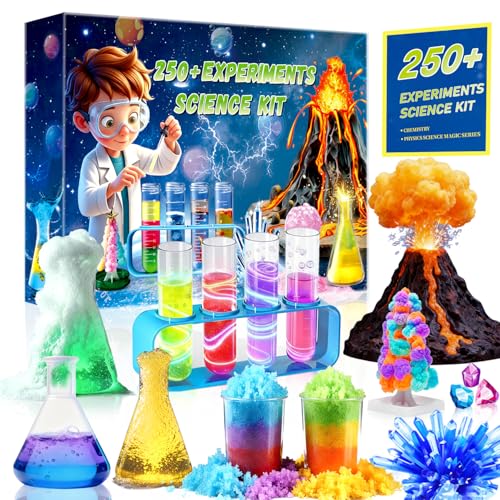
- More than 250 chemistry and physics activities
- Includes lab tools, goggles, and labeled materials
- Illustrated instructions plus video demonstrations
Best For: Families wanting the widest activity variety
Best Starter Kit
National Geographic Junior Chemistry Set

- Made for children ages 4 and up
- Includes 50 experiments and 20+ lab tools
- Illustrated directions support beginner-friendly use
Best For: Young children starting guided chemistry activities
Best for Repeat Projects

- Includes 52 experiments for ages 8 and up
- Reusable tools and labeled containers aid organization
- Full-color instructions support repeat activities
Best For: School-age kids doing structured home projects
Classic Chemistry Pick

- 28 guided chemistry experiments
- Includes core lab tools and chemicals
- 48-page illustrated science guide
Best For: Ages 10–15 seeking structured chemistry lessons
Biggest Experiment Variety
Doctor Jupiter Ultimate Science Kit

- More than 135 total experiments
- Designed for ages 8 and up
- Includes tools, ingredients, and bonus activities
Best For: Families wanting long-lasting, colorful STEM play
Creative Chemistry Choice

- 50 experiments in total
- Materials included for 15 projects
- Goggles and glow-themed activities included
Best For: Ages 8–12 who enjoy colorful, creative experiments
Most Complete Experiment Kit – National Geographic Amazing Chemistry Set
For shoppers comparing chemistry sets under 50, this National Geographic kit stands out for its broad activity count and hands-on materials. It includes supplies for 15 featured experiments, plus a guide with 85 additional activities using common household items.
Best For: Kids ages 8 and up who want a wide variety of chemistry activities, including crystal growing, color-changing reactions, glowing projects, and bouncy-ball making.
Pros:
- Offers more than 100 total experiment ideas.
- Includes real scientific tools such as test tubes, beakers, and pipettes.
- Features engaging projects including crystals, glowing worms, and color-changing solutions.
- Includes materials for 15 experiments and a bonus household-items guide.
Cons:
- Only the 15 featured experiments include the kit’s materials; the 85 bonus activities use common household items.
- Recommended for ages 8 and up, so it may not suit younger children.
This is a strong all-around choice when variety and tactile STEM learning matter most. Its combination of included materials and extra experiment ideas gives children plenty to explore.
Best Labware Variety – Baderke 28-Piece Plastic Lab Set
Among chemistry sets under 50, this Baderke collection is best viewed as reusable laboratory equipment rather than a prepackaged experiment kit. It supplies assorted plastic vessels and measuring tools for classroom activities, demonstrations, and practice.
Best For: Students, teachers, and families who need a broad selection of durable plastic beakers, flasks, test tubes, graduated cylinders, and pipettes.
Pros:
- Includes 28 pieces across multiple types and sizes of labware.
- Provides six lidded test tubes, a rack, three graduated cylinders, beakers, flasks, and 10 pipettes.
- Uses sturdy plastic to reduce the risk of broken-glass injuries.
- Clear measurement markings support measuring and storage.
Cons:
- Does not include a supplied experiment guide or chemical materials in the listed components.
- Its broad assortment may be more equipment than a beginner needs.
This set makes sense for buyers who already have experiment ideas or household materials and primarily need reusable lab containers. The plastic construction and range of sizes add practical flexibility.
Best Guided Starter Kit – National Geographic Chemistry Set
For families seeking chemistry sets under 50 with structured activities, this National Geographic kit offers 45 experiments and illustrated, kid-friendly instructions. The projects focus on visible reactions such as volcanoes, geysers, rockets, and fizzy demonstrations.
Best For: Kids ages 8 and up who are beginning to explore chemistry and benefit from step-by-step guidance.
Pros:
- Includes 45 experiments with easy-to-follow illustrated instructions.
- Features engaging projects such as a volcano eruption, geyser, and rocket activity.
- Introduces the scientific process, chemistry fundamentals, and safe experiment practices.
- Requires no batteries.
Cons:
- The supplied notes do not specify the complete list of included materials.
- Its 45 activities offer less stated variety than the brand’s 100-plus-experiment kit.
This is a practical pick when clear directions and recognizable demonstrations are more important than the largest possible activity count. It provides an approachable introduction to hands-on STEM learning.
Best Molecular Modeling Set – 240-Piece Chemistry Model Kit
For shoppers comparing chemistry sets under 50, this 240-piece molecular model kit offers a different kind of hands-on learning. Rather than focusing on reactions, it helps students build and examine chemical structures, molecular bonds, bond angles, and geometry in three dimensions.
Best For: Students, teachers, and learners from 7th grade through graduate level who need a physical aid for organic and inorganic chemistry concepts.
Pros:
- Includes 86 atom pieces and 154 bond pieces.
- Supports both ball-and-stick and space-filling molecular representations.
- Makes molecular geometry and stereochemistry tangible and easier to visualize.
- Uses food-grade, eco-friendly plastics for the models.
Cons:
- It is a modeling and teaching tool, not a chemical reaction experiment kit.
- The supplied notes do not identify a detailed curriculum or project guide.
This kit is a strong fit for learners who need to visualize molecules rather than perform wet-lab experiments. Its large piece count and two modeling styles make it useful across multiple levels of chemistry study.
Most Experiments – 250+ Experiments Science Kit
For shoppers comparing chemistry sets under 50, this kit stands out for its unusually large experiment count. It combines chemistry and physics activities—including volcanoes, color changes, crystal growing, rainbow effects, and magic sand—with lab tools, goggles, labeled materials, illustrated instructions, and video demonstrations.
Best For: Families seeking maximum activity variety and hands-on STEM exploration for children from about 3 to 15.
Pros:
- Offers more than 250 listed experiments across chemistry and physics themes.
- Includes beakers, pipettes, test tubes, protective goggles, and 14 listed materials.
- Illustrated guides and scannable video demonstrations support independent learning.
- Activities encourage observation, problem-solving, creativity, and family participation.
Cons:
- The very large activity selection may feel less focused than a traditional chemistry-only kit.
- The manufacturer recommends adult consideration for the broad age range, especially with younger children.
This is the strongest option when experiment quantity and variety matter most. Buyers should review each activity and supervise younger children despite the included safety equipment.
Best Starter Kit – National Geographic Junior Chemistry Set
This National Geographic Junior set is a straightforward choice among chemistry sets under 50 for younger beginners. It provides 50 hands-on experiments, more than 20 child-friendly lab tools, and illustrated instructions, while using common household items such as baking soda and vinegar for some activities.
Best For: Children ages 4 and up who are starting with simple, guided chemistry activities.
Pros:
- Designed for young scientists ages 4 and up.
- Includes 50 interactive experiments and more than 20 lab tools.
- Illustrated, step-by-step directions make activities easier to follow.
- Uses familiar household supplies for some experiments, including baking soda and vinegar.
Cons:
- Some activities require household ingredients beyond the included kit.
- Its 50-experiment scope is smaller than the larger multi-subject kits in this roundup.
Choose this set for accessible early science play rather than an extensive laboratory experience. The younger age recommendation and guided format make it especially approachable for first-time experimenters.
Best for Repeat Projects – Playz Extreme Chemistry Kit
For families comparing chemistry sets under 50 for school-age children, the Playz Extreme Chemistry kit offers a focused collection of 52 experiments. Its projects include a foaming volcano, self-inflating balloon, and density stacks, with reusable tools, visual instructions, labeled containers, and storage intended to make repeat activities easier.
Best For: Children ages 8 to 12 who want structured, repeatable chemistry projects at home or for homeschool and science-fair preparation.
Pros:
- Includes 52 chemistry experiments with attention-grabbing demonstrations.
- Provides reusable lab tools, labeled containers, and a storage system.
- Full-color visual instructions support independent exploration.
- Suitable for gifting, homeschool activities, bonding time, and classroom-friendly projects.
Cons:
- Recommended for ages 8 and up, so it is less suitable for preschool beginners.
- Some experiments may require additional household supplies, depending on the activity.
This is a practical middle ground for kids ready for more structured experimentation. Its organized storage and reusable equipment are useful advantages if you expect to revisit projects rather than use the kit once.
Classic Chemistry Pick – Thames & Kosmos Chem C500
For shoppers comparing chemistry sets under 50, the Thames & Kosmos Chem C500 is a focused introductory kit built around 28 classic experiments. Its included chemicals, lab tools, and clearly structured guide make it a practical choice for children ready to explore foundational chemistry.
Best For: Kids ages 10–15 who want guided, hands-on chemistry activities.
Pros:
- Includes 28 guided experiments covering acids, bases, solids, liquids, and gases.
- Features colorful reactions, fizzy and foamy activities, and invisible-ink messaging.
- Comes with beakers, test tubes, chemicals, stoppers, pipettes, and a 48-page full-color manual.
- The manual explains both how to perform each experiment and why it works.
Cons:
- Its 28 experiments provide less overall activity volume than larger multi-experiment kits.
- It is recommended for ages 10–15, so it may not suit younger children.
The Chem C500 stands out for its structured learning experience rather than sheer experiment count. It is a solid option when clear explanations and classic chemistry concepts matter most.
Biggest Experiment Variety – Doctor Jupiter Ultimate Science Kit
Among chemistry sets under 50, the Doctor Jupiter Ultimate Science Kit emphasizes variety, with more than 135 activities combining supplied materials and common household items. Step-by-step instructions and separately packaged ingredients support repeatable, parent-and-child experimentation.
Best For: Children ages 8 and up who want a large selection of colorful STEM activities.
Pros:
- Offers more than 135 experiments, including color changes, glowing water, and underwater volcanoes.
- Includes equipment such as a measuring cylinder, conical flask, test tube stand, funnel, tray, and stirring tools.
- Supplies ingredients including glow powder, baking soda, citric acid, food colors, and vinegar.
- Separate leak-proof bottles and illustrated instructions are designed to help reduce mess and simplify setup.
Cons:
- Many of the bonus activities use everyday household items, so not every experiment relies solely on included materials.
- The broad activity range may require more parent involvement for younger children.
This kit is a strong value-oriented pick for families that want extended experimentation. Its 135-plus activity count and bonus booklet offer plenty of variety, though the experience is broader than a narrowly focused chemistry course.
Creative Chemistry Choice – Barbie Chemistry Activity Lab
For families browsing chemistry sets under 50, the Barbie Chemistry Activity Lab combines themed presentation with hands-on projects. It includes materials for 15 experiments and a bonus guide with 35 more household-item activities, covering slime, lava lamps, glowing chalk, and other visually engaging results.
Best For: Kids ages 8–12 who enjoy creative, glow-focused chemistry projects.
Pros:
- Provides 50 experiments across the included activities and bonus guide.
- Includes goggles, tools, lab supplies, and materials for 15 experiments right away.
- Activities include glow-in-the-dark slime, a lava lamp, glowing chalk, bouncy balls, putty, and sodium alginate worms.
- Step-by-step instructions and a learning guide introduce chemistry concepts such as pH and polymers.
Cons:
- Only 15 experiments include the required materials; the other 35 use easy-to-find household items.
- The Barbie branding may not appeal to every child.
The Barbie Chemistry Activity Lab is a lively option for children motivated by colorful, tactile results. It balances ready-to-use supplies with additional activities, making it a practical starter kit for creative STEM exploration.
How We Picked the Best Chemistry Sets Under 50
We compared the 10 selected kits on practical factors that matter to families: age guidance, number and variety of activities, included lab equipment, clarity of instructions, educational scope, and value at the listed price. Experiment count is useful, but it does not tell the whole story. A smaller kit with better explanations and reusable tools may provide more satisfying learning than a larger box filled with one-time activities.
We also included different formats. Several kits focus on guided reactions for elementary-age children, while others emphasize beakers and test tubes, molecular models, or broad STEM exploration. Adult supervision is important whenever a kit involves chemicals, heat, glass, spills, or activities outside a child’s reading and attention level.
Quick Comparison
| Best For | What to Look For |
|---|---|
| First chemistry kit | Clear instructions, modest experiment count, and an appropriate age range |
| Maximum variety | 100 or more activities, provided the contents and directions remain organized |
| Reusable lab setup | Beakers, test tubes, graduated cylinders, flasks, and measuring tools |
| Molecular learning | Color-coded pieces and connection guides for organic and inorganic structures |
| Structured instruction | A substantial guide with background explanations and step-by-step procedures |
Key Buying Factors for Chemistry Sets Under $50
Age and Supervision
Choose a kit that matches the child’s reading ability, patience, and comfort with following multi-step directions. “Ages 8–12” is a starting point, not a guarantee of independent use. Younger children generally need hands-on adult help, especially with measuring, cleanup, and safety rules.
Experiment Quality and Variety
Check whether the listed activities cover genuinely different concepts or repeat similar demonstrations. A good starter kit balances quick visual reactions with activities that encourage observation, prediction, measurement, and recording results.
Equipment and Consumables
Inventory the box before buying. Some sets provide a complete assortment of plastic labware and materials, while others depend on household ingredients or require replacement supplies. Reusable tools can improve long-term value, even when the initial experiment count is lower.
Instructions and Educational Depth
Look for clear safety notes, diagrams, definitions, and explanations of why an experiment works. A well-designed guide helps children move beyond watching a reaction to forming a basic scientific explanation.
Storage and Cleanup
Small pieces, powders, and liquids are easier to manage when the kit includes organized storage. Consider where experiments will happen and whether washable, nonbreakable equipment is preferable for your household.
Who Should Buy Which Chemistry Sets Under 50?
Choose a National Geographic Junior or 45-experiment set for a younger beginner who benefits from accessible, guided activities. The National Geographic 100-plus-experiment kit and the 250-plus-experiment science kit suit families prioritizing breadth, provided they are comfortable sorting supplies and supervising more activities.
The Baderke labware set is a practical choice for children who mainly need reusable containers and measuring tools, but it may be better paired with a separate experiment guide. Choose the molecular model kit for learners interested in how atoms connect and how organic and inorganic structures are represented.
For a more structured science lesson, Thames & Kosmos’ Chem C500 is a strong fit for families who value a detailed guide and a defined sequence of experiments. Playz and Doctor Jupiter are geared toward broad, energetic STEM exploration, while the Barbie Chemistry Science Kit can appeal to children who are more likely to engage with a familiar themed presentation. Before ordering, verify the current contents, required household materials, and safety instructions.