
The best chemistry sets for elementary students turn science concepts into hands-on discoveries, from colorful reactions and crystal growth to slime and simple lab techniques.
We compared 10 popular kits by age range, experiment variety, included tools, instructions, and how well each supports supervised learning at home or in the classroom.
Best 10 Chemistry Sets for Elementary Students Picks for 2026
Best Introductory Pick
National Geographic Junior Chemistry Set

- 50 hands-on experiments
- 20+ child-safe lab tools
- Illustrated instructions for ages 4+
Best For: Young beginners ages 4 and up
Best for Little Hands
Learning Resources Primary Science Lab Set
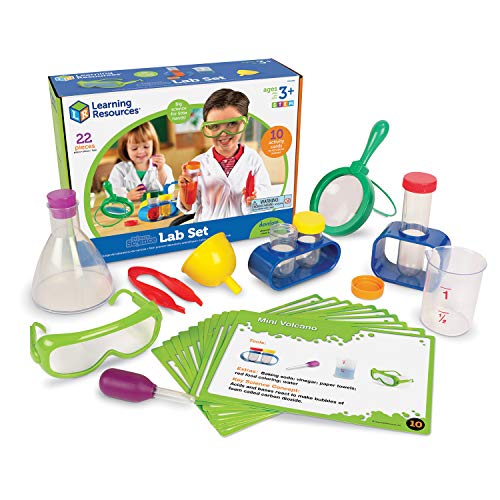
- 22-piece beginner lab set
- Sturdy plastic construction
- 10 double-sided activity cards
Best For: Children ages 4–7
Best for Experiment Variety
National Geographic Amazing Chemistry Set

- 100+ experiment ideas
- Materials for 15 featured projects
- Designed for ages 8 and up
Best For: Older elementary students seeking variety
Best All-Around STEM Mix
UNGLINGA 70-Experiment Science Kit

- 70 varied experiments
- Includes chemistry, circuits, and motion projects
- Illustrated learning guide
Best For: Ages 8+ wanting broad STEM variety
Best Overall
National Geographic Chemistry Set

- 45 experiments include volcano, geyser, and rocket activities
- Illustrated instructions explain reactions in kid-friendly language
- Introduces chemistry fundamentals and safe STEM practices
Best For: Elementary-age children seeking a broad, hands-on chemistry introduction
Best Guided Learning
Thames & Kosmos Chemistry C500

- 28 classic experiments cover acids, bases, and reactions
- 48-page manual explains procedures and results
- Includes beakers, test tubes, chemicals, and pipettes
Best For: Older elementary students who prefer structured, explanation-rich activities
Best for Comfort

- Offers more than 250 activities across several science subjects
- Includes pipettes, test tubes, and a step-by-step color manual
- Features chemistry, earth science, physics, lava lamp, and volcano projects
Best For: Families wanting a large activity library for ongoing science play
Best Starter Chemistry Set
Butterfly EduFields 100+ Experiments

- 100+ activities for ages 4–8
- Step-by-step child-friendly guide
- Includes goggles, gloves, and volcano mold
Best For: Young beginners exploring STEM through guided activities
Best All-Around Chemistry Lab
Discovery Super Reactions Science Kit

- 66 experiments for ages 8+
- Covers pH, acid-base reactions, and gas expansion
- Includes tools, ingredients, and volcano materials
Best For: Older elementary students wanting variety and real chemistry concepts
Best Concept-Focused Chemistry Set
Discovery Radical Reactions Science Kit

- 31 experiments for ages 8+
- Explains pH, density, gas, and heat reactions
- Includes tools and materials for guided activities
Best For: Young learners who want the science explained behind each reaction
Best Introductory Pick – National Geographic Junior Chemistry Set
For families comparing chemistry sets for elementary students, this National Geographic Junior kit offers a gentle introduction for children ages 4 and up. It combines 50 hands-on experiments with more than 20 child-safe lab tools, while illustrated instructions help young learners work through activities involving familiar household ingredients such as baking soda and vinegar.
Best For: Young beginners ages 4 and up who need simple, guided chemistry activities.
Pros:
- Includes 50 interactive experiments.
- Comes with more than 20 child-safe lab tools, including test tubes and goggles.
- Illustrated, step-by-step instructions support independent participation.
Cons:
- Its early-learning focus may feel limited for older elementary students.
- Many activities use common household ingredients, so some supplies are not included.
This is a practical starting point for younger children who benefit from visual directions, familiar materials, and a broad selection of short experiments.
Best for Little Hands – Learning Resources Primary Science Lab Set
Among chemistry sets for elementary students, this Learning Resources set is designed for younger children, with sturdy plastic tools sized for small hands. It includes 22 pieces and 10 double-sided activity cards, making it suitable for simple experiments, observation practice, and open-ended pretend lab play.
Best For: Children ages 4–7 who need durable tools for structured or imaginative science play.
Pros:
- Includes a beaker, flask, magnifying glass, funnel, eyedropper, tweezers, test tubes, stands, and goggles.
- Thick plastic construction is designed to withstand drops and spills.
- Activity cards encourage hypothesis formation, observation, and critical thinking.
Cons:
- It focuses on simple activities rather than advanced chemistry concepts.
- Household ingredients are needed for experiments.
This set is especially useful when durability and accessible equipment matter more than a large catalog of fully supplied chemical reactions.
Best for Experiment Variety – National Geographic Amazing Chemistry Set
For older elementary learners, this National Geographic kit stands out among chemistry sets for elementary students with more than 100 experiment ideas. The kit supplies materials for 15 featured activities, while an additional guide provides 85 experiments using common household items. Projects include crystal growing, color-changing solutions, glowing test tubes, and chemical reactions.
Best For: Children ages 8 and up who want a wide range of chemistry-focused projects.
Pros:
- Offers more than 100 total experiment ideas.
- Includes materials for 15 featured experiments.
- Uses tools such as test tubes, beakers, and pipettes in hands-on activities.
Cons:
- Only 15 experiments include the necessary supplied materials.
- The 85 bonus activities require common household items.
This is a strong choice for children who are likely to keep experimenting after completing the included projects and enjoy visually engaging results such as crystals and glowing mixtures.
Best All-Around STEM Mix – UNGLINGA 70-Experiment Science Kit
This UNGLINGA kit is a flexible option for families seeking chemistry sets for elementary students that combine chemistry with broader STEM activities. Its 70 experiments include volcanoes, crystal growing, balloon rockets, fruit circuits, and chemical reactions, and the illustrated manual explains both the steps and the science behind them.
Best For: Children ages 8 and up who want chemistry plus engineering, electricity, and problem-solving activities.
Pros:
- Provides 70 varied experiments across several STEM topics.
- Includes clear illustrated instructions and explanations of chemical reactions.
- Uses child-friendly ingredients and introduces scientific process and safe experimentation.
Cons:
- It is a broad science kit, not a chemistry-only set.
- The supplied notes do not specify the included lab tools or materials list.
This kit makes sense for children who may lose interest in a narrow chemistry curriculum and would enjoy switching between reactions, circuits, motion, and crystal projects.
Best Overall – National Geographic Chemistry Set
For families comparing chemistry sets for elementary students, this National Geographic kit offers a broad mix of colorful, hands-on activities. Children ages 8 and up can explore 45 experiments, including volcanoes, geysers, rockets, and chemical reactions, with illustrated instructions designed for young learners.
Best For: Elementary-age children who want a varied introduction to chemistry and STEM through exciting demonstrations.
Pros:
- Includes 45 guided experiments with engaging activities such as volcanoes, geysers, and rockets.
- Illustrated, kid-friendly instructions explain both the steps and the underlying reactions.
- Emphasizes scientific process, chemistry fundamentals, and safe experiment practices.
- Designed for ages 8 and up and backed by a U.S. support team.
Cons:
- The kit is recommended for ages 8 and up, so younger elementary students may need more help.
- Some activities require household items in addition to the kit components.
With its high experiment count and accessible guide, this is a strong all-purpose choice for children ready to move beyond simple demonstrations and build foundational STEM confidence.
Best Guided Learning – Thames & Kosmos Chemistry C500
Among chemistry sets for elementary students, the Thames & Kosmos Chemistry C500 stands out for its structured approach. It includes 28 classic experiments and a 48-page, full-color manual that walks children through setup, procedures, and explanations of what happened and why.
Best For: Older elementary students who benefit from detailed guidance and clear explanations of core chemistry concepts.
Pros:
- Covers acids and bases, fizzy reactions, invisible ink, and reactions among solids, liquids, and gases.
- The 48-page manual provides step-by-step instructions and follow-up explanations.
- Includes practical tools such as beakers, test tubes, chemicals, stoppers, and pipettes.
- Recommended for ages 10–15 and recognized with a Parents’ Choice Silver Award.
Cons:
- With 28 experiments, it offers fewer activities than some larger kits.
- The recommended age range makes it less suitable for younger elementary children.
This kit is a particularly good fit when learning depth matters more than the biggest experiment count, especially for children who enjoy reading instructions and connecting results to chemistry concepts.
Best for Comfort – UNGLINGA 250+ Science Kit
For shoppers seeking chemistry sets for elementary students with an especially large activity selection, the UNGLINGA kit offers more than 250 experiments. Its activities span chemistry, earth science, and physics, with projects such as lava lamps, snow, and volcanoes, plus hands-on use of pipettes and test tubes.
Best For: Families wanting an extensive activity library for repeated science play, school breaks, and weekend projects.
Pros:
- Provides more than 250 experiments for substantial variety and repeat use.
- Includes real science tools such as pipettes and test tubes.
- Color manual uses clear, step-by-step instructions for children.
- Combines chemistry with earth science and physics activities.
Cons:
- The kit requires some common household items beyond what is included.
- The broad chemistry, earth science, and physics mix may feel less focused than a dedicated chemistry kit.
- Children ages 8 and up may still need adult support for setup and supervision.
Its standout advantage is sheer variety: this is a practical choice for families that want one kit to support many afternoons of experimenting rather than a short sequence of chemistry lessons.
Best Starter Chemistry Set – Butterfly EduFields 100+ Experiments
For younger children, the Butterfly EduFields kit is a broad introduction to chemistry sets for elementary students. It combines more than 100 guided activities with simple tools and familiar experiment themes such as slime and volcanoes.
Best For: Children ages 4 to 8 who are beginning STEM exploration and benefit from short, clearly explained activities.
Pros:
- Includes more than 100 curated science activities and bonus experiment ideas.
- Uses a kid-friendly, step-by-step instruction manual.
- Includes useful starter equipment such as test tubes, measuring cups, goggles, gloves, and a volcano mold.
- Designed to meet ASTM F963-17 safety standards.
Cons:
- The manufacturer recommends adult supervision and the youngest users may need substantial help.
- The included set has 30 listed items, so some bonus activities may rely on household materials.
This is the most age-accessible option in the roundup, with an emphasis on variety and guided discovery rather than advanced chemistry. Its compact format and extensive activity book make it a practical first science kit.
Best All-Around Chemistry Lab – Discovery Super Reactions Science Kit
The Discovery Super Reactions kit is a strong all-around choice among chemistry sets for elementary students ages 8 and up. It provides 26 guided experiments plus 40 bonus ideas, covering visible reactions such as color changes, bubbling mixtures, slime, and volcanoes.
Best For: Curious children ages 8 and up who want a larger activity selection and more direct exposure to chemistry concepts.
Pros:
- Offers 66 total experiments, including 40 bonus DIY activities.
- Introduces acid-base reactions, pH indicators, states of matter, and gas expansion.
- Includes chemistry tools, ingredients, a volcano mold, slime materials, and food coloring.
- Combines hands-on demonstrations with clear instructions.
Cons:
- Adult supervision is required.
- Some bonus activities use household items beyond the supplied kit materials.
With its balance of included materials, guided lab work, and extra at-home experiments, this kit offers more staying power than a one-project activity set. It is best suited to children ready for more structured chemistry exploration.
Best Concept-Focused Chemistry Set – Discovery Radical Reactions Science Kit
Discovery Radical Reactions is a focused option for families comparing chemistry sets for elementary students ages 8 and up. Its 16 guided kit experiments and 15 household-material activities connect visible results—such as instant snow, pH color changes, and gas-powered balloons—to specific chemistry ideas.
Best For: Children who want experiments that explain the science behind reactions, rather than relying only on visual effects.
Pros:
- Includes 31 total experiments, with 16 guided activities and 15 bonus projects.
- Teaches acid-base reactions, exothermic heat, gas production, density, and pH indicators.
- Provides materials and tools for the kit experiments, including test tubes, bowls, measuring equipment, and a volcano mold.
- Includes safety instructions and carries the STEM Seal of Authenticity.
Cons:
- Adult supervision is required.
- Some activities require household supplies such as water and vinegar.
This kit has fewer total experiments than Super Reactions, but its explanations are especially useful for children who want to understand why each reaction happens. It is a good fit for science-focused learners who enjoy connecting observation with concepts.
How We Picked the Best Chemistry Sets for Elementary Students
We focused on kits that offer meaningful, hands-on science activities rather than relying on novelty alone. Our comparison considered the recommended age range, number and variety of experiments, clarity of the instructions, quality of included equipment, storage, and the amount of adult supervision likely to be needed.
Experiment counts can be misleading, since some brands count repeated variations as separate activities. We therefore looked for kits that provide a useful mix of demonstrations, observations, and repeatable investigations. We also favored products that explain the science behind each activity and identify any household supplies parents must provide.
Quick Comparison
| What to Compare | Why It Matters |
|---|---|
| Age recommendation | Indicates whether the reading, measuring, and motor-skill demands suit the child. |
| Experiment variety | A broad mix helps maintain interest and introduces more scientific concepts. |
| Instruction quality | Clear, illustrated directions make activities easier to complete correctly and safely. |
| Included materials | More specialized tools mean fewer extra shopping trips before the first experiment. |
| Adult involvement | Shows whether the kit is designed for independent exploration or guided use. |
Key Buying Factors for Chemistry Sets for Elementary Students
Age and Reading Level
Check both the printed age range and the child’s abilities. Younger elementary students generally benefit from short, visual activities with direct adult guidance. Older children may be ready for more detailed procedures, measurement, recording, and cause-and-effect explanations.
Safety and Supervision
Choose a kit with clearly labeled materials, sensible safety instructions, and appropriate protective equipment when needed. “Non-toxic” does not mean risk-free: children should not taste substances, touch their eyes during experiments, or work without an adult nearby. Follow the manufacturer’s guidance and dispose of materials as directed.
Experiment Quality and Repeatability
Look beyond the headline experiment count. A kit with fewer well-explained activities may provide more educational value than one with hundreds of loosely defined variations. Repeatable experiments are especially useful because children can change one variable and compare results.
Tools, Storage, and Supplies
Be sure the set includes practical basics such as containers, droppers, measuring tools, or protective accessories. Also check whether common household ingredients are required. A storage case or organized tray can make cleanup easier and prevent small parts from being lost.
Who Should Buy Which Chemistry Sets for Elementary Students?
For younger children beginning STEM exploration, prioritize simple instructions, colorful demonstrations, and strong adult participation. A primary science lab set or a kit aimed at ages five to eight is often a better fit than a large, advanced collection.
For children around ages eight to twelve who want structured learning, choose a set with a science guide, a wider range of reactions, and enough equipment to conduct experiments independently with supervision. High experiment-count kits suit curious children who enjoy variety, but confirm that the activities are genuinely different and that replacement materials are available.
For families seeking a more classroom-style experience, look for durable tools, organized storage, detailed explanations, and opportunities to record observations. Whichever kit you choose, plan experiments together at first, read the safety instructions before opening the materials, and treat the set as a starting point for asking questions—not just following recipes.