
The right capture card can turn a console, camera, or second computer into a reliable streaming source. The best choice depends on your resolution target, refresh rate, connection type, and whether you need passthrough for a gaming display.
Our 2026 roundup compares 10 capture cards for streaming across different budgets and setups, including 1080p60 models, 4K passthrough devices, and higher-end cards designed for modern consoles and mirrorless cameras.
Best 10 Capture Card for Streaming Picks for 2026
Camera Upgrade Pick

- Captures camera video through USB 3.0
- Supports 1080p60 and up to 4K capture
- Works with PC, Mac, and iPad
Best For: Creators using a DSLR, mirrorless camera, camcorder, or action cam
Advanced Gaming Pick

- Captures gameplay at up to 4K60
- Supports HDR and VRR passthrough
- Handles ultrawide and high-refresh-rate inputs
Best For: Advanced console and PC streamers with HDR or VRR displays
Console Creator Pick

- Captures console gameplay at 4K60
- Passes through 1440p120 and 1080p240
- Includes HDR10 and analog audio input
Best For: PS5, Xbox Series X/S, and Switch 2 streamers
Budget-Friendly Pick

- Captures 1080p60 or 1440p30 video
- Passes through 4K60 HDMI
- Includes mic input and USB-A/USB-C support
Best For: Affordable console, camera, meeting, and basic streaming setups
Full HD Commentary Capture

- 1080p60 capture with 4K30Hz input
- Built-in mic input and headphone output
- 1080p60 low-latency loop-out
Best For: Gamers who want simple external commentary controls
Portable USB-C Capture
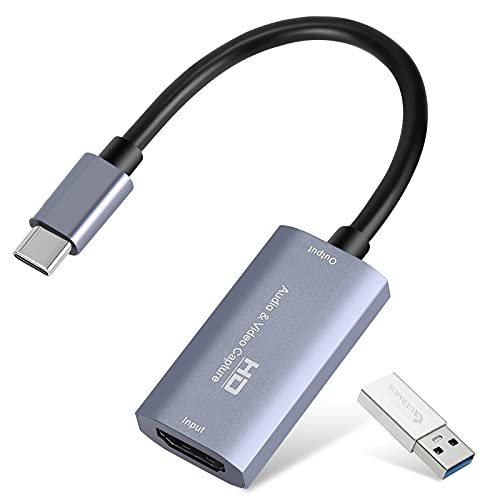
- 1080p60 capture with 4K30Hz input
- USB 3.0 and USB-C connectivity
- Compact plug-and-play design
Best For: Portable laptop, USB-C, and outdoor streaming setups
Acer Low-Latency Capture

- 4K input with 1080p60 performance
- YUY2 color and low-latency capture
- Mic-in and broad device compatibility
Best For: Console streamers seeking loop-out and direct commentary
RGB Streaming Pick

- 1080p capture at 60fps
- 4K/30fps HDMI loop-out
- Nine RGB lighting modes
Best For: Gamers wanting customizable lighting and versatile streaming connections
Portable Starter Pick
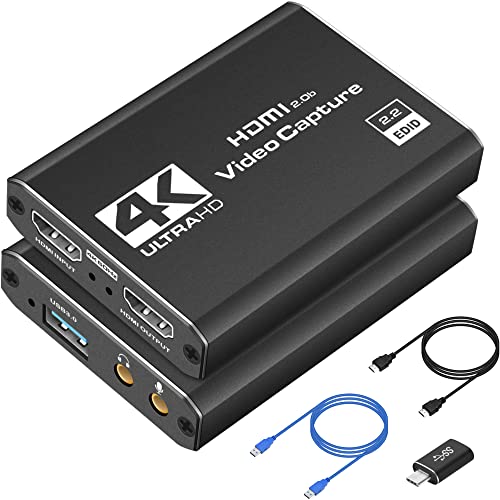
- 1080p capture at 60fps
- Plug-and-play USB 3.0 setup
- Compact and travel-friendly
Best For: Beginners and mobile creators using consoles, cameras, or PCs
Audio-Ready Performance Pick

- 4K/60Hz HDMI loop-out
- 1080p capture at 60fps
- Dedicated 3.5mm mic input
Best For: Streamers needing pass-through and external gameplay commentary
Camera Upgrade Pick – Elgato Cam Link 4K
The Elgato Cam Link 4K is a practical capture card for streaming when you want to use a DSLR, mirrorless camera, camcorder, action camera, or compatible iPhone as a higher-quality video source. It connects through USB 3.0 and supports up to 1080p60 or 4K capture, depending on the camera and model configuration.
Best For: Streamers who want to turn a compatible camera into a webcam for OBS, Zoom, Discord, or other computer-based workflows.
Pros:
- Supports 1080p60 and up to 4K60 capture with compatible equipment
- Ultra-low latency helps keep video and audio synchronized
- Works with PC, Mac, and USB-C iPad setups
Cons:
- Requires a compatible camera and HDMI output
- Maximum performance depends on the camera and current Cam Link model
Choose this model if your main goal is camera-based streaming rather than console gameplay capture. Its compact design and broad software compatibility make it a straightforward upgrade for creators who already own a suitable camera.
Advanced Gaming Pick – AVerMedia Live Gamer ULTRA S
The AVerMedia Live Gamer ULTRA S is a high-performance capture card for streaming modern console and PC gameplay. It supports 4K60 capture, HDR and VRR passthrough, high-refresh-rate formats, ultrawide inputs, and a USB 3.2 Gen 1 Type-C connection for supported Windows, Mac, and iPad systems.
Best For: Serious gaming streamers who want 4K capture, HDR/VRR passthrough, high-refresh-rate support, or ultrawide compatibility.
Pros:
- Captures up to 4K60 and supports 1440p144 or 1080p240 formats
- Passes through HDR and VRR for compatible displays
- Supports ultrawide inputs and 5.1-channel audio on Windows workflows
- Compatible with consoles, PCs, Macs, and iPads
Cons:
- Advanced features depend on compatible hardware, software, and displays
- 5.1-channel audio support is specified for Windows workflows
This is the strongest fit in the group for demanding gaming setups. Its combination of high-resolution capture, high-refresh-rate support, and HDR/VRR passthrough gives it more headroom than a basic 1080p streaming device.
Console Creator Pick – Elgato 4K S
The Elgato 4K S is a console-focused capture card for streaming and recording gameplay from systems such as the PS5, Xbox Series X/S, and Switch 2. It offers 4K60 capture, high-frame-rate passthrough up to 1440p120 or 1080p240, HDR10 support on Windows, and a 3.5mm analog audio input.
Best For: Console creators who want 4K60 capture, smooth high-refresh-rate passthrough, and a direct input for commentary or in-game audio.
Pros:
- Captures gameplay in up to 4K60
- Supports 1440p120 and 1080p240 passthrough
- Includes HDR10 support with tone mapping on Windows
- Works across supported consoles, computers, and USB-C iPads
Cons:
- Windows HDR10 tone mapping is platform-specific
- Requires compatible system hardware and a USB 3.0 Type-C connection
The 4K S is a well-rounded option for players who want a simple console streaming setup without giving up high-refresh-rate gameplay. Its analog audio input is especially useful for adding commentary or compatible game audio sources.
Budget-Friendly Pick – USB 3.0 HDMI Capture Card
This USB 3.0 HDMI capture card is a flexible option for streaming at 1080p60 without the cost or complexity of more advanced models. It supports 4K60 HDMI input and loop-out, captures up to 1080p60 or 1440p30, and includes USB-A/USB-C connectivity plus a 3.5mm microphone input for commentary.
Best For: Budget-conscious streamers who need basic HDMI capture for consoles, cameras, meetings, or online broadcasts.
Pros:
- Supports 1080p60 and 1440p30 capture
- Offers 4K60 HDMI input and loop-out
- Includes USB-A/USB-C cable support and a microphone input
- Works with common systems and software including OBS, Zoom, Windows, Mac, and Linux
Cons:
- It does not capture 4K video; 4K is supported for input and loop-out
- Microphone input does not record party chat
- OBS may need to be restarted after audio setup
This model makes sense for straightforward 1080p streaming, recording, and video meetings. Its loop-out and microphone input add useful flexibility, but buyers should distinguish its 4K passthrough capability from its lower capture-resolution limit.
Full HD Commentary Capture – 4K Input Game Capture Card
This capture card for streaming is a practical choice for gamers who want 1080p video at 60fps, 4K30Hz input support, and straightforward audio connections. Its USB 3.0 connection works with common consoles, cameras, computers, and streaming software without requiring a separate driver or power supply.
Best For: Gamers and creators who want built-in microphone and headphone connections for live commentary.
Pros:
- Captures Full HD 1080p video at 60fps and accepts up to 4K30Hz input.
- Includes 3.5mm microphone input and headphone output for external audio.
- Supports 1080p60 loop-out with low-latency video transmission.
- Works with Windows, Linux, and macOS, plus consoles, cameras, and webcams.
Cons:
- Requires a computer USB 3.0 port; hubs and USB extension cables are not recommended.
- Loop-out output is limited to 1080p at 60Hz.
This model stands out when direct voice input matters as much as video capture. It is less suitable for setups that require output above 1080p60, but its broad compatibility and included one-year warranty make it a versatile entry-level option.
Portable USB-C Capture – 4K HDMI Video Capture Card
This capture card for streaming is designed for portable recording, online meetings, and live gaming. It accepts up to 4K30Hz input and captures up to 1080p60, while its USB 3.0 and USB-C connectivity makes it adaptable to many computers and mobile setups.
Best For: Streamers who need a compact HDMI-to-USB capture device for laptops, USB-C systems, or outdoor use.
Pros:
- Supports up to 4K30Hz input, 2K30Hz output, and 1080p60 output.
- Includes USB 3.0 and USB-C connection options through the supplied adapter.
- Compact, lightweight, plug-and-play design requires no extra driver or power supply.
- Compatible with Windows, macOS, Linux, Android, OBS, VLC, Zoom, and major streaming platforms.
Cons:
- Designed for capture software and is not intended to cast directly to a monitor or TV.
- It supports one-way HDMI-to-USB-C transmission, not USB-C-to-HDMI conversion.
- OBS may require a restart after audio setup.
This is a flexible travel-friendly choice for users who value USB-C compatibility and easy setup. Be sure to use a USB 3.0 connection and suitable capture software to achieve the advertised bandwidth and functionality.
Acer Low-Latency Capture – 4K HDMI Loop-Out Capture Card
This capture card for streaming combines 4K input with 1080p60 performance and HDMI loop-out in a compact USB 3.0 design. Its YUY2 support is intended to provide richer color than MJPEG, while the built-in mic input helps keep live commentary aligned with captured video.
Best For: Gamers and creators who want an Acer-branded capture card with mic input, loop-out, and broad platform compatibility.
Pros:
- Accepts 4K HDMI input and delivers 1080p at 60Hz.
- Uses YUY2 technology for richer color compared with MJPEG.
- Includes mic-in support for direct voice commentary.
- Works with OBS, XSplit, VLC, YouTube, Facebook, Switch, Switch 2, PlayStation, Xbox, and cameras.
Cons:
- A USB 3.0 port is required for USB 3.0 operation.
- The supplied details specify 1080p capture resolution rather than 4K capture.
The Acer option is appealing for users who prioritize recognized-brand support, direct microphone connectivity, and a wide range of consoles and apps. Choose it for smooth 1080p streaming from a 4K source rather than native 4K recording.
RGB Streaming Pick – AmpliGame V3 Capture Card
The Fifine AmpliGame V3 is a practical capture card for streaming if you want 1080p video at 60fps, 4K/30fps HDMI pass-through, and broad console compatibility. Its plug-and-play setup, included cables, and built-in connection ports make it a convenient option for gaming broadcasts.
Best For: Streamers who want smooth 1080p/60fps capture, low-latency pass-through, and customizable RGB lighting.
Pros:
- Captures 1080p video at 60fps through USB 3.0.
- Provides 4K/30fps HDMI loop-out for delay-free gameplay.
- Includes HDMI output, line-in, and headset ports.
- Works with Windows, Mac, PS4, PS5, Switch, Xbox, OBS, Twitch, YouTube, and Discord.
Cons:
- Requires a USB 3.0 port and HDMI input/output.
- The listing recommends using the original USB cable for best performance.
- Some users may need to consult the manual if no screen appears.
With its combination of 1080p/60fps capture, 4K pass-through, audio connections, and nine RGB modes, the V3 is a versatile choice for a polished gaming setup.
Portable Starter Pick – Dcyfol 1080p60 Capture Card
The Dcyfol capture card for streaming is designed for straightforward recording and broadcasting from HDMI devices. It supports 1080p/60fps capture, plug-and-play operation, and compatibility with OBS Studio, Streamlabs, and XSplit, while its compact design suits mobile setups.
Best For: Beginners and traveling creators who need a compact USB 3.0 capture device for consoles, cameras, or PCs.
Pros:
- Captures smooth 1080p video at 60fps.
- Offers 4K HDMI real-time preview and pass-through.
- Works without driver installation with Windows and Mac systems.
- Includes HDMI, USB, and USB-C adapter accessories.
Cons:
- Requires a USB 3.0 port.
- Its capture resolution is limited to 1080p/60fps rather than recording 4K.
- The supplied details do not identify a warranty period longer than one year.
The Dcyfol focuses on accessible setup and portability, making it a sensible option for creators who want dependable 1080p capture without a complicated installation process.
Audio-Ready Performance Pick – VIXLW V316B-FR Capture Card
The VIXLW V316B-FR is a capture card for streaming that combines 4K/60Hz HDMI input and loop-out with 1080p/60fps capture. It also adds a 3.5mm microphone input, making it useful for creators who want external commentary during gameplay, interviews, or live presentations.
Best For: Streamers who need 4K pass-through, low-latency gameplay, and a dedicated microphone input.
Pros:
- Supports 4K/60Hz HDMI input and loop-out.
- Captures up to 1080p at 60fps or 2K at 30fps through USB 3.0.
- Includes a 3.5mm microphone input for external commentary.
- Works with Windows, macOS, Linux, Android, major consoles, cameras, and streaming software.
Cons:
- It does not support 4K/120Hz or 4K/144Hz input.
- The microphone input accepts a 3.5mm microphone headset and does not record party chats.
- The listed warranty is 60 days.
The V316B-FR stands out for its audio and pass-through features. It is a strong fit for more involved streaming setups, provided its input limitations and short listed warranty suit your needs.
How We Picked the Best Capture Card for Streaming
We focused on the specifications that affect real-world streaming: supported input and capture resolutions, frame rates, passthrough capabilities, connection standards, compatibility, and setup simplicity. We also included options for different users, from first-time streamers using USB 3.0 to creators who need 4K signals and high-refresh-rate gaming passthrough.
Because product listings can vary by seller and revision, confirm the manufacturer’s current requirements before buying. Your computer’s USB bandwidth, streaming software, HDMI source, and display all need to support the performance you expect.
Quick Comparison
- Best for camera input: Elgato Cam Link 4K is designed for DSLR, camcorder, and action-camera workflows.
- Best for advanced gaming setups: AVerMedia Live Gamer ULTRA S and Elgato 4K S target high-resolution console capture and passthrough.
- Best for straightforward 1080p streaming: The USB 3.0 HDMI models offer a practical balance of price, compatibility, and 60fps capture.
- Best for flexible connections: USB-C-compatible options can work well with newer laptops and compact creator setups.
Key Buying Factors for a Capture Card for Streaming
Capture Resolution and Frame Rate
Choose 1080p60 if your streams center on Twitch-style gameplay, webcam content, or standard live video. Consider 4K capture when you record locally, produce videos, or want more room to crop and edit. A device advertised with 4K passthrough may still capture at 1080p, so check both specifications separately.
Passthrough and Latency
HDMI passthrough sends the source signal to your monitor or television while the computer receives a capture feed. This is important for responsive console gaming. Look for passthrough support matching your console and display, including resolution, refresh rate, HDR, and variable-refresh requirements.
Ports, Bandwidth, and Compatibility
USB 3.0 is generally preferable for uncompressed or higher-frame-rate video, while USB-C describes the connector rather than guaranteed speed. Check the actual USB standard and whether your computer has a direct, compatible port. Also verify support for Windows or macOS, OBS, your console, and your camera’s clean HDMI output.
Audio and Setup Features
For a simple workflow, connect HDMI from the source to the card, then USB to the computer and monitor output to the display. If you mix microphones, game audio, and party chat, review how the card handles embedded HDMI audio and whether your software needs additional routing.
Who Should Buy Which Capture Card for Streaming?
New streamers should start with a reliable 1080p60 USB 3.0 model that matches their console or camera and does not require complicated drivers. Competitive gamers should prioritize passthrough resolution, refresh rate, HDR support, and low-latency monitoring over headline capture resolution. Camera-based creators should choose a model intended for camera HDMI input and confirm that the camera can provide a clean, uninterrupted signal. Video professionals and long-term upgraders may benefit from 4K capture or advanced 4K passthrough, particularly if they record footage for editing as well as stream live.
Before ordering, match the capture card to your source output, monitor, computer ports, and streaming goals. A properly matched 1080p60 device is often a better buy than a 4K model your setup cannot fully use.