
Sleeping on the ground can make an otherwise great backpacking trip unnecessarily uncomfortable. The best camping cots for backpacking provide a raised, more supportive sleep surface while remaining light and compact enough to carry.
This roundup compares 10 portable cots across weight capacity, adjustability, packed size, setup, and overall practicality, so you can choose a model that fits your route, gear load, and sleeping preferences.
Best 10 Camping Cots for Backpacking Picks for 2026
Best Ultralight Pick
MARCHWAY Ultralight Folding Camping Cot

- About 4.9 pounds with a compact stuff sack
- Aircraft-grade aluminum and ripstop nylon construction
- Supports up to 275 pounds
Best For: Backpackers focused on low pack weight
Best Adjustable Design
ONETIGRIS SUPRANUBIS Camping Cot

- Two height options for varied terrain
- 330-pound capacity with 7075 aluminum frame
- Includes side pocket and under-cot storage net
Best For: Campers needing height flexibility and organization
Best Value Ultralight

- 4.7-pound design folds to about 7 by 14 inches
- 75-by-27.5-inch sleeping surface
- Supports up to 330 pounds
Best For: Backpackers seeking compact support and wide sleeping space
Best High-Capacity Option
ONETIGRIS SUPRAGRIS Camping Cot
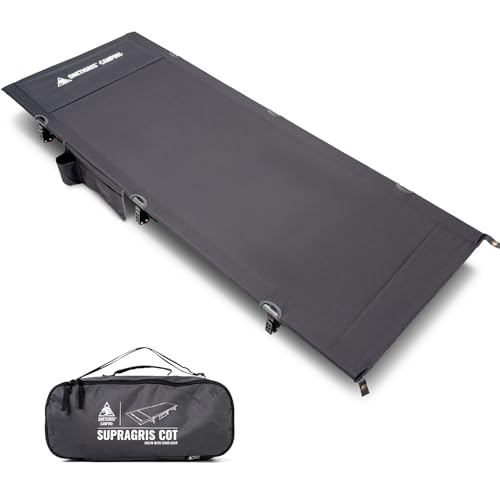
- 5.7-pound cot supports up to 396 pounds
- Wide sleeping surface with durable 300D Oxford fabric
- Includes pillow pocket and side pockets
Best For: Larger campers needing a high-capacity portable cot
Feature-Rich Support Pick
MIKKUPPA Backpacking Camping Cot

- 350-lb capacity with 7075 aluminum frame
- Adjusts between 15 and 7.09 inches high
- Includes pillow and storage pockets
Best For: Campers wanting full-size support and adjustable elevation
Spacious Car-Camping Pick

- Wide 73 x 35-inch sleeping surface
- Steel frame supports up to 300 pounds
- Folds for transport in most car trunks
Best For: Car campers, guests, and elevated campsite lounging
Most Versatile Height-Adjustable Cot

- Dual-height design for wet ground or tent use
- 330-pound capacity with 7075 aluminum frame
- Wide surface with pillow and gear storage
Best For: Campers wanting comfort, adjustable clearance, and organization
Heavy-Duty Full-Size Pick
MIKKUPPA Backpacking Camping Cot

- 350-pound capacity and full-size sleeping area
- Includes inflatable pillow and storage pockets
- Folds into a compact carry bag
Best For: Adults prioritizing room and weight capacity
Best Ultralight Pick – MARCHWAY Ultralight Folding Camping Cot
For backpackers who want to keep pack weight down, the MARCHWAY is one of the more practical camping cots for backpacking. It weighs about 4.9 pounds, packs into a 15.7-by-6.9-inch stuff sack, and uses an aircraft-grade aluminum frame with ripstop nylon fabric.
Best For: Backpackers, hikers, and trekkers prioritizing compact storage and low weight.
Pros:
- Lightweight design supports up to 275 pounds.
- Shock-cord pole system is tool-free and designed for quick setup.
- Five cross rods, ten anti-skid feet, and wide feet help improve stability.
- Off-ground sleeping surface helps separate you from cold, damp, or hard ground.
Cons:
- Its 275-pound capacity is lower than several heavier-duty options.
- The compact sleeping design may feel less spacious than a full-size cot.
The MARCHWAY balances portability, support, and straightforward setup well. It is a sensible choice when carrying comfort into the backcountry without adding unnecessary bulk.
Best Adjustable Design – ONETIGRIS SUPRANUBIS Camping Cot
The ONETIGRIS SUPRANUBIS stands out among camping cots for backpacking because its extending legs offer two height options. Its 7075 aluminum frame and 300D Oxford fabric provide a sturdy setup, while the included storage features add convenience at camp.
Best For: Campers who want adjustable height for damp ground, tent use, or sitting.
Pros:
- Two height settings: approximately 5.9 inches and 15.75 inches.
- Supports up to 330 pounds with aircraft-grade 7075 aluminum bars and legs.
- Wide 74.8-by-27.5-inch sleeping surface.
- Side pocket and under-cot storage net keep small items and clothing organized.
Cons:
- At about 9.5 pounds, it is heavier than the ultralight models in this roundup.
- Assembly is required, even though the leverage-locking mechanism is designed to speed setup.
This cot trades some backpacking-friendly lightness for flexibility and extra support. The adjustable height is especially useful when conditions change between grassy, muddy, damp, and solid ground.
Best Value Ultralight – Sutekus Portable Camping Cot
The Sutekus Portable Camping Cot is a straightforward option for shoppers comparing camping cots for backpacking. It weighs 4.7 pounds, folds to about 7 by 14 inches, and provides a 75-by-27.5-inch sleeping area with a 330-pound capacity.
Best For: Backpackers wanting a light, compact cot with a wide sleeping surface.
Pros:
- Weighs 4.7 pounds and fits into the included storage bag.
- Supports up to 330 pounds with ten ground contact points for stability.
- No tools are needed for assembly or disassembly.
- Side pocket provides convenient storage for small personal items.
Cons:
- Inserting the brackets into the slots requires extra effort during setup.
- The basic design has fewer dedicated features than the storage-focused models.
With a low weight, generous width, and high stated capacity, the Sutekus offers a practical middle ground. It makes the most sense for users who value portability and sleeping space over premium extras.
Best High-Capacity Option – ONETIGRIS SUPRAGRIS Camping Cot
For larger campers comparing camping cots for backpacking, the ONETIGRIS SUPRAGRIS combines a 5.7-pound weight with a stated capacity of up to 396 pounds. Its 7075 aluminum alloy frame, wide sleeping surface, and durable 300D Oxford fabric are suited to camping, tent, and van use.
Best For: Larger campers who want a relatively light cot with a high weight capacity.
Pros:
- Supports up to 396 pounds while weighing about 5.7 pounds.
- Wide 74.8-by-27.5-inch sleeping surface offers extra room.
- 300D Oxford fabric is described as dirt-, water-, and scratch-resistant.
- Pillow pocket and side pockets provide useful bedside storage.
Cons:
- At 5.7 pounds, it is not the lightest cot in the group.
- Assembly is required before use.
The SUPRAGRIS is a strong fit when weight capacity matters as much as packability. Its wide platform and storage details add everyday convenience without moving into the bulk of a traditional camp cot.
Lightweight Lever-Lock Pick – MARCHWAY Folding Camping Cot
For shoppers comparing camping cots for backpacking, the MARCHWAY stands out for its relatively low 6.5-pound weight, compact carry size, and fast setup. Its aluminum frame, taut nylon fabric, and 330-pound capacity make it a practical option when elevated sleeping comfort matters without adding excessive bulk.
Best For: Backpackers, motorcycle campers, hikers, and travelers who prioritize easy setup and portability.
Pros:
- Weighs 6.5 pounds and packs into a 17 x 7 x 6-inch carry bag.
- Supports up to 330 pounds with an aircraft-grade aluminum frame and tear-resistant nylon.
- Lever-lock design enables quick, pinch-free setup and takedown.
- Eight-inch elevation, anti-skid feet, and taut fabric improve stability and comfort.
Cons:
- At 6.5 pounds, it is still heavier than ultralight sleeping systems.
- The 27.6-inch width may feel narrower than a conventional bed.
The MARCHWAY is a strong balance of portability, support, and convenience. Its elevated design and straightforward lever lock are especially useful for campers who want a cot that is easier to use than a more complicated frame.
Feature-Rich Support Pick – MIKKUPPA Backpacking Camping Cot
Among camping cots for backpacking, the MIKKUPPA offers a full-size sleeping surface, durable materials, and useful built-in storage. Its 7075 aluminum frame and 800D Oxford fabric support up to 350 pounds, while the dual-height design lets you choose between a lower or taller setup.
Best For: Campers who want full-size support, multiple height options, and convenient storage features.
Pros:
- 77.2 x 26.8-inch sleeping area accommodates adults up to 6 feet 2 inches.
- Supports up to 350 pounds with a 7075 aluminum frame and 800D Oxford fabric.
- Dual-height design offers 15-inch or 7.09-inch configurations.
- Includes an inflatable pillow, pillow pocket, and side storage pocket.
Cons:
- At 10 pounds, it is heavier than the MARCHWAY and less suited to weight-focused trips.
- Setup requires three assembly steps, including support bars, legs, and brackets.
- The packed size is 17 x 8.3 x 8.3 inches, larger than some compact cots.
The MIKKUPPA favors features and robust support over minimum weight. It makes sense for campers who can carry 10 pounds and value a larger surface, adjustable height, and organized bedside storage.
Spacious Car-Camping Pick – Coleman Trailhead II Cot
The Coleman Trailhead II is a large folding cot for campers who prioritize room and a familiar, simple design over backpacking weight. It supports up to 300 pounds, accommodates users up to 6 feet 2 inches, and folds for transport in most car trunks.
Best For: Car campers, guest use, and elevated lounging where compact vehicle transport matters more than trail weight.
Pros:
- Spacious 73 x 35-inch sleeping and lounging surface.
- Strong cross-bar steel frame supports up to 300 pounds.
- 17-inch maximum height keeps the sleeper well off the ground.
- Folds to fit in most car trunks and includes a one-year limited warranty.
Cons:
- Weighs 21.5 pounds, making it substantially less practical for backpacking.
- Its steel frame is heavier than the aluminum frames of the other options.
- Its folded dimensions are better suited to vehicle transport than carrying on foot.
The Trailhead II is best viewed as a roomy vehicle-based cot rather than a true backpacking choice. Its generous width and steel construction can be appealing for base camps, guests, and campsite lounging, but the weight limits trail portability.
Most Versatile Height-Adjustable Cot – Moon Lence Camping Cot
For shoppers comparing camping cots for backpacking, the MOON LENCE stands out with two height settings, a wide sleeping surface, and a sturdy aluminum frame. Its 4.3 kg weight is worth considering alongside the extra comfort and storage features.
Best For: Backpackers and campers who want adjustable height, a roomy bed, and organized gear storage.
Pros:
- Dual-height design works on wet ground, grass, solid ground, or inside tents.
- Supports up to 330 pounds with a 7075 aluminum frame and rip-stop, water-resistant 300D Oxford fabric.
- Wide 74.8-by-27.5-inch surface includes a pillow pocket, side pocket, and under-cot mesh storage.
- Leverage locking mechanism enables setup in about one minute.
Cons:
- At 4.3 kg, it is not the lightest option for weight-focused backpacking.
- The included instructions should be read carefully before assembly.
The MOON LENCE is a practical choice when sleeping space and adjustable ground clearance matter more than minimizing pack weight. Its storage features and two height modes add useful versatility for changing campsite conditions.
Heavy-Duty Full-Size Pick – MIKKUPPA Backpacking Camping Cot
The MIKKUPPA is a full-size option for shoppers evaluating camping cots for backpacking who still want room to stretch out. It combines a 350-pound capacity with 800D Oxford fabric, a 7075 aluminum frame, and a compact carry bag.
Best For: Adults seeking a spacious, heavy-duty cot for camping, travel, or occasional office naps.
Pros:
- 77.2-by-26.8-inch sleeping area accommodates adults up to 6 feet 2 inches and 350 pounds.
- Dual-height settings provide 15-inch or 7.09-inch clearance for different conditions.
- Includes an inflatable pillow, pillow pocket, and side storage pocket.
- Detachable parts fit into a 17-by-8.3-by-8.3-inch bag, and the cot weighs 10 pounds.
Cons:
- At 10 pounds, it may be less suitable for minimalist backpacking.
- Setup requires three assembly steps, including side bars, legs, and brackets.
The MIKKUPPA prioritizes adult-sized comfort and load capacity over ultralight portability. Its included pillow and storage features make it especially convenient for car camping, travel, and backup sleeping arrangements.
Comfort-Focused Lightweight Pick – Gonex Adjustable Camping Cot
Among camping cots for backpacking, the Gonex offers a useful balance of portability, setup speed, and comfort. It weighs 8.4 pounds, supports up to 350 pounds, and includes a pillow plus several storage options.
Best For: Backpackers and campers who want a relatively light cot with fast setup, adjustable height, and added comfort.
Pros:
- Weighs 8.4 pounds and includes a carrying bag for transport.
- 7075 aluminum construction and dual-tube support provide a stated 350-pound capacity.
- High and low modes suit damp or muddy ground, tents, and solid surfaces.
- Four-step lever-lock setup takes about 60 seconds and includes a pillow.
Cons:
- At 8.4 pounds, it is not an ultralight backpacking sleep system.
- The 27.5-inch width and 74.8-inch length may not suit every sleeper.
The Gonex is a strong all-around option for campers who want a manageable carry weight without giving up a high weight rating. Its quick assembly, included pillow, and extensive storage make it convenient for varied outdoor trips.
How We Picked the Best Camping Cots for Backpacking
We focused on the features that matter most when carrying a cot outdoors: manageable weight, compact storage, dependable frame construction, sleeping-surface support, and straightforward setup. We also considered published weight limits, height options, portability, and whether each design is better suited to minimalist backpacking, car camping, or flexible outdoor use.
Because the selected cots vary considerably, there is no single best choice for every trip. A lighter model may be preferable for long hikes, while a heavier, stronger cot can be more comfortable for larger users or base-camp applications.
Quick Comparison
| Best For | What to Prioritize |
|---|---|
| Long-distance backpacking | Low packed weight, compact folding, and fast setup |
| Higher-weight users | A reinforced frame and a capacity comfortably above your body weight |
| Uneven or wet ground | A raised, stable platform and adjustable or longer legs |
| Car camping and base camps | Extra width, comfort, and easier assembly over minimum weight |
Key Buying Factors for Camping Cots for Backpacking
Weight and Packed Size
Every ounce matters when a cot joins your sleeping bag, pad, shelter, and cooking equipment. Check the complete packed weight, including poles, legs, carry bag, and hardware. Also confirm the folded dimensions will fit inside or securely alongside your backpack.
Weight Capacity and Stability
Do not shop at the exact limit. Choose a cot with a meaningful margin above your body weight, especially if you move during sleep or carry gear onto the bed. Wider leg spacing, locking joints, and a taut fabric deck can improve stability.
Height, Length, and Comfort
Compare the unfolded dimensions with your height and sleeping position. Low cots generally reduce weight and improve stability, while taller or adjustable designs can be easier to enter and exit and may provide useful clearance from damp ground.
Setup and Durability
Look for clearly locking frames, reinforced stress points, durable fabric, and replacement-part availability when possible. A cot that takes a few extra minutes to assemble may be worthwhile if it offers better support, but complicated mechanisms are inconvenient after a long day on the trail.
Who Should Buy Which Camping Cots for Backpacking?
Choose an ultralight, compact model if you are counting grams or covering significant mileage. Pick a higher-capacity or reinforced cot if support and durability matter more than the lowest possible carry weight. Adjustable-height models are useful for mixed terrain, easier access, and occasional car camping, while a larger folding cot is better for comfort-focused trips where portability is less critical.
Before buying, compare the cot’s packed dimensions with your existing backpack and test the listed capacity against your real needs. For many hikers, the best Camping Cots for Backpacking are the lightest models that still provide adequate length, stability, and a comfortable safety margin.