
The right tripod can make handheld limitations disappear, giving your camera a steadier platform for landscapes, portraits, video, long exposures, and self-timer shots.
These 10 camera tripods cover lightweight travel models, tall overhead designs, phone-friendly options, and sturdier supports for heavier equipment. Use the guide below to narrow the list by stability, portability, height, and value.
Best 10 Camera Tripods Picks for 2026
Best Budget Pick
Amazon Basics 50-Inch Lightweight Tripod

- Lightweight 1.23-pound aluminum construction
- Adjusts from 16.1 to 50 inches
- Supports equipment up to 4.4 pounds
Best For: Travel photography and lightweight camera kits
Best Heavy-Duty Support
SIRUI AM-324 Carbon Fiber Tripod

- 44-pound maximum load capacity
- 3.1- to 57.1-inch height range
- No center column for low-angle shooting
Best For: Heavy camera setups and outdoor photography
Best Premium Travel Pick
Peak Design Aluminum Travel Tripod
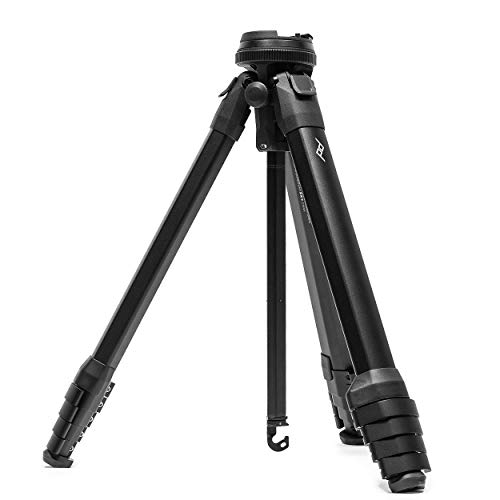
- Supports up to 20 pounds
- Compact 15.35-inch folded length
- Includes built-in phone mount
Best For: Travelers carrying capable camera or phone setups
Best for Overhead Shots
K&F CONCEPT 90-Inch Overhead Tripod

- Reaches an impressive 90 inches
- Supports up to 22 pounds
- Detachable monopod and flexible legs
Best For: Overhead, panoramic, and elevated photography
Best Premium Pick
Manfrotto 290XTRA with 496 Ball Head

- 10 kg load capacity for DSLR and mirrorless setups
- Four leg angles for flexible shooting positions
- Arca-Swiss-compatible plate and adjustable ball head
Best For: Landscape, macro, and low-angle photography
Best Budget Versatility
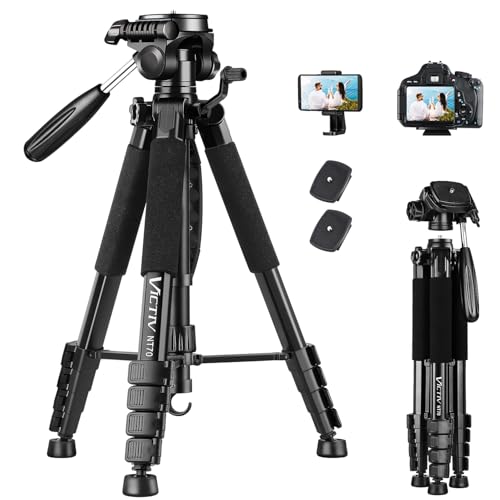
- 19- to 74-inch height range
- Includes phone holder and extra quick-release plate
- Three-way pan head for photos and video
Best For: Beginners and camera-phone content creators
Best for Video
NEEWER 79-Inch Heavy-Duty Tripod

- 360-degree fluid head for controlled pans
- 8 kg capacity with sturdy aluminum construction
- Reaches 200 cm and includes a carry bag
Best For: Video shooting with cameras and camcorders
Best Lightweight Travel Pick
K&F Concept 64-Inch Aluminum Travel Tripod

- 2.53-pound tripod folds to 15.5 inches
- 360-degree ball head supports up to 17.6 pounds
- Includes phone holder and carrying bag
Best For: Travel, landscape photography, and lightweight vlog setups
Best Heavy-Duty Convertible Pick

- Converts from tripod to monopod
- Supports up to 33 pounds vertically
- Three accessory mounting holes add rigging flexibility
Best For: Outdoor photography and content-creation rigs
Best Versatile Tall Pick

- Reaches 75 inches and weighs 2.18 pounds
- Converts to a monopod or selfie stick
- Remote control and phone holder included
Best For: Vlogging, travel, and outdoor camera-phone shooting
Best Budget Pick – Amazon Basics 50-Inch Lightweight Tripod
For shoppers seeking affordable camera tripods for travel and casual photography, this Amazon Basics model offers a lightweight aluminum design, adjustable height, and a quick-release plate. Its 4.4-pound weight limit makes it better suited to compact cameras and lighter setups than heavy professional gear.
Best For: Travel photography, hiking, camping, and lightweight camera kits.
Pros:
- Lightweight 1.23-pound design includes a zippered storage bag.
- Adjusts from 16.1 to 50 inches with three-section lever-lock legs.
- Three-way head supports portrait and landscape orientations.
- Built-in bubble level and quick-release plate help with positioning and fast setup.
Cons:
- Not recommended for heavy, high-end DSLRs, long lenses, or large telescopes.
- Maximum equipment weight is limited to 4.4 pounds.
- It is not water resistant.
This is a practical entry-level tripod when portability and low cost matter most. Choose a sturdier model if your camera setup approaches the weight limit or requires more robust support.
Best Heavy-Duty Support – SIRUI AM-324 Carbon Fiber Tripod
Among camera tripods for demanding equipment, the SIRUI AM-324 stands out for its carbon fiber construction, 20-kilogram load capacity, and no-center-column design. It offers a wide height range and interchangeable feet for varied shooting surfaces.
Best For: Professional cameras, heavier accessories, low-angle work, and uneven outdoor terrain.
Pros:
- Supports up to 44 pounds while weighing about 3.1 pounds.
- Adjusts from 3.1 to 57.1 inches for low and elevated perspectives.
- No center column allows compact storage and ultra-low or macro shooting.
- Includes rubber feet and metal spikes for mud, ice, sand, and slippery surfaces.
Cons:
- Its 20.5-inch folded length is less compact than smaller travel tripods.
- Twist-lock legs may require more deliberate adjustment than lever locks.
- The tripod is sold as a tripod, without a head listed among the included components.
The AM-324 is a strong choice when stability and payload capacity take priority over the lightest possible travel setup. Its low-angle design also gives it useful flexibility for macro and landscape photography.
Best Premium Travel Pick – Peak Design Aluminum Travel Tripod
This Peak Design model is one of the most compact camera tripods for photographers who want pro-level stability in a travel-friendly format. Its five-section legs, quick setup, ergonomic ball head, and built-in phone mount make it versatile for both cameras and mobile devices.
Best For: Frequent travelers, full-frame DSLR users, and photographers who value compact packing.
Pros:
- Packs down to a compact, water-bottle-like diameter and about 15.35 inches in length.
- Supports up to 20 pounds, including a full-frame DSLR with telephoto lens.
- Quick-release lever system enables fast setup and takedown.
- Built-in mobile mount and integrated hook add shooting flexibility.
Cons:
- Its 20-pound capacity is lower than the SIRUI AM-324’s listed maximum.
- The five-section leg design involves more sections to adjust.
- The supplied details list no included components.
For travelers, the compact folded profile and fast controls are the main advantages. It is especially appealing when you need a capable tripod that takes up minimal space without giving up support for substantial camera equipment.
Best for Overhead Shots – K&F CONCEPT 90-Inch Overhead Tripod
For photographers comparing camera tripods for elevated, overhead, or panoramic compositions, the K&F CONCEPT KF09.119 offers an unusually tall 90-inch maximum height. Its flexible legs, horizontal positioning, gimbal-style head, and detachable monopod support a wide range of shooting angles.
Best For: Overhead photography, elevated compositions, panoramas, and flexible studio or field setups.
Pros:
- Reaches up to 90 inches while folding to about 21.3 inches.
- Supports up to 22 pounds with a 28mm ball head.
- Flexible legs tilt from 0 to 180 degrees, with 360-degree panoramic rotation.
- Detachable monopod adds versatility in confined spaces.
Cons:
- At about 4.5 pounds, it is heavier than lightweight travel tripods.
- Its 21.4-inch minimum height is not intended for ultra-low ground-level work.
- It is not water resistant.
This tripod is a specialized option for photographers who need height and unusual positioning rather than the smallest everyday travel footprint. The overhead column and detachable monopod make it particularly adaptable for creative compositions.
Best Premium Pick – Manfrotto 290XTRA with 496 Ball Head
For photographers who want adaptable camera tripods with a durable build, the Manfrotto 290XTRA combines an aluminum frame, a versatile ball head, and multiple leg-angle settings. Its 10 kg capacity suits many DSLR and mirrorless setups, while the included bag makes transport easier.
Best For: Landscape, macro, and low-angle photography with DSLR or mirrorless cameras.
Pros:
- Four independent leg-angle positions support creative shooting angles on varied terrain.
- 496 ball head provides pan, ball, and friction controls for precise positioning.
- Arca-Swiss-compatible plate works with L-brackets, cages, and telephoto lens collars.
- Rapid center column, rubber leg warmer, and included shoulder bag improve usability.
Cons:
- At 2.7 kg, it is heavier than some travel-focused camera tripods.
- The 67.5 cm folded length may be less convenient for compact luggage.
- It is not water resistant.
The Manfrotto 290XTRA is a strong choice when stability, head control, and shooting flexibility matter more than minimizing packed size or weight.
Best Budget Versatility – VICTIV 74-Inch Camera Tripod
The VICTIV 74-inch is one of the more flexible camera tripods for everyday shooting because it supports cameras, phones, and several other devices. Its adjustable height, three-way pan head, phone holder, and carry bag make it practical for home studios and outdoor use.
Best For: Beginners, video creators, livestreaming, food photography, and mixed camera-phone use.
Pros:
- Height adjusts from 19 to 74 inches for tabletop, eye-level, and elevated shooting.
- Included 360-degree phone holder supports compatible smartphones as well as cameras.
- Three-way pan head enables horizontal panoramas, vertical portraits, and tilt adjustments.
- Weight hook, nonslip pads, extra quick-release plate, and carry bag add convenience.
Cons:
- Its 9.5 lb weight limit is lower than the Manfrotto and NEEWER options here.
- The 1.4 kg weight and 20-inch folded size may still be noticeable for longer travel.
- It is not water resistant.
The VICTIV stands out as an accessible all-purpose option, especially if you alternate between a camera and phone or need a tripod for content creation.
Best for Video – NEEWER 79-Inch Heavy-Duty Tripod
For video work, the NEEWER TP-M200 brings a fluid drag head and a sturdy double-tube aluminum design to camera tripods shopping. It reaches 200 cm, supports up to 8 kg, and includes leveling and stability features for controlled setups indoors or outdoors.
Best For: Video shooting with DSLR cameras, camcorders, and other compatible camera setups.
Pros:
- Fluid head pans 360 degrees and tilts from -70 to 90 degrees for smooth framing changes.
- 70 mm bowl base and built-in bubble level help maintain a balanced setup.
- 8 kg load capacity and double-tube aluminum construction support heavier equipment.
- Height adjusts from 88 to 200 cm, and a carry bag is included.
Cons:
- At 5.58 kg, it is substantially heavier than the other listed camera tripods.
- Its 91 cm folded length is relatively long for transport.
- It is designed around a fluid head rather than a still-photography ball head.
The NEEWER is the clearest fit for users prioritizing smooth video movement and a tall, stable platform over lightweight portability.
Best Lightweight Travel Pick – K&F Concept 64-Inch Aluminum Travel Tripod
For photographers seeking portable camera tripods, the K&F Concept model balances a 64.1-inch maximum height with a compact 15.5-inch folded size. Its aluminum construction, 360-degree ball head, and included phone holder make it practical for travel, landscapes, and mixed camera setups.
Best For: Travelers, landscape photographers, and vloggers who want a lightweight tripod with flexible positioning.
Pros:
- Lightweight 2.53-pound design folds to 15.5 inches for transport.
- 36mm ball head rotates 360 degrees and supports up to 17.6 pounds.
- Inverted center-column setup supports low-angle and special photography.
- Includes a phone holder, quick-release plate, wrench, and carrying bag.
Cons:
- It is not water resistant.
- The 64.1-inch maximum height is lower than some taller options.
This is a well-rounded travel tripod for users who prioritize portability without giving up a full-height setup. The quick flip locks and broad compatibility add convenience for everyday shooting.
Best Heavy-Duty Convertible Pick – SmallRig CT-10 71-Inch Tripod
The SmallRig CT-10 stands out among camera tripods for its combination of a 71-inch working height, 2-in-1 tripod-to-monopod conversion, and substantial load capacity. Its 360-degree metal ball head and accessory mounting points also suit creators building more elaborate camera or phone rigs.
Best For: Outdoor photographers and content creators who need a tall, sturdy tripod that can convert to a monopod.
Pros:
- Adjusts from 16 to 71 inches and folds to 16.9 inches.
- Supports up to 33 pounds vertically, with an 11-pound tilt capacity.
- Converts into a monopod for hiking and travel.
- Three additional 1/4-inch threaded holes accommodate accessories such as monitors and magic arms.
Cons:
- At 3.4 pounds, it is heavier than the lightest travel tripods.
- Telephoto lenses may require an additional tripod or lens mount ring for better balance.
- It is not water resistant.
The CT-10 is a strong choice when stability, height, and accessory expansion matter more than minimum carry weight. Its convertible design gives it useful flexibility for outdoor and content-creation workflows.
Best Versatile Tall Pick – XXZU 75-Inch Camera Tripod
Among versatile camera tripods, the XXZU model offers a 75-inch maximum height, detachable center column, phone support, and remote control. It is designed for creators who want one compact setup for camera work, selfies, livestreams, and low-angle outdoor shooting.
Best For: Travelers, vloggers, and outdoor photographers who need tall height, phone compatibility, and flexible shooting modes.
Pros:
- Extends to 75 inches while folding to 14.17 inches and weighing 2.18 pounds.
- Detachable center column can function as a monopod or selfie stick.
- Three leg-angle positions support low-angle shooting and uneven terrain.
- Includes a remote control, phone holder, carrying bag, and accessory mounting point.
Cons:
- Maximum load drops to 6.61 pounds at a 45-degree tilt.
- The supplied notes do not specify the included kit’s complete component list.
- It is not water resistant.
This tripod is particularly appealing for hybrid camera-and-phone use. Its tall profile, remote operation, and detachable center column provide more shooting options than a basic travel stand while keeping the packed size small.
How We Picked These Camera Tripods
We focused on practical differences that matter in real shooting conditions: maximum load capacity, folded size, working height, construction materials, head design, setup speed, and versatility. The selection includes compact travel tripods, taller aluminum models, carbon-fiber support, video-oriented designs, and tripods that can also work with phones or convert into monopods.
Published specifications are useful starting points, but a tripod’s best use depends on the camera, lens, accessories, and terrain involved. Treat capacity ratings as a guide rather than a target; support is generally more reliable when your setup remains comfortably below the stated maximum.
Quick Comparison
| Best For | Look For | Trade-Off |
|---|---|---|
| Travel and everyday photography | Low weight, compact folded length, quick-release plate | Less resistance to wind and heavy lenses |
| Landscape and outdoor shooting | Strong leg locks, useful maximum height, stable center column | More height and stability usually add weight |
| Video | Video-style head, smooth movement, sturdy leg platform | Less convenient for rapid portrait-to-landscape changes |
| Phones and casual content | Phone holder, remote, simple controls | Often limited for professional camera systems |
| Heavy cameras or long lenses | High load rating, rigid legs, secure head | Bulkier and slower to carry |
Key Buying Factors for Camera Tripods
Stability and Load Capacity
Choose a tripod that comfortably supports your camera body, lens, flash, microphone, and any other mounted accessories. Wider leg sections, stronger joints, and a rigid head improve stability, especially outdoors. A center column is convenient for extra height, but extending it fully can reduce rigidity.
Weight, Size, and Materials
Aluminum tripods tend to offer good value and durability, while carbon fiber can reduce carrying weight and help dampen vibration. Check both the packed length and total weight if you plan to travel by air or hike with the tripod. A compact model that you will actually carry is often more useful than a heavier professional support left at home.
Height and Leg Adjustments
Compare maximum height with the height of your camera and preferred shooting position. Independent leg-angle adjustments help on stairs, uneven ground, and low-angle shots. More leg sections can shorten the folded size but may require additional setup and can feel less rigid.
Head and Mounting System
Ball heads are fast and flexible for still photography. Video heads are better suited to controlled pans and tilts. Look for a secure quick-release plate and verify compatibility with your existing plates or Arca-Swiss accessories. A reversible or removable center column can also expand low-angle and overhead options.
Who Should Buy Which Camera Tripods?
Choose a lightweight travel tripod if portability is your main concern or you primarily use a mirrorless camera and modest lens. A taller, sturdier aluminum model is better for landscape photographers, studio-style work, and users who want more eye-level height without paying for premium materials.
Choose carbon fiber when every ounce matters and you regularly carry the tripod outdoors. Video creators should prioritize a suitable video head and smooth controls over the highest advertised height. Phone users and casual creators can save money with a model that includes a phone mount and remote. For full-frame bodies, long lenses, or demanding outdoor conditions, prioritize rigidity and a generous capacity rating over compactness.