
The best camera gimbal for professionals combines dependable stabilization with the payload capacity, camera-control features, and setup speed your production workflow demands. The right model can make handheld movement look polished without slowing down a fast-paced shoot.
This roundup compares ten DJI and FeiyuTech options, from compact mirrorless gimbals to higher-capacity systems designed for DSLR and cinema-camera rigs. Use the guide below to narrow your choice by camera weight, shooting style, tracking needs, and included accessories.
Best 10 Camera Gimbal for Professionals Picks for 2026
Balanced Workhorse

- 3 kg payload for mainstream mirrorless setups
- Native vertical shooting without extra accessories
- Teflon-coated axes for precise balancing
Best For: Professional mirrorless-camera creators producing horizontal and vertical video
High-Payload Specialist

- 4.5 kg payload with carbon-fiber axis arms
- 20% higher motor torque for demanding rigs
- LiDAR and remote focus/zoom control support
Best For: Cinematographers using heavier mirrorless or cinema-camera setups
Lightweight Multi-Device Pick

- Supports cameras, phones, action cameras, and video cameras
- Built-in AI tracking works without an app connection
- 852 g body with fill light and useful accessories
Best For: Mobile creators using several lightweight device types
Complete Cinema Bundle
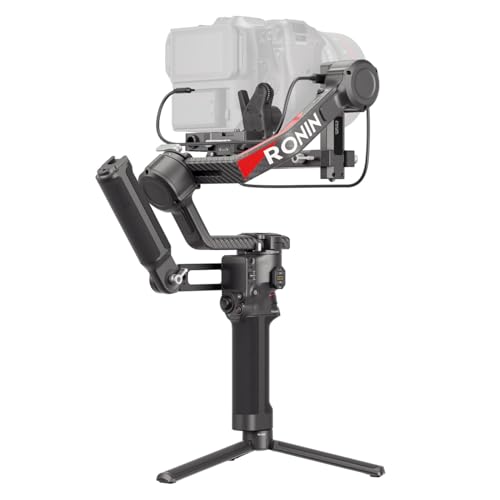
- 4.5 kg payload for mirrorless and cinema setups
- Includes Ronin Image Transmitter and Focus Pro Motor
- Adds LiDAR focus support and extensive cables
Best For: Cinema-camera operators needing transmission and manual-lens focus tools
Professional Payload Pick
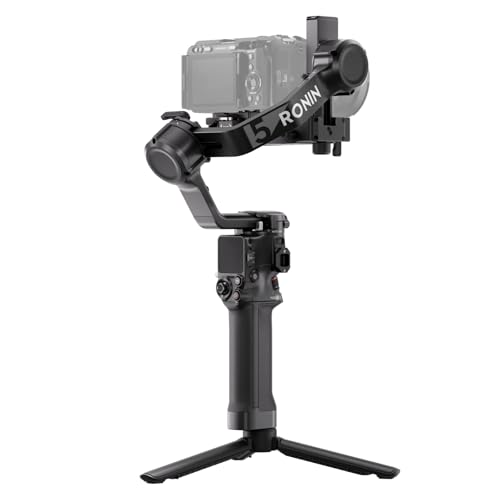
- 3 kg tested payload for heavier camera setups
- Intelligent tracking for people, vehicles, and pets
- 14-hour standby with one-hour full charging
Best For: Professionals balancing larger camera rigs and demanding shoots
Integrated Tracking Alternative

- Built-in AI tracking with gesture controls
- 2.5 kg payload for DSLR and mirrorless cameras
- Quick vertical setup and Bluetooth or cable control
Best For: Solo operators needing flexible tracking and vertical shooting
Agile Hybrid Choice

- One-second setup with automated axis locks
- Supports cameras and smartphones up to 2 kg
- Fast horizontal-to-vertical switching
Best For: Fast-paced shoots using lighter cameras or phones
Most Versatile

- Supports cameras, phones, and action cameras
- 18 m AI tracking with 360-degree follow
- Detachable remote handle and 2 kg payload
Best For: Solo creators using multiple camera types
Fastest Setup

- Automated axis locks speed up setup
- Quick horizontal-to-vertical conversion
- 2 kg payload with intelligent tracking
Best For: Fast-paced shoots and frequent rig changes
Best Lightweight Option
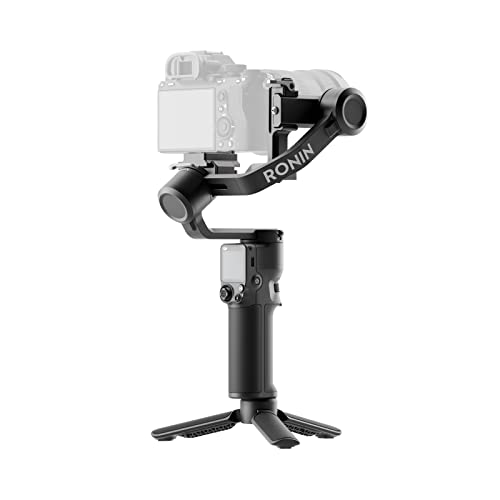
- Lightweight 795 g design
- 2 kg payload for camera and lens combinations
- Native vertical shooting and Bluetooth shutter control
Best For: Travel filmmakers and extended handheld shooting
Balanced Workhorse – DJI RS 4
The DJI RS 4 is a practical camera gimbal for professionals who need reliable stabilization for mainstream mirrorless camera and lens combinations. Its 3 kg payload, native vertical shooting, and low-friction axis design make it a flexible choice for solo video production.
Best For: Professional creators using mirrorless cameras for horizontal and vertical video.
Pros:
- Supports camera and lens setups up to 3 kg.
- Switches efficiently to vertical shooting without an additional accessory.
- Teflon-coated axes support smoother, more precise balancing.
- Includes a 1.8-inch screen, battery grip, tripod grip, and Arca-Swiss/Manfrotto quick-release plate.
Cons:
- Not water resistant.
- The extended 29.5-hour battery option requires the separately sold BG70 grip.
- The DJI Ronin app must be downloaded from DJI’s website rather than Google Play.
Choose the RS 4 when your setup fits within its 3 kg payload and you want a capable professional gimbal without stepping up to the heavier RS 4 Pro platform. Its vertical-shooting design is especially useful for creators producing content across multiple formats.
High-Payload Specialist – DJI RS 4 Pro
The DJI RS 4 Pro is a camera gimbal for professionals handling heavier mirrorless or cinema-camera configurations. With a 4.5 kg payload, carbon-fiber axis arms, increased motor torque, and support for remote focus and zoom control, it is designed for demanding production setups.
Best For: Cinematographers and solo operators using heavier camera, lens, and focusing configurations.
Pros:
- Handles payloads up to 4.5 kg with 20% increased motor torque.
- Supports native vertical shooting for social content.
- Enables joystick switching between gimbal movement and lens zoom control.
- Supports Focus Pro LiDAR with 76,800 ranging points within 20 m.
Cons:
- Heavier than the standard RS 4 at 1.84 kg.
- The 29-hour battery extension requires the separately sold BG70 grip.
- Not water resistant.
The RS 4 Pro is the better fit when payload capacity and advanced focusing support matter more than minimizing kit weight. It offers a strong foundation for professional camera builds while retaining quick vertical-orientation changes.
Lightweight Multi-Device Pick – FeiyuTech SCORP Mini 2 Kit
The FeiyuTech SCORP Mini 2 Kit is a versatile camera gimbal for professionals who move between mirrorless cameras, smartphones, action cameras, and compact video cameras. Its 852 g body, built-in AI tracker, fill light, and extension accessories make it suited to mobile and varied shooting workflows.
Best For: Mobile creators and small-production teams using multiple device types.
Pros:
- Supports devices up to 1.2 kg across four device categories.
- Built-in AI tracking can follow faces or objects without connecting to the app.
- Includes a 1.3-inch touchscreen and five-way joystick for easier operation.
- Comes with a carrying case, wireless fill light, extension rod, tripod, phone clamp, and GoPro adapter.
Cons:
- Its 1.2 kg payload is substantially lower than the DJI RS 4 models.
- The white finish may be less discreet for some production environments.
- Device-specific control may require Bluetooth or cable connections.
Pick the SCORP Mini 2 Kit if portability and device flexibility are priorities. It is less appropriate for large cinema builds, but its integrated tracking and broad accessory bundle can simplify lightweight professional shoots.
Complete Cinema Bundle – DJI RS 4 Pro Combo
The DJI RS 4 Pro Combo is a camera gimbal for professionals who want a high-capacity stabilizer with expanded focus, monitoring, and transmission equipment included. Its 4.5 kg payload combines with a Ronin Image Transmitter and Focus Pro Motor for more complete production control.
Best For: Professional cinema-camera operators who need integrated image transmission and manual-lens focus support.
Pros:
- Supports camera builds up to 4.5 kg with increased motor torque.
- Includes the Ronin Image Transmitter and Focus Pro Motor.
- Provides LiDAR focusing support with 76,800 ranging points within 20 m.
- Includes a briefcase handle, carrying case, multiple HDMI cables, and extended metal tripod grip.
Cons:
- Its expanded kit is heavier and more involved than a basic gimbal package.
- The 29-hour battery extension requires the separately sold BG70 grip.
- Not water resistant.
The RS 4 Pro Combo makes the most sense when the included transmitter and focus motor match your workflow. It costs less in setup friction than assembling those capabilities separately, while preserving the RS 4 Pro’s payload and vertical-shooting features.
Professional Payload Pick – DJI RS 5
The DJI RS 5 is a strong camera gimbal for professionals using heavier mirrorless or DSLR setups. Its 3 kg tested payload, fine-tuning knobs, automated axis locks, and intelligent tracking support a faster, more controlled shooting workflow.
Best For: Professionals who need precise balancing, subject tracking, and extended shooting readiness with larger camera configurations.
Pros:
- Supports a tested payload of up to 3 kg (6.6 lb).
- Fine-tuning knobs and Teflon interlayers help balance heavier setups precisely.
- Enhanced Intelligent Tracking can follow people, vehicles, or pets from the touchscreen.
- Charges fully in one hour and provides up to 14 hours of standby time.
Cons:
- At 1.62 kg, it is relatively substantial for handheld shooting.
- It is not water resistant.
- The DJI Ronin app is not available through Google Play and must be downloaded from DJI.
Choose the RS 5 when payload capacity and adjustment precision matter more than minimizing weight. The automated locks, Z-Axis Indicator, and included tripod make it particularly practical for demanding, repeatable production work.
Integrated Tracking Alternative – FeiyuTech SCORP 2
The FeiyuTech SCORP 2 is a versatile camera gimbal for professionals who want built-in tracking without adding a separate module. It combines a 2.5 kg payload, gesture-controlled AI tracking, quick vertical setup, and wired or Bluetooth camera control.
Best For: Solo creators and camera operators who want integrated tracking, vertical shooting, and hands-on control in a lighter stabilizer.
Pros:
- Built-in AI tracking works through gestures, with no additional tracking accessory required.
- Supports cameras weighing up to 2.5 kg.
- Quick-release components enable fast vertical filming setup.
- Offers a 1.3-inch touchscreen and multifunction control knob for gimbal and zoom adjustments.
Cons:
- Its payload is lower than the DJI RS 5’s 3 kg tested capacity.
- It is not water resistant.
- Some advanced functions require the Feiyu SCORP app.
The SCORP 2 stands out for practical integrated features rather than maximum payload. Its gesture tracking, vertical mounting system, and multiple camera-control options make it a flexible choice for mobile, solo, and social-video workflows.
Agile Hybrid Choice – DJI RS 4 Mini Combo
The DJI RS 4 Mini Combo is a compact camera gimbal for professionals and content creators working with mirrorless cameras, vlog cameras, or phones. Its 2 kg payload, automated locks, intelligent tracking module, and rapid vertical switching favor fast-moving production schedules.
Best For: Videographers who prioritize quick setup, mobile-friendly vertical footage, and responsive stabilization across cameras and smartphones.
Pros:
- Auto axis locks help make setup ready in about one second.
- Supports cameras and smartphones up to 2 kg (4.4 lb).
- Switches from horizontal to vertical shooting in about 10 seconds.
- Includes an Intelligent Tracking Module and Briefcase Handle.
Cons:
- Its 2 kg payload is more limited than the RS 5’s 3 kg tested capacity.
- It is not water resistant.
- The DJI Ronin app is not available through Google Play and must be downloaded from DJI.
The RS 4 Mini Combo is the better fit when speed and portability are central to the shoot. It offers useful professional controls and tracking while remaining suited to lighter camera and phone-based setups.
Most Versatile – FeiyuTech SCORP Mini-3-Pro
For creators seeking a camera gimbal for professionals that can adapt across multiple camera types, the FeiyuTech SCORP Mini-3-Pro supports mirrorless, compact, action cameras, and smartphones. Its 2 kg payload, AI tracking, and modular shooting options make it suited to varied production setups.
Best For: Solo creators and filmmakers who need one gimbal for cameras, phones, and action cameras.
Pros:
- Supports cameras, smartphones, and action cameras with a 2 kg payload.
- AI Tracking 4.0 offers up to 18 meters of tracking distance and 360-degree follow coverage.
- Detachable handle can serve as a remote control for flexible solo filming.
- Quick-release components support fast horizontal-to-vertical switching.
Cons:
- It weighs 1 kg, making it heavier than the DJI RS 3 Mini.
- It is not water resistant.
- The broad feature set may be more than needed for straightforward camera-only work.
The SCORP Mini-3-Pro stands out when versatility and built-in tracking matter most. Its strong payload and included adapters make it a practical choice for mixed-device production, while the detachable handle adds useful control options for solo operators.
Fastest Setup – DJI RS 4 Mini
The DJI RS 4 Mini is a strong camera gimbal for professionals who prioritize fast setup and responsive handling. Automated axis locks, Teflon-enhanced balancing, and a 2 kg payload support efficient work with compatible mirrorless cameras, vlogging cameras, and smartphones.
Best For: Fast-moving shooters who frequently reconfigure their rig or switch between horizontal and vertical content.
Pros:
- Automated axis locks help make the gimbal ready in about one second.
- Switches from horizontal to vertical shooting in approximately 10 seconds.
- Supports up to 2 kg and includes an intelligent tracking module for subject framing.
- Responsive Follow Mode reacts quickly to hand movements during dynamic shots.
Cons:
- At 1,030 g, it is heavier than the DJI RS 3 Mini.
- It is not water resistant.
- The DJI Ronin app must be downloaded from DJI’s website because it is unavailable on Google Play.
Choose the RS 4 Mini if reducing setup friction is a priority. Its automated locks, quick vertical conversion, and tracking support are especially useful for creators working under time pressure or producing frequent social-first footage.
Best Lightweight Option – DJI RS 3 Mini
For professionals who want a portable camera gimbal for professionals, the DJI RS 3 Mini combines a 795 g body with a tested 2 kg payload. It offers three-axis stabilization, native vertical shooting, Bluetooth shutter control, and a full-color touchscreen for compact production kits.
Best For: Travel filmmakers and creators who need strong payload capacity in a lightweight package.
Pros:
- Weighs 795 g for easier handheld operation and travel.
- Supports up to 2 kg, accommodating a range of camera and lens combinations.
- Provides native vertical shooting for social media content.
- Includes Bluetooth shutter control and a 1.4-inch full-color touchscreen.
Cons:
- Its listed compatible devices focus on cameras rather than the broader device range of the FeiyuTech model.
- It is not water resistant.
- Activation and full functionality require the DJI Ronin app, which is unavailable on Google Play.
The RS 3 Mini is the easiest pick when weight matters without giving up a 2 kg payload. It is particularly appealing for travel and extended handheld sessions, provided you are comfortable downloading the required app directly from DJI.
How We Picked the Best Camera Gimbal for Professionals
We focused on the features that matter most during real production: payload capacity, motor strength, balance and adjustment range, stabilization design, camera compatibility, control options, battery practicality, and overall portability. We also considered whether a kit adds useful production value, such as a focus motor, AI tracking, fill light, extra mounting hardware, or a detachable remote.
The selection covers full-size professional gimbals as well as lighter models for mirrorless, compact, action-camera, and smartphone workflows. Because listed capacity and compatibility can vary by camera, lens, cage, and accessories, verify your complete rig before buying.
Quick Comparison
| Best For | Models to Consider | Why |
|---|---|---|
| Professional DSLR and cinema rigs | DJI RS 4 Pro, RS 4 Pro Combo, FeiyuTech SCORP 2 | Greater capacity and more room for heavier lenses or accessories |
| Everyday mirrorless production | DJI RS 4, RS 5 | Strong balance of control, portability, and professional features |
| Travel and lightweight crews | DJI RS 4 Mini, RS 4 Mini Combo, RS 3 Mini | Smaller form factors that are easier to carry and deploy |
| Tracking and creator workflows | SCORP Mini 2 Kit, SCORP Mini-3-Pro | Integrated tracking-oriented features and flexible device support |
Key Buying Factors for a Camera Gimbal for Professionals
Payload and Balance
Start with the fully built camera: body, lens, battery, memory card, cage, microphone, monitor, and any focus or transmission accessories. A gimbal should support that setup with useful headroom, not merely meet its weight on paper. Correct balance also reduces motor strain and improves battery life.
Camera Compatibility and Controls
Check whether the gimbal supports your camera’s shutter, record, focus, zoom, and wireless-control functions. Compatibility may depend on the camera model, cable, firmware, or lens. If you change systems often, choose a model with broad Canon, Sony, Nikon, or Fujifilm support and a clear accessory ecosystem.
Size, Ergonomics, and Operating Modes
Professional stabilization is only helpful if you can operate it comfortably for a full shoot. Compare handle design, weight, folded size, portrait orientation, underslung use, and quick-release hardware. Faster balancing features are particularly valuable when switching lenses or moving between setups.
Tracking and Included Accessories
AI tracking, fill lights, focus motors, remotes, and extension handles can improve solo shooting, interviews, and event coverage. Decide whether those features solve a real production problem or simply add cost and bulk to a rig you already own.
Who Should Buy Which Camera Gimbal for Professionals?
Choose the DJI RS 4 Pro or RS 4 Pro Combo when your work involves heavier DSLR or cinema-camera builds and you need capacity for production accessories. The standard DJI RS 4 or newer RS 5 is a sensible fit for professionals using mainstream mirrorless bodies who want a capable all-around setup.
Pick the RS 4 Mini, RS 4 Mini Combo, or RS 3 Mini for travel, run-and-gun work, and smaller mirrorless kits where low weight matters more than maximum payload. FeiyuTech’s SCORP 2 is worth considering for larger camera setups, while the SCORP Mini 2 Kit and SCORP Mini-3-Pro suit creators who value integrated tracking and support for compact cameras or smartphones.
Before ordering, confirm the exact camera-and-lens combination, required control cables, accessory clearance, battery expectations, and whether the included package contains the tools you need. A correctly sized gimbal is usually a better investment than an oversized model that spends most of its time unused.