
Camera extension tubes make ordinary lenses focus much closer, giving you an affordable way to explore macro photography without buying a dedicated macro lens.
We selected 10 options for Canon, Nikon, Sony, and other compatible systems, with attention to autofocus support, mount compatibility, extension lengths, and build quality.
Best 10 Camera Extension Tubes for Macro Photography Picks for 2026
Best Flexible Canon Kit

- 12mm, 20mm, and 36mm tubes
- Autofocus and auto exposure support
- Metal mounts with electronic contacts
Best For: Canon EF/EF-S photographers wanting adjustable macro magnification
Best Weather-Ready Canon Option
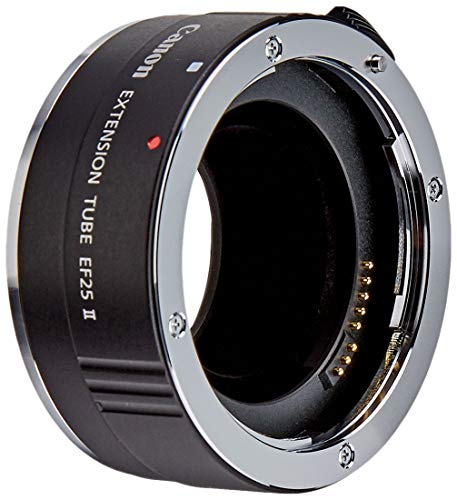
- 25mm extension for close focusing
- Retains metering and autofocus with most EF lenses
- O-ring seals improve water and dust resistance
Best For: Canon photographers prioritizing sealing and branded system compatibility
Best Compact Sony Set

- 10mm and 16mm tubes
- Supports Sony E/FE autofocus and shooting modes
- Compact metal-bayonet design
Best For: Sony mirrorless users photographing small subjects on the go
Best Simple Nikon Value
Fotodiox Nikon F Macro Tube Set

- 7mm, 14mm, and 28mm sections
- Manual-focus macro setup for Nikon F
- No optical insert and lightweight design
Best For: Nikon F photographers wanting an affordable, flexible manual setup
Best Flexible Kit
JJC EF/EF-S Auto Focus Extension Tubes
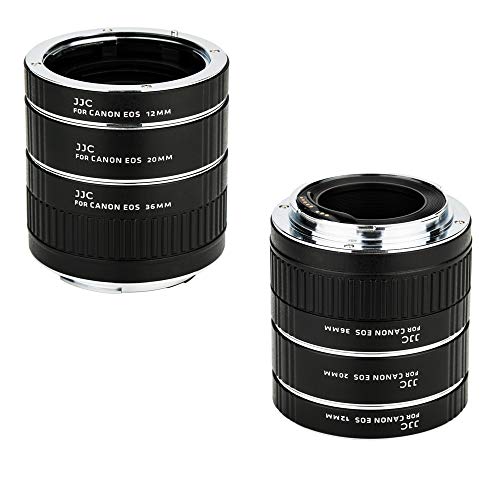
- Three lengths: 12mm, 20mm, and 36mm
- Supports autofocus and automatic exposure
- Brass mounts for Canon EF/EF-S systems
Best For: Canon DSLR users seeking flexible macro magnification
Best Nikon Z Option
Meike MK-Z-AF1 Metal Macro Tube Kit

- 11mm and 18mm tubes can be stacked
- Autofocus support for Nikon Z cameras
- Metal, waterproof, and dustproof construction
Best For: Nikon Z users wanting a durable stackable kit
Best Combination Range
VILTROX DG-C Canon Macro Tubes

- Three tubes create seven usable combinations
- Electronic contacts support autofocus
- Metal bayonets and gold-plated signal pins
Best For: Canon DSLR users seeking maximum extension flexibility
Flexible Nikon Macro Kit
Extnp Auto Focus Extension Tubes

- Three lengths: 12mm, 20mm, and 36mm
- Fits Nikon AF, AF-S, DX, and FX SLR cameras
- Autofocus supported, with manual focus recommended when stacked
Best For: Nikon DSLR photographers seeking adjustable macro magnification
Compact RF Macro Option
JJC Auto Focus Extension Tube Set

- Includes 11mm and 16mm extension tubes
- Designed for Canon RF cameras and lenses
- Supports autofocus and automatic exposure
Best For: Canon RF mirrorless users shooting controlled close-ups
Multi-Length Nikon Macro Set
Meike Electronic Extension Tubes

- 12mm, 20mm, and 36mm tubes offer seven combinations
- Works with many Nikon DSLRs and Nikkor lenses
- Autofocus available in individual or smaller combinations
Best For: Nikon DSLR users wanting flexible macro configurations
Best Flexible Canon Kit – VILTROX DG-C Auto Focus Tubes
For Canon DSLR owners comparing camera extension tubes for macro photography, the VILTROX DG-C offers three working lengths—12mm, 20mm, and 36mm. Its electronic contacts preserve autofocus and automatic exposure, while the tubes can be used separately or combined for different magnification levels.
Best For: Canon EF and EF-S users who want flexible tube combinations with autofocus support.
Pros:
- Includes 12mm, 20mm, and 36mm tubes for adjustable magnification.
- Maintains electronic communication for autofocus and automatic exposure.
- Precision-engineered metal mounts and electronic contacts.
Cons:
- Compatible with Canon EF and EF-S systems rather than multiple camera mounts.
- No image stabilization.
- Not water resistant.
This is a practical, versatile choice when you want to experiment with different close-focusing distances without committing to a dedicated macro lens.
Best Weather-Ready Canon Option – Canon EF 25 II Extension Tube
The Canon EF 25 II is a single 25mm extension tube for Canon EF systems, designed to shorten focusing distance for high-magnification work. It retains metering and autofocus with most Canon EF lenses and adds O-ring sealing for improved water and dust resistance.
Best For: Canon users who prefer a branded single tube with autofocus retention and weather-resistant construction.
Pros:
- Retains metering and autofocus with most Canon EF lenses.
- Compatible with EF, EF-S, and TS-E lenses according to the supplied details.
- O-ring seals and high water and dust resistance suit heavy-rain conditions.
Cons:
- Provides one 25mm extension rather than multiple tube lengths.
- Exposure compensation may be required with cameras other than the EOS-1 Series.
- Manual exposure control is listed in the product details.
Choose this model when sealing and Canon-system integration matter more than having several extension lengths in one kit.
Best Compact Sony Set – Meike S-AF3A Auto Focus Tubes
Sony E-mount photographers looking for camera extension tubes for macro photography can use the Meike S-AF3A’s 10mm and 16mm tubes individually or together. The set supports autofocus and all shooting modes, though the supplied notes recommend manual mode for direct shutter-speed control and indicate exposure compensation may be needed.
Best For: Sony E and FE mirrorless users who want a lightweight, portable two-tube set for flowers, insects, and small objects.
Pros:
- Works with Sony E-mount APS-C and full-frame cameras.
- 10mm and 16mm tubes combine for increased magnification.
- Metal bayonet construction with a compact, portable design.
Cons:
- Exposure compensation may be required.
- Product notes recommend manual mode for direct shutter-speed control.
- Not water resistant and has no image stabilization.
The two lengths make this a convenient travel-friendly option for Sony users who want close-up capability without carrying a larger dedicated macro setup.
Best Simple Nikon Value – Fotodiox Nikon F Macro Tube Set
The Fotodiox Macro Extension Tube Set provides a straightforward way to use Nikon F-mount lenses at closer focusing distances. It includes 7mm, 14mm, and 28mm sections, and any combination can be used to vary reproduction ratios without adding optical glass.
Best For: Nikon F-mount photographers seeking an inexpensive, lightweight manual-focus route into macro photography.
Pros:
- Includes 7mm, 14mm, and 28mm sections for flexible combinations.
- No optical insert, helping preserve the lens’s optical quality.
- Lightweight design with a two-year manufacturer warranty.
Cons:
- Manual focus is required.
- Not water resistant.
- Does not provide the autofocus support listed for some competing sets.
This set is a sensible budget-oriented choice for Nikon users comfortable focusing manually and wanting adjustable extension without extra optical elements.
Best Flexible Kit – JJC EF/EF-S Auto Focus Extension Tubes
For Canon DSLR owners comparing camera extension tubes for macro photography, this three-piece JJC kit offers 12mm, 20mm, and 36mm options. Use them individually or in combination to shorten a lens’s minimum focusing distance, with electronic support for autofocus and automatic exposure.
Best For: Canon EOS DSLR users who want several magnification options and broad EF/EF-S compatibility.
Pros:
- Includes 12mm, 20mm, and 36mm tubes for flexible combinations.
- Supports autofocus and automatic exposure.
- Brass camera and lens mounts are paired with an ABS tube body.
- Can turn many existing lenses into closer-focusing macro setups.
Cons:
- Manual focus or a tripod and focusing rail is recommended for best results.
- Designed for Canon EF and EF-S systems only.
This is a practical, adaptable choice for Canon photographers who value multiple extension lengths, though macro work may be easier with manual focusing than autofocus.
Best Nikon Z Option – Meike MK-Z-AF1 Metal Macro Tube Kit
Among camera extension tubes for macro photography, the Meike MK-Z-AF1 is designed for Nikon Z cameras and provides 11mm and 18mm extension lengths. The tubes can be used separately or stacked, while autofocus support preserves electronic communication with compatible setups.
Best For: Nikon Z photographers who want a metal, stackable extension-tube kit for closer focusing.
Pros:
- Offers 11mm, 18mm, and 11mm-plus-18mm combinations.
- Supports autofocus with Nikon Z mount cameras.
- Metal mount and waterproof, dustproof construction.
- Can be used with F-mount lenses when paired with an FTZ adapter.
Cons:
- Exposure control is listed as manual, so shutter-speed adjustment may be needed.
- Compatibility with F-mount lenses requires an FTZ adapter.
The MK-Z-AF1 is a focused choice for Nikon Z users who want durable construction and selectable extension, with manual exposure control worth planning for.
Best Combination Range – VILTROX DG-C Canon Macro Tubes
For Canon users shopping for camera extension tubes for macro photography, the VILTROX DG-C provides 12mm, 20mm, and 36mm tubes with seven possible combinations. Its electronic contacts support autofocus and signal transmission, while the metal-plated bayonets are designed for durability.
Best For: Canon EF/EF-S DSLR owners who want extensive control over extension length and magnification.
Pros:
- Provides seven combinations from three tube lengths.
- Supports autofocus and manual focus with Canon EF/EF-S systems.
- Metal-plated bayonets and gold-plated signal pins support stable communication.
- Inner-surface treatment helps reduce reflected light.
Cons:
- Manual focus is recommended when combining multiple tubes.
- Stacking two or three rings is not recommended with lenses shorter than 70mm.
- Compatible with Canon EF-mount DSLR cameras rather than mirrorless mounts directly.
This kit suits photographers who want the most extension combinations in the group, but its stacking guidance makes lens focal length and focusing technique important considerations.
Flexible Nikon Macro Kit – Extnp Auto Focus Extension Tubes
For Nikon DSLR owners comparing camera extension tubes for macro photography, this three-piece Extnp set offers 12mm, 20mm, and 36mm rings. Use them individually or in combination to shorten a lens’s focusing distance and explore close-up subjects without adding macro optics.
Best For: Nikon AF and AF-S DX/FX SLR users who want several extension lengths and autofocus compatibility for close-up work.
Pros:
- Compatible with a broad range of Nikon AF, AF-S, DX, and FX SLR cameras.
- Includes 12mm, 20mm, and 36mm tubes for adjustable magnification.
- Supports autofocus when used at an appropriate 1–3cm focusing distance.
Cons:
- Autofocus can become difficult when all three tubes are combined.
- Manual focus or a longer lens may be needed to reduce blur in some setups.
This is a versatile choice for Nikon photographers who want to experiment with different magnification levels. Expect more hands-on focusing when stacking the full set.
Compact RF Macro Option – JJC Auto Focus Extension Tube Set
This JJC set is a practical option for Canon RF users shopping for camera extension tubes for macro photography. Its 11mm and 16mm tubes can be used separately or together to bring RF lenses closer to subjects while preserving the lens’s original optical design.
Best For: Canon RF mirrorless photographers who want a compact two-length set with autofocus and automatic exposure support.
Pros:
- Fits Canon RF mirrorless cameras and RF-mount lenses.
- 11mm and 16mm tubes provide two magnification options or a combined setup.
- Supports full autofocus and automatic exposure.
- Uses an aluminum camera mount, brass lens mount, and ABS tube construction.
Cons:
- Not compatible with Canon RF teleconverters or extenders.
- The manufacturer recommends manual focus or a tripod with a focusing rail after installation.
With its dedicated RF fit and two useful extension lengths, this set suits controlled close-up shooting. A tripod and manual focusing may provide more consistent results than relying on autofocus.
Multi-Length Nikon Macro Set – Meike Electronic Extension Tubes
The Meike N-AF1-A gives Nikon DSLR photographers a flexible way to try camera extension tubes for macro photography. Its 12mm, 20mm, and 36mm tubes can be used alone or stacked, moving compatible lenses farther from the sensor to achieve closer focus and greater magnification.
Best For: Nikon DSLR users who want multiple combinations for macro shooting with compatible Nikkor AF, AF-S, D, G, and VR lenses.
Pros:
- Compatible with numerous Nikon DSLR bodies and Nikkor lens series.
- Three tubes offer seven possible combinations and magnification options.
- Supports autofocus when used individually or in smaller combinations.
- Features engineering-plastic tubes with metal bayonets.
Cons:
- Autofocus may be difficult with all three rings stacked.
- Manual focus is recommended in the full stacked configuration to help protect the lens motor.
This set is well suited to photographers who value experimentation with different extension lengths. Its electronic design adds convenience, but the most demanding stacked setup is better approached with manual focus.
How We Picked the Best Camera Extension Tubes for Macro Photography
We focused on extension-tube sets that clearly identify their camera and lens mounts, support useful close-focusing distances, and offer practical features for real-world macro shooting. Electronic models received particular attention because they can preserve autofocus, aperture control, and—in some systems—camera communication.
We also considered whether each set includes multiple tube lengths, whether it supports full-frame or crop-sensor cameras, and whether its construction is suitable for repeated lens changes. Compatibility is the most important criterion: an extension tube must match both the camera mount and the lens mount.
Quick Comparison
| Best For | What to Look For |
|---|---|
| Canon EF/EF-S DSLRs | Electronic EF-compatible tubes with autofocus and aperture communication |
| Canon RF mirrorless | RF-mount tubes designed specifically for Canon RF cameras and lenses |
| Nikon F DSLRs | AF or electronic F-mount tubes that match the lens and camera contacts |
| Nikon Z mirrorless | Z-mount tubes with full-frame compatibility when required |
| Sony E/FE | Electronic E-mount tubes supporting the intended lens and camera body |
| Maximum framing flexibility | A set with multiple extension lengths, such as 12mm, 20mm, and 36mm |
Key Buying Factors for Camera Extension Tubes for Macro Photography
Mount and Sensor Compatibility
Check the exact mount name before buying. Canon EF and EF-S, Canon RF, Nikon F, Nikon Z, and Sony E/FE are not interchangeable. Also verify whether the tube supports full-frame lenses and cameras if you use a full-frame body.
Autofocus and Electronic Contacts
Manual tubes are simple and inexpensive, but electronic contacts can retain lens autofocus and automatic aperture control. Autofocus may be less reliable at extreme magnification, yet electronic communication is valuable for focusing and exposure adjustments.
Extension Length and Magnification
Longer tubes generally create greater magnification and a shorter minimum focusing distance, but they also reduce available light and working distance. Sets with several lengths let you balance detail, framing, and ease of use.
Construction and Handling
Metal mounts can provide a more secure connection with heavier lenses, while precise bayonet fit and reliable contact alignment matter more than appearance alone. Look for tubes that attach smoothly without excessive play.
Who Should Buy Which Camera Extension Tubes for Macro Photography?
Choose a Canon EF/EF-S set if you use a Canon DSLR, and select a dedicated RF set for Canon’s mirrorless RF system. Nikon DSLR owners should choose a Nikon F-compatible option, while Nikon Z users need a Z-mount set. Sony E/FE photographers should select an E-mount electronic kit.
For beginners, a multi-piece autofocus set offers the most flexibility. If you already know the extension length you prefer, a single Canon EF tube can be simpler and easier to carry. Photographers who prioritize manual control and low cost can consider a basic mechanical set, while frequent macro shooters will usually benefit from electronic contacts and sturdier construction.