
Extension tubes offer an affordable way to turn compatible DSLR lenses into closer-focusing macro tools. By increasing the distance between the lens and camera body, they can reveal detail without adding another dedicated macro lens to your kit.
This roundup compares 10 options for Canon and Nikon DSLR systems, including manual and electronic tubes, common tube lengths, and metal-mount designs. Check mount compatibility and feature support before buying.
Best 10 Camera Extension Tubes for Dslr Cameras Picks for 2026
Nikon Autofocus Pick
Extnp Auto Focus Macro Tube Set

- 12mm, 20mm, and 36mm tubes
- Supports Nikon AF, AF-S, DX, and FX SLR cameras
- Autofocus and manual-focus operation
Best For: Nikon DSLR users seeking flexible macro extension
Canon EOS Premium Set
Kenko Auto Extension Tube Set DG

- 12mm, 20mm, and 36mm tubes
- Autofocus and auto-exposure support
- Works individually or combined
Best For: Canon EOS macro and close-up photography
Nikon Manual-Focus Value
Fotodiox Macro Extension Tube Set

- 7mm, 14mm, and 28mm sections
- No optical insert for a lightweight design
- Manual-focus Nikon F mount setup
Best For: Nikon F users exploring affordable close-up photography
Canon Single-Tube Choice

- 12mm extension for Canon EF mount
- Eight electronic contacts for lens communication
- Includes caps, pouch, and one-year warranty
Best For: Canon EOS users needing a dedicated close-up tube
Nikon Macro Flexibility
Meike N-AF1-A Extension Tube Set

- Three tubes: 12mm, 20mm, and 36mm
- Seven combinations for adjustable magnification
- Supports Nikon electronic lens functions
Best For: Nikon DSLR macro photographers seeking flexible tube combinations
Canon OEM Reliability
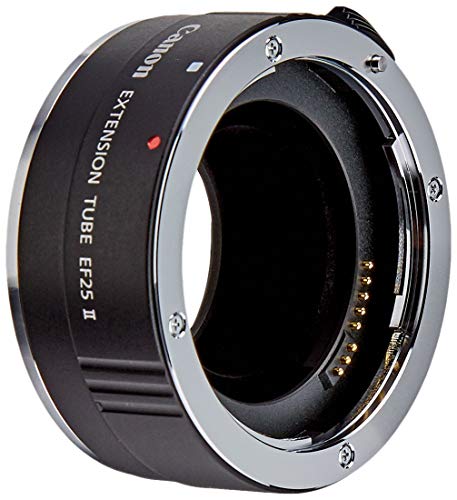
- Retains metering and AF with most EF lenses
- O-ring seals protect mounts and release lever
- Designed for high water and dust resistance
Best For: Canon EOS users wanting a single sealed extension tube
Canon Macro Versatility

- Includes 12mm, 20mm, and 36mm tubes
- Retains autofocus and automatic exposure
- Works with Canon EF and EF-S lenses
Best For: Canon DSLR users seeking flexible electronic macro extension
Flexible Canon Macro Upgrade
JJC EF/EF-S Auto Focus Extension Tubes
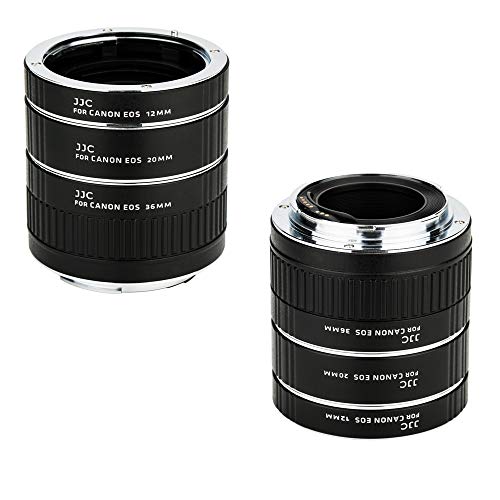
- 12mm, 20mm, and 36mm tubes
- Supports Canon EF/EF-S and auto exposure
- Brass mounts with combined-use flexibility
Best For: Canon EOS DSLR users seeking adjustable close-up magnification
Wide Canon Compatibility
VILTROX DG-C Auto-Focusing Macro Tubes

- Three tubes create seven configurations
- Designed for Canon EF/EF-S systems
- Metal bayonets and gold-plated signal pins
Best For: Canon DSLR users wanting broad compatibility and flexible magnification
Seven-Step Close-Up Control
VILTROX Canon AF Macro Tube Set

- 12mm, 20mm, and 36mm tube lengths
- Seven combinations for varied magnification
- Supports AF and TTL/AE metering on compatible setups
Best For: Canon users wanting lightweight, adjustable macro experimentation
Nikon Autofocus Pick – Extnp Auto Focus Macro Tube Set
For Nikon owners comparing camera extension tubes for dslr cameras, this three-piece set adds close-focusing ability to compatible AF, AF-S, DX, and FX SLR cameras. The 12mm, 20mm, and 36mm tubes can be used separately or combined, with autofocus available at an appropriate 1–3 cm focusing distance.
Best For: Nikon DSLR users who want adjustable macro magnification and electronic autofocus support.
Pros:
- Compatible with a broad range of Nikon AF, AF-S, DX, and FX SLR cameras.
- Includes 12mm, 20mm, and 36mm tubes for flexible combinations.
- Designed to transform a standard lens into a macro setup.
Cons:
- Using all three tubes together can make autofocus difficult.
- Autofocus requires a close 1–3 cm focusing distance.
This set is a practical choice when flexibility matters, though manual focus may be preferable at maximum extension. Nikon users should verify camera compatibility before ordering.
Canon EOS Premium Set – Kenko Auto Extension Tube Set DG
The Kenko DG set is a versatile option among camera extension tubes for dslr cameras, giving Canon EOS users 12mm, 20mm, and 36mm sections for close-up and macro photography. Its automatic features are designed to preserve autofocus and auto-exposure functions while the tubes are used individually or together.
Best For: Canon EOS photographers who want adjustable extension with autofocus and automatic exposure support.
Pros:
- Includes three useful lengths: 12mm, 20mm, and 36mm.
- Supports macro photography, close-ups, and detail magnification.
- Designed for Canon EOS AF mounting with autofocus and auto-exposure.
Cons:
- Compatibility is specified for Canon EOS cameras and EF lenses.
- There is no built-in image stabilization.
With multiple lengths and automatic camera functions, this is a strong all-around choice for Canon EOS users. The set is especially appealing when you want to experiment with different reproduction ratios without buying a dedicated macro lens.
Nikon Manual-Focus Value – Fotodiox Macro Extension Tube Set
Fotodiox offers a straightforward choice for Nikon photographers seeking camera extension tubes for dslr cameras without optical glass. The set includes 7mm, 14mm, and 28mm sections that can be combined to move a compatible Nikon F lens closer to the subject while keeping the setup lightweight.
Best For: Nikon F users who prefer an affordable, manual-focus approach to extreme close-up photography.
Pros:
- Includes 7mm, 14mm, and 28mm tube sections.
- Any combination can be used for varied reproduction ratios.
- No optical insert, helping maintain lens optical quality and reduce weight.
- Backed by a limited two-year manufacturer warranty.
Cons:
- Focus type is manual focus.
- It is intended for Nikon F mount cameras, limiting cross-system use.
This kit suits photographers comfortable setting focus themselves and wanting a simple route into macro work. Its graduated tube lengths make it easier to adjust magnification for different subjects and lenses.
Canon Single-Tube Choice – Canon EF 12 II Extension Tube
The Canon EF 12 II is a compact option for photographers comparing camera extension tubes for dslr cameras and using Canon EF-mount equipment. It shortens the lens’s focusing distance for higher-magnification photography and includes eight electronic contacts to maintain communication between the camera and lens.
Best For: Canon EOS users who want a dedicated 12mm extension tube with electronic lens communication.
Pros:
- Compatible with Canon EOS cameras using the EF mount.
- Works with EF-S, EF, and TS-E lenses for close-up photography.
- Eight electronic contacts support continuous camera-lens communication.
- Includes lens caps, a pouch, and a limited one-year warranty.
Cons:
- This is a single 12mm tube rather than a multi-length set.
- Not compatible with several lenses, including the 15mm f/2.8 fisheye, 14mm f/2.8L, and MP-E 65mm f/2.8.
Choose this model when Canon compatibility and electronic communication are more important than maximum extension flexibility. Its fixed 12mm length makes it a focused, convenient accessory for compatible close-focusing setups.
Nikon Macro Flexibility – Meike N-AF1-A Extension Tube Set
The Meike N-AF1-A is a versatile option for photographers comparing camera extension tubes for DSLR cameras with Nikon S-mount bodies and compatible Nikkor lenses. Its 12mm, 20mm, and 36mm tubes can be used separately or combined to adjust focusing distance and magnification for macro work while retaining autofocus support in suitable configurations.
Best For: Nikon DSLR users who want multiple macro magnification options and electronic lens communication.
Pros:
- Includes 12mm, 20mm, and 36mm tubes for seven possible combinations.
- Compatible with many Nikon DSLR bodies and Nikkor AF, AF-S, D, G, and VR lenses.
- Supports autofocus when used individually or in smaller combinations.
- Metal bayonets and electronic contacts support practical macro shooting.
Cons:
- Autofocus may become difficult when all three tubes are stacked.
- The product is not water resistant.
This set stands out for its configuration flexibility, but using the full 66mm combination may require manual focus or a longer-focal-length lens to protect the lens motor and maintain control.
Canon OEM Reliability – Canon EF 25 II Extension Tube
The Canon EF 25 II is a straightforward choice for photographers seeking camera extension tubes for DSLR cameras with Canon EF or EF-S compatibility. It increases the distance between the lens and sensor to shorten the focusing distance, while retaining metering and autofocus functions with most compatible Canon EF lenses.
Best For: Canon EOS users who prefer a single branded extension tube with electronic lens communication and weather-oriented sealing.
Pros:
- Retains metering and autofocus with most Canon EF lenses.
- Compatible with Canon EF, EF-S, and TS-E lenses according to the supplied specifications.
- O-ring seals help protect the mounts and release lever.
- Designed with high-level water and dust resistance for use in heavy rain.
Cons:
- Provides one fixed extension length rather than multiple tube combinations.
- Exposure compensation may be needed with cameras other than the EOS-1 series when using handheld meters.
The EF 25 II favors dependable, simple operation over flexibility. It is a strong fit for Canon users who want a single extension solution and continued camera-lens automation with most EF lenses.
Canon Macro Versatility – VILTROX DG-C Auto Focus Set
The VILTROX DG-C gives Canon DSLR owners a flexible way to explore camera extension tubes for DSLR cameras and close-up photography. Its 12mm, 20mm, and 36mm tubes reduce minimum focusing distance, preserve electronic communication, and can be used individually or in combination for different magnification levels.
Best For: Canon EF and EF-S users who want adjustable macro magnification with autofocus and automatic exposure support.
Pros:
- Includes three extension lengths for varied macro magnification.
- Maintains autofocus and automatic exposure functions through electronic contacts.
- Compatible with Canon EF and EF-S lenses and a broad range of Canon DSLR bodies.
- Uses precision-engineered metal mounts for a reliable lens-to-camera connection.
Cons:
- It has no image stabilization.
- The set is not water resistant.
For Canon photographers who want more flexibility than a single tube provides, the DG-C is a practical set. Its three lengths make it easier to balance magnification and working distance while retaining automatic camera functions.
Flexible Canon Macro Upgrade – JJC EF/EF-S Auto Focus Extension Tubes
For photographers comparing camera extension tubes for dslr cameras, this JJC set offers three lengths—12mm, 20mm, and 36mm—to shorten a lens’s minimum focusing distance and create macro-style close-ups without buying a dedicated macro lens. It supports Canon EF and EF-S lenses and retains autofocus and automatic exposure functionality, although manual focus or a tripod is recommended for precise results.
Best For: Canon EOS DSLR owners who want flexible close-up magnification and electronic camera functions.
Pros:
- Includes 12mm, 20mm, and 36mm tubes for individual or combined use.
- Compatible with Canon EF and EF-S lenses and Canon EOS DSLR cameras.
- Supports autofocus and automatic exposure.
- Uses brass camera and lens mounts for a durable connection.
Cons:
- Autofocus may be less practical after mounting the tubes.
- Manual focus or a tripod with a focusing rail is recommended for best control.
- Not water resistant.
This is a versatile, cost-conscious option for Canon users who want to experiment with macro photography using lenses they already own. The three-piece configuration gives useful flexibility, while careful manual focusing can help maximize sharpness.
Wide Canon Compatibility – VILTROX DG-C Auto-Focusing Macro Tubes
These camera extension tubes for dslr cameras are designed for Canon EF and EF-S lenses, with 12mm, 20mm, and 36mm sections that provide seven individual or combined configurations. The metal bayonets and gold-plated signal pins support electronic communication, while autofocus is most practical with a single tube; manual focus is recommended when stacking tubes, especially with shorter focal lengths.
Best For: Canon DSLR users who value broad camera compatibility and multiple magnification combinations.
Pros:
- Works with a wide range of Canon DSLR bodies and EF/EF-S lenses.
- Offers seven configurations from three tube lengths.
- Metal bayonets and gold-plated pins support durable, stable signal transmission.
- Inner-surface treatment helps reduce reflected light.
Cons:
- Stacking two or three tubes is not recommended with focal lengths under 70mm.
- Manual focus is suggested when combining tubes.
- Autofocus performance is easiest with a single ring.
The DG-C stands out when compatibility and configuration choices matter. Its electronic contacts preserve useful camera communication, but users should follow the stacking guidance and expect a more deliberate manual-focus workflow for higher magnification.
Seven-Step Close-Up Control – VILTROX Canon AF Macro Tube Set
For Canon photographers shopping for camera extension tubes for dslr cameras, this VILTROX set converts EF or EF-S lenses for close-up photography by moving the lens farther from the sensor. Its 12mm, 20mm, and 36mm tubes can be used alone or stacked in seven combinations, with autofocus and TTL/AE metering support described for compatible Canon DSLR and film SLR setups.
Best For: Canon EF and EF-S users who want seven magnification choices in a lightweight set.
Pros:
- Three tubes provide seven individual and combined magnification options.
- Compatible with Canon EF and EF-S lenses and Canon DSLR or film SLR cameras.
- Supports autofocus when used individually or in suitable combinations.
- Metal bayonets and an ABS body balance connection strength with low weight.
Cons:
- Autofocus can be difficult when all three rings are stacked.
- Manual focus is recommended with three rings to help protect the lens motor.
- No image stabilization is provided.
This set is a practical choice for exploring different close-up working distances without committing to a macro lens. Its strongest advantage is configuration flexibility, while stacked use calls for manual focusing and steady technique.
How We Picked the Best Camera Extension Tubes for Dslr Cameras
We focused on mount compatibility, electronic communication, construction, available tube lengths, and practical value. The selection includes Canon EF and EF-S options, Nikon F-mount models, individual 12mm or 25mm tubes, and 12mm/20mm/36mm sets. Electronic contacts can preserve autofocus, aperture control, or EXIF communication, but performance depends on the camera and lens combination.
Because extension tubes contain no optical elements, image quality is largely determined by the attached lens. However, fit, contact reliability, light leaks, and mount strength can significantly affect the shooting experience.
Quick Comparison
- Best flexibility: A 12mm, 20mm, and 36mm set provides multiple magnification levels and can be stacked.
- Best convenience: Electronic autofocus tubes are useful when you want camera-controlled aperture and easier focusing.
- Best simplicity: A single Canon EF 12 II or EF 25 II tube offers a straightforward, brand-matched solution.
- Best budget approach: Manual or third-party sets can provide strong macro value, especially for fully manual lenses.
Key Buying Factors for Camera Extension Tubes for Dslr Cameras
Mount Compatibility
Match the tube to the camera-body mount and lens mount. Canon EF and EF-S tubes are intended for compatible Canon DSLR equipment, while Nikon F options are designed for Nikon F-mount cameras and lenses. Do not assume a tube for a mirrorless mount will fit a DSLR.
Electronic Contacts
Auto-focus extension tubes with electronic contacts may retain autofocus and aperture control. Autofocus can become less reliable as magnification increases, so manual focus remains important for close-up work. Basic tubes without contacts require manual aperture control with many lenses.
Tube Length and Working Distance
Longer extension generally produces greater magnification but reduces the minimum focusing distance and available light. Sets are more adaptable; individual tubes are easier to use when you already know the amount of extension you need.
Build Quality and Handling
Look for secure locking, accurate mounts, sturdy metal bayonets, and clean, well-protected contacts. A heavy lens places more stress on the tube, so construction matters particularly with telephoto or professional lenses.
Who Should Buy Which Camera Extension Tubes for Dslr Cameras?
Choose a multi-length electronic set if you want to experiment with different subjects, lenses, and magnification levels. Canon DSLR owners seeking broad compatibility should consider an EF/EF-S autofocus set, while Nikon users should select a Nikon F-compatible electronic or manual option. A Canon-branded 12mm tube suits photographers wanting modest close-focus improvement with a familiar ecosystem; a 25mm tube is better when stronger magnification is the priority.
For controlled studio subjects, coins, flowers, or product details, manual tubes can be an economical choice. For insects, handheld shooting, or changing light, electronic aperture support is usually worth prioritizing. Before ordering, confirm the exact camera, lens mount, lens clearance, and whether autofocus and aperture functions are supported.