
Reliable backup power can keep phones, networking equipment, laptops, and essential small devices running when the electricity goes out. The right option depends on how much energy you need, how long you need it, and whether automatic switchover matters.
This roundup compares 10 battery chargers for home backup, including UPS units, portable power stations, and high-capacity power banks, so you can choose practical emergency power for your household.
Best 10 Battery Chargers for Home Backup Picks for 2026
Portable Power Pick

- 292Wh LiFePO4 battery with 300W output
- Six-device connectivity with AC, USB, and car ports
- Supports AC, car, and optional solar charging
Best For: Portable backup power and smaller electronics
Computer Backup Pick
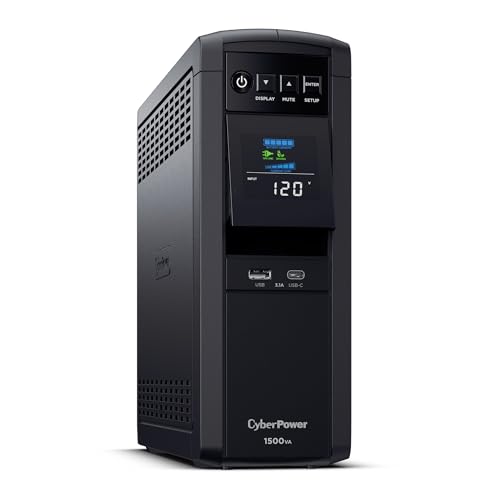
- 1500VA/1000W sinewave UPS capacity
- 12 outlets, including six battery-backed outlets
- AVR and color LCD status display
Best For: Home-office computers and networking equipment
Lightweight Emergency Pick

- 2.3-pound design with 120W running output
- Eight ports plus built-in LED emergency lighting
- AC, car, and optional solar recharging
Best For: Small electronics, lighting, and compact emergency kits
Compact Office UPS

- 625VA/360W standby UPS in a compact enclosure
- Eight outlets with four battery-backed connections
- Two USB charging ports and three-year battery warranty
Best For: Routers, computers, consoles, and small office setups
Compact AC Backup
SinKeu 23,400mAh Portable Laptop Charger
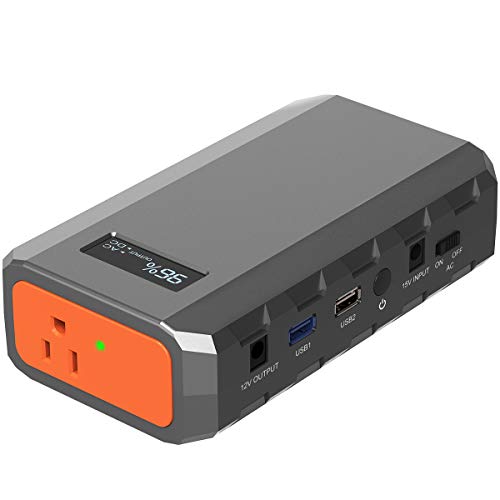
- 86.58Wh battery with a 120V/65W AC outlet
- USB, DC, car-charging, and cigarette-lighter options
- OLED display and multiple safety protections
Best For: Short outages, travel, and small electronics
High-Capacity Device Backup
50,000mAh Charger with Built-In Wall Plug

- 50,000mAh capacity for extended personal-device backup
- Built-in wall plug, USB-C cable, and iOS cable
- 22.5W PD/QC charging with digital display
Best For: Phones, tablets, and compatible laptops during outages
Best Compact Power Station
Daran 89.6Wh LiFePO4 Power Station

- 100W output with two AC outlets
- Seven ports and four charging methods
- Quiet, lightweight design with flashlight
Best For: Small electronics, laptops, camping, and short outages
Best High-Capacity Phone Backup

- 50,000mAh capacity for multi-day use
- 22.5W USB-C fast charging
- Charges up to three devices at once
Best For: Phones and USB devices during travel or outages
Best Extended USB Backup

- 56,800mAh capacity for extended backup
- 22.5W charging with three-device output
- LED display and multi-layer safety protection
Best For: Multiple phones and tablets during long outages
Portable Power Pick – Jackery Explorer 300
The Jackery Explorer 300 is a compact option for shoppers comparing battery chargers for home backup, camping, and short outages. Its 292Wh LiFePO4 battery, 300W rated output, and multiple charging options make it useful for keeping small electronics and essential devices running away from a wall outlet.
Best For: Portable backup power, camping, travel, and charging laptops, cameras, or other smaller devices.
Pros:
- Lightweight design with an integrated handle for easier carrying.
- Offers two AC outlets, USB-A, USB-C, and a 120W car port.
- LiFePO4 battery is rated for more than 4,000 charge cycles before reaching 70% capacity.
- Supports AC, car, and optional solar-panel charging.
Cons:
- Its 300W output is intended for smaller electronics rather than high-powered appliances.
- Solar panel charging requires a separately purchased panel.
- Orders require a physical delivery address rather than only a PO Box.
Choose the Explorer 300 when portability and long battery life matter more than running large appliances. It is a practical small-scale backup unit, especially for electronics and outdoor use.
Computer Backup Pick – CyberPower CP1500PFCLCD UPS
The CyberPower CP1500PFCLCD is designed for stationary battery backup rather than portable power. As a 1500VA/1000W sinewave UPS, it suits home offices and equipment that need stable backup power, surge protection, and voltage regulation during interruptions or fluctuations.
Best For: Computers, workstations, networking equipment, and home-office setups using active PFC power supplies.
Pros:
- Provides 1500VA/1000W capacity with PFC-compatible sinewave output.
- Includes 12 outlets, with six providing battery backup and surge protection.
- Automatic voltage regulation corrects minor fluctuations without switching to battery power.
- Color LCD provides detailed battery and power-condition information.
Cons:
- At 24.9 pounds, it is intended for a fixed location rather than frequent carrying.
- Only six of the 12 outlets include battery backup; the others provide surge protection only.
- Its two required 12V batteries add replacement considerations over time.
For home backup focused on computers and networking hardware, this UPS offers a stronger fit than a small portable power station. Its sinewave output, AVR, display, and three-year battery-inclusive warranty make it a feature-rich desktop solution.
Lightweight Emergency Pick – HOWEASY 88Wh Power Station
The HOWEASY 88Wh power station is a highly portable choice among battery chargers for home backup. Weighing 2.3 pounds, it provides 120W of running output, eight ports, built-in lighting, and AC, car, or optional solar recharging for phones, small electronics, and low-wattage essentials.
Best For: Lightweight emergency kits, camping, phone charging, lighting, and devices drawing under 120W.
Pros:
- Compact 2.3-pound design with a space-saving hidden handle.
- Offers eight output ports, including AC, USB, USB-C, and DC connections.
- Can recharge from an AC outlet, car socket, or compatible 15V–24V solar panel.
- Built-in LED light includes steady, flashing, and SOS modes.
Cons:
- The 88Wh capacity and 120W running output limit it to smaller devices.
- The solar panel is not included.
- Its listed cycle life is over 1,500 cycles, lower than the Jackery’s stated rating.
This HOWEASY model is best viewed as a grab-and-go emergency power bank, not a solution for large appliances. Its low weight and integrated light are useful advantages for short outages, travel, and camping.
Compact Office UPS – CyberPower ST625U UPS
The CyberPower ST625U is a compact standby UPS for home offices and entertainment setups. Its 625VA/360W capacity, eight outlets, USB charging ports, and simulated sinewave output provide basic battery backup and surge protection for computers, routers, consoles, and related electronics.
Best For: Home-office equipment, broadband routers, gaming consoles, computers, and smaller entertainment systems.
Pros:
- Compact 625VA/360W design fits easily under or beside a desk.
- Eight outlets include four battery-backed and surge-protected connections.
- Two USB charging ports share 2.1 amps for mobile devices.
- Includes a three-year warranty covering the battery and a connected-equipment guarantee.
Cons:
- Its 360W output is not suitable for high-demand appliances.
- Simulated sinewave output may be less suitable than pure sinewave output for some sensitive equipment.
- The listed runtime is approximately two minutes.
The ST625U is a straightforward choice when you need brief battery coverage and surge protection in a compact footprint. It is particularly appropriate for keeping a router, computer, or console powered long enough to handle a short interruption safely.
Compact AC Backup – SinKeu 23,400mAh Portable Laptop Charger
For shoppers comparing battery chargers for home backup, the SinKeu HP500S is a compact option for keeping phones, tablets, and some laptops running during short interruptions. Its 86.58Wh battery includes a 120V/65W AC outlet, USB ports, and a DC output, while the OLED display helps track remaining charge.
Best For: Compact emergency power for phones, tablets, compatible laptops, and travel use.
Pros:
- 120V/65W AC outlet plus USB and DC outputs for charging multiple device types.
- Recharges in under four hours with the included 30W input charger.
- Includes a car charger and cigarette-lighter adapter for charging on the road.
- UL, CE, FCC, and RoHS certifications, along with multiple protection features.
Cons:
- The 65W AC output is intended for smaller electronics rather than high-demand appliances.
- Its 86.58Wh capacity is more suited to short-term backup than extended household outages.
The SinKeu stands out when portability and output variety matter more than running larger equipment. Its display, car-charging accessories, and compact design make it practical for mobile or limited home backup needs.
Multi-Output Emergency Station – MARBERO 88Wh Portable Power Station
The MARBERO M82 is a practical choice among battery chargers for home backup when you want several output types in a compact power station. Its 88Wh capacity, two AC outlets, USB and USB-C ports, car DC output, and built-in lighting cover a broad range of small-device and emergency needs.
Best For: Home outages, camping, road trips, and powering several small devices at once.
Pros:
- Eight output ports support AC, DC, USB, and USB-C charging simultaneously.
- Recharges from 0% to 80% in about two hours with the included adapter.
- Includes three-level lighting and an SOS flashing mode for emergencies.
- Built-in BMS provides voltage and temperature control with automatic short-circuit and overload shutdown.
Cons:
- The 88Wh capacity and 80W listed output are intended for small electronics and modest loads.
- At about 3.2 pounds, it is less pocketable than a conventional power bank.
Choose the MARBERO if versatility is a priority. It combines multiple charging formats, useful emergency lighting, and solar or AC recharging in a portable unit, though it is not designed for large appliances.
High-Capacity Device Backup – 50,000mAh Charger with Built-In Wall Plug
For everyday battery chargers for home backup, this 50,000mAh Sucrosey power bank focuses on extended phone, tablet, and laptop support without the size of a power station. The built-in wall plug, USB-C and iOS cables, digital display, and 22.5W charging make it convenient for bedside preparation or travel.
Best For: Long-duration personal-device backup when you mainly need USB charging rather than AC power.
Pros:
- 50,000mAh capacity can provide multiple charges for phones, tablets, and compatible laptops.
- Built-in AC plug supports direct recharging from a 100–240V outlet.
- Built-in USB-C and iOS cables reduce the need to carry separate charging cords.
- 22.5W PD/QC output and pass-through charging add everyday convenience.
Cons:
- Its maximum 22.5W output is better suited to personal electronics than high-demand devices.
- It does not provide an AC outlet for powering standard household appliances.
This Sucrosey model is a strong fit when backup power means keeping personal devices charged for longer. Its high capacity and integrated accessories are convenient, but shoppers needing appliance support should consider a power station with AC output instead.
Best Compact Power Station – Daran 89.6Wh LiFePO4 Power Station
For shoppers comparing battery chargers for home backup, the Daran is a compact power station for phones, laptops, and other devices up to 100W. Its LiFePO4 battery, AC outlets, USB ports, quiet operation, and multiple charging options make it more versatile than a standard phone power bank.
Best For: Quiet emergency backup, laptops, small electronics, camping, and short power outages.
Pros:
- 89.6Wh LiFePO4 battery with a rated 100W output and 200W peak.
- Offers two AC outlets, USB-C, USB-A, and DC5521 outputs for several device types.
- Supports wall, USB-C, car, and optional solar-panel charging.
- Compact 2.54-pound design, built-in flashlight, display, and fanless operation.
Cons:
- Limited to devices requiring no more than 100W.
- Solar panel and charging cable are not included.
- Its 89.6Wh capacity is intended for smaller electronics rather than large appliances.
The Daran is a practical choice when portability and silent operation matter more than maximum capacity. It is best suited to keeping essential personal electronics running, not powering high-wattage household equipment.
Best High-Capacity Phone Backup – OHOVIV 50,000mAh Power Bank
Among battery chargers for home backup, the OHOVIV focuses on keeping USB-powered devices running for extended periods. Its 50,000mAh capacity, 22.5W USB-C output, and ability to charge three devices at once make it useful when an outlet is unavailable.
Best For: Multi-day phone backup, camping, hiking, travel by car, and emergency kits.
Pros:
- Large 50,000mAh capacity can recharge phones multiple times.
- 22.5W USB-C output supports fast charging protocols, including QC4.0 and QC3.0.
- Can charge up to three devices simultaneously through USB ports.
- LED display shows remaining power, while built-in safeguards address overcharge, overvoltage, overcurrent, and short circuits.
Cons:
- Not permitted on airplanes because of its capacity.
- Designed for USB charging rather than AC-powered appliances or laptops without USB charging.
- At about 1.4 pounds, it is heavier than a typical everyday phone power bank.
The OHOVIV is a straightforward backup battery for phones, earbuds, watches, and other USB devices. Choose it for high capacity and portability, but select a power station instead if you need AC outlets.
Best Extended USB Backup – 56,800mAh Portable Charger
This 56,800mAh power bank is one of the more substantial battery chargers for home backup when your priority is extended USB power. It combines 22.5W charging, three-device output, an LED percentage display, and protection features for phones, tablets, and other USB electronics.
Best For: Long outages, road trips, camping, outdoor work, and emergency kits requiring repeated USB recharges.
Pros:
- 56,800mAh capacity is rated to provide more than 10 charges for some compatible phones.
- 22.5W USB-C fast charging supports phones and tablets.
- Two USB-A outputs and one two-way USB-C port can charge three devices simultaneously.
- LED percentage display and safeguards against overvoltage, overheating, short circuits, and overcurrent.
Cons:
- Not allowed on airplanes due to its high battery capacity.
- Provides USB power only, so it cannot run AC appliances.
- Large capacity may be more than needed for ordinary daily carry.
The MaiVoz charger is a strong fit for extended USB-only backup, particularly when several people need phone or tablet power. Its high capacity is useful for outages, but it should not be mistaken for an AC power station.
How We Picked These Battery Chargers for Home Backup
We focused on products that cover the main ways homeowners prepare for outages: UPS battery backups for always-on electronics, portable power stations for flexible household use, and power banks for phones and other USB devices. We compared stated battery capacity, output options, portability, charging methods, surge capability, and useful safety or convenience features.
Capacity figures are not directly interchangeable. A UPS designed for a router and computer has a different purpose from a solar-ready power station, while a high-mAh power bank is best suited to lower-wattage USB charging. Actual runtime also depends on the connected device, conversion losses, battery age, and operating conditions.
Quick Comparison
| Type | Best for | Main advantage | Important limitation |
|---|---|---|---|
| UPS battery backup | Computers, routers, and networking equipment | Automatic backup during an outage | Usually limited runtime and AC capacity |
| Portable power station | Multiple small household devices | AC, USB, and sometimes solar charging | Larger and heavier than a power bank |
| AC power bank | Phones, tablets, and lightweight laptops | Compact, convenient emergency charging | Limited output and shorter total runtime |
| USB power bank | Mobile devices | Simple and highly portable | No standard AC outlet on many models |
Key Buying Factors for Battery Chargers for Home Backup
Capacity and Runtime
Look for watt-hours (Wh) when comparing power stations and UPS units. A larger Wh rating generally provides more runtime, but the usable amount is lower after inverter and charging losses. For occasional phone charging, a power bank may be sufficient; for a router, monitor, or laptop, estimate the device’s watt draw and choose additional capacity for headroom.
Output Type and Wattage
Check whether you need USB-A, USB-C Power Delivery, AC outlets, or regulated backup power. Confirm both continuous and peak wattage. Motors, printers, and some appliances can require a temporary surge, while sensitive computers and networking gear may benefit from a pure sine-wave UPS.
Recharge Options and Portability
Wall charging is the fastest and simplest option. Solar input can be useful during extended outages but depends on panel compatibility, sunlight, and charging speed. Compare weight, handle design, display quality, and recharge time if you may move the unit between rooms or use it outdoors.
Safety and Setup
Prioritize overload, short-circuit, overcharge, and thermal protection. For a UPS, consider automatic voltage regulation, replaceable batteries, alarm behavior, and the number of protected outlets. Never connect a backup battery to household wiring or a wall outlet unless the system is specifically designed and professionally installed for that purpose.
Who Should Buy Which Battery Chargers for Home Backup?
- Choose a UPS if your priority is uninterrupted power for a desktop computer, modem, router, or other stationary electronics.
- Choose a portable power station if you want AC and USB outputs for several devices, longer runtime, and optional solar recharging.
- Choose an AC power bank if you need a compact unit for a laptop, tablet, phone, or small electronics during short outages.
- Choose a USB power bank if emergency phone charging is your main requirement and maximum portability matters most.
For most homes, the best setup combines a UPS for essential always-on equipment with a portable power station or power bank for mobile charging. Before buying, list the devices you need to operate, add their wattage, and select a unit with comfortable capacity and output headroom.