
Travel astrophotography demands a careful balance between tracking performance, portability, setup time, and payload capacity. The best mount is not always the most advanced model—it is the one you can carry, level, align, and use confidently at a dark-sky destination.
This roundup includes compact equatorial trackers, GoTo mounts, camera tripods, wedges, and support accessories for different cameras, lenses, and observing styles. Use the guide below to narrow the field by portability, compatibility, and intended use.
Best 10 Astrophotography Mounts for Travel Picks for 2026
Best Portable Tracker
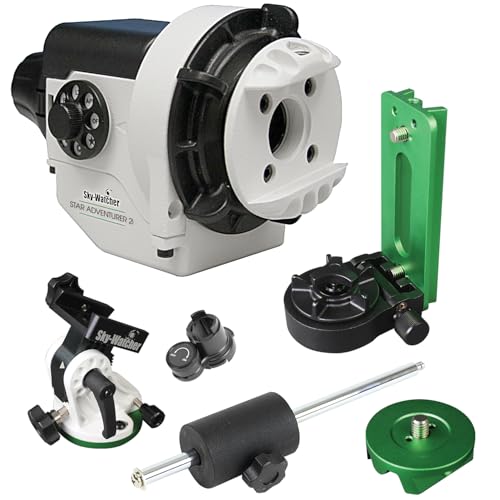
- Motorized platform for detailed nightscapes
- Works with photographic tripods
- Wi-Fi smartphone control
Best For: Portable wide-field astrophotography and time-lapse work
Best App-Controlled GoTo

- Eight-CPU PMC-Eight control system
- ExploreStars tablet app support
- Dual-axis GoTo equatorial operation
Best For: Traveling telescope users who want app-based GoTo control
Best Travel Tripod Upgrade

- Compatible with several Sky-Watcher mounts
- Folds to 18 by 3 by 3 inches
- Portable aluminum construction
Best For: Travel support for compatible Star Adventurer and AZ-series mounts
Best Compact Equatorial Value

- Equatorial mount with ST1 tripod
- Listed weight of 1,000 grams
- Alloy-steel construction
Best For: Travelers wanting a lightweight, basic equatorial package
Best Portable GoTo Mount
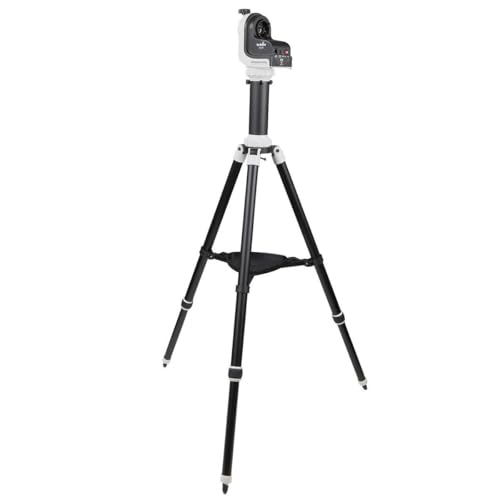
- 8.6-pound travel-friendly mount
- 11-pound payload capacity
- WiFi app, time-lapse, and panorama support
Best For: Mobile astronomers wanting automated GoTo control
Best Versatile Travel Tripod

- Folds to a compact 19 inches
- 34-pound maximum load
- Converts to a monopod for added flexibility
Best For: Travelers needing one tripod for cameras, phones, and lightweight setups
Best Compact Equatorial Tracker

- Stellar, moon, and custom rotation speeds
- Compact design with metal latitude base
- USB-C power-bank compatibility
Best For: Experienced travelers building a customizable tracking rig
Best with Extra Features

- Converts to a monopod or walking stick
- 22-pound capacity with weight hook
- Folds to 16.7 inches with carrying case
Best For: Travelers needing a tall, multipurpose tripod for cameras and compatible optical gear
Compact Alignment Accessory
Equatorial Wedge for Seestar S50

- Adjustable tilt for equatorial alignment
- Provides a steady outdoor telescope base
- Compact design for travel and storage
Best For: Seestar S50 users seeking portable polar-alignment support
Stability Add-On for Travel Mounts

- Adds up to 33 pounds of portable ballast
- Waterproof nylon helps resist outdoor wear
- Folds easily into a camera backpack
Best For: Travel tripod users needing extra wind and vibration resistance
Best Portable Tracker – Star Adventurer 2i Pro Pack
For photographers comparing astrophotography mounts for travel, the Sky-Watcher Star Adventurer 2i Pro Pack is a compact, motorized tracking platform designed to pair with existing photographic tripods. Its modular setup supports wide-field astrophotography, time-lapse video, and telescopic use.
Best For: Portable Milky Way, eclipse, and wide-field astrophotography.
Pros:
- Motorized tracking for detailed nightscape images and other astronomical subjects.
- Modular design integrates with existing photographic tripods.
- Wi-Fi enables smartphone control through the free SAM Console app.
- Deluxe equatorial base assists with positioning for polar alignment.
Cons:
- At 7 pounds, it is not the lightest travel tracking option.
- Lithium metal batteries are required, even though they are included.
With its travel-oriented tracking platform, tripod compatibility, and app control, the Star Adventurer 2i is a practical choice when wide-field portability matters more than a fully integrated telescope mount.
Best App-Controlled GoTo – iEXOS-100-2 PMC-Eight
The Explore Scientific iEXOS-100-2 PMC-Eight is a travel-friendly equatorial mount and tripod for users who want GoTo operation and app-based control. Its PMC-Eight system, dual-axis drives, and polar-alignment features make it a capable option among astrophotography mounts for travel.
Best For: Tablet-controlled telescope alignment, navigation, and tracking.
Pros:
- Eight independent CPUs assign functions for responsive operation and timing.
- ExploreStars app supports Apple, Android, and Windows tablets.
- Quiet belt-driven stepper motors and clutched dual-axis worm gears.
- Polar-alignment sight hole and altitude control simplify alignment.
Cons:
- Tablet compatibility is central to its app-based control system.
- The supplied notes do not specify the mount’s weight or folded travel dimensions.
This mount suits travelers who want more automated telescope operation than a basic star tracker provides, particularly if tablet control and GoTo navigation are priorities.
Best Travel Tripod Upgrade – Star Adventurer Tripod
The Sky-Watcher Star Adventurer Tripod is a portable aluminum support designed for several Sky-Watcher mounts, including the Star Adventurer Mini, Star Adventurer, Star Adventurer GTi, AZ-GT series, and AZ5. It is a useful accessory for building a flexible travel setup around compatible astrophotography mounts for travel.
Best For: Supporting compatible Sky-Watcher trackers and mounts on the road.
Pros:
- Compatible with multiple Star Adventurer, AZ-GT, and AZ5 models.
- Portable three-section aluminum construction.
- Folds to a listed 18 by 3 by 3 inches.
- Includes a two-year limited warranty.
Cons:
- At 4.9 pounds, it adds noticeable weight to a travel kit.
- It is an accessory tripod rather than a complete tracking mount.
- It is not water resistant according to the supplied specifications.
This tripod makes the most sense for owners of compatible Sky-Watcher equipment who need a dedicated, foldable support option rather than a standalone astrophotography system.
Best Compact Equatorial Value – FirstLight EXOS Nano EQ3
Explore Scientific FirstLight EXOS Nano EQ3 Mount; Steel ST1 Tripod, FL-EXOSNANOT1-00
Check Price On AmazonThe Explore Scientific FirstLight EXOS Nano EQ3 is a compact equatorial mount paired with a steel ST1 tripod. For shoppers evaluating astrophotography mounts for travel, its listed 1,000-gram item weight and alloy-steel construction make it an interesting lightweight option, though the supplied notes provide limited operating specifications.
Best For: Travelers seeking a lightweight equatorial mount and tripod package.
Pros:
- Listed item weight is 1,000 grams.
- Includes an equatorial mount and steel ST1 tripod.
- Alloy-steel construction with a black metallic finish.
Cons:
- The supplied notes do not specify GoTo, motorized tracking, or app control.
- Payload capacity and detailed travel dimensions are not provided.
- Its listed product dimensions are relatively large for a travel-focused setup.
This is best considered when basic equatorial hardware and a stated lightweight figure are more important than documented automation or detailed portability features.
Best Portable GoTo Mount – Sky-Watcher AZ-GTi
For travelers who want computerized convenience in a compact package, the Sky-Watcher AZ-GTi is a strong option among astrophotography mounts for travel. It weighs 8.6 pounds, supports up to 11 pounds, and includes a tripod with pier extension for portable observing and imaging setups.
Best For: Mobile astronomers and photographers who want WiFi app control, GoTo tracking, and time-lapse or panorama capabilities.
Pros:
- Portable 8.6-pound design with included adjustable tripod and pier extension.
- 11-pound payload capacity supports many telescope tubes and DSLR cameras.
- WiFi-enabled SynScan Pro app offers smartphone control, time-lapse, and panorama modes.
- Freedom Find dual encoders allow manual slewing without losing alignment.
Cons:
- Its Alt-Az design may be less suited to long-exposure equatorial imaging than a dedicated equatorial mount.
- AA batteries or an external 12V power source are required for mobile operation.
The AZ-GTi stands out when portability and automated setup matter most. Its integrated features make it a versatile travel mount for casual astrophotography, panoramas, and time-lapse work, while the 11-pound capacity leaves room for a range of compact equipment.
Best Versatile Travel Tripod – NEEWER TP77 Camera Tripod
The NEEWER TP77 is a camera tripod rather than a dedicated star tracker, but its compact folded size and high load rating make it useful for lightweight travel imaging setups. For shoppers comparing astrophotography mounts for travel, it offers a flexible support platform that can also serve everyday photography needs.
Best For: Travelers who need one compact tripod for cameras, phones, panoramas, and occasional lightweight astrophotography accessories.
Pros:
- Folds to 19 inches and weighs 3.53 pounds for easier transport.
- Supports up to 34 pounds, providing substantial capacity for camera equipment.
- Converts to a monopod and includes a 360-degree ball head with 90-degree tilt.
- Includes a phone holder, Arca-type quick-release plate, and cold shoe mount.
Cons:
- It is not a motorized or computerized astronomical tracking mount.
- The supplied notes do not identify an equatorial head or star-tracking function.
- It is not water resistant.
Choose the TP77 when general-purpose portability is more important than automated celestial tracking. Its sturdy aluminum construction, monopod conversion, and broad camera and phone compatibility make it a practical travel support, but astrophotographers seeking true tracking will need a separate star-tracking solution.
Best Compact Equatorial Tracker – TeSeek Equatorial Mount
Equatorial Mount Star Tracker with Latitude Adjustment Base for Astrophotography
Check Price On AmazonThe TeSeek Equatorial Mount is a compact open-source tracker designed for travelers who want celestial rotation modes without a phone app. Its small 3.54-by-3.54-by-3.15-inch body, USB-C power input, and included metal latitude adjustment base make it an intriguing option among astrophotography mounts for travel.
Best For: Experienced photographers assembling a compact, customizable tracking setup with their own ball head and quick-release hardware.
Pros:
- Supports stellar, moon, and custom rotation speeds for different tracking needs.
- Works in both northern and southern hemispheres.
- Compact body uses a PETG and carbon-fiber shell and includes an all-metal latitude base.
- Can run from a power bank through USB-C and also function as a gimbal head for time-lapse photography.
Cons:
- No built-in battery is included.
- A ball head is required to connect a camera, and a 1/4-to-3/8-inch screw sleeve may need to be purchased separately.
- The manufacturer warns that unauthorized screw disassembly can damage the equipment.
This tracker favors flexibility and compactness over an all-in-one setup. It can be a capable travel companion for photographers comfortable supplying compatible accessories, selecting rotation speeds, and managing external USB-C power.
Best with Extra Features – Victiv 78-Inch Camera Tripod
For astrophotography mounts for travel, the Victiv tripod offers a flexible camera-support platform that can also accommodate compatible telescopes, binoculars, and spotting scopes. Its aluminum construction, included carrying case, and monopod conversion make it practical for mobile setups, though its ball head is more general-purpose than a dedicated equatorial mount.
Best For: Travelers who need one tall, portable tripod for cameras and compatible optical equipment.
Pros:
- Converts from a tripod to a monopod or walking stick for travel flexibility.
- Supports up to 22 pounds and includes a retractable hook for adding weight.
- Reaches 78 inches while folding to about 16.7 inches and includes a carrying case.
- Compatible with cameras, binoculars, spotting scopes, and telescopes using a standard 1/4-inch mount.
Cons:
- The ball head is not an equatorial tracking mount for long-exposure astrophotography.
- At 3.3 pounds, it may be heavier than minimalist travel supports.
- It is not water resistant.
This is a strong general-purpose travel tripod when portability, height, and broad device compatibility matter more than motorized or equatorial tracking. For serious deep-sky work, pair it with an appropriate tracking system if supported by your equipment.
Compact Alignment Accessory – Equatorial Wedge for Seestar S50
Among astrophotography mounts for travel, this compact equatorial wedge is designed to help compatible ZWO Seestar S50 users position their telescope for equatorial alignment. Its adjustable tilt and lightweight format can simplify field setup, but it is a third-party replacement accessory rather than a complete telescope mount.
Best For: Seestar S50 users who want a compact, adjustable base for polar-alignment-oriented outdoor sessions.
Pros:
- Provides adjustable tilt angles for more precise equatorial alignment.
- Creates a steady base for telescope placement and long-exposure use.
- Compact and portable for travel or field observation.
- Designed to simplify positioning during night-sky setup.
Cons:
- It is a wedge accessory, not a complete tracking mount.
- Compatibility is specifically presented for the ZWO Seestar S50.
- It is a third-party part with no warranty listed.
This wedge makes the most sense for a Seestar S50 owner prioritizing compact alignment support. Confirm fit and expectations before purchase, especially if you need a full equatorial drive system rather than an adjustable base.
Stability Add-On for Travel Mounts – INNOREL TSB-40H Weight Bag
For astrophotography mounts for travel, the INNOREL TSB-40H is a lightweight stability accessory rather than a mount itself. Fill it with stones, sand, or accessories to add up to 33 pounds of ballast, helping reduce vibration and improve wind resistance when using a compatible tripod outdoors.
Best For: Astrophotographers who need extra tripod stability without carrying a heavy permanent counterweight.
Pros:
- Holds up to 33 pounds of stones, sand, or photography accessories.
- Waterproof, tear-resistant nylon helps it withstand outdoor use.
- Three hook-and-loop straps and an anti-slip strap support secure attachment.
- Folds into a camera backpack and adds only about 0.1 kg when empty.
Cons:
- It does not provide tracking, equatorial alignment, or a mounting head.
- Compatibility is limited to tripod legs up to 40 mm in diameter.
- Using its full capacity requires access to suitable ballast material.
This is a practical add-on for travel rigs that are already functional but vulnerable to wind or vibration. Check your tripod’s leg diameter and attachment geometry before relying on it for a particular setup.
How We Picked the Best Astrophotography Mounts for Travel
We evaluated these travel-ready options by focusing on the factors that matter most away from a permanent observatory: packed size, weight, setup complexity, tracking approach, payload considerations, and compatibility with cameras, lenses, and small optical tubes. The selection includes dedicated star trackers, computerized alt-azimuth and equatorial mounts, basic equatorial mounts, and support accessories that can improve stability in the field.
Because these products serve different purposes, they should not be judged by price or specifications alone. A compact tracker may be ideal for wide-field Milky Way images, while a GoTo mount may be better for locating and tracking many targets during an extended observing session.
Quick Comparison
- Best for wide-field travel photography: A compact star tracker with a suitable camera tripod and counterweight setup.
- Best for automated target finding: A Wi-Fi or GoTo mount, provided its payload and power requirements fit your kit.
- Best for beginners: A simpler equatorial mount or tracker with fewer alignment and app dependencies.
- Best for flexible support: A sturdy tripod, latitude wedge, or weight bag that improves an existing setup.
Key Buying Factors for Astrophotography Mounts for Travel
Portability and Setup
Check the packed dimensions, total weight, tripod design, and number of separate components. A mount that is technically portable may still be inconvenient if it requires a bulky tripod, counterweights, or multiple power accessories. For air travel, verify carry-on and checked-baggage limits before buying.
Tracking and Payload
Equatorial trackers are generally suited to long-exposure wide-field imaging because they compensate for Earth’s rotation. Alt-azimuth mounts can be convenient for visual astronomy and simpler camera setups, but field rotation may limit longer exposures. Stay comfortably below the stated payload rating, especially when using a long lens, guide scope, or accessories.
Alignment, Power, and Controls
Look for latitude adjustment, a usable polar-alignment method, app or hand-controller support, and a power arrangement you can manage outdoors. Wi-Fi and GoTo features add convenience but may require a phone, reliable connection, charged batteries, or an external power bank.
Tripod Stability and Compatibility
Confirm the mounting thread, plate type, wedge compatibility, and adjustment range. Lightweight camera tripods can work with small loads, but extending the center column often reduces stability. A hanging weight bag or lower center of gravity can help in windy conditions.
Who Should Buy Which Astrophotography Mounts for Travel?
Choose a dedicated star tracker if your priority is portable Milky Way, constellation, or landscape astrophotography with a camera and wide-to-moderate lens. Choose a GoTo mount if automated pointing and broader observing flexibility matter more than the smallest packed size.
Choose a basic equatorial mount if you want a lower-complexity learning platform and are comfortable handling alignment manually. Choose a tripod, wedge, or weight bag if you already own a tracker or compact telescope and need better support rather than a complete mount.