
Choosing among the best astrophotography mounts for beginners can make the difference between sharp, repeatable exposures and frustrating trial and error. The right mount should match your camera or telescope, expected payload, portability needs, and comfort with alignment and tracking software.
This roundup includes compact camera trackers, GoTo equatorial mounts, and beginner-focused learning resources. Use the guide below to narrow the options by capability, budget, portability, and the type of targets you want to photograph.
Best 10 Astrophotography Mounts for Beginners Picks for 2026
Best Portable GoTo Mount

- Portable GoTo EQ mount with built-in Wi-Fi
- Includes tripod, pier extension, and counterweight
- Illuminated polar scope for alignment
Best For: Beginners wanting portable automated tracking
Best Higher-Capacity Beginner Mount

- 30-pound payload capacity
- Computerized GoTo with 40,000+ object database
- Multiple alignment and tracking features
Best For: Beginners building a larger telescope-based setup
Best Lightweight Tracker
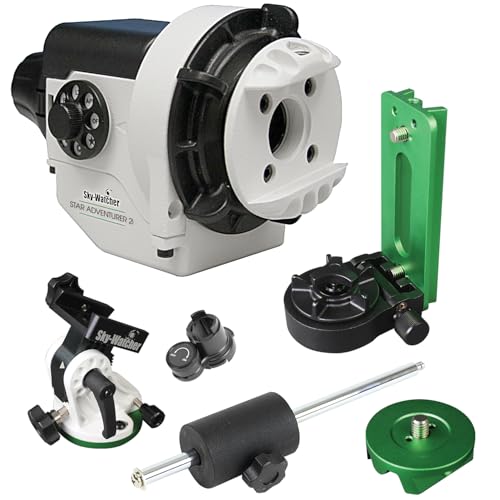
- Lightweight 7-pound tracking platform
- Works with existing photographic tripods
- Wi-Fi smartphone control via SAM Console
Best For: Portable wide-field and Milky Way photography
Best App-Controlled Starter Mount
Explore Scientific iEXOS-100-2

- Wi-Fi and Bluetooth app control
- ExploreStars app supports major tablet platforms
- Clutched dual-axis gears aid balancing
Best For: Beginners wanting tablet-based GoTo operation
Beginner Learning Pick
Astrophotography Guide for Beginners

- Covers cameras, telescopes, and smart telescopes
- Explains settings, tracking, stacking, and processing
- Designed for beginners using existing equipment
Best For: Learning the fundamentals before buying or using a mount
Portable Tracking Pick
iOptron SkyGuider Pro Camera Mount

- Compact 2.2-pound all-metal body
- Supports up to 11 pounds when balanced
- Illuminated polar scope and rechargeable battery
Best For: Traveling beginners using cameras and lenses
Equipment Planning Pick
Astrophotography: A Practical Beginner’s Guide

- Explains trackers, equatorial mounts, and alignment
- Covers Solar System and deep-sky imaging
- Includes stacking, calibration, and post-processing
Best For: Planning a complete beginner astrophotography system
Mount Mastery Guide

- Explains equatorial mount setup and adjustment
- Designed for astrophotography or visual use
- Works across mount ages and manufacturers
Best For: Beginners learning how to operate an equatorial telescope mount
Night-Sky Starter Guide
Astrophotography Without the Gear Overwhelm

- Teaches a step-by-step shooting method
- Works with smartphones, DSLRs, and mirrorless cameras
- Includes city-light tips and a first-10-outings plan
Best For: Beginners building astrophotography skills before buying specialized gear
Easy Sky Explorer
70mm Refractor with Smartphone Adapter
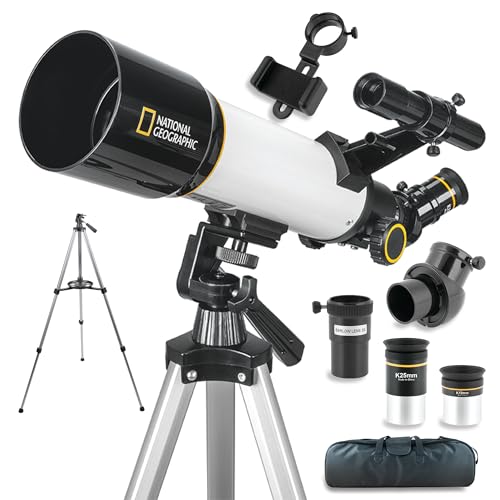
- 70mm aperture for Moon, planets, and bright deep-sky objects
- Includes 2 eyepieces and a 3x Barlow lens
- Panhandle mount and smartphone adapter included
Best For: Casual beginners exploring astronomy and simple smartphone photography
Best Portable GoTo Mount – Star Adventurer GTi Mount Kit
For beginners comparing astrophotography mounts for beginners, the Sky-Watcher Star Adventurer GTi is a portable GoTo EQ option with built-in Wi-Fi, an illuminated polar scope, and a supplied tripod with pier extension. Its included counterweight system makes it a more complete setup than a bare mount head.
Best For: Beginners who want portable GoTo control for lightweight astrophotography setups.
Pros:
- Includes mount head, tripod, pier extension, counterweight bar, and 5 lb. counterweight.
- Built-in Wi-Fi supports convenient control features.
- Illuminated polar scope helps with polar alignment.
- Offers multiple tracking rates and a portable design.
Cons:
- The 26-pound kit is less lightweight than a compact tracker-only setup.
- It is not water resistant.
The GTi is a practical middle ground for beginners who want automated GoTo features without moving straight to a much larger observatory-style mount. Its included accessories also reduce the need to assemble a complete kit separately.
Best Higher-Capacity Beginner Mount – Celestron Advanced VX
The Celestron Advanced VX is a computerized German equatorial mount designed for users who need more capacity while exploring astrophotography mounts for beginners. Its 30-pound payload rating, computerized hand control, and multiple alignment options provide a substantial platform for compatible telescope and accessory combinations.
Best For: Beginners planning a larger telescope-based setup for imaging or advanced visual astronomy.
Pros:
- Supports up to a 30-pound payload.
- NexStar+ hand control includes a database of more than 40,000 objects.
- Provides sidereal, solar, and lunar tracking rates.
- Includes All-Star Polar Alignment, SkyAlign, and PPEC features.
Cons:
- The listed kit weight is about 47 pounds, making it less convenient for frequent transport.
- Requires a DC power supply for operation.
- Its larger capacity may be more mount than a lightweight beginner camera setup needs.
The Advanced VX is a strong choice when stability and future equipment capacity matter more than minimal carrying weight. Beginners should account for its heavier kit and power requirements before choosing it for remote imaging trips.
Best Lightweight Tracker – Star Adventurer 2i Pro Pack
The Sky-Watcher Star Adventurer 2i Pro Pack is a lightweight starting point for shoppers researching astrophotography mounts for beginners. Weighing 7 pounds, it is designed for wide-field nightscape photography, time-lapse work, and use with an existing photographic tripod.
Best For: Beginners prioritizing portability for Milky Way and wide-field astrophotography.
Pros:
- Compact 7-pound design is easy to transport.
- Works with existing photographic tripods.
- Supports wide-field astrophotography, time-lapse video, and telescopic use.
- Built-in Wi-Fi enables smartphone control through the SAM Console app.
Cons:
- The supplied notes describe a tracking platform rather than a full GoTo mount.
- Its emphasis on wide-field photography may not suit heavier telescope setups.
The 2i Pro Pack is appealing when simplicity and travel convenience come first. Its modular design lets beginners use equipment they may already own, while Wi-Fi adds modern control without making the tracker a full GoTo system.
Best App-Controlled Starter Mount – Explore Scientific iEXOS-100-2
The Explore Scientific iEXOS-100-2 PMC-Eight is an app-controlled equatorial mount for beginners who want a more structured GoTo experience while evaluating astrophotography mounts for beginners. Its Wi-Fi and Bluetooth connectivity, clutched dual-axis gears, and included tripod support telescope-based observing and imaging.
Best For: Beginners who prefer tablet-based GoTo control and guided star navigation.
Pros:
- ExploreStars app is available for Apple, Android, and Windows tablets.
- Wi-Fi and Bluetooth provide flexible app control.
- Eight independent CPUs are designed for responsive PMC-Eight operation.
- Clutched RA and declination axes support balancing and precise repositioning.
Cons:
- It uses a polar-alignment sight hole rather than a polar scope.
- The supplied notes do not specify a payload capacity.
- Tablet compatibility may be less convenient for users seeking hand-controller operation.
The iEXOS-100-2 stands out for its software-focused approach. Its ExploreStars app and multi-processor control system may suit beginners who want digital guidance, while the equatorial design provides a path toward more precise tracking than a basic camera platform.
Beginner Learning Pick – Astrophotography Guide for Beginners
If you are researching astrophotography mounts for beginners but are not sure how to build or use a setup, this guide offers a practical starting point. It covers smartphones, DSLRs, mirrorless cameras, traditional telescopes, and smart telescopes, with guidance on planning, camera settings, stacking, and processing.
Best For: Beginners who want a broad, step-by-step foundation before choosing or operating astrophotography equipment.
Pros:
- Covers multiple camera and telescope types in one guide.
- Explains polar alignment, exposure settings, stacking, and image processing workflows.
- Includes approaches for affordable equipment and light-polluted locations.
Cons:
- It is an instructional book rather than an astrophotography mount.
- Its publication date is listed as June 19, 2026.
This is a useful companion for anyone comparing astrophotography mounts for beginners, especially if you want to understand the complete imaging process before investing in hardware.
Portable Tracking Pick – iOptron SkyGuider Pro Camera Mount
The iOptron SkyGuider Pro is a compact camera mount for beginners who want a portable entry into tracked astrophotography. Its all-metal construction, illuminated polar scope, adjustable base, and rechargeable battery are aimed at helping users capture sharper long-exposure images with a camera and lens.
Best For: Beginners seeking a portable camera-tracking mount for travel and balanced camera-and-lens combinations.
Pros:
- Compact 2.2-pound design fits a camera bag or backpack.
- Supports up to 11 pounds when properly balanced.
- Includes an illuminated polar scope and latitude adjustment from -30° to 65°.
- Internal rechargeable battery provides up to 20 hours of operation at 20°C.
Cons:
- Requires careful balancing and polar alignment for best results.
- The supplied details identify it as a camera-compatible mount, not a complete telescope system.
- It is not water resistant.
Among astrophotography mounts for beginners, the SkyGuider Pro stands out for portability and camera capacity. It is a practical choice for users who want tracked exposures without carrying a larger mount.
Equipment Planning Pick – Astrophotography: A Practical Beginner’s Guide
This practical guide is useful when comparing astrophotography mounts for beginners alongside cameras, lenses, telescopes, and accessories. It explains how star trackers, equatorial mounts, polar alignment, autoguiding, calibration frames, stacking, and post-processing fit together in a complete imaging workflow.
Best For: Beginners who want to understand equipment choices and develop a reliable Solar System or deep-sky imaging setup.
Pros:
- Explains the differences among photographic lenses, refractors, reflectors, and catadioptric telescopes.
- Covers star trackers, equatorial mounts, polar alignment, and autoguiding.
- Includes capture, calibration, stacking, dithering, and post-processing topics.
- Uses illustrations, focal-length comparisons, and infographics.
Cons:
- It is a 171-page guide rather than a physical mount.
- The listed publication date is August 2, 2026.
- Some advanced subjects, including narrowband filters and autoguiding, may require additional study.
This book can help narrow down which mount style and supporting equipment fit your goals, making it a strong planning resource before purchasing hardware.
Mount Mastery Guide – Equatorial Mount Basics
For beginners comparing astrophotography mounts for beginners, this 71-page Kindle guide focuses on understanding and using equatorial telescope mounts. It explains assembly, setup, adjustment, and operation across different mount ages and manufacturers, making it a practical reference before investing in or configuring an equatorial system.
Best For: Beginners who need a clear introduction to equatorial mounts for astrophotography or visual observing.
Pros:
- Explains how to assemble, set up, and adjust an equatorial mount.
- Connects practical procedures with the reasons behind the mount’s design.
- Applies broadly across mount ages and manufacturers.
- Compact 71-page digital format with screen-reader support and enhanced typesetting.
Cons:
- It is an instructional ebook, not a physical mount or telescope.
- The focus is specifically on equatorial mounts rather than general beginner astrophotography.
This is best viewed as a confidence-building companion for learning an equatorial setup. It can help reduce the unfamiliarity of tracking mounts, but you will still need compatible hardware to practice the techniques.
Night-Sky Starter Guide – Astrophotography Without the Gear Overwhelm
For newcomers researching astrophotography mounts for beginners, this step-by-step guide starts with camera technique rather than specialized equipment. It covers manual settings, focusing, Milky Way and star-trail photography, introductory deep-sky targets, and ways to work under city light pollution using a smartphone, DSLR, or mirrorless camera.
Best For: First-time astrophotographers who want to build skills with equipment they already own.
Pros:
- Uses a six-step EXPOSE Method to structure each shoot.
- Covers focusing, manual settings, troubleshooting, and light-pollution challenges.
- Includes settings tables, troubleshooting guidance, a 10-outing plan, and a year-round shooting calendar.
- Addresses Milky Way, star trails, the Moon, nebulae, and galaxies.
Cons:
- It is a digital photography guide, not a mount-buying or mount-operation manual.
- Its publication date is July 2026, so availability may vary.
This is a useful starting point if you are not ready to buy a tracking mount. It emphasizes repeatable camera skills and realistic shooting conditions, helping beginners determine what equipment they actually need next.
Easy Sky Explorer – 70mm Refractor with Smartphone Adapter
Among astrophotography mounts for beginners, this National Geographic 70mm refractor is a simple altazimuth option for visual observing and basic smartphone photography. Its panhandle mount, 400mm focal length, included adapter, and multiple magnification combinations make it approachable for Moon, planetary, and bright deep-sky exploration.
Best For: Beginners, families, and casual observers who want an easy telescope with basic smartphone imaging capability.
Pros:
- 70mm aperture supports views of the Moon, planets, and some bright deep-sky objects.
- Includes two eyepieces and a 3x Barlow lens for 16x, 40x, 48x, and 120x magnification.
- Smartphone adapter enables simple photos of the Moon and other targets.
- Comes with a panhandle-controlled mount, viewfinder, diagonal, and adjustable tripod with accessory tray.
Cons:
- The altazimuth panhandle mount is intended for simple viewing and photography, not advanced long-exposure tracking.
- Manual focus and a straight-through viewfinder may require hands-on alignment.
This telescope is a sensible entry point for visual astronomy and occasional smartphone captures. Its included accessories reduce the need for immediate add-ons, though serious deep-sky astrophotography will require a more specialized tracking setup.
How We Picked These Astrophotography Mounts for Beginners
We focused on the factors that matter most when learning long-exposure imaging: tracking performance, payload capacity, setup complexity, portability, included accessories, and compatibility with common cameras and telescopes. We also considered whether each option supports a clear upgrade path, such as adding a guide camera, larger telescope, or computer-controlled pointing.
The selection spans lightweight star trackers for wide-field Milky Way photography, full German equatorial mounts for heavier imaging systems, and educational guides that help new users understand polar alignment, balancing, focusing, calibration frames, and post-processing. Telescope-only options are best treated as entry-level visual or basic imaging tools rather than direct substitutes for dedicated tracking mounts.
Quick Comparison
| Best For | Look For | Typical Advantage |
|---|---|---|
| Camera and wide-field lenses | Compact tracker, low power draw, simple alignment | Portability and easier learning curve |
| Small refractors and heavier camera rigs | GoTo controls, counterweights, higher payload rating | More framing flexibility and upgrade potential |
| Deep-sky beginners | Equatorial tracking, guiding support, stable tripod | Longer exposures with fewer star trails |
| Complete newcomers | Clear instructions and practical setup examples | Faster progress before buying more equipment |
Key Buying Factors for Astrophotography Mounts for Beginners
Payload Capacity
Do not match the mount to the telescope’s weight alone. Include the camera, lens or optical tube, dovetail hardware, guide scope, cables, and counterweights. For easier tracking, stay comfortably below the advertised maximum rather than operating at the limit.
Tracking and Alignment
A sidereal tracking mode is essential for avoiding star trails. GoTo adds automated pointing, while a polar scope or electronic polar-alignment aid can simplify setup. Remember that GoTo improves target finding; it does not replace accurate polar alignment.
Portability and Power
Compact trackers suit travel and wide-field work, but full equatorial mounts offer greater stability at the cost of weight. Check tripod size, counterweight bulk, battery requirements, and whether your observing location has a convenient power source.
Upgrade Path
If you expect to move from a DSLR and lens to a small telescope, choose a mount with spare capacity and support for guiding. A modest mount used within its limits often produces better results than a heavier system that is difficult to transport and balance.
Who Should Buy Which Astrophotography Mounts for Beginners?
Choose a lightweight camera tracker if your priority is the Milky Way, star fields, or travel photography with a camera and lens. Choose a GoTo German equatorial mount if you plan to image nebulae and galaxies with a dedicated telescope, or if automated target locating is important. A mid-capacity mount is the most versatile choice for beginners who want room to grow.
If you are still learning the fundamentals, pair a simple tracker or telescope with a practical beginner guide before investing in accessories. Readers who want visual observing first may prefer a small refractor package, while serious deep-sky imaging should prioritize tracking accuracy, rigidity, guiding compatibility, and payload headroom over the lowest purchase price.