
Choosing the best astrophotography mount with autoguiding can make a bigger difference to image quality than upgrading your camera or telescope. Accurate tracking, stable payload support, and a compatible guide system are the foundation of sharp long-exposure images.
This roundup includes complete GoTo mounts, portable star trackers, and guide-scope and guide-camera components for beginners, travel imagers, and more demanding deep-sky setups.
Best 10 Astrophotography Mount with Autoguiding Picks for 2026
Best Portable GoTo Mount

- Complete kit with tripod, pier extension, counterweight, and bar
- Built-in Wi-Fi, GoTo, and illuminated polar scope
- Portable 26-pound package for lightweight setups
Best For: Portable astrophotographers building a lightweight GoTo EQ rig
Best Mini Guide Scope
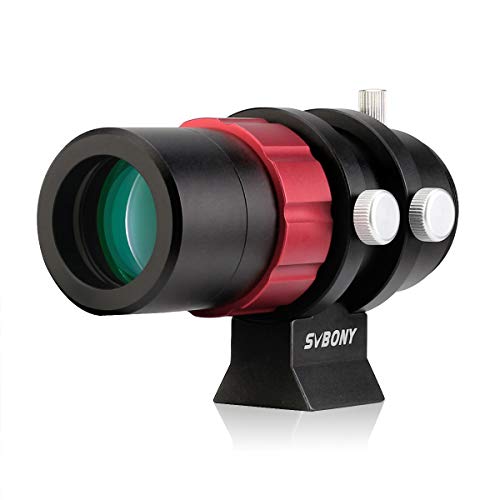
- 30mm f/4 optics offer a wide field of view
- Supports 1.25-inch and M42 camera interfaces
- Includes adjustable rings with nylon-tipped screws
Best For: Compact autoguiding setups using compatible guide cameras
Best Higher-Capacity Mount

- Supports telescope and accessory loads up to 30 pounds
- Computerized GoTo control with a 40,000-plus-object database
- Includes All-Star Polar Alignment and PPEC
Best For: Larger telescope setups and mixed imaging or visual astronomy
Best Guide Camera
SVBONY SV905C Autoguiding Camera

- 1.23MP color CMOS sensor with 3.75-micron pixels
- ST4 and USB 2.0 connections for guiding workflows
- Supports PHD2, NINA, MDL, and SKY-X
Best For: Compact 1.25-inch guide-scope and OAG configurations
All-Latitude Imaging Mount

- 22-pound payload capacity
- 0–90° latitude range
- GoTo, WiFi, and guidescope ports
Best For: Mid-size telescope imaging setups
Precision Guide Scope
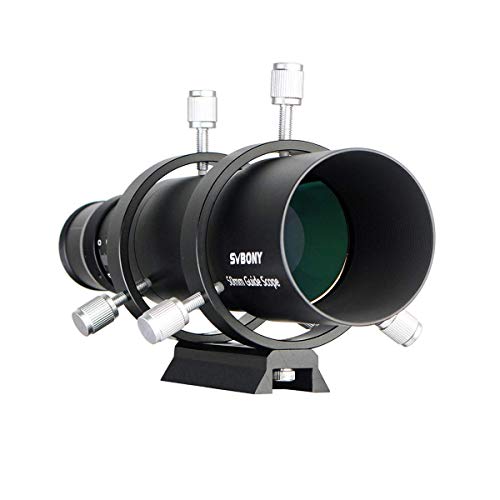
- 50mm guide-scope optics
- 8mm helical focus travel
- Rings and dovetail bar included
Best For: Adding optical guidance to an existing mount
Compact Star Tracker
ConsoleXpress Equatorial Mount
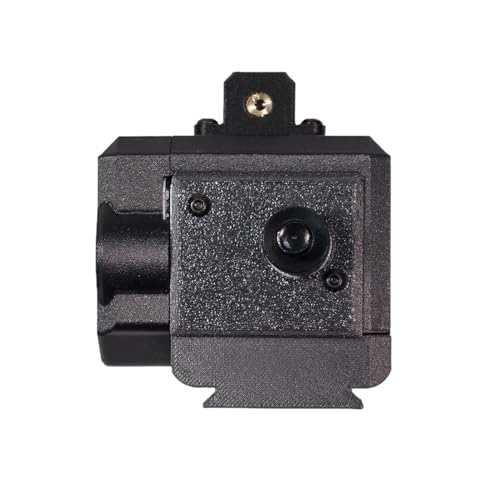
- 4kg axial load without counterweights
- ESP32 dual-core 5V control
- Star pointer for cold-weather alignment
Best For: Portable lightweight imaging and time-lapse work
Flexible Guiding
60mm Helical-Focuser Guide Scope

- Wide 2.7-degree field of view
- Precise, low-rotation helical focusing
- Includes rings and Synta-style dovetail
Best For: Multi-use finding and autoguiding on compatible telescope tubes
Portable Tracking
Open-Source Equatorial Star Tracker

- Stellar, lunar, and custom speeds
- Northern and southern hemisphere support
- USB-C power-bank operation
Best For: Portable camera astrophotography and time-lapse tracking
Long-Reach Guiding
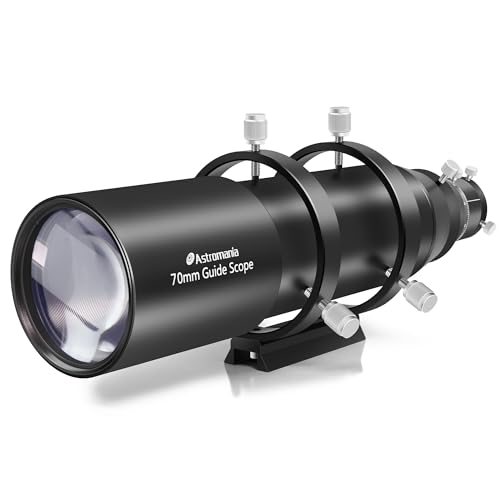
- 400mm focal length with 70mm optics
- Wide field for locating guide stars
- Includes rings and Synta-style plate
Best For: Larger visual-finder and autoguiding setups
Best Portable GoTo Mount – Star Adventurer GTi Mount Kit
The Sky-Watcher Star Adventurer GTi is a practical astrophotography mount with autoguiding potential for portable setups. Its GoTo functionality, built-in Wi-Fi, illuminated polar scope, tripod, pier extension, and counterweight are included in the kit, making it a convenient starting point for lightweight imaging.
Best For: Portable astrophotographers who want a complete, lightweight GoTo EQ tracking package.
Pros:
- Includes mount head, tripod, pier extension, counterweight bar, and 5 lb. counterweight
- Built-in Wi-Fi and GoTo functionality simplify operation
- Illuminated polar scope supports polar-alignment work
Cons:
- Not water resistant
- The 26-pound kit is less suited to ultra-light travel than a mount head alone
This kit stands out when portability and included accessories matter. For a compact imaging rig, its GoTo controls and polar scope provide useful foundations, though users should confirm compatibility with their specific guide-camera and telescope configuration.
Best Mini Guide Scope – SVBONY SV165 30mm Guide Scope
The SVBONY SV165 is a compact guide scope for an astrophotography mount with autoguiding. Its 30mm aperture, 120mm focal length, 45mm back focus, and 1.25-inch/M42 interfaces are designed to work with compatible guide cameras from SVBONY, ZWO, QHY, and Orion.
Best For: Imagers who need a small, wide-field guide scope for compatible autoguiding cameras.
Pros:
- 30mm aperture and f/4 optics provide a wide field of view
- Compatible with mainstream 1.25-inch and M42 autoguiding cameras
- Nylon-tipped thumbscrews help prevent scratches while positioning the tube
- 45mm back focus allows precise focusing adjustments
Cons:
- Some camera models may require additional focusing accessories
- Cannot be used with a dielectric mirror star diagonal
This guide scope is a sensible accessory for adding guide-star acquisition to a compatible imaging system. Verify the camera interface and focus requirements before buying, particularly if you plan to use it with a less common camera or adapter.
Best Higher-Capacity Mount – Celestron Advanced VX
The Celestron Advanced VX is a computerized German equatorial astrophotography mount with autoguiding potential for larger telescope setups. It supports up to 30 pounds, includes a sturdy 2-inch stainless steel tripod, and provides GoTo control through the NexStar+ hand control.
Best For: Beginners and advanced visual astronomers who need a higher-capacity EQ mount for imaging or observing.
Pros:
- 30-pound payload capacity accommodates a broad range of telescope and accessory combinations
- Includes sidereal, solar, and lunar tracking rates
- NexStar+ hand control offers a database of more than 40,000 objects
- Features All-Star Polar Alignment, PPEC, dual saddle plate, and Celestron PWI software
Cons:
- The listed kit weight is approximately 47 to 50 pounds, limiting portability
- Requires a DC power supply
- Warranty is limited to one year
The Advanced VX offers more capacity and control than a lightweight travel mount, making it attractive for a substantial imaging system. Its included alignment and tracking tools are useful, but the heavier package is better suited to planned observing locations than frequent carry-on travel.
Best Guide Camera – SVBONY SV905C Autoguiding Camera
The SVBONY SV905C is a compact guide camera for an astrophotography mount with autoguiding. Its 1.23MP color CMOS sensor, 3.75-micron pixels, ST4 guide port, and USB 2.0 connection support guiding with compatible software such as PHD2, MDL, NINA, and SKY-X.
Best For: Users adding a compact color guide camera to a 1.25-inch guide-scope or OAG setup.
Pros:
- 1280×960, 1/3-inch CMOS sensor is designed for autoguiding and planetary imaging
- Small 3.75-micron pixels, up to 80% peak QE, and low read noise support guide-star tracking
- Includes USB 2.0 output and an ST4 guide-star interface
- Compatible with PHD2, MDL, NINA, SKY-X, and other guiding software
Cons:
- Not compatible with ASI AIR
- Drivers must be downloaded for use
- Software and mount compatibility should be confirmed before purchase
This camera is a focused accessory rather than a complete guiding system, so it needs a suitable guide scope or off-axis guider. Its compact 1.25-inch form and ST4 connection make it a flexible option, provided your software workflow does not depend on ASI AIR.
All-Latitude Imaging Mount – EQ-AL55i Pro
If you need an astrophotography mount with autoguiding support for a mid-size telescope setup, the Sky-Watcher EQ-AL55i Pro combines equatorial tracking, GoTo navigation, and imaging-focused ports. Its 22-pound payload rating and 0–90° latitude range make it a versatile option for observing and imaging in many locations.
Best For: Mid-size telescope users who want wireless GoTo control and built-in support for guidescope and SNAP connections.
Pros:
- 22-pound payload capacity for mid-size optical tubes and imaging equipment.
- 0–90° latitude adjustment supports use from equatorial to polar regions.
- SynScan GoTo system includes a database of more than 42,900 objects.
- Built-in WiFi, Bluetooth, guidescope, and SNAP ports support imaging workflows.
Cons:
- The mount weighs 25.3 pounds before considering the included counterweights and other equipment.
- Its manual-focus specification means focusing remains a separate task.
The EQ-AL55i Pro is the strongest all-around choice here for users building a conventional telescope imaging rig. It offers the most complete combination of payload capacity, alignment flexibility, wireless control, and autoguiding-oriented connectivity.
Precision Guide Scope – SV106 50mm
The SVBONY SV106 is an accessory rather than a complete mount, but it can add practical autoguiding capability to a compatible astrophotography mount with autoguiding setup. Its 50mm optics, helical focuser, included rings, and dovetail bar are designed to help you find and maintain a sharply focused guide-star view.
Best For: Astrophotographers adding a focused, adjustable guide scope to a compatible telescope and guide-camera system.
Pros:
- 50mm objective and 190mm focal length provide a dedicated guide-scope platform.
- 8mm helical focus travel and up to 30mm of additional drawtube back-travel allow precise adjustment.
- Includes guide-scope rings and a 3.5-inch dovetail mounting bar.
- Male T-threads support secure attachment of compatible guide cameras.
Cons:
- This is a guide scope, not a tracking or GoTo mount.
- Compatibility depends on the guide camera, dovetail base, and telescope setup.
- Its manual-focus design requires hands-on focusing.
Choose the SV106 when your existing mount already provides tracking and you need a dedicated optical guide path. The helical focuser and included mounting hardware make it a useful component for assembling an autoguiding system, but it cannot replace the mount itself.
Compact Star Tracker – ConsoleXpress Equatorial Mount
This compact equatorial tracker is aimed at deep-sky astrophotography and time-lapse photography rather than full-size telescope mounting. For shoppers seeking an astrophotography mount with autoguiding, its ESP32 dual-core control and star pointer are useful starting features, but the supplied specifications do not list a dedicated guidescope or autoguider port.
Best For: Lightweight outdoor imaging and time-lapse setups that can stay within the stated 4kg axial load.
Pros:
- Supports up to 4kg axial weight without counterweights.
- ESP32 dual-core control operates from low-voltage 5V sources.
- Carbon-fiber-reinforced PETG body is designed to be lightweight and durable.
- Bright star pointer is specified for alignment in conditions down to -10°C.
Cons:
- The supplied information does not confirm a dedicated autoguiding or GoTo system.
- Its 4kg capacity is substantially lower than the Sky-Watcher mount’s rating.
- Compatibility details are limited, with OrionU listed as the compatible device.
The ConsoleXpress mount may suit portable, lower-weight imaging where simplicity and power efficiency matter. However, buyers specifically prioritizing autoguiding should verify camera, software, and connection support before choosing it over a mount with explicitly listed imaging ports.
Flexible Guiding – 60mm Helical-Focuser Guide Scope
For anyone building an astrophotography mount with autoguiding, this 60mm guide scope combines a wide 2.7-degree field of view with precise helical focusing. Its 240mm focal length is intended for astrophotography telescopes up to 1500mm and supports direct attachment of compatible guide cameras with female T-threads.
Best For: Astrophotographers who want a multi-use finder and autoguiding scope with flexible mounting and fine manual focus control.
Pros:
- 60mm fully multi-coated optics and a wide field help place potential guide stars in view.
- Helical worm focuser provides precise adjustments while helping prevent camera or eyepiece rotation.
- Includes guide scope rings, Teflon inlays, and a Synta-style dovetail mounting plate.
- Male T-threads allow a secure threaded connection to compatible autoguider cameras.
Cons:
- Manual focusing requires setup and adjustment by the user.
- The included rings fit telescope tubes from 53mm to 79mm, so compatibility should be checked first.
This is a practical choice when you need one compact optical tube for both visual finding and guiding. The rigid metal housing, adjustable aiming hardware, and 45mm total focusing range make it a versatile addition to an autoguided astrophotography setup.
Portable Tracking – Open-Source Equatorial Star Tracker
Equatorial Mount Star Tracker with Latitude Adjustment Base for Astrophotography
Check Price On AmazonThis compact equatorial tracker is an option for lightweight astrophotography systems that need sidereal tracking without a phone app. It supports northern and southern hemisphere operation, moon and stellar speeds, and custom rotation speeds, making it a flexible component for an astrophotography mount with autoguiding.
Best For: Camera-based astrophotography and time-lapse users who want a portable, USB-C-powered equatorial tracker with adjustable latitude.
Pros:
- Supports stellar, lunar, and custom rotation speeds.
- Works in both northern and southern hemispheres.
- Metal CNC latitude adjustment base has a stated 15kg load capacity.
- Can run from a power bank and requires no app download.
Cons:
- It has no built-in battery, so an external USB-C power source is required.
- A ball head is required to connect a camera to the standard 1/4-inch output shaft.
- The 1/4-to-3/8-inch screw sleeve may need to be purchased separately for some ball heads.
Its straightforward power-on operation and adjustable tracking modes suit portable camera rigs and time-lapse work. Before buying, confirm your camera support hardware and remember that the product is a tracker rather than a complete camera-and-ball-head package.
Long-Reach Guiding – 70mm Deluxe Guide Scope
This 70mm guide scope is designed for an astrophotography mount with autoguiding when you want a longer 400mm focal length and bright, wide-field optics. It accepts a 1.25-inch eyepiece and includes a dual-stage-style worm-focuser arrangement for precise manual focusing and stable camera or eyepiece positioning.
Best For: Astrophotographers seeking a larger guide scope that also functions as a visual finder and can connect to an autoguiding camera.
Pros:
- 70mm optics and 400mm focal length provide a bright guide-scope platform.
- Wide-field design helps show numerous potential guide stars.
- Worm focuser with brass compression ring helps focus quickly without rotating the camera or eyepiece.
- Includes matching rings and a Synta-style mounting plate for installation.
Cons:
- At 2.5 pounds, it adds more weight than a smaller guide scope.
- Manual focusing and adjustable alignment require setup time.
- Mounting compatibility should be confirmed before purchase.
The 70mm aperture and 400mm focal length make this a substantial finder-and-guider option, while the 90mm focusing range accommodates setup adjustments. Its extra weight is worth considering when balancing a portable astrophotography rig.
How We Picked the Best Astrophotography Mount with Autoguiding
We focused on products that contribute directly to guided astrophotography: equatorial mounts with GoTo or tracking functions, portable star trackers, guide scopes, and guide cameras. We considered payload capacity, portability, adjustment controls, compatibility, focusing features, and how well each option fits a realistic imaging workflow.
Because the list includes both complete mounts and supporting accessories, check the product type carefully before buying. A guide scope or guide camera cannot track on its own; it must be paired with a compatible mount and imaging setup.
Quick Comparison
| Need | Best fit | What to prioritize |
|---|---|---|
| Portable wide-field imaging | Star tracker or compact GoTo mount | Low weight, polar alignment, battery life |
| Heavier telescope setups | Full-size German equatorial mount | Payload margin, tripod stability, GoTo control |
| Accurate guiding | Guide scope plus guide camera | Focal length, focus adjustment, camera compatibility |
| Travel and time-lapse use | Lightweight equatorial tracker | Simple setup and latitude adjustment |
Key Buying Factors for an Astrophotography Mount with Autoguiding
Payload Capacity
Do not treat the advertised payload as your ideal imaging load. Include the telescope, camera, guide scope, guide camera, dovetail hardware, filter accessories, and cables. Staying comfortably below the limit generally improves balance and tracking consistency.
Tracking and Guiding Compatibility
Look for an equatorial design with an autoguider input or a control system compatible with your guiding software. GoTo functionality is convenient, but accurate polar alignment and reliable guiding matter more for long exposures.
Guide Scope and Camera Matching
A guide scope should provide a useful field of view and secure focusing. Helical focusers can make calibration easier, while a sensitive guide camera helps the software find stars. Match the guide scope, camera, and mount connections before ordering.
Portability and Setup
Compact trackers are attractive for wide-angle lenses and travel, while larger mounts provide better stability and capacity. Consider tripod weight, counterweights, polar alignment controls, power requirements, and how often you will transport the system.
Who Should Buy Which Astrophotography Mount with Autoguiding?
Beginners: Choose a complete GoTo equatorial mount if you want a structured path into guided imaging, or a simple tracker for camera lenses and short focal lengths.
Travel astrophotographers: A lightweight star tracker with latitude adjustment is easier to carry and well suited to wide-field Milky Way and time-lapse work.
Deep-sky imagers: Prioritize a stable mount with generous payload capacity, then add a properly matched guide scope and camera for longer exposures.
Upgraders: If you already own a mount, a dedicated guide scope and camera may deliver a more noticeable improvement than replacing the entire system. Verify mounting hardware, focal length, focus travel, and software support first.