
Choosing a 3D scanner for miniatures is mostly about detail, stability, and how easy it is to capture tiny parts without losing edges or texture. The best models make it simpler to scan figurines, collectibles, and small prototypes for accurate 3D printing.
Below, we focus on scanners that balance precision, workflow, and value so you can match the right tool to your hobby, studio, or production needs.
Best 10 3d Scanner for Miniatures Picks for 2026
Miniature Detail Specialist
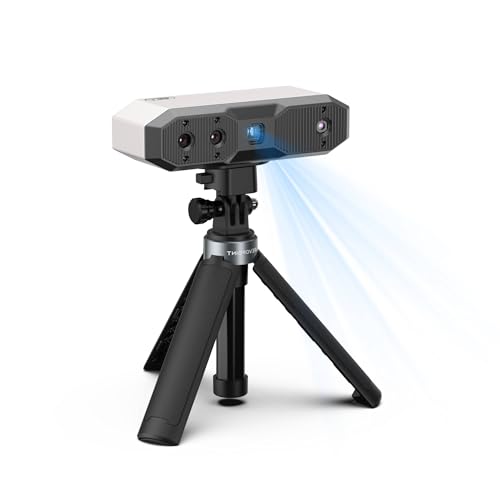
- Up to 0.02 mm precision for fine miniature detail
- 175 g body with USB-C and Wi-Fi 6 options
- RGB camera, Flash LEDs, and IMU help stabilize scans
Best For: detail-focused miniature scanning and 3D printing prep
Portable Laser Hybrid
Creality Pika Portable 3D Scanner

- 0.03 mm accuracy for fine miniature detail
- Dual blue laser and NIR modes cover small to large scans
- Wi-Fi 6, touchscreen, and dual batteries add portability
Best For: buyers who want one scanner for miniatures and larger objects
Budget-Friendly Starter Pick

- Up to 0.07 mm accuracy for structural detail
- Markerless tracking and anti-shake simplify setup
- Made for small-to-medium objects, including desktop miniatures
Best For: beginners who want an entry-level miniature scanner
Wireless Precision Pick

- 0.03 mm blue laser accuracy for small details
- Wireless Wi-Fi 6 design with hot-swappable batteries
- AI tools help with retexturing, body completion, and hole filling
Best For: wireless miniature scanning with extra flexibility for larger objects
Wireless Outdoor Detail Scanner
Revopoint INSPIRE 2 3D Scanner

- 0.05 mm accuracy for fine detail
- Dual laser and structured light modes
- Lightweight with outdoor scanning support
Best For: Miniatures, small parts, and portable detailed scanning
Fast Full-Color Scanner

- 0.1 mm precision in fine-detail mode
- 30 FPS point cloud capture
- RGB camera for full-color textures
Best For: Portable scanning with color capture for small objects
AI Blue Laser Mini Detail Scanner

- 0.03 mm precision for tiny details
- 7 blue lasers for figurines and parts
- AI cleanup tools and outdoor-capable scanning
Best For: High-detail miniature scanning with color capture and AI cleanup
Large-Object Specialist
Revopoint RANGE Handheld 3D Scanner

- 0.1 mm single-frame precision
- Wide 360 mm x 650 mm capture range
- Up to 18 fps with full-color RGB scanning
Best For: large models, body scans, and bigger creative projects
Portable Beginner Pick

- WiFi6 wireless scanning with cross-platform support
- Up to 0.1 mm accuracy and full-color capture
- 105g lightweight design with included accessory kit
Best For: beginners who want a portable scanner for small-to-medium objects
Miniature Detail Pick

- Up to 0.02 mm single-frame precision
- Built for small objects from 10 mm to 0.5 m
- Blue light, IMU, and USB or Wi-Fi 6 connectivity
Best For: small-object scanning, miniature models, and detail-focused 3D printing
Miniature Detail Specialist – Revopoint MINI 2 3D Scanner
If you want a 3d scanner for miniatures, the Revopoint MINI 2 is built around fine detail and compact objects. Its blue light system, up to 0.02 mm single-frame precision, and 16 fps capture speed make it a strong fit for small prints, tabletop figures, and other intricate items, especially when you want clean geometry for 3D printing.
Best For: Hobbyists and makers scanning miniatures and other small objects who want high precision and easy portability.
Pros:
- Up to 0.02 mm single-frame precision for tiny details
- Compact 175 g body with USB Type-C or Wi-Fi 6 connection options
- IMU and tactile buttons help reduce shaky-hand scanning issues
- RGB camera and Flash LEDs improve texture, color, and marker recognition
Cons:
- Blue light scanning can vary by material and color
- Scanning spray is recommended for better results on some surfaces
- Best suited to small items within its stated scan volume limits
Overall, the MINI 2 is a practical choice when detail matters more than brute-force size coverage. It leans toward careful, small-object scanning and offers helpful software and export formats for turning miniature captures into printable files.
Portable Laser Hybrid – Creality Pika Portable 3D Scanner
The Creality Pika is a versatile 3d scanner for miniatures, but it is also built to handle much larger subjects when you need one device for multiple jobs. Its 7-line blue laser mode is the main draw for small parts and figurines, while NIR structured light adds full-body and large-object flexibility in a wireless, portable package.
Best For: Users who want a portable scanner that can handle miniatures, collectibles, and much larger scans with one setup.
Pros:
- 0.03 mm accuracy and 0.1 mm resolution for fine small-object detail
- Dual-mode scanning combines blue laser precision with NIR full-body capture
- Wi-Fi 6, touchscreen, and dual batteries support cable-free scanning
- Can scan dark and metallic surfaces without scanning spray
Cons:
- Broader feature set may be more scanner than some miniature-only users need
- Best results still depend on matching the right mode to the object
- Mobile and PC workflows may require some setup and app familiarity
For buyers who want flexibility as much as precision, the Pika stands out. It gives you a serious small-object scanning mode for miniatures, but it also expands into body and larger-item scanning without forcing you to buy a second device.
Budget-Friendly Starter Pick – 3DMakerpro Fox 3D Scanner
If you’re shopping for a 3d scanner for miniatures on a tighter budget, the 3DMakerpro Fox is positioned as an entry-level option with a learning curve. It uses NIR light, markerless tracking, and anti-shake features to make scanning more approachable for small to medium objects, including desktop miniatures and other compact models.
Best For: Beginners willing to learn the workflow and who want an affordable path into miniature and small-object scanning.
Pros:
- Up to 0.07 mm accuracy for essential structural detail
- Markerless tracking simplifies setup for small-object scans
- Anti-shake helps compensate for minor hand tremors
- Designed for objects from 40 mm to 1200 mm
Cons:
- Results may require patience and some basic CAD/3D modeling skill
- Dedicated GPU recommended for smooth software performance
- Not the simplest option if you want instant plug-and-play results
The Fox makes sense if you want a lower-cost scanner and are comfortable learning the process. It can work well for miniatures, but the notes make it clear that good results depend on user skill, system power, and time spent refining scans.
Wireless Precision Pick – Creality Pika 3D Scanner
The Creality Pika is a compact 3d scanner for miniatures that focuses on precision, portability, and a wireless workflow. Its 7-parallel blue laser system is aimed at fine details on small parts, while the infrared structured light mode extends the scanner to larger objects when needed.
Best For: Makers who want a compact wireless scanner for miniatures and other small precision objects, with room to scan larger items too.
Pros:
- 0.03 mm accuracy from the blue laser mode
- Scan range covers tiny components through large items
- AI retexturing, body completion, and hole-filling streamline output
- No spray needed for black or metal objects
Cons:
- High-end device requirements may limit some phone and computer users
- Wireless convenience depends on compatible hardware
- Smallest-object work still benefits from matching the right scan mode
This version of the Pika is a good fit if you value a cable-free setup without giving up detail. It combines miniature-friendly precision with automation features that can reduce cleanup and make the scan-to-print process easier.
Wireless Outdoor Detail Scanner – Revopoint INSPIRE 2 3D Scanner
If you want a 3d scanner for miniatures that also scales well to other small objects, the Revopoint INSPIRE 2 is built around detail capture and flexible scanning. Its infrared structured light and multi-line laser modes help it adapt to different surfaces, while the adjustable optical zoom makes it easier to focus on fine features.
Best For: Makers who want a portable, high-precision scanner for miniatures, small parts, and mixed-surface objects.
Pros:
- Up to 0.05 mm accuracy and 0.03 mm precision for highly detailed models
- Dual scanning modules with infrared structured light and 11 infrared laser lines
- Can scan in outdoor lighting up to 20,000 lux and weighs just 190g
- Built-in RGB camera captures full-color texture data
Cons:
- Revo Design scan-to-CAD workflow requires separate paid software
- Best results still depend on using the included markers and calibration tools
The INSPIRE 2 stands out if you need a scanner that can handle miniature-level detail without giving up portability. It looks especially strong for users who want both precision and a more mobile workflow.
Fast Full-Color Scanner – Creality CR-Scan Ferret
The Creality CR-Scan Ferret is a practical 3d scanner for miniatures if you want full-color capture and fast scanning in a portable package. Its dual-mode approach gives you a wider capture mode for larger subjects and a high-accuracy mode for finer detail, which helps when switching between small models and general objects.
Best For: Budget-conscious users who want a fast, color-capable handheld scanner for small objects and general scanning.
Pros:
- Up to 0.1 mm precision in high-accuracy mode
- 30 FPS point cloud capture and 60 FPS image processing with ASIC chipset
- Built-in RGB camera captures realistic full-color textures
- Works with Android, Windows, and newer Mac systems; can run from a power bank
Cons:
- Mobile scanning support is limited to Android on this model
- Fine-detail performance depends on using the correct mode and system requirements
This scanner makes sense if speed, portability, and texture capture matter as much as accuracy. It is a good all-around option for users who want to scan miniatures without jumping straight to a more premium system.
AI Blue Laser Mini Detail Scanner – Creality Pika 3D Scanner
The Creality Pika is a strong 3d scanner for miniatures if your priority is fine-detail capture on small models, parts, and figurines. Its 7 parallel blue lasers are designed for tiny contours, while the NIR mode adds broader scanning, body capture, and full-color output for more versatile projects.
Best For: Users who want maximum detail on miniatures, coins, and precision parts, plus color scanning and mobile-friendly portability.
Pros:
- Ultra-fine 0.03 mm precision for small, detailed objects
- 7 parallel blue lasers are tuned for figurines, parts, and complex contours
- AI retexturing, hole filling, and body completion help clean up models
- Detachable IR filter supports bright outdoor scanning and black metal without spray
Cons:
- Feature-rich software may be more than casual users need
- Best laser performance is tied to USB 3.0 computer use for the highest FPS
For miniature scanning, the Pika leans hard into detail recovery and post-processing convenience. It is the most specialized pick here for users who care about tiny geometry and want extra software help to finish models faster.
Large-Object Specialist – Revopoint RANGE Handheld 3D Scanner
If you want a 3d scanner for miniatures, the Revopoint RANGE is not the most specialized pick, but it can still be useful when your workflow includes larger props, figures, or display pieces that need full-color capture. It is built for bigger objects, with fast scanning, a wide capture range, and beginner-friendly software that keeps the process straightforward.
Best For: creators who need a handheld scanner for large models, body scans, or mixed-size projects rather than ultra-small miniature detail.
Pros:
- Up to 0.1 mm single-frame precision for detailed handheld scanning
- Wide 360 mm x 650 mm capture range at 600 mm, optimized for large objects
- Up to 18 fps scanning speed for smoother capture sessions
- Full-color scanning with RGB camera and user-friendly Revo Scan software
Cons:
- Designed primarily for large-sized objects, not tiny miniatures
- Best results depend on a suitable scanning setup and compatible hardware
As a roundup choice, the RANGE stands out for scale and speed more than fine miniature work. If your projects extend beyond minis into larger prints, props, or people, it offers a practical balance of accuracy, color, and ease of use.
Portable Beginner Pick – Creality CR-Scan Ferret Pro
The Creality CR-Scan Ferret Pro is a practical 3d scanner for miniatures if you want an easy-entry handheld option for small display pieces and hobby prints, though it is not built for very small or highly detailed items like jewelry. It focuses on simple setup, wireless scanning, and portable use, making it a flexible choice for everyday scanning.
Best For: beginners and portable users who want a lightweight scanner for small-to-medium objects and general 3D printing work.
Pros:
- Simple, beginner-friendly workflow with quick start guidance
- WiFi6 wireless scanning for flexible use across devices
- Up to 0.1 mm accuracy with full-color 24-bit scanning
- Lightweight 105g body plus included travel-friendly accessory kit
Cons:
- Not suitable for very small or highly detailed items like jewelry or precision parts
- Best results require avoiding reflective, transparent, or very dark surfaces
Overall, the Ferret Pro is a strong convenience-focused scanner for users who value portability and wireless operation. For miniature work, it fits better with larger minis and general hobby objects than with highly intricate small-scale details.
Miniature Detail Pick – Revopoint MINI 2 3D Scanner
If you need a 3d scanner for miniatures, the Revopoint MINI 2 is the most focused option here because it is built for small objects and fine detail. Its blue light system, high precision, and improved tracking make it a better fit for miniature models, tabletop pieces, and other compact scans that benefit from tighter capture.
Best For: small-object scanning, miniature models, and detail-focused 3D printing workflows.
Pros:
- Single-frame precision up to 0.02 mm for fine detail capture
- Industrial-grade blue light technology for higher accuracy and better ambient-light filtering
- Designed for small objects, from 10 mm up to 0.5 m
- IMU, tactile controls, and USB or Wi-Fi 6 connectivity for easier use
Cons:
- Scanning results can vary by material and color, and spray may help
- Not intended for very large objects
- Revo Design is separate paid software and Windows-only
For miniature scanning, this model is the strongest match because its hardware and capture range are aimed at small, intricate subjects. If your priority is preserving tiny features for printing or CAD work, the MINI 2 is the most purpose-built scanner in this roundup.
How We Picked the Best 3d Scanner for Miniatures
For miniatures, the most important factors are usable accuracy, fine-detail capture, stable tracking, and software that can handle small objects without constant rescans. We also looked at lighting options, color capture, portability, and whether a scanner is practical for tabletop models, figurines, and other compact subjects.
We favored options that can help reduce post-processing time, since miniatures often reveal errors that larger objects hide. Ease of setup matters too: a scanner that is technically precise but frustrating to use is usually a poor fit for small-scale work.
Quick Comparison: What Matters Most
High-accuracy desktop-style scanners are usually the best choice for tiny parts, crisp edges, and controlled indoor setups. Portable handheld models are better if you need more flexibility, want to scan larger props alongside miniatures, or need a scanner that can move between workspaces.
If your main goal is miniature reproduction for 3D printing, prioritize close-range detail and reliable tracking over broad scanning area. If you also need full-color captures or outdoor use, look for models with stronger environmental versatility.
Key Buying Factors for a 3d Scanner for Miniatures
Accuracy and Minimum Scan Distance
Look for strong advertised accuracy and a close working range. Tiny models benefit from scanners that can resolve sharp geometry instead of smoothing over details like facial features, armor trim, or textured bases.
Tracking Stability
Miniatures can be hard to track because they present fewer large surfaces. Anti-shake processing, better alignment software, and turntable-friendly workflows can make a major difference.
Color Capture and Texture Support
Color is not required for every miniature project, but it helps if you are archiving painted figures, creating reference models, or preserving surface detail for digital edits.
Software and Cleanup Workflow
Strong scan software should make mesh cleanup, hole filling, and alignment manageable. This is especially important for hobbyists who want a smoother path from scan to print.
Object Size Flexibility
Some users only scan miniatures; others also want busts, props, or larger display pieces. A scanner with a wider size range gives you more room to grow without replacing hardware.
Who Should Buy Which 3d Scanner for Miniatures?
If you scan mostly tabletop miniatures, collectibles, or small detailed parts, a precision-focused model is usually the best fit. If you want to scan both miniatures and larger objects, choose a more versatile handheld scanner with solid tracking and broader coverage.
For creators who value portability and faster workflows, wireless or anti-shake models can save time. For the highest-detail hobby work, a compact scanner designed for close-range scanning is often the smartest choice.