
Finding the best 3D printer for ceramic clay requires more than comparing print speed or color options. Ceramic printing depends on material compatibility, reliable extrusion, build volume, cleanup, and the firing process that follows.
This roundup includes dedicated clay printers alongside conventional 3D printers and ceramic-printing material, helping hobbyists, educators, makers, and studio users identify the right setup for their projects and budget.
Best 10 3d Printer for Ceramic Clay Picks for 2026
Best Beginner Ceramic Pick
TRONXY Moore1 Mini Clay 3D Printer
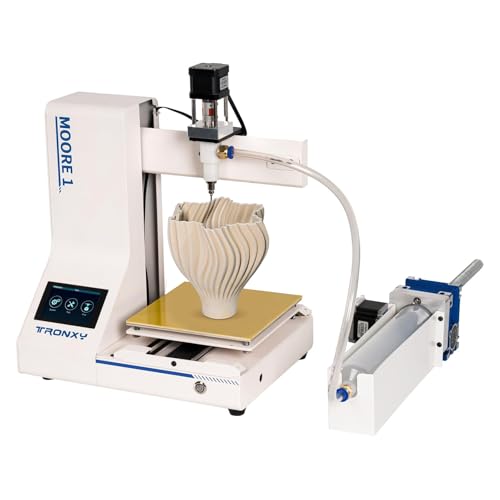
- Fully assembled for easier setup
- 180 mm cubic build volume
- Electric putter clay feeding
Best For: Beginners and small ceramic projects
Best for Creative Hybrid Projects
Bambu Lab A1 Combo with LED Kit

- Includes an LED kit
- Supports AMS lite multicolor printing
- Automatic calibration and flow compensation
Best For: Multicolor filament décor and lighting projects
Best Larger Clay Capacity
TRONXY Moore 2 Pro Ceramic Printer

- 250 × 250 × 260 mm build area
- Supports clay and ceramic slurry
- No air compressor required
Best For: Larger clay prototypes and ceramic experimentation
Best Enclosed Filament Alternative

- Up to 500 mm/s listed speed
- Enclosed design for advanced filaments
- AMS enables multicolor printing
Best For: Fast multicolor filament prototypes
Best Foldable Clay Printer

- Foldable 250 × 250 × 260 mm design
- Electric clay feeding needs no air compressor
- Supports clay, slurry, and red porcelain
Best For: Home makers who want a compact ceramic printer
Best High-Fire Clay Material

- Cone 6–10 firing range
- 22% water content for 3D printing
- White ivory finish accepts glazes well
Best For: Artists using a compatible ceramic extrusion printer
Best Multicolor Alternative
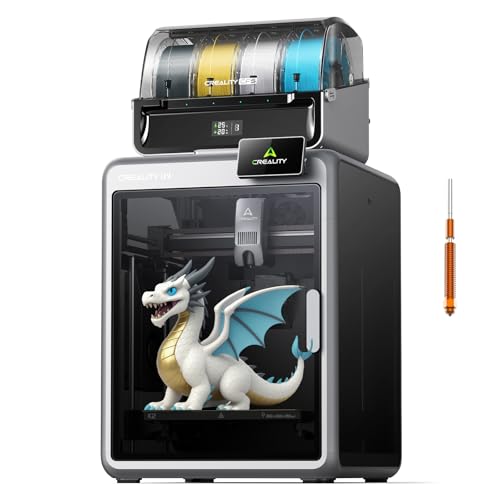
- Supports up to 16 colors with CFS expansion
- Prints at speeds up to 600 mm/s
- Designed for filament, not ceramic clay
Best For: Users seeking a fast multicolor filament printer instead
Best Ceramic Clay Pick
TRONXY Moore 2Pro Clay 3D Printer

- Purpose-built for clay and ceramic slurry
- Electric putter needs no air compressor
- 250 x 250 x 260 mm build area
Best For: Beginners making ceramic clay prints
Best High-Speed Alternative
Flashforge AD5X Multicolor 3D Printer

- Reaches claimed speeds up to 600 mm/s
- Supports four-color filament printing
- Auto leveling and flexible PEI plate
Best For: Fast multicolor filament projects
Best Multicolor Filament Option
FLASHFORGE AD5X Multi-Material Printer

- Four-color Intelligent Filament System
- Full-auto leveling and filament backup
- Compact CoreXY design with high-speed printing
Best For: Colorful, automated filament printing
Best Beginner Ceramic Pick – TRONXY Moore1 Mini Clay 3D Printer
If you are looking for a 3d printer for ceramic clay, the TRONXY Moore1 is a beginner-friendly option with an all-in-one, fully assembled design. Its 180 × 180 × 180 mm build area, electric putter feeding system, and maximum 40 mm/s speed suit small ceramic projects and experimentation.
Best For: Beginners, hobbyists, kids, and adults making small clay or ceramic pieces.
Pros:
- Arrives fully assembled and ready to use.
- Electric putter replaces the need for compressed air.
- Resume-printing function helps recover from power interruptions.
- External dual-axis roller guides support smooth movement.
Cons:
- Its 7-inch build volume limits the size of finished pieces.
- Maximum print speed is 40 mm/s.
- At 33 pounds, it is not especially lightweight.
The Moore1 emphasizes approachable setup and stable clay extrusion rather than large-format production. Choose it when compact dimensions and beginner-friendly operation matter most.
Best for Creative Hybrid Projects – Bambu Lab A1 Combo with LED Kit
The Bambu Lab A1 Combo is not a ceramic clay printer; it is an FDM machine designed for filament. It may still interest shoppers comparing a 3d printer for ceramic clay with a fast general-purpose printer, especially for multicolor models, decorative projects, and the included LED lamp kit.
Best For: Users who want fast multicolor filament printing and illuminated decorative models rather than direct clay printing.
Pros:
- Includes an LED kit for compatible illuminated models.
- Supports multicolor printing with AMS lite.
- Offers automatic calibration, including bed leveling and Z-offset.
- Active flow-rate compensation supports consistent extrusion.
Cons:
- It is an FDM filament printer, not a ceramic-clay deposition machine.
- AMS lite is required for multicolor printing.
- The supplied notes do not list clay or ceramic slurry as supported materials.
For ceramic work specifically, look to a dedicated clay printer instead. The A1 Combo is better positioned as a convenient, quiet, multicolor companion for décor, prototypes, and lighting projects.
Best Larger Clay Capacity – TRONXY Moore 2 Pro Ceramic Printer
For shoppers seeking a 3d printer for ceramic clay with more room than a mini model, the TRONXY Moore 2 Pro provides a 250 × 250 × 260 mm build area. It handles clay, ceramic slurry, red porcelain, and other liquid-flowing materials using an electric putter system that does not require an air compressor.
Best For: Hobbyists and beginners who need a larger workspace for clay and ceramic prototypes.
Pros:
- Offers a larger 250 × 250 × 260 mm build volume.
- Supports clay, ceramic slurry, red porcelain, and other flowing materials.
- Electric putter eliminates the need for a compressed-air setup.
- Layer thickness can be set from 0.3 to 3 mm.
Cons:
- Maximum listed printing speed is 40 mm/s.
- Its 16 × 16 × 20-inch footprint requires dedicated space.
- The supplied notes do not describe automatic calibration features.
The Moore 2 Pro is the stronger choice over a compact clay model when build volume is the priority. Its adjustable layer thickness and broad material description also offer useful flexibility for ceramic experimentation.
Best Enclosed Filament Alternative – Bambu Lab P1S Combo
The Bambu Lab P1S Combo is another alternative rather than a true 3d printer for ceramic clay: it is an enclosed FDM printer for filament. Its high speed, automatic bed leveling, and included AMS make it useful for multicolor models and functional prototypes when clay printing is not required.
Best For: Users who want enclosed, high-speed multicolor filament printing instead of ceramic-clay deposition.
Pros:
- Supports multicolor or multimaterial printing with the AMS.
- Lists speeds up to 500 mm/s and acceleration up to 20,000 mm/s².
- Enclosed design is suited to advanced filaments.
- Automatic bed leveling and a setup designed for about 15 minutes simplify operation.
Cons:
- It is an FDM printer and is not specified for clay or ceramic slurry.
- AMS is required for the multicolor capability.
- Carbon- and glass-fiber-reinforced polymers are not recommended.
If your project needs ceramic clay, choose a dedicated liquid-deposition model instead. The P1S Combo makes more sense for fast, enclosed filament work and multicolor prototypes.
Best Foldable Clay Printer – TRONXY Moore 2 Pro
If you need a 3d printer for ceramic clay that is easier to store and set up, the TRONXY Moore 2 Pro offers a foldable design, a 250 × 250 × 260 mm build area, and an electric clay-feeding system that does not require an air compressor. It supports clay, ceramic slurry, red porcelain, and other flowing materials.
Best For: Home users and makers seeking a relatively compact clay printer with straightforward setup and quiet, stable operation.
Pros:
- Foldable frame with a 250 × 250 × 260 mm building size.
- Electric putter eliminates the need for an air compressor.
- Dual-axis metal guide rail and TMC2209 32-bit silent mainboard support smooth, quieter operation.
- Power-outage recovery and printing speeds up to 40 mm/s.
Cons:
- At 40 pounds, it is not especially lightweight to move frequently.
- A separate firing solution is still needed for finished ceramic pieces.
The Moore 2 Pro is a practical choice when portability, simpler clay extrusion, and home-friendly operation matter more than a large-format build volume. Its foldable frame and broad liquid-material compatibility make it a flexible entry point for ceramic printing.
Best High-Fire Clay Material – SIO-2 PRAI 3D Ceramic Clay
A capable 3d printer for ceramic clay also needs a material formulated for reliable extrusion and firing. SIO-2 PRAI 3D is a 3.5-pound white ivory stoneware clay with 22% water content, a Cone 6–10 firing range, and compatibility with a range of nozzle sizes and materials.
Best For: Ceramic artists who need high-fire clay for detailed printed forms and glaze-ready results.
Pros:
- Fires from Cone 6 to Cone 10, or approximately 1240ºC to 1300ºC.
- Available for use with brass, metal, or plastic nozzles across several sizes.
- White ivory fired color helps highlight glazes and coloring oxides.
- Extruded body with 22% water content is optimized for 3D printing and reduced shrinkage.
Cons:
- Some finer 0.4–0.6 mm nozzles may require a high-pressure compressor.
- This is clay material, not a complete 3D printer or kiln.
For users who already have a compatible clay extrusion setup, PRAI 3D provides a purpose-made high-fire material with useful nozzle flexibility and strong glaze compatibility. Its 3.5-pound package is suited to test pieces, small projects, and studio work.
Best Multicolor Alternative – Creality K2 Combo
The Creality K2 Combo is not a dedicated 3d printer for ceramic clay; it is a high-speed filament printer designed for multicolor and engineering-material work. Its CFS system supports up to 16 colors with expansion, while the hardened steel nozzle, direct-drive extruder, and 300°C hotend accommodate PLA, ABS, PETG, and other compatible filaments.
Best For: Buyers who want fast multicolor filament printing rather than ceramic clay extrusion.
Pros:
- CFS enables multicolor printing, with expansion up to 16 colors.
- Print speeds reach up to 600 mm/s with 20,000 mm/s² acceleration.
- Automatic leveling, guided calibration, and pre-assembled setup simplify operation.
- AI chamber camera, Wi-Fi, local storage, and built-in air purification add convenience.
Cons:
- It is designed for filament materials, not clay, ceramic slurry, or porcelain.
- Its 55-pound weight and 21 × 25 × 20-inch dimensions require dedicated workspace.
If ceramic clay is your priority, this is the wrong tool for the job. However, it is a strong alternative for users comparing clay printers with a versatile, fast filament machine for colorful prototypes, decorative parts, and engineering-grade materials.
Best Ceramic Clay Pick – TRONXY Moore 2Pro Clay 3D Printer
If you need a 3d printer for ceramic clay, the TRONXY Moore 2Pro is purpose-built for liquid-deposition materials rather than standard filament. Its 250 x 250 x 260 mm build area, electric putter, and included clay packs make it a practical starting point for ceramic projects.
Best For: Beginners and makers who want a dedicated ceramic clay printer without using an air compressor.
Pros:
- Designed for clay, ceramic slurry, red porcelain, and other flowing materials.
- Electric putter avoids the need for a separate air compressor.
- Arrives 99% pre-installed and includes two packs of clay.
- Offers up to 40 mm/s printing and adjustable 0.3–3 mm layer thickness.
Cons:
- Its material focus is specialized, so it is not a general filament printer.
- The listed product dimensions are unusually large, so verify available workspace carefully.
The Moore 2Pro is the clearest match here for ceramic clay work. Its dedicated feeding system and compressor-free operation simplify setup, while the adjustable layer range gives users room to balance detail and speed.
Best High-Speed Alternative – Flashforge AD5X Multicolor 3D Printer
Although the Flashforge AD5X is not a ceramic clay printer, it is worth considering if your projects also include conventional 3D printing. Its CoreXY platform, 600 mm/s claimed speed, and 300°C all-metal hotend target fast work with compatible filament materials.
Best For: Users who want a fast, versatile filament printer alongside or instead of a dedicated clay machine.
Pros:
- Supports PLA, PETG, TPU, and other listed filament types through its IFS system.
- CoreXY motion, vibration compensation, and linear rails support high-speed printing.
- Auto leveling and a magnetic PEI spring steel plate simplify first-layer setup.
- Wi-Fi connectivity and app monitoring add convenient remote control.
Cons:
- It is designed for filament, not clay, ceramic slurry, or porcelain.
- Carbon-fiber materials require an enclosed chamber kit.
The AD5X should not be your primary choice for a 3d printer for ceramic clay. Choose it when filament versatility, multicolor output, and speed matter more than ceramic-material compatibility.
Best Multicolor Filament Option – FLASHFORGE AD5X Multi-Material Printer
The FLASHFORGE AD5X is another filament-based alternative rather than a 3d printer for ceramic clay. Its four-color Intelligent Filament System, automatic calibration, and compact modular design make it suited to colorful prototypes and decorative models.
Best For: Makers prioritizing multicolor filament productivity, compact placement, and automated calibration.
Pros:
- Prints in up to four colors using the Intelligent Filament System.
- Supports listed materials including PLA, TPU, PETG, PLA-CF, and PETG-CF.
- Full auto leveling helps maintain consistent first-layer distance.
- CoreXY construction and vibration suppression support precise high-speed printing.
Cons:
- It does not support the clay or ceramic slurry materials needed for ceramic printing.
- Its feature set is oriented toward filament, so ceramic-focused buyers would need a separate machine.
For ceramic clay, the TRONXY is the more relevant option. The AD5X earns consideration as a compact companion printer when four-color filament output and automated operation are the main priorities.
How We Picked the Best 3d Printer for Ceramic Clay
We compared the selected products by their intended use, material compatibility, build size, extrusion or feeding system, automation, ease of setup, and likely value for different users. Dedicated liquid-deposition machines received special attention because they are designed to handle ceramic clay directly. Conventional printers were evaluated as versatile alternatives for plastic prototypes, molds, tools, and workflow support rather than automatic replacements for clay-specific equipment.
We also considered practical ownership factors, including replacement parts, calibration, software, cleanup, and whether the product appears better suited to beginners, classrooms, general makers, or experienced ceramic artists. Always confirm the manufacturer’s material requirements and firing recommendations before purchasing.
Quick Comparison
- Dedicated clay printers: TRONXY Moore models are the most directly relevant choices for liquid ceramic deposition.
- General-purpose multicolor printers: Bambu Lab, Creality, and Flashforge models are better suited to filament-based prototypes, presentation models, molds, and studio accessories.
- Ceramic material: SIO-2 PRAI clay may complement a compatible ceramic-printing setup, but it is not itself a printer.
- Build size: The Moore 2 Pro models list approximately 10 x 10 x 10.2 inches, while several filament printers use compact desktop build volumes.
Key Buying Factors for a 3d Printer for Ceramic Clay
Material and Extrusion Compatibility
Check whether the machine is engineered for wet clay or only thermoplastic filament. Ceramic clay requires a suitable delivery system, controlled pressure, and a nozzle or tool path that can manage the material without excessive drying or clogging.
Build Volume and Project Size
Measure the largest form you expect to print, then allow room for supports, trimming, and handling. Larger capacity is useful for vessels and sculptural work, but it can increase footprint, cleanup, and material waste.
Drying, Cleanup, and Firing
Clay prints need careful drying to reduce cracking and warping before kiln firing. Consider how easily the print head, tubing, bed, and work area can be cleaned. Confirm that your studio has access to an appropriate kiln and understands the clay body’s firing range.
Automation and Workflow
Auto-leveling, calibration, enclosed designs, touchscreen controls, and dependable software can simplify routine printing. These features matter especially in classrooms or shared studios, although they do not replace proper clay preparation and kiln knowledge.
Who Should Buy Which 3d Printer for Ceramic Clay?
Choose a dedicated TRONXY Moore model if direct ceramic-clay printing is your main goal and you are prepared to learn the material-preparation, extrusion, drying, and firing workflow.
Choose a Bambu Lab, Creality, or Flashforge printer if you primarily need fast filament printing, multicolor prototypes, molds, jigs, or studio tools. These are not automatically suitable for wet clay without substantial modification.
Choose SIO-2 PRAI clay only when its specifications match your printer, nozzle system, drying method, and kiln schedule. For beginners, the safest purchase is the option that matches the complete workflow—not simply the machine with the highest speed or largest feature list.